
If you love bún thịt nướng, bánh hỏi with grilled pork is the next Vietnamese dish to put on your list. You get the same smoky, caramelized pork and big handfuls of fresh herbs, but the noodles are something special. Instead of a bowl of loose vermicelli, bánh hỏi (bánh hỏi) is made from super-fine rice noodles woven into delicate little mats.
Each soft mat gets brushed with scallion oil, then tucked into a lettuce leaf with juicy grilled pork, crunchy cucumber, fresh herbs, and tangy pickled vegetables. Dip the whole bundle into nước chấm, that sweet, salty, bright Vietnamese fish sauce, and you have one seriously good bite.
Bánh hỏi is often associated with Vietnam's south-central coast, but you'll find it served throughout the south, from family celebrations to breakfast stalls piled high with roast pork and grilled meats. It looks impressive on a platter, but you don't need a special occasion to make it at home. The pork marinates while you prep everything else, and the noodles take just minutes to prepare.
If you're building a collection of Vietnamese favorites, my Vietnamese pork noodle bowl is another delicious place to start.
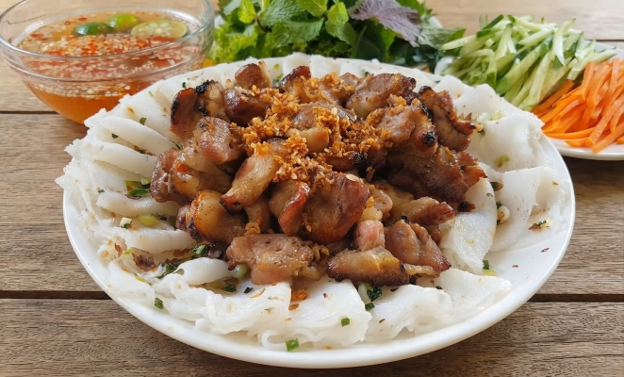
What Is Bánh Hỏi?
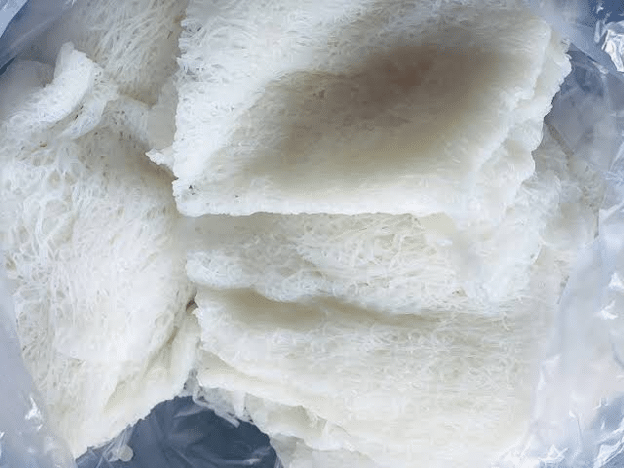
Bánh hỏi is Vietnamese rice vermicelli pressed into incredibly fine strands and arranged in thin, interlocking sheets. Compared with regular bún, the noodles are more delicate, soft, and almost melt-in-your-mouth once they're warm and coated with scallion oil.
You'll generally find two types at Vietnamese or Asian grocery stores:
- Fresh bánh hỏi: Usually sold refrigerated and already folded into small squares. It just needs to be warmed through.
- Dried bánh hỏi: Shelf-stable and packaged in flat sheets. It needs a brief soak in boiling water followed by steaming if necessary.
Can't find bánh hỏi? Use the thinnest rice vermicelli you can find. Cook it according to the package directions, rinse it under cold water, and twist small portions into nests. The texture won't be exactly the same, but you'll still get all the delicious grilled pork, herbs, and dipping sauce.
Want to Save This Recipe?
Enter your email & I'll send it to your inbox. Plus, get great new recipes from me every week!
By submitting this form, you consent to receive emails from Went Here 8 This.
Why You're Going to Love This Bánh Hỏi Recipe
- Smoky, caramelized pork: Fish sauce, honey or brown sugar, garlic, shallots, and lemongrass create a savory-sweet marinade that gives the pork plenty of flavor and those irresistible charred edges.
- Delicate noodles with scallion oil: The warm rice noodle sheets soak up the fragrant oil while staying soft and glossy.
- Fresh, crunchy toppings: Lettuce, cucumber, herbs, and pickled vegetables balance the richness of the grilled meat.
- A sauce that brings everything together: Nước chấm adds a sweet, salty, tangy finish to every bite.
- A fun, hands-on meal: Put everything on a big platter and let everyone build their own Vietnamese lettuce wraps. Less formal dinner, more deliciously messy fun.
Bánh Hỏi Ingredients
Scroll down to the recipe card for a printable version of the ingredients and instructions.
For the grilled pork (thịt nướng)
- 1 ½ lb (680 g) pork shoulder (butt), sliced about ⅛ inch thick
- 3 tablespoons fish sauce
- 2 tablespoons honey or brown sugar
- 2 shallots, minced
- 4 cloves garlic, minced
- 1 stalk lemongrass, tender inner part only, finely minced (optional but recommended)
- 1 tablespoon neutral oil
- ½ teaspoon freshly ground black pepper
- 1 teaspoon dark soy sauce (optional, for deeper color)
For the scallion oil (mỡ hành)
- 4 scallions, thinly sliced
- ⅓ cup neutral oil (or rendered pork fat, if you have it)
- Pinch of salt
For the noodles
- 1 lb (450 g) fresh banh hoi, or about 6–8 oz (170–225 g) dried banh hoi
To serve
- 1 head butter lettuce or green leaf lettuce, leaves separated
- A big handful of mixed herbs: mint, Thai basil, cilantro, and perilla if you can find it
- 1 cucumber, cut into thin sticks
- Pickled carrot and daikon (đồ chua)
- Crushed roasted peanuts
- Nước chấm, for dipping
A Few Ingredients That Make a Difference
Pork shoulder: This cut has enough fat to stay juicy over the grill while developing flavorful, caramelized edges. Slice it thinly so it cooks quickly and fits neatly into your lettuce wraps.
Fish sauce: The fish sauce does most of the seasoning here, so it's worth using a good one. An anchovy-based sauce with a clean, savory finish, like CHIN-SU Premium Anchovy Fish Sauce, gives the pork its deep umami without tasting overly fishy once it hits the grill. Its anchovies are salted at sea and aged for a year before bottling, which is where that rounded flavor comes from.
Lemongrass: The tender inner part adds a fresh, citrusy aroma that works beautifully with the garlic, shallots, and grilled pork.
Bánh hỏi noodles: These delicate sheets are what make the dish different from a standard Vietnamese grilled pork noodle bowl. Handle them gently and avoid soaking dried noodles for too long.
Scallion oil: Also called mỡ hành, this simple topping adds fragrant scallion flavor and keeps the warm noodle sheets glossy instead of sticking together.
How to Make Bánh Hỏi with Grilled Pork
Marinate the pork
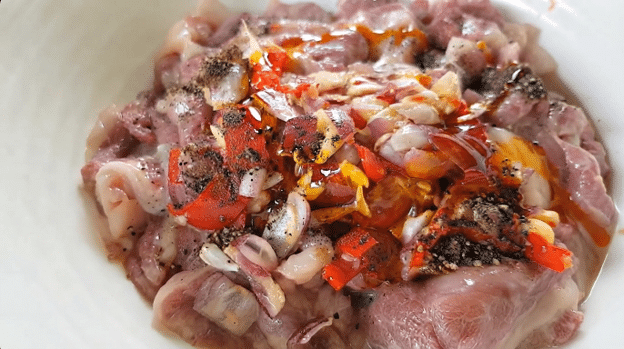
Step1: Whisk the fish sauce, honey, shallots, garlic, lemon grass, oil, pepper, and dark soy sauce in a large bowl.
Step2: Add the sliced pork and massage the marinade in so every slice is coated. Cover and refrigerate for at least 1 hour, for the best flavor marinate overnight.
Tip: Partially freezing the pork for 20–30 minutes makes it much easier to slice thinly.
Make the scallion oil
Step3: Put the sliced scallions and a pinch of salt in a heatproof bowl.
Step4: Heat the oil in a small pan until it shimmers, then carefully pour it over the scallions. They should sizzle and turn bright green. Stir and set aside.
Prepare the bánh hỏi noodles
Step5 Fresh banh hoi:: Steam fresh banh hoi for 2–3 minutes, just until warm and soft.
Step5 Dried banh hoi: Work in batches. Put a few sheets in a heatproof bowl, pour boiling water over them, and keep them submerged for 60–90 seconds. Drain, then rinse quickly under cold water to stop the cooking. If a sheet still feels firm in the center, steam it for a minute or two to finish. Don't leave the sheets in the hot water any longer than 90 seconds. The strands are so fine that they turn mushy fast.
Step6: Plate the noodles right away and brush each sheet lightly with scallion oil while it's still warm. Banh hoi sticks to itself as it cools, and the oil keeps the sheets separate and glossy. Fold or cut them into palm-sized squares and arrange them on a platter.
Grill the pork
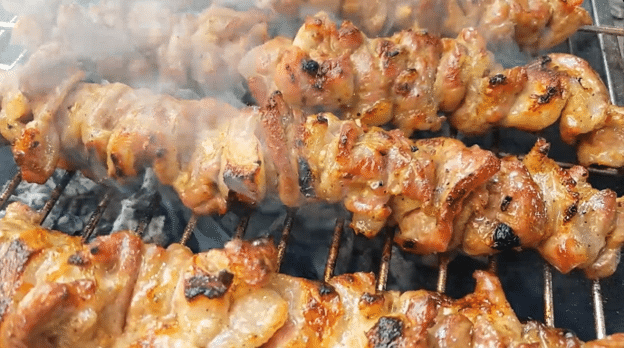
Step7: Grill the pork over medium-high heat for 2–3 minutes per side, until it's cooked through with charred, caramelized edges. The honey in the marinade burns quickly, so stay close and turn the slices often.
Step7 No grill: Broil the pork on a foil-lined sheet pan 3–4 inches from the heat for 3–4 minutes per side. You can also air fry it at 400°F (200°C) for 8–10 minutes, shaking the basket halfway through.
Assemble the platter
Step8: Arrange the bánh hỏi squares, grilled pork, lettuce, herbs, cucumber, and pickled vegetables on a large platter. Sprinkle the noodles with crushed peanuts and set out small bowls of nước chấm for dipping.
Step9: Bring everything to the table and let everyone build their own bites. It's colorful, fresh, and a lot more fun than passing around individual plates.
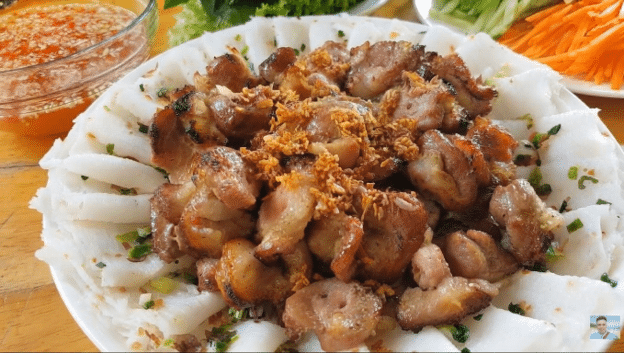
How to Get Soft, Glossy Bánh Hỏi and Juicy Grilled Pork
The noodles and pork need slightly different kinds of attention, but neither is difficult once you know what to watch for.
- Slice the pork thinly. Aim for slices about ⅛ inch thick so they cook quickly and develop caramelized edges.
- Give the marinade time. At least 1 hour gives the fish sauce, garlic, shallots, and sweetener time to flavor the meat.
- Keep an eye on the grill. The honey or brown sugar can darken quickly over high heat. Turn the pork as needed instead of walking away.
- Be gentle with the noodles. Fresh bánh hỏi needs only a quick steam. Dried sheets need just 60–90 seconds in boiling water before you check their texture.
- Brush on the scallion oil while the noodles are warm. This helps keep the fine strands glossy and prevents the sheets from sticking together.
- Serve the noodles promptly. Bánh hỏi is at its best when soft and freshly prepared.
Variations to Try
Bánh hỏi is often served as part of a generous shared platter, and grilled pork is just one of the proteins you can include.
- Bánh hỏi heo quay: Swap the grilled pork for store-bought or homemade crispy roast pork belly.
- Grilled shrimp: Marinate peeled shrimp in half the pork marinade for 20 minutes, then grill for 1–2 minutes per side.
- Bánh hỏi with beef: Thinly sliced flank steak or sirloin works with the same marinade. Reduce the marinating time to 30 minutes.
- Nem nướng: Add grilled Vietnamese pork sausage, which is sweet and slightly garlicky. Look for it frozen at Vietnamese markets.
- Chạo tôm: Serve shrimp paste grilled around sugarcane sticks. Peel the shrimp off the sugarcane and tuck it into your lettuce wrap.
- Chả giò: Add crispy fried rolls, cut into bite-size pieces for wrapping.
- A lighter pork option: Use pork tenderloin instead of shoulder. Remove it from the heat as soon as it's cooked through because it dries out faster.
What to Serve With Bánh Hỏi and Grilled Pork
The platter already has meat, noodles, herbs, and vegetables, so you don't need a complicated spread. A few Vietnamese-inspired sides make it feel like a feast.
- How to Make Vietnamese Egg Rolls: Add crispy rolls for a crunchy contrast to the soft noodles and tender pork.
- Thai Cucumber Salad: A crisp, refreshing side is a nice counterpoint to the rich grilled meat and scallion oil.
- Vietnamese Shrimp Street Tacos: If you're putting together a larger Vietnamese-inspired meal, these bring more fresh herbs and seafood to the table.
And don't skip the dipping sauce! Vietnamese dipping fish sauce (nước chấm) is the bright, tangy finishing touch that ties the pork, noodles, and herbs together.
Expert Tips for Making Bánh Hỏi at Home
- Prep the toppings before you cook the pork. Wash the herbs, separate the lettuce leaves, slice the cucumber, and arrange the pickled vegetables so everything is ready when the meat comes off the grill.
- Make thin pork slices easier. A brief 20–30-minute stint in the freezer firms up the meat and makes slicing much less fiddly.
- Work in batches with dried noodles. This helps you monitor the texture and prevents the sheets from sitting in hot water while you prepare the rest.
- Use a big serving platter. Bánh hỏi is a family-style dish, and spreading out the components makes it easy for everyone to build a wrap.
- Offer extra scallion oil. Some people like a little more on their noodles, so set a small bowl on the table.
- Keep the dipping sauce nearby. Each wrap should get a dip just before eating, so put the nước chấm where everyone can reach it.
Frequently Asked Questions
Both are Vietnamese rice vermicelli. Bún is served as loose noodles in bowls or soups, while bánh hỏi is made from finer strands woven into thin sheets. It's softer and is usually eaten by the piece, often wrapped in lettuce with grilled pork and herbs.
Look in the refrigerated section for fresh bánh hỏi or in the dried noodle aisle for shelf-stable sheets at Vietnamese or Asian grocery stores. If you can't find it, use the thinnest rice vermicelli available. The texture will differ, but the grilled pork and fresh toppings will still make a delicious meal.
Bánh hỏi is made from rice flour and water, so it's naturally gluten-free. Check the package label, and check the labels on your fish sauce and soy sauce if you're cooking for someone with celiac disease.
Yes. Marinate the pork the night before, and make the scallion oil and dipping sauce in the morning. Wash and dry the herbs and lettuce ahead of time, too. Prepare the bánh hỏi shortly before serving because the sheets can stick together as they cool, and grill the pork last so it arrives warm.
It usually means the noodles stayed in hot water too long. Dried bánh hỏi needs only 60–90 seconds in boiling water. Drain it promptly and finish with a short steam if the center still feels firm rather than leaving the sheets to soak.
Use the thinnest rice vermicelli you can find. Cook it according to the package directions, rinse it under cold water, and twist small portions into nests. It won't have the same woven-sheet texture, but it works as a practical substitute.
Nước chấm is a Vietnamese dipping sauce commonly made with fish sauce, sugar, water, lime, garlic, and chili. Its sweet, salty, tangy flavor cuts through the richness of grilled pork and scallion oil. For this dish, the original recipe suggests starting with roughly equal parts fish sauce and sugar to two parts water, then adjusting with lime and chili to taste.
Make-Ahead, Storage, and Reheating
Pork: Marinate the pork up to 24 hours ahead. Cooked pork keeps for 3 days in the refrigerator. Reheat it in a hot skillet or under the broiler to help the edges crisp again.
Scallion oil: Store it in the refrigerator for up to 3 days. Let it come to room temperature before using.
Bánh hỏi noodles: These are best eaten the day they're prepared. Refrigerated leftovers can dry out and firm up. To revive them, cover with a damp paper towel and microwave for 30–60 seconds, or steam for a minute.
Herbs and lettuce: Wash and dry them ahead of time. Wrap them in paper towels and store them in a bag in the refrigerator.
Leftovers: Store each component in its own container and reheat separately. The noodles, pork, and herbs need different treatment, so keeping them apart makes leftovers easier to enjoy.
Make Bánh Hỏi with Grilled Pork for Your Next Vietnamese Feast
Bánh hỏi with grilled pork brings together so many things I love about Vietnamese food: smoky meat, delicate rice noodles, fresh herbs, crunchy vegetables, and a dipping sauce that makes every bite pop. The woven noodle sheets make the platter feel a little special, but the process is approachable once you break it into a few simple steps.
Give the pork time to marinate, keep a close eye on those caramelized edges, and prepare the noodles just before serving. Then pile everything onto a platter, pass around the nước chấm, and let everyone make their own lettuce wraps. Don't be surprised if the pork disappears first!
Recipe
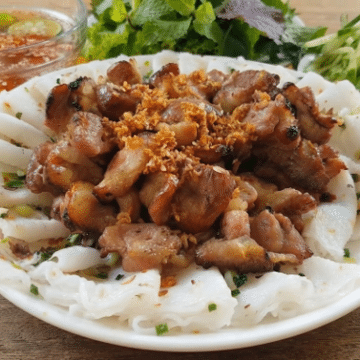
Bánh Hỏi with Grilled Pork (Vietnamese Rice Noodles)
Ingredients
For the Grilled Pork (Thịt Nướng)
- 1.5 lb pork shoulder (butt) sliced about ⅛ inch thick
- 3 tablespoons fish sauce
- 2 tablespoons honey or brown sugar
- 2 shallots minced
- 4 cloves garlic minced
- 1 stalk lemongrass tender inner part only, finely minced (optional but recommended)
- 1 tablespoon neutral oil
- ½ teaspoon freshly ground black pepper
- 1 teaspoon dark soy sauce optional, for deeper color
For the Scallion Oil (Mỡ Hành)
- 4 scallions thinly sliced
- ⅓ cup neutral oil or rendered pork fat, if you have it
- Pinch of salt
For the Noodles
- 1 lb fresh banh hoi, or about 6–8 oz dried banh hoi
Instructions
How to Make Banh Hoi with Grilled Pork?
- Whisk the fish sauce, honey, shallots, garlic, lemon grass, oil, pepper, and dark soy sauce in a large bowl.
- Add the sliced pork and massage the marinade in so every slice is coated. Cover and refrigerate for at least 1 hour, for the best flavor marinate overnight.
Make the Scallion Oil
- Put the sliced scallions and a pinch of salt in a heatproof bowl.
- Heat the oil in a small pan until it shimmers, then carefully pour it over the scallions. They should sizzle and turn bright green. Stir and set aside.
Prepare the Banh Hoi
- Fresh banh hoi:: Steam fresh banh hoi for 2–3 minutes, just until warm and soft.
- Dried banh hoi: Work in batches. Put a few sheets in a heatproof bowl, pour boiling water over them, and keep them submerged for 60–90 seconds. Drain, then rinse quickly under cold water to stop the cooking. If a sheet still feels firm in the center, steam it for a minute or two to finish. Don't leave the sheets in the hot water any longer than 90 seconds. The strands are so fine that they turn mushy fast.
- Plate the noodles right away and brush each sheet lightly with scallion oil while it's still warm. Banh hoi sticks to itself as it cools, and the oil keeps the sheets separate and glossy. Fold or cut them into palm-sized squares and arrange them on a platter.
Grill the Pork
- Grill the pork over medium-high heat for 2–3 minutes per side, until it's cooked through with charred, caramelized edges. The honey in the marinade burns quickly, so stay close and turn the slices often.
- No grill? Broil the pork on a foil-lined sheet pan 3–4 inches from the heat for 3–4 minutes per side. You can also air fry it at 400°F (200°C) for 8–10 minutes, shaking the basket halfway through.
Assemble the Platter
- Arrange the banh hoi squares, grilled pork, lettuce, herbs,cucumber, and pickles on a large platter. Sprinkle peanuts over the noodles,and set out small bowls of dipping sauce for everyone.
Expert Tips:
- Prep the toppings before you cook the pork. Wash the herbs, separate the lettuce leaves, slice the cucumber, and arrange the pickled vegetables so everything is ready when the meat comes off the grill.
- Make thin pork slices easier. A brief 20–30-minute stint in the freezer firms up the meat and makes slicing much less fiddly.
- Work in batches with dried noodles. This helps you monitor the texture and prevents the sheets from sitting in hot water while you prepare the rest.
- Use a big serving platter. Bánh hỏi is a family-style dish, and spreading out the components makes it easy for everyone to build a wrap.
- Offer extra scallion oil. Some people like a little more on their noodles, so set a small bowl on the table.
- Keep the dipping sauce nearby. Each wrap should get a dip just before eating, so put the nước chấm where everyone can reach it.


Comments
No Comments