
Instead of simply walking through the stone remains of ancient Athens, what if you could actually step inside everyday life in 290 BCE?
No phones. No electricity. No modern conveniences. Just grain to crush into bread, local clay to shape, games to play, and plenty of hard work!
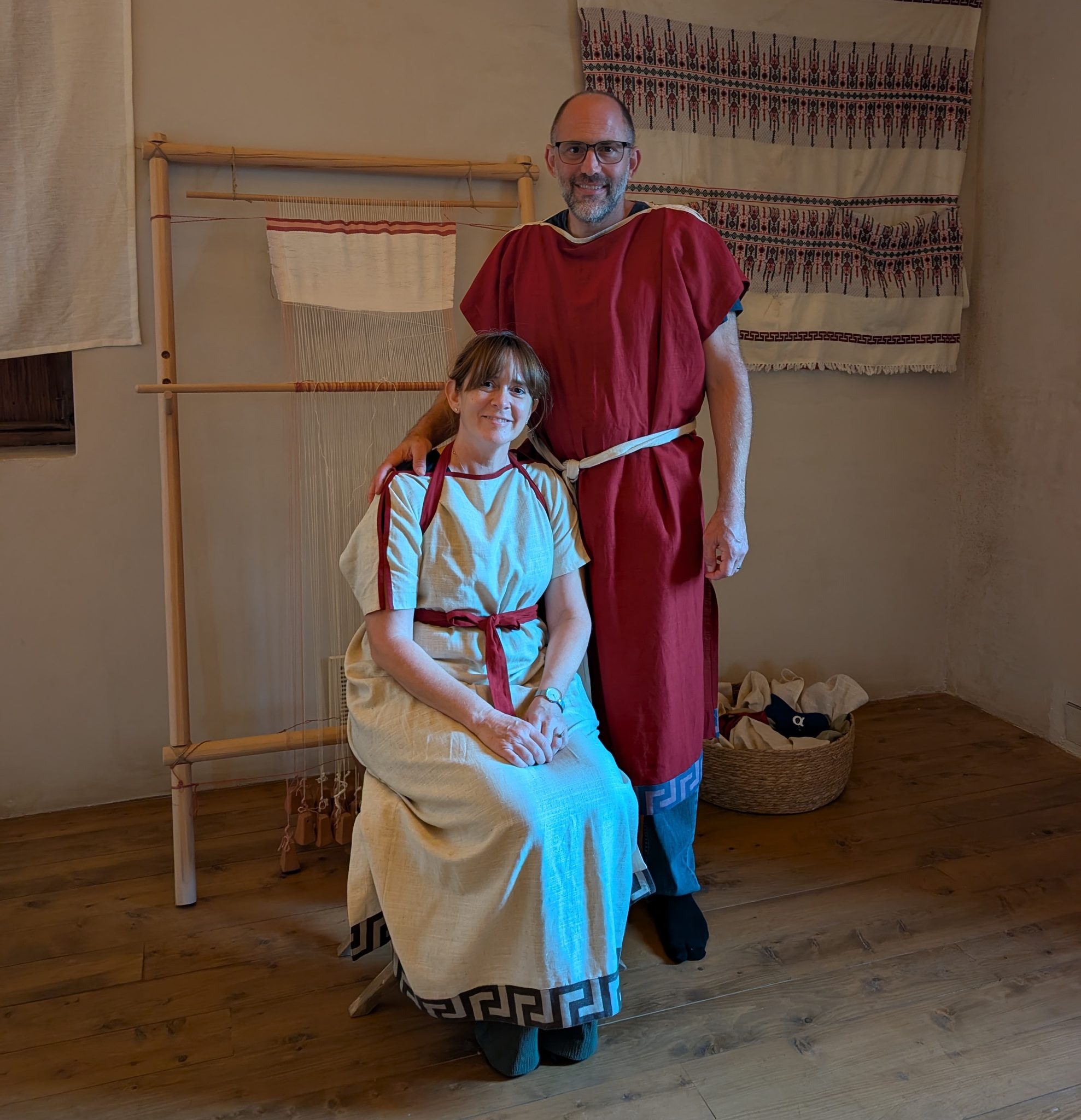
After spending hours exploring the Acropolis and other sights from my Exploring Athens, Greece Travel Guide, I wanted a deeper look at the people who actually lived in the ancient city. That's what led us to Plataeon—an immersive living-history experience in Athens where you dress in traditional robes, get your hands dirty with ancient crafts, explore a recreated Hellenistic home, and finish with food and wine in a traditional-style ancient tavern.
What Is Plataeon in Athens?
Plataeon is an interactive cultural and culinary experience in Athens, Greece, set in 290 BCE during the Hellenistic Period. Visitors participate in hands-on workshops—including ancient breadmaking at Kaminos, pottery crafting, and domestic life at Aule—with an optional Hellenistic tavern dining experience at Kapeleion.
290 BCE: What Was Life Really Like?
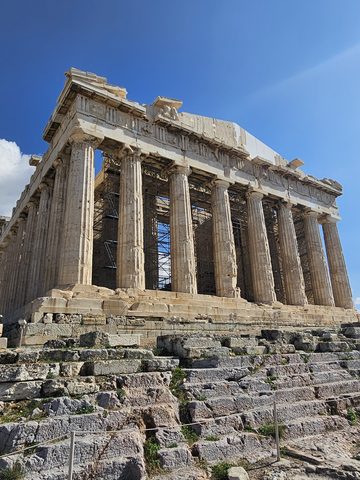
The year 290 BCE falls within the Hellenistic Period, which followed the Classical or Golden Age of Athens. This is an important distinction because when we visit famous monuments like the Parthenon today, we're often imagining the height of Classical Athens (the Parthenon itself was built between 447 and 432 BCE).
Plataeon takes you into a later era—nearly 200 years after the Parthenon was completed. In some ways, life back then was certainly slower. But in other ways, it was a whole lot harder. There was no popping over to the grocery store for a loaf of bread or ordering household items online—everyday necessities had to be made completely by hand. Instead of simply looking at ruins, we got to experience how ordinary people actually worked, crafted, played, and ate. And apparently, they were very busy!
Want to Save This Recipe?
Enter your email & I'll send it to your inbox. Plus, get great new recipes from me every week!
By submitting this form, you consent to receive emails from Went Here 8 This.
Get Your Hands Dirty at Kaminos
One of my favorite parts of the experience was Kaminos, where we discovered the trades and crafts that powered everyday life—transforming raw materials into essentials by shaping clay for pottery and preparing dough for bread.
Making Bread the Ancient Way
Forget walking into a bakery and grabbing a warm loaf off the shelf. At Kaminos, we were taken through the entire process of turning raw grain into flour, crushing the wheat by hand and realizing just how much physical labor was required before baking could even begin. It definitely gave me a whole new appreciation for a staple food we tend to take completely for granted!
Then came the fun part: making the bread.
We worked the dough and shaped it into loaves, adding nuts, seeds, and traditional ingredients before preparing it for baking. There is something deeply satisfying about making food with your hands when you realize cooks thousands of years ago were doing the exact same thing—just without modern stand mixers or ovens.
Working With Clay: Pottery & Ancient Building Materials
Next up was clay—and I mean actually getting your hands into it! We learned how ancient craftspeople prepared local clay by soaking and working it until it became pliable enough to shape.
What I loved most about Plataeon is that you aren't simply lectured on how things were made. You follow the process alongside the hosts and craftspeople, learn about the materials, and try it yourself. It's one thing to read in a museum that ancient Athenians made pottery by hand—it's another thing entirely to sit there with clay on your fingers and think, Oh… this actually takes serious skill!
Aule: Stepping Into Ancient Home Life
After breadmaking and pottery, we stepped into the domestic world at Aule, which focuses on what daily life looked like inside a wealthy Athenian home—especially for families and children.
Instead of viewing ancient Greece solely through temples and marble statues, Aule explores everyday activities, household crafts, childhood games, and family rituals. Moving through the recreated domestic spaces makes history feel personal—less about kings, warriors, and philosophers, and more about the ordinary people who lived behind those ruins.
Kapeleion: Dining in an Ancient Greek Tavern
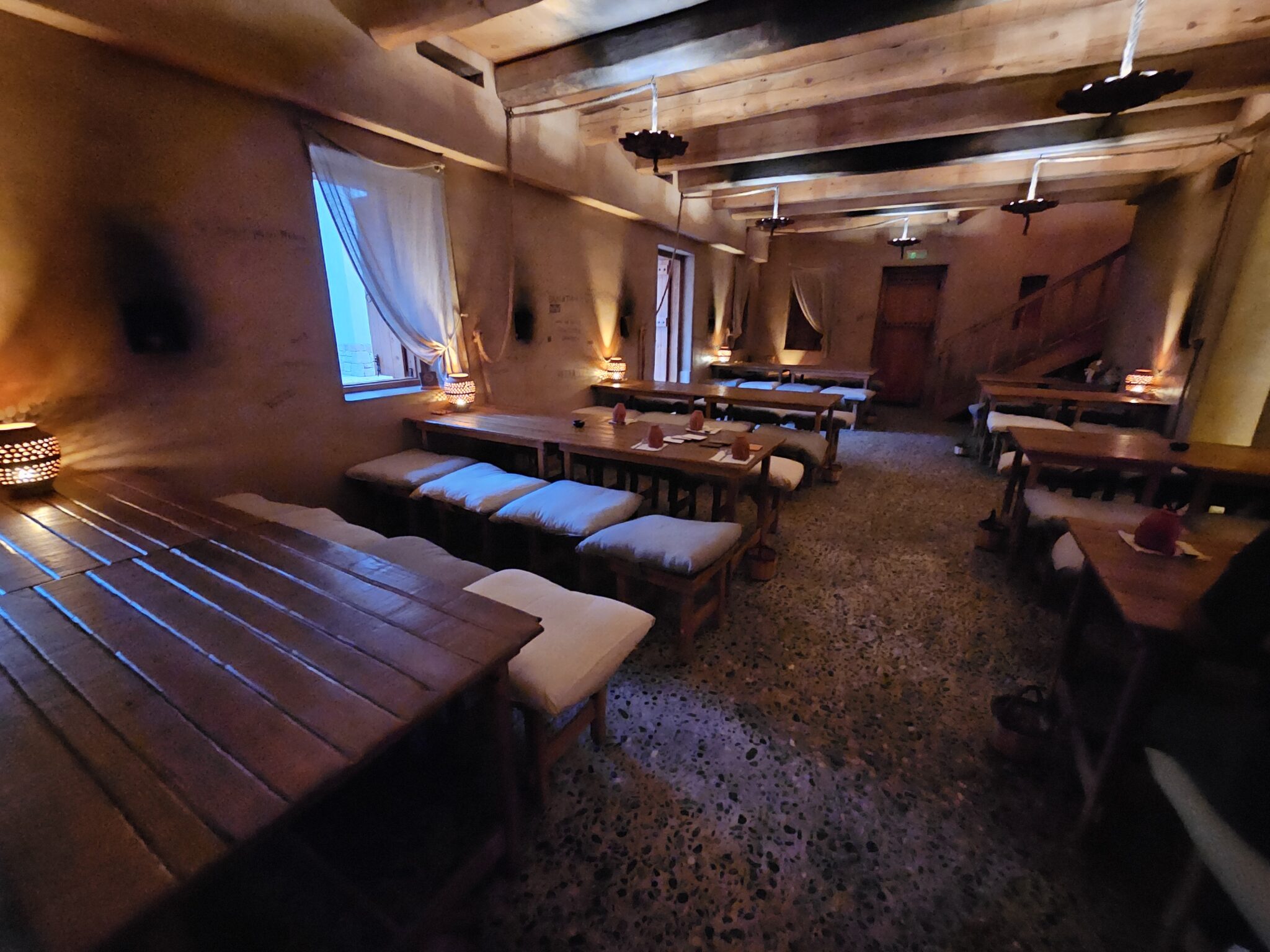
Let's be honest—this is the part I was most excited about! At Kapeleion, Plataeon brings you into a reimagined ancient tavern inspired by everyday food and hospitality in Athens around 290 BCE.
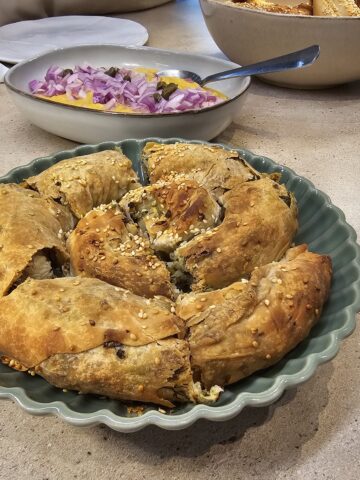
You can choose to add the dining experience to your visit, and it is 100% worth it. Of course, the dishes aren't meant to be a dusty museum exhibit on a plate—the menu draws inspiration from Hellenistic cooking traditions while making every bite delicious for modern palates. And yes, there was wine! Because even in 290 BCE, the Greeks knew great food tastes better with something good in your glass.
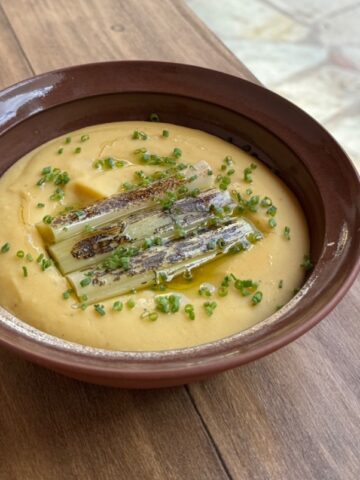
One dish that completely won me over was their creamy yellow split pea puree topped with smoky grilled leeks. I loved it so much that I brought the recipe home—you can make my Ancient Greek Fava with Charred Leeks Recipe in your own kitchen!
Is Plataeon Worth Visiting in Athens?
If you want to connect with ancient Greek culture beyond archaeological sites, Plataeon is easily one of the most memorable experiences you can book in Athens. Moving from raw grain and wet clay to sitting down together over Hellenistic-inspired food and wine brings thousands of years of history to life in a way no walking tour ever could.
Would you try ancient breadmaking and pottery in Athens? Drop a comment below—and if you're planning a trip to Greece, don't miss my Vegan Spanakopita Recipe from our Athens cooking class!

Comments
No Comments