
Vegetarian meal planning does not have to mean eating the same sad salad five days in a row. In fact, I think it should be the exact opposite!
My mother-in-law is vegetarian, and one of her biggest struggles is coming up with new things to eat every day. She often finds herself making the same meals over and over—and because she isn't planning ahead, she's also buying more food than she actually uses.
We're talking simple salads, plain rice with vegetables, or even a bowl of cereal for dinner. And while cereal absolutely has its place, I think we can do a little better for dinner!
A good vegetarian meal plan should be colorful, flavorful, filling, and packed with variety. Think spicy curries, crispy vegetables, creamy pasta, hearty lentils, chickpeas, noodles, and all those delicious sauces and seasonings that make vegetables seriously exciting.
Whether you're trying to eat more meatless meals, planning a completely vegetarian week, or simply looking for some fresh ideas for Meatless Monday, a little planning can make cooking so much easier.

Jump to:
- Why Vegetarian Meal Planning Makes Life Easier
- How to Build a Vegetarian Meal Plan
- Step 1: Pick Your Main Proteins
- Step 2: Add Plenty of Vegetables
- Step 3: Don't Forget the Grains
- Step 4: Make One Big Recipe and Plan for Leftovers
- A Sample 5-Day Vegetarian Meal Plan
- Make Vegetarian Meal Planning Even Easier
- My Favorite Vegetarian Meal Planning Tips
- 5. Embrace Leftovers
- The Bottom Line
- 💬 Comments
Why Vegetarian Meal Planning Makes Life Easier
Planning your meals ahead of time takes a lot of the guesswork out of dinner.
Instead of standing in front of the refrigerator at 6 p.m. wondering what on earth you can possibly make with half an onion and three lonely carrots, you'll already have a plan.
And here's another thing I love about meal planning: using the same ingredients in several different meals.
Bought a big bunch of cilantro for one recipe? Find two or three more recipes that use it. Have leftover chickpeas? Turn them into tomorrow's lunch. Extra vegetables hanging around in the fridge? Toss them into a curry, pasta, soup, or grain bowl.
That's how you get the most out of your grocery haul—and waste a whole lot less food.
Want to Save This Recipe?
Enter your email & I'll send it to your inbox. Plus, get great new recipes from me every week!
By submitting this form, you consent to receive emails from Went Here 8 This.
How to Build a Vegetarian Meal Plan
The easiest way to create a vegetarian meal plan is to think about your week as a collection of meals rather than trying to plan every single ingredient individually.
Start with a few favorite breakfasts, lunches, dinners, and snacks. Then fill in the gaps with recipes that use some of the same ingredients.
It's less complicated, more flexible, and much easier to stick with.
Step 1: Pick Your Main Proteins

Vegetarian meals can include plenty of satisfying protein. You definitely don't need meat on the plate to make dinner filling.
Some of my favorite vegetarian protein sources include:
Legumes are especially useful because they're inexpensive, versatile, and work in everything from curries and salads to pasta sauces.
For example, my Easy Instant Pot Chana Masala is loaded with chickpeas, tomatoes, garlic, ginger, and warm spices. It comes together quickly and makes a fantastic dinner with basmati rice or naan.
And leftovers? Even better. One dinner can become tomorrow's lunch with almost zero extra effort.
Step 2: Add Plenty of Vegetables

Please don't think of vegetables as the boring side dish sitting next to the "real" meal.
Make the vegetables the real meal!
Roast them, grill them like Grilled Summer Squash, sauté them, curry them, stir-fry them, turn them into soup, or toss them with a ridiculously good sauce.
I love creating vegetable recipes inspired by cuisines from around the world, including curries, crispy cauliflower, fritters, roasted vegetables, and plenty more.
And don't forget stir-fries! Something as simple as Spicy Chinese Stir Fry Green Beans is a great way to turn a vegetable into something seriously flavorful.
One recipe I always like having in my back pocket is Curry Tomatoes.
It's a spicy, flavorful meatless curry made with tomatoes and warm spices, and it comes together in about 30 minutes. Serve it over basmati rice, or add chickpeas or lentils to make it even heartier.
Another favorite is my Warm Curried Chickpea Salad with Zucchini. It combines roasted zucchini and chickpeas with warm curry flavors for a quick, satisfying meal.
And because it holds up beautifully, it's a great option for make-ahead lunches.
Step 3: Don't Forget the Grains
A good grain can turn a pile of vegetables into a seriously satisfying meal.
Keep a few staples in your pantry, such as:
Rice is especially useful because it goes with practically everything.
A spicy chickpea curry over fluffy basmati rice?
Yes, please.
Vegetarian meal planning really doesn't need to be complicated. Sometimes dinner can be as simple as:
Grain + vegetables + protein + fantastic sauce = dinner.
And honestly, that's a pretty great formula.
Step 4: Make One Big Recipe and Plan for Leftovers
This is one of my favorite meal-planning tricks.
Instead of cooking something completely different every single night, make a larger batch of one recipe and intentionally plan to eat the leftovers for lunch or dinner later in the week.
For example, my Easy Lentil Bolognese makes a hearty plant-based sauce using brown lentils, mushrooms, carrots, and celery.
It's delicious over pasta and freezer-friendly, which makes it especially handy when you're trying to get ahead on meal prep.
Cook once, eat twice. That's my kind of math.
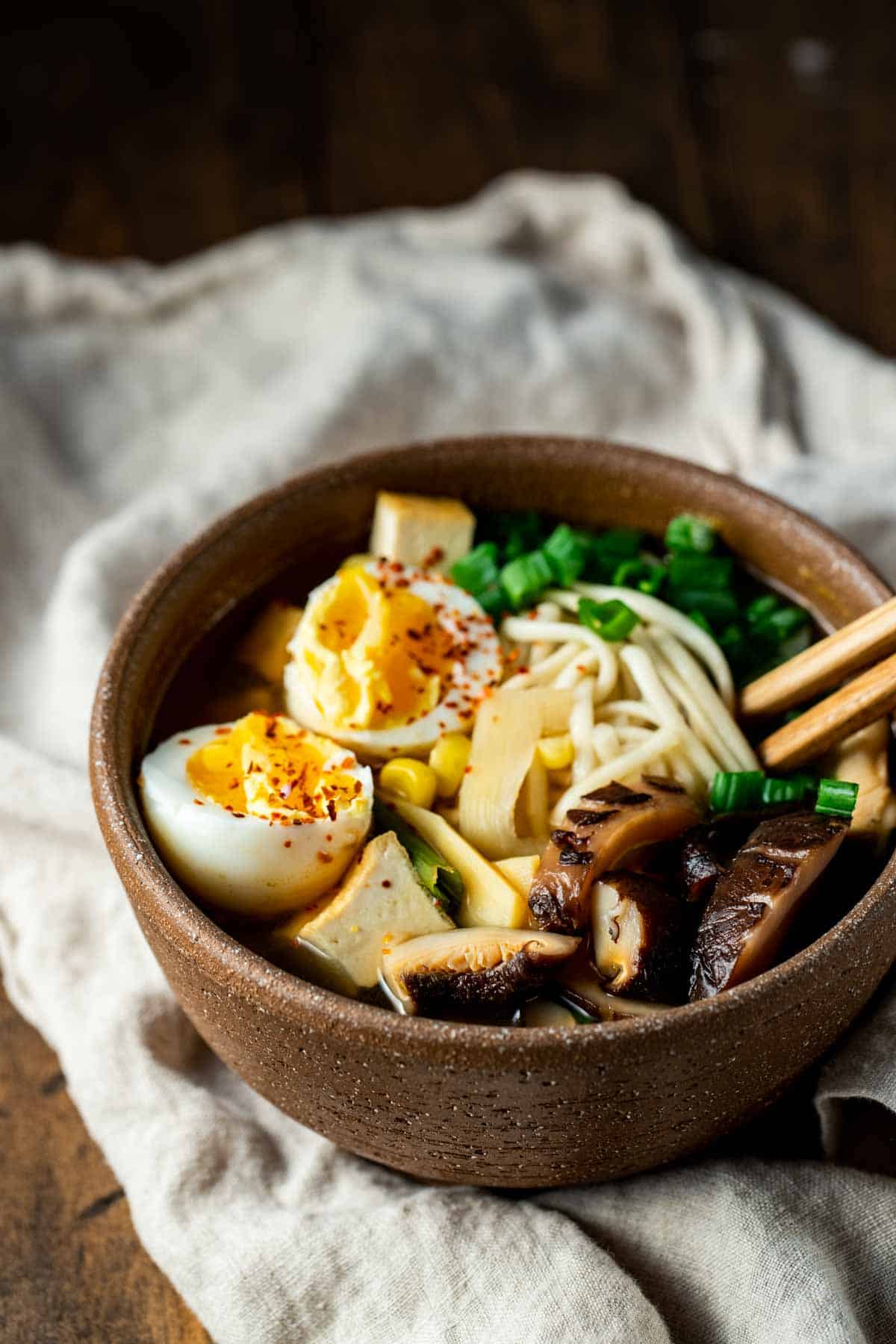
A Sample 5-Day Vegetarian Meal Plan
Need somewhere to start? Here's a simple five-day plan using recipes and ingredients that can overlap throughout the week.
Monday
Breakfast: Greek yogurt with fruit and nuts
Lunch: Warm Curried Chickpea Salad with Zucchini
Dinner: Easy Instant Pot Chana Masala with basmati rice
Tuesday
Breakfast: Chocolate Oatmeal
Lunch: Leftover Chana Masala
Dinner: Curry Tomatoes with rice and roasted vegetables
Wednesday
Breakfast: Cauliflower, Mushroom, Chickpea Scramble
Lunch: Raw Zucchini Salad Recipe
Dinner: Easy Lentil Bolognese with pasta and a simple green salad
Thursday
Breakfast: Sous Vide Yogurt, fruit, and granola
Lunch: Leftover Lentil Bolognese
Dinner: Roasted Cauliflower Tikka Masala Curry
Friday
Breakfast: Avocado Toast with Eggs
Lunch: Leftover Raw Zucchini Salad Recipe
Dinner: Vegetable Ribbon Pasta with Carrots and Zucchini
See? Vegetarian meal planning doesn't have to be complicated.
And you don't need a brand-new recipe every night. Leftovers are doing some of the heavy lifting here—and we're perfectly okay with that.
Make Vegetarian Meal Planning Even Easier
If staring at a blank weekly calendar makes you want to order takeout, you're definitely not alone.
A meal-planning tool can take some of the guesswork out of deciding what to cook. The vegetarian app from Eat This Much can create personalized vegetarian meal plans based on your preferences and nutrition goals, and it can also generate grocery lists.
You can swap meals, customize foods you don't like, and even add your own recipes.
I especially like using a planner as a starting point rather than a strict rulebook.
If Tuesday's planned dinner doesn't sound good, swap it!
If you have a bunch of vegetables that need to be used, build dinner around them.
If you suddenly decide that what you really want is pasta? Make the pasta.
The goal is to make eating well easier—not turn dinner into homework.
My Favorite Vegetarian Meal Planning Tips
1. Plan Around What You Already Have
Before making your grocery list, take a quick tour of your refrigerator and pantry.
That half-used bag of spinach? Use it.
Those carrots you've had staring at you for a week? They're begging to become part of dinner.
Reducing food waste starts with using the food you've already bought.
2. Pick Recipes With Overlapping Ingredients
This is one of the easiest ways to make meal planning less expensive and less overwhelming.
If one recipe uses cilantro, look for another recipe that uses cilantro.
Buying chickpeas? Plan two meals around them.
Need a bunch of carrots? Find several ways to use them.
This keeps your grocery list shorter and makes your ingredients work harder.
3. Keep a Few Pantry Staples Around
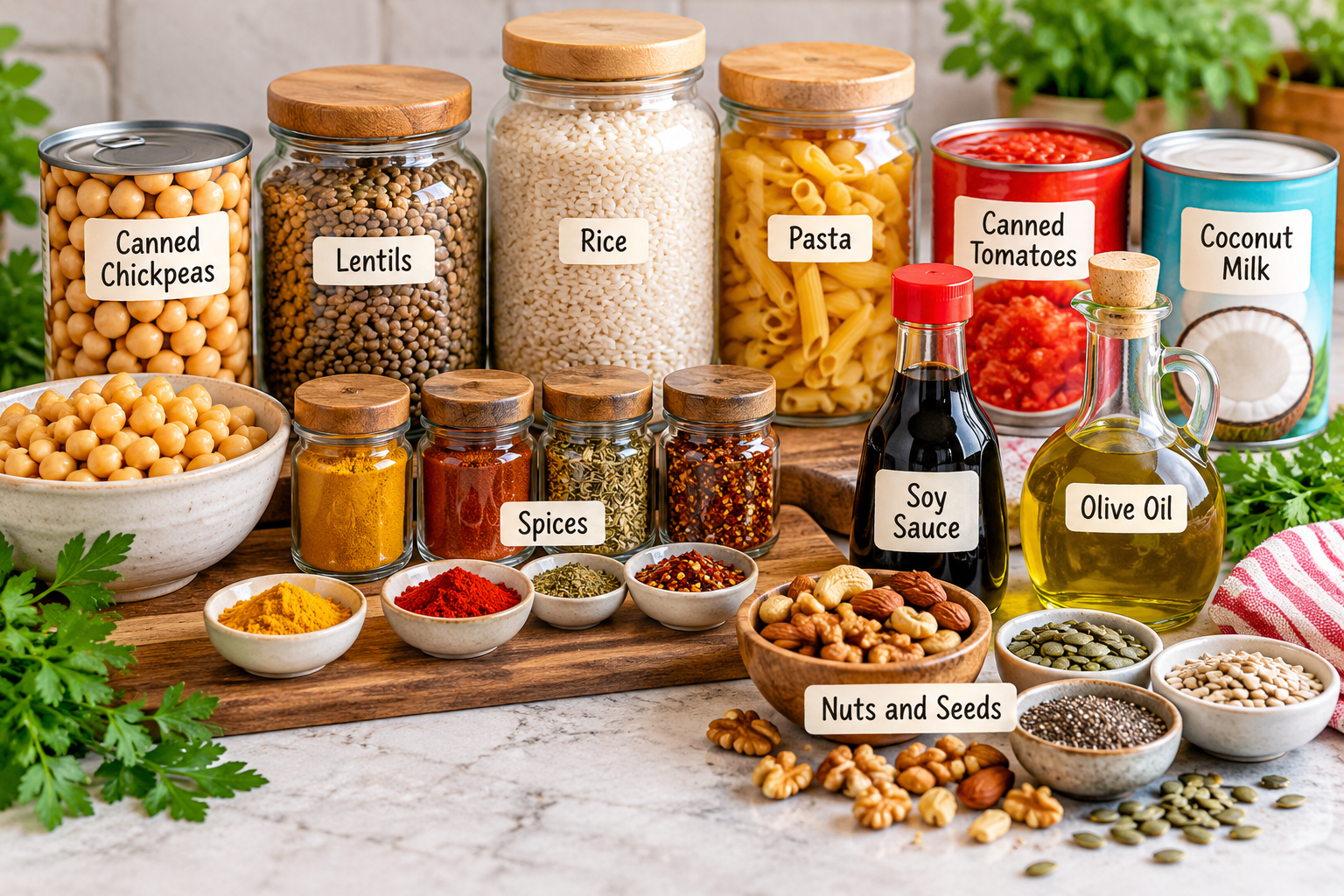
A well-stocked pantry makes vegetarian cooking so much easier.
I like having:
- Canned chickpeas
- Lentils
- Rice
- Pasta
- Canned tomatoes
- Coconut milk
- Spices
- Soy sauce
- Olive oil
- Nuts and seeds
With those basics on hand, you're never too far away from dinner.
And that's a very good feeling when it's 5:30 p.m. and everyone is hungry.
4. Prep Ingredients Instead of Entire Meals
You don't have to spend your entire Sunday cooking twelve containers of identical food.
Instead, do a little prep:
- Wash and chop vegetables.
- Cook a pot of rice.
- Rinse and portion your chickpeas.
- Prepare a sauce or dressing.
Then mix and match throughout the week.
Much less work. Much more flexibility.
5. Embrace Leftovers
Leftovers are not boring.
They're basically future-you doing present-you a favor.
Make extra curry on Monday and you've got Tuesday's lunch. Cook extra lentil Bolognese and freeze some for another week.
Once you start planning for leftovers instead of treating them like an afterthought, meal planning becomes so much easier.
The Bottom Line
Vegetarian meal planning is really about making your life easier without making your meals boring.
Start with a few recipes you already love, add plenty of colorful vegetables, include satisfying protein sources, and choose ingredients that can be used in multiple meals.
And please don't feel like every meal needs to be perfectly planned.
Some weeks you'll cook elaborate curries.
Some weeks you'll eat eggs and toast for dinner.
And sometimes dinner might be a very random combination of leftovers that somehow works beautifully.
That's okay!
The important thing is to have a few delicious vegetarian recipes in your back pocket so eating meatless doesn't feel like a chore.
A little planning, a little creativity, and a refrigerator full of ingredients you actually want to eat can go a very long way.



Comments
No Comments