
Romania is famous for Dracula legends, medieval castles, dramatic mountain scenery, and a fascinating history. For me, though, the best way to experience any new country is through its cuisine—so I'm sharing what I ate in Romania alongside the castles, cities, and road-trip detours that came with it!
When we planned our trip to Romania, I had a few non-negotiables on my list: Bran Castle, Peleș Castle, Bucharest, and as much traditional Romanian food as I could possibly fit into three days.
I had three days. Three. Naturally, I thought I could tour castles, explore medieval cities, squeeze in a side trip to Bulgaria, and eat my way across Romania. Spoiler alert: I was overly optimistic.
Our Romanian adventure was fun, gorgeous, delicious, and just a little bit chaotic. I learned that Romanian traffic should never be underestimated, missed a city I really wanted to visit, discovered surprisingly addictive fried olives, and ate traditional Romanian dishes I would happily fly back for.
Romania Trip & Food Highlights at a Glance:
• Must-Try Dishes We Loved: Ciorbă de Pui (sour chicken soup), Ciuperci cu Smântână & Mămăligă, Crispy Fried Olives, and Papanași
• Castles & Cities Visited: Bran Castle, Peleș Castle (Sinaia), and Bucharest Old Town
• Top Travel Tip: Give yourself more than 3 days, and consider a guided tour from Bucharest to avoid mountain highway traffic!
Traditional Romanian Foods to Try
Before diving into our full itinerary, here is a quick introduction to some of the most iconic traditional Romanian dishes to put on your radar when planning a trip. Romanian cuisine is hearty, comforting, and shaped by centuries of Balkan, Central European, and Ottoman influences.
Ciorbă
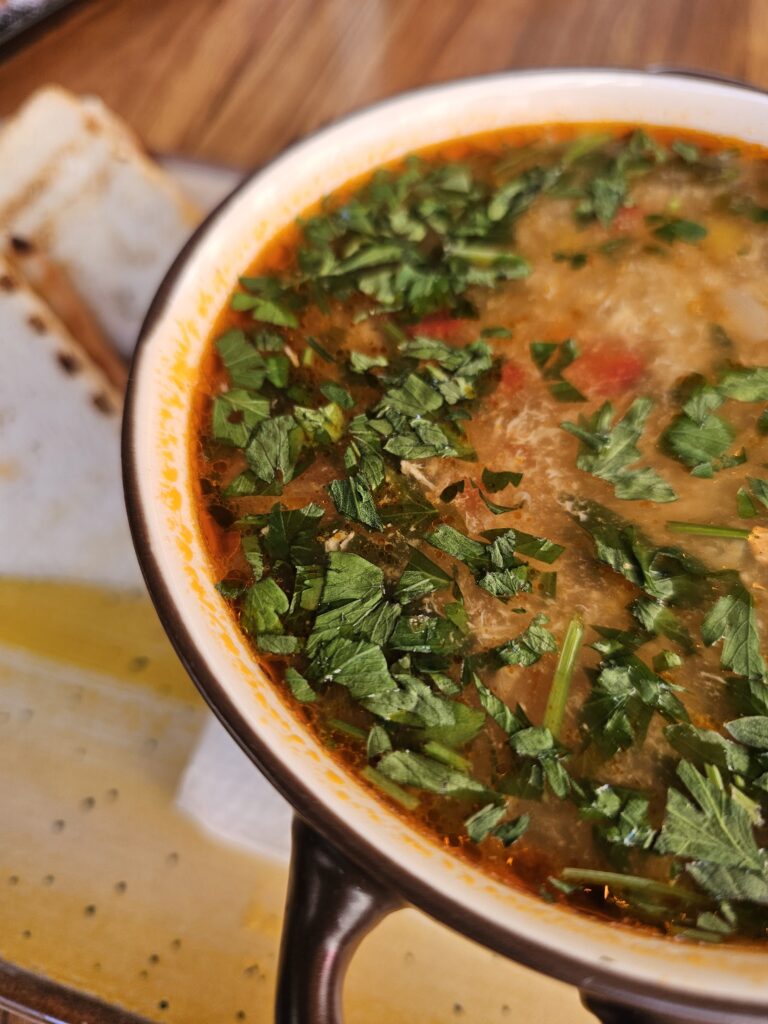
Ciorbă is the Romanian name for a beloved family of traditional sour soups. That signature tang typically comes from borș (fermented wheat or barley bran liquid), vinegar, or lemon juice.
I tried ciorbă de pui—a hearty chicken and vegetable soup—in Bucharest, and it ended up being one of my favorite dishes of the entire trip.
Mămăligă
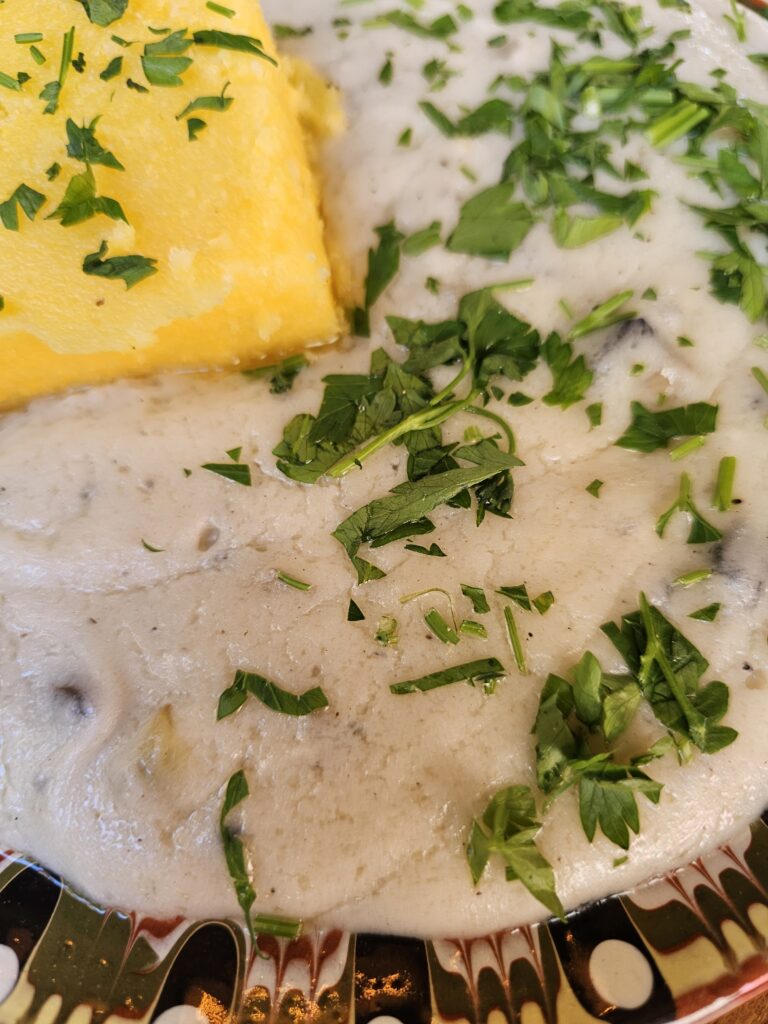
Mămăligă is Romania's classic yellow cornmeal dish, very similar to Italian polenta. Depending on the dish, it can be served soft and creamy or cooked until firm and sliced.
We had ours alongside ciuperci cu smântână—sautéed mushrooms simmered with garlic and sour cream. The combination was rich, rustic, and deeply comforting.
Papanași
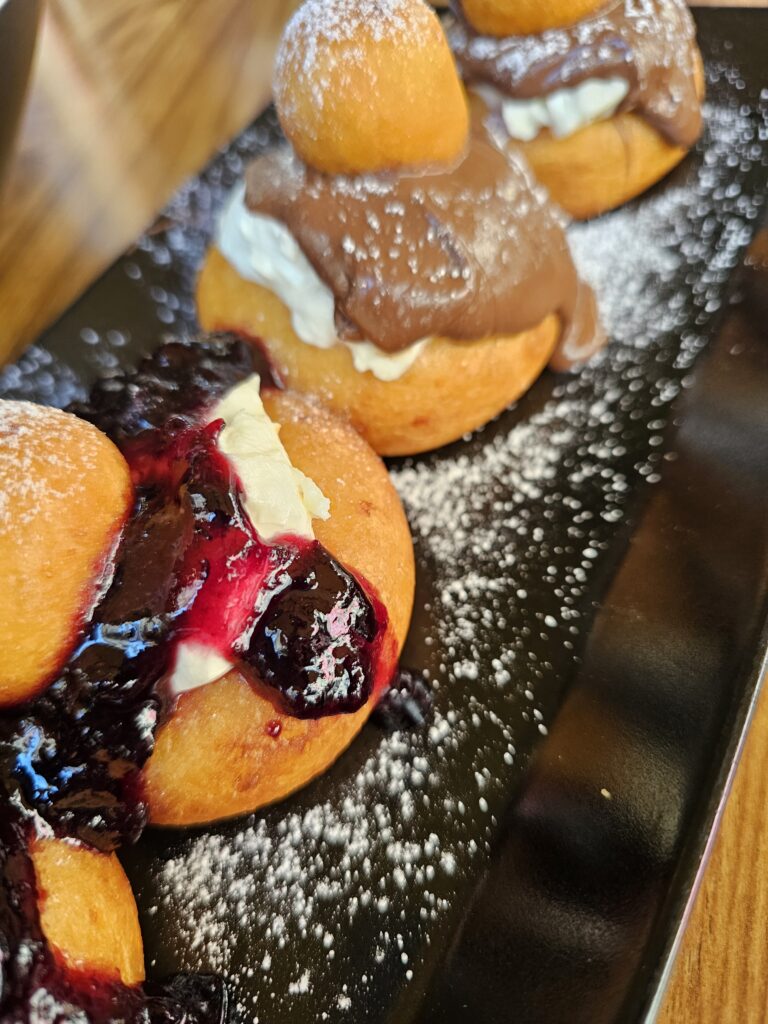
If you have a sweet tooth, do not leave Romania without ordering papanași. These traditional fried doughnuts are made with sweet cow's cheese (similar to cottage cheese or quark) and topped with cool sour cream and fruit preserves.
We tried them topped with blueberry and sour cherry jam as well as Nutella—and yes, I would order them again in a heartbeat.
Zacuscă & Romanian Wine
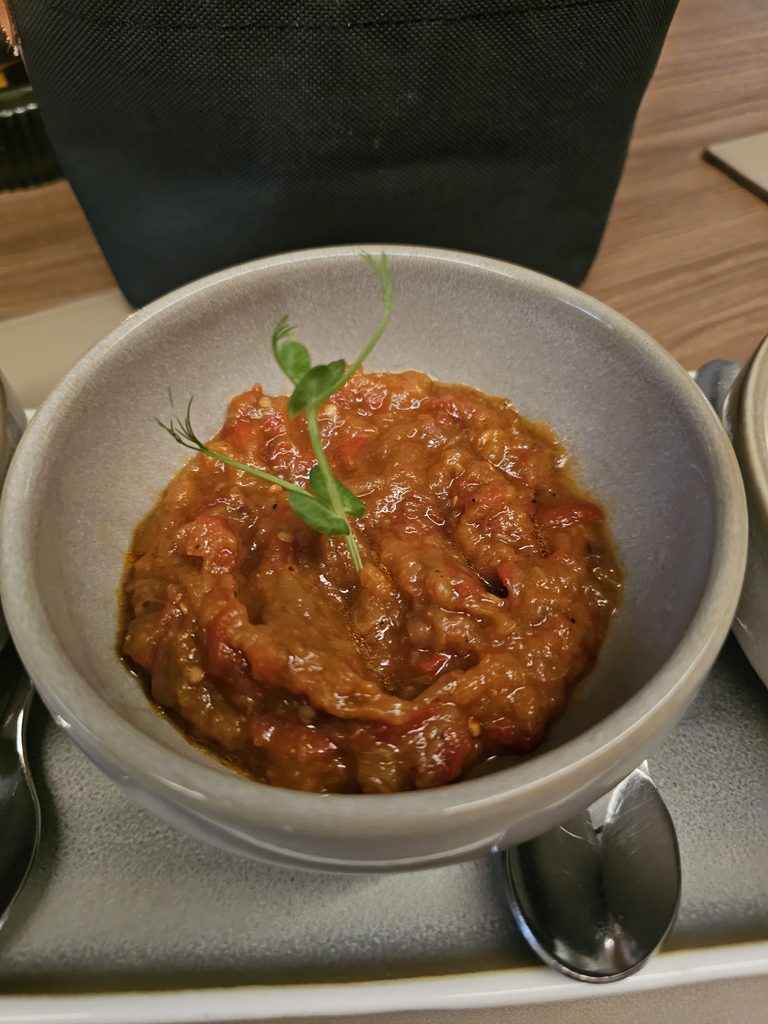
Zacuscă is a beloved Romanian vegetable spread made with fire-roasted eggplant, red peppers, onions, and spices, usually served on crusty bread. Pair local dips and small plates with a crisp glass of Romanian white wine—Romania is one of Europe's oldest wine-producing regions!
Other classic staples like mici (grilled minced meat rolls), sarmale (stuffed cabbage rolls, similar to the gołąbki I tried in Kraków), and cozonac (sweet holiday bread) are also huge parts of Romanian food culture—and are already at the top of my list for our next visit.
Want to Save This Recipe?
Enter your email & I'll send it to your inbox. Plus, get great new recipes from me every week!
By submitting this form, you consent to receive emails from Went Here 8 This.
The Great Romanian Road Trip
Because I wanted to visit both Bran Castle and Peleș Castle on our own schedule, I decided renting a car was the best way to get around. Our flight landed late at night, so I picked up the rental car around midnight and drove about an hour north of Bucharest to get a head start toward the mountains for the next morning.
It sounded like a brilliant plan. Then we met Romanian traffic.
I had mapped out an ambitious route to visit Bran Castle, explore Brașov, and then make our way to Peleș Castle for a timed afternoon tour. Instead, I spent what felt like approximately 900 years sitting in bumper-to-bumper mountain traffic.
Because I had a scheduled entry time at Peleș Castle and was determined not to miss it, we had to skip Brașov completely. By the time we finally pulled into Sinaia for Peleș, I was running purely on adrenaline and the promise of dinner.
Looking back, booking an organized day tour from Bucharest that includes both castles would have been much less stressful than navigating the winding mountain roads myself—even though those tours run around 12 hours (and most skip Brașov too). Lesson learned: Romanian traffic is not to be underestimated!
How to Stay Connected on a Food Trip: Phone Data, Maps & Menus Abroad
One thing I definitely recommend when traveling around Romania is setting up an eSIM before you go. Having reliable mobile data makes it so much easier to check live traffic, navigate unfamiliar roads, find highly rated local restaurants, and translate menus when you're starving and don't speak the language. I relied heavily on my phone for live rerouting between Bran Castle and Peleș Castle—and let's just say Romanian traffic gave me plenty of opportunities to check my map! An eSIM from providers like eSIM Plus lets you access mobile data right away without swapping out your physical SIM card, as long as your phone is eSIM-compatible and your plan covers Romania.
Bran Castle: Come for Dracula, Stay for the Food

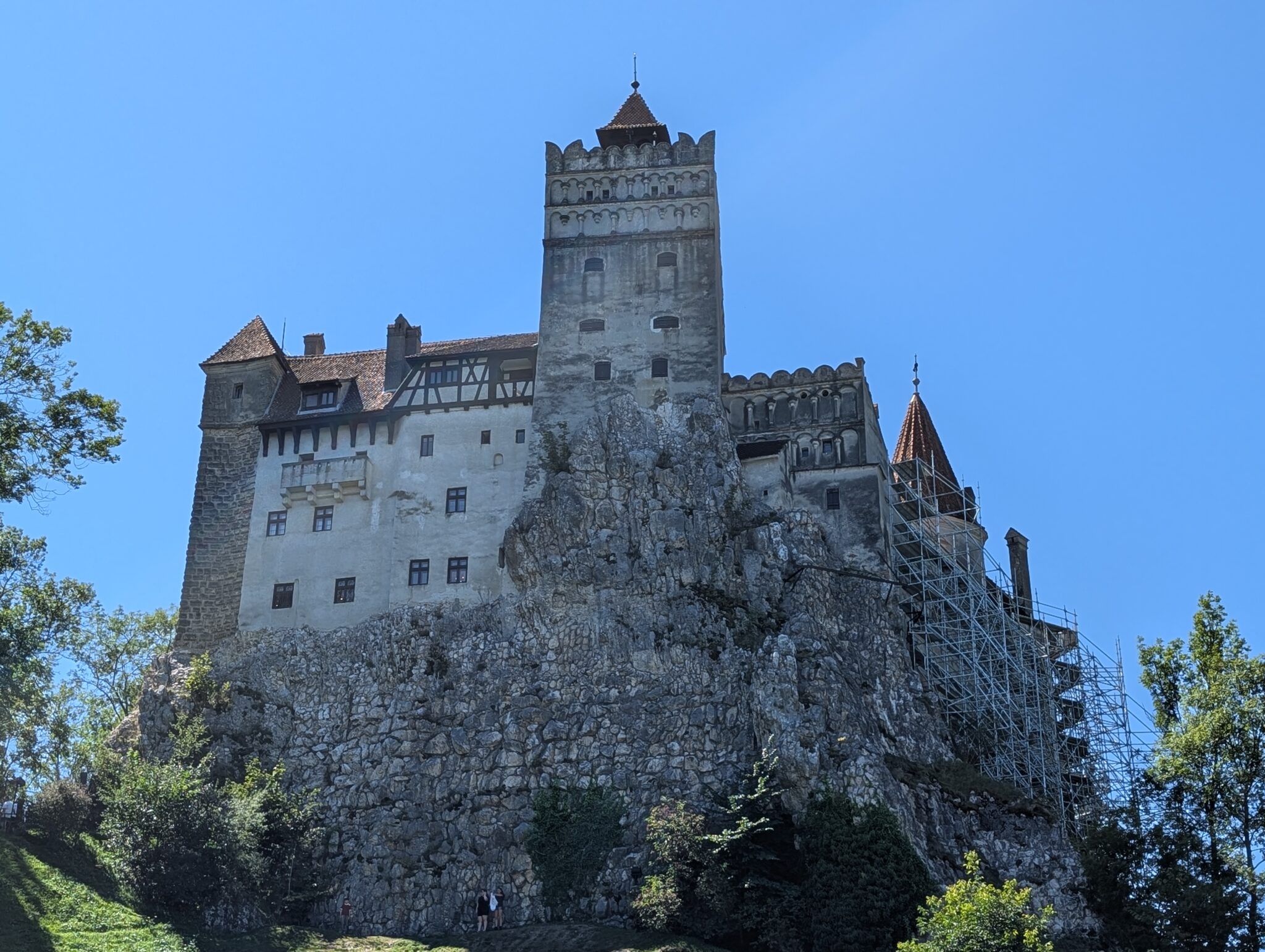
Dracula's Castle, perched on a rocky cliff in Transylvania, Romania. Beautiful views overlooking Bran Castle’s courtyard and the majestic surrounding mountains. 
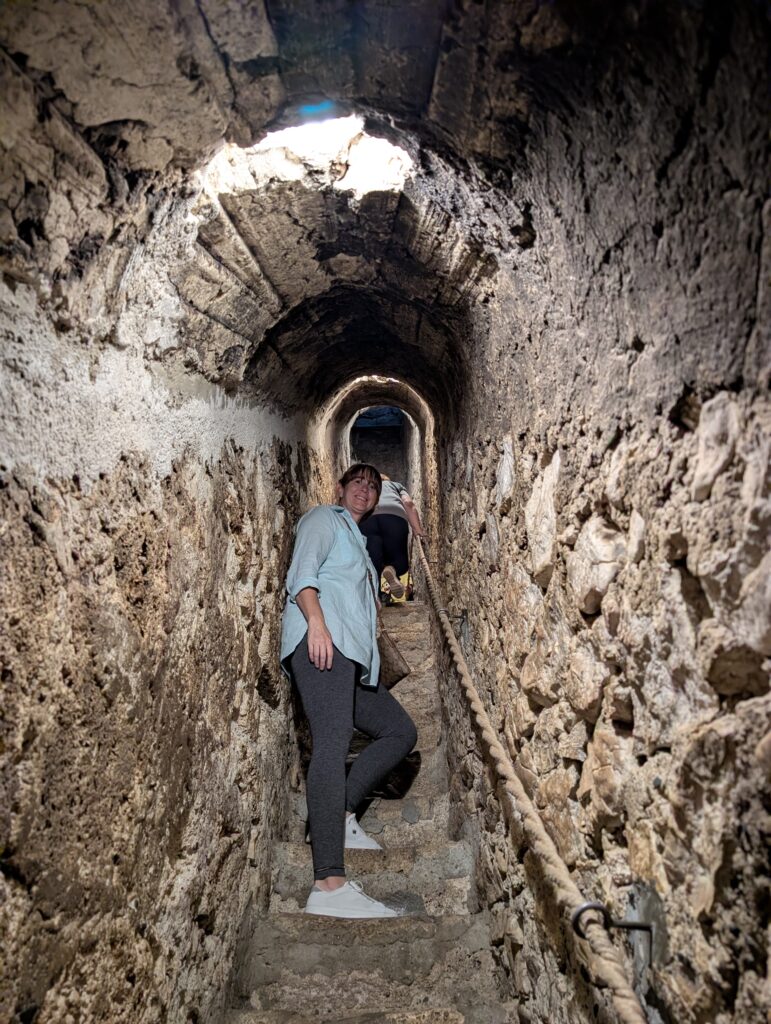
Here I am making my way up one of the narrow stone staircases hidden inside Bran Castle 
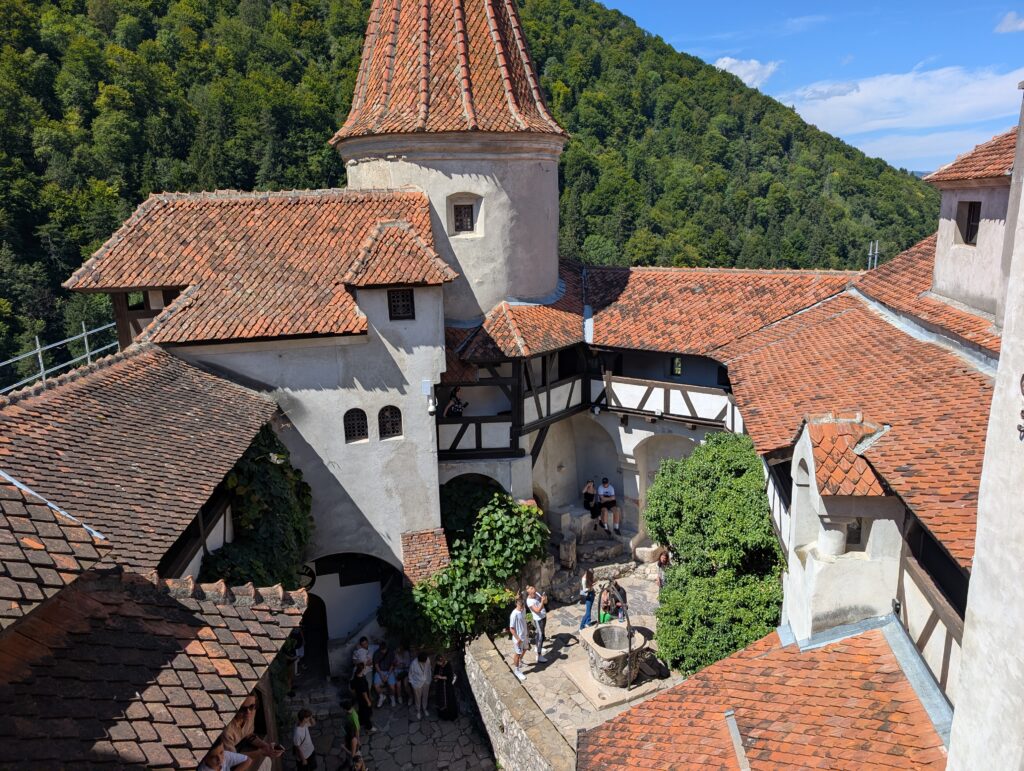
A look at the charming inner courtyard of Bran Castle in Transylvania, Romania. The crowds in the interior courtyard give you a good idea of just how popular Bran Castle is. It was definitely a busy day, but the castle was still fascinating to explore. A glimpse inside Bran Castle, where a traditional ceramic-tiled stove and antique wooden furniture reflect the castle’s historic charm An interior room inside Bran Castle in Transylvania, famously known as Dracula’s Castle. Bran Castle was built in 1377 by the Saxons of Brașov. It later served as a royal residence for Queen Marie of Romania and is very cozy with all its wood The inner courtyard of Bran Castle—you can see why its mysterious, medieval atmosphere makes it the perfect backdrop for Dracula’s castle. Originally build as medieval fortress and later as a royal residence the castle has a cozy feel with all the exposed wood. This view overlooks the town of Bran from the windows of Bran Castle in Transylvania, Romania.
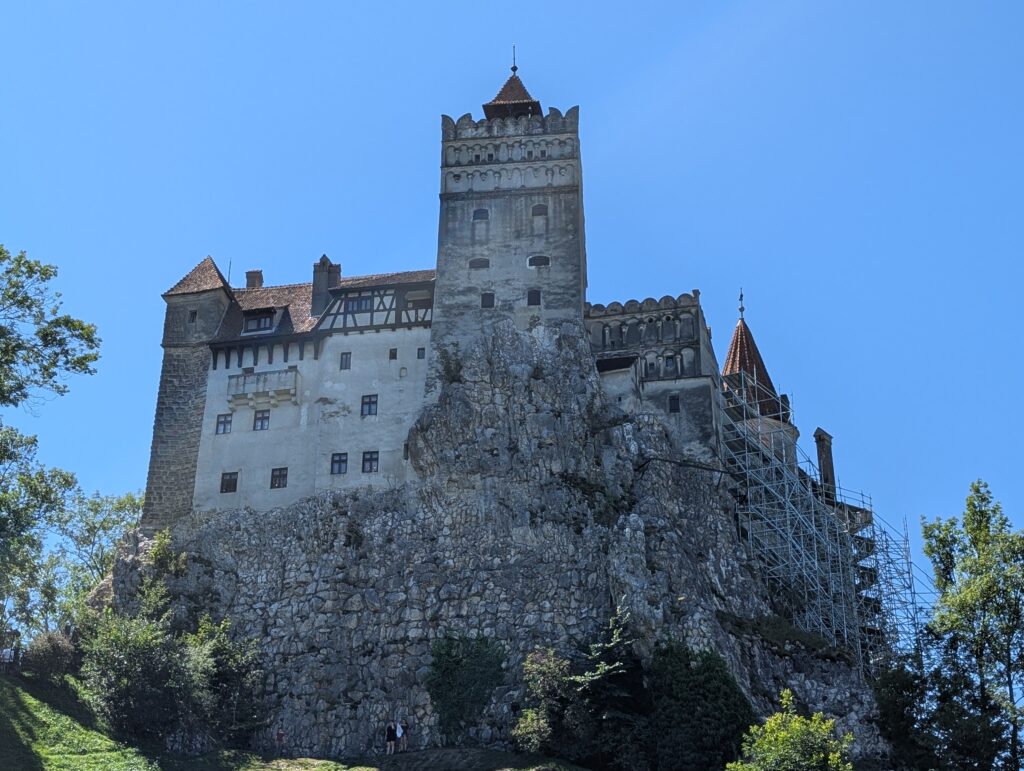
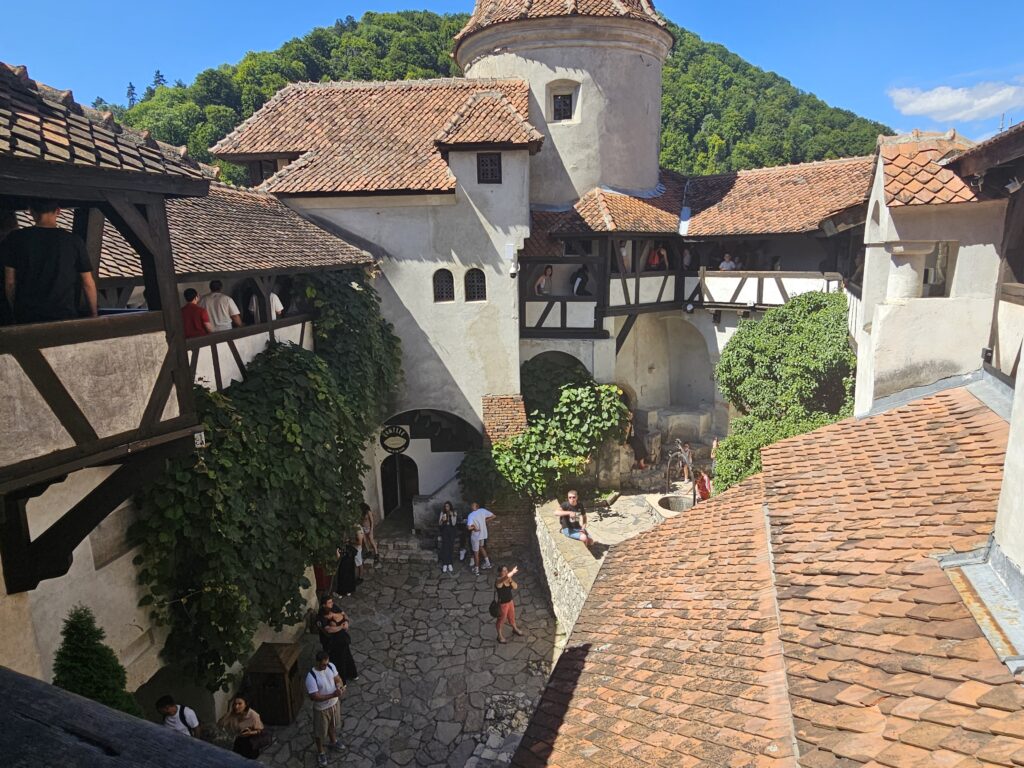
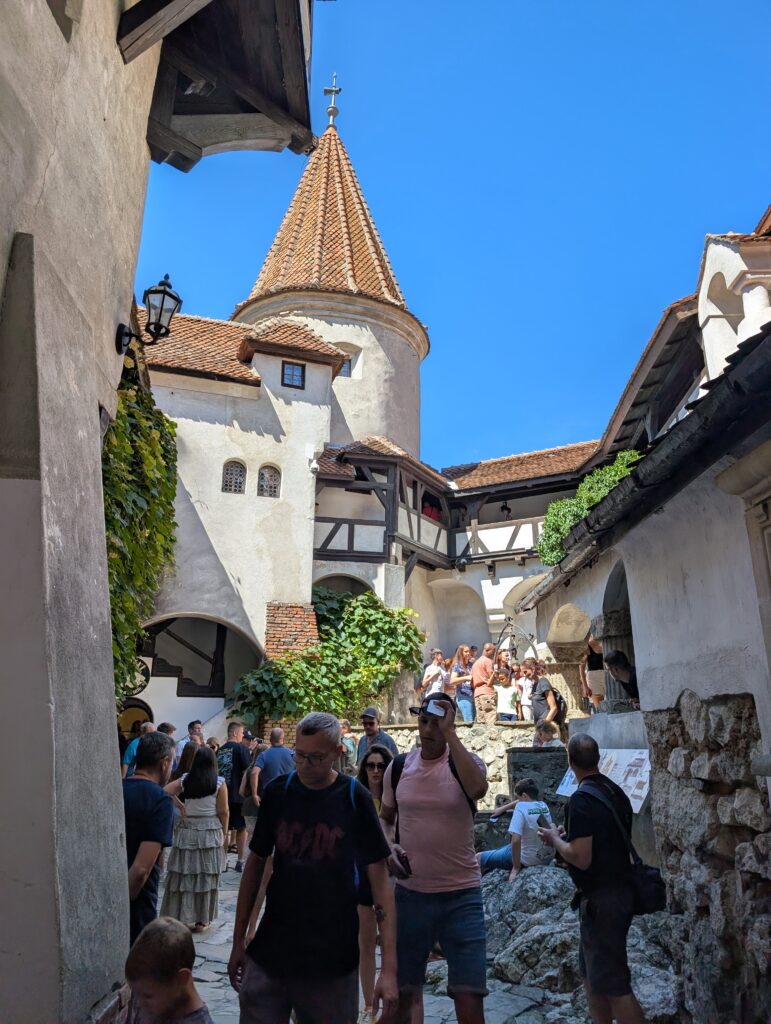
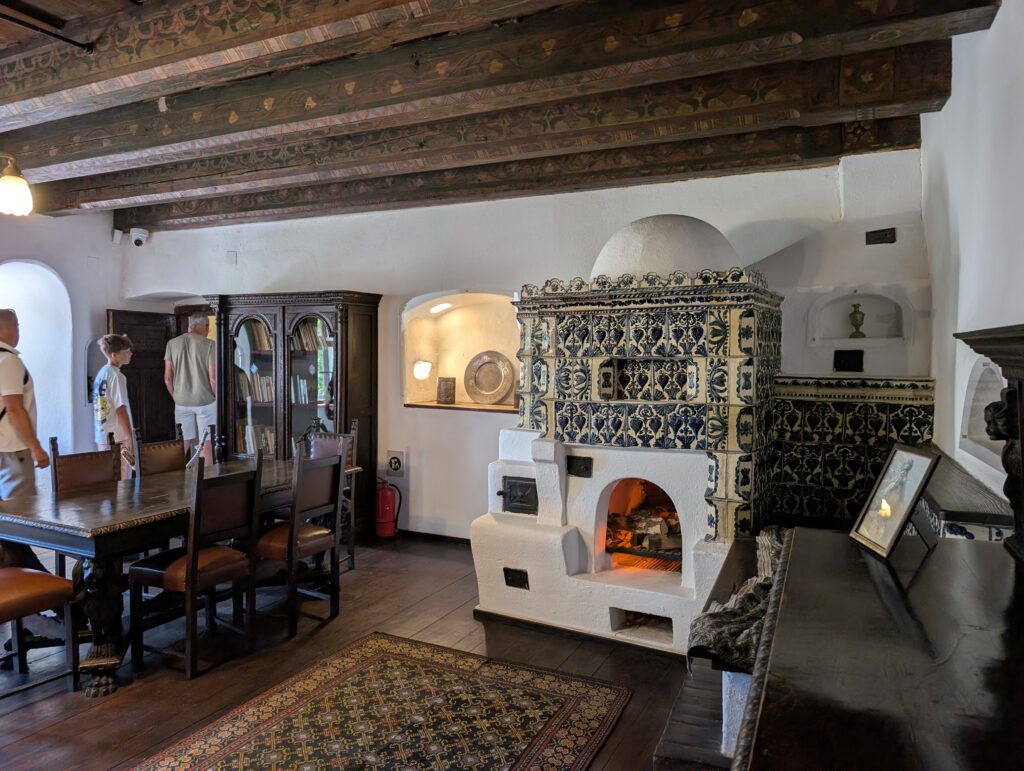
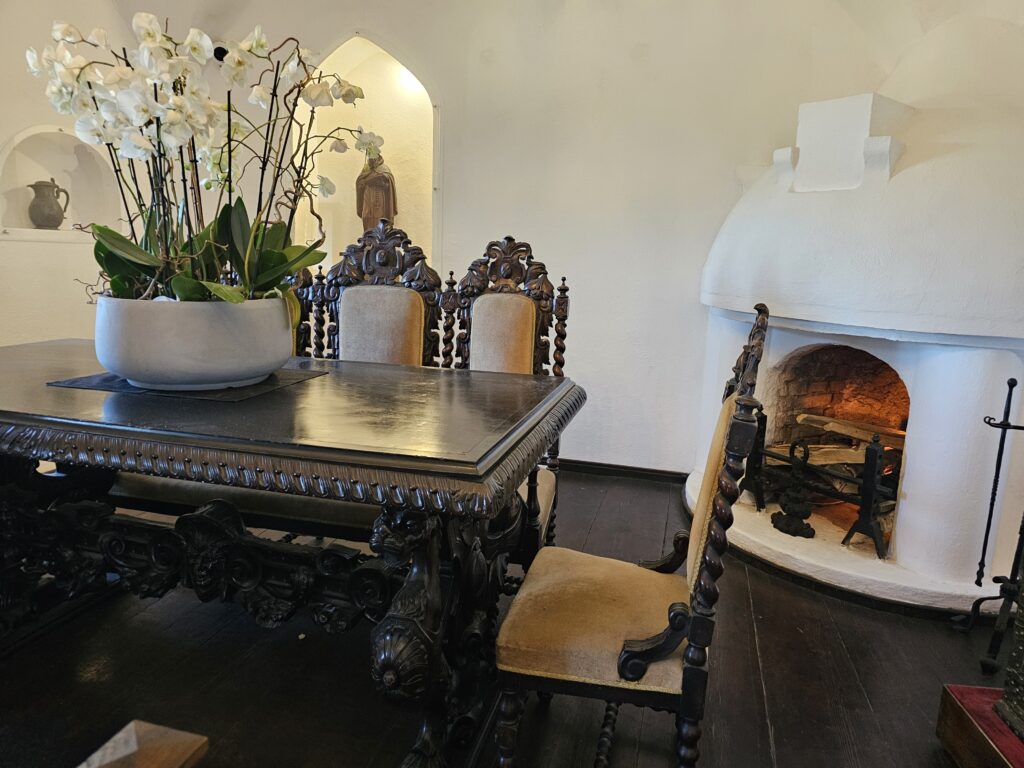
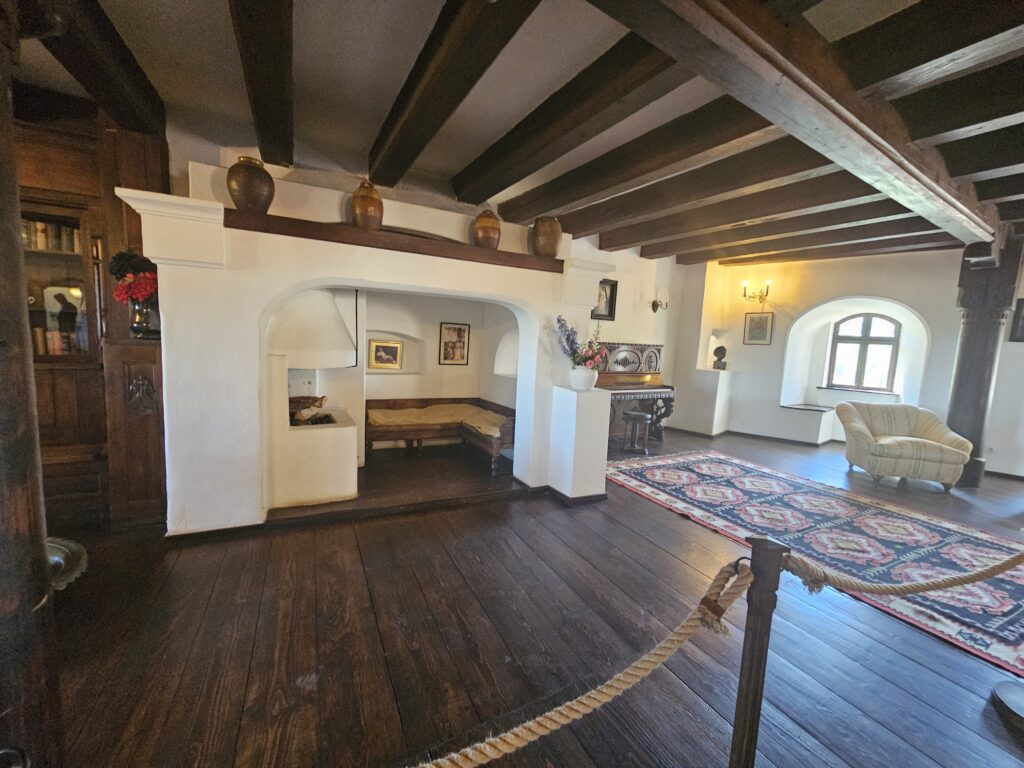
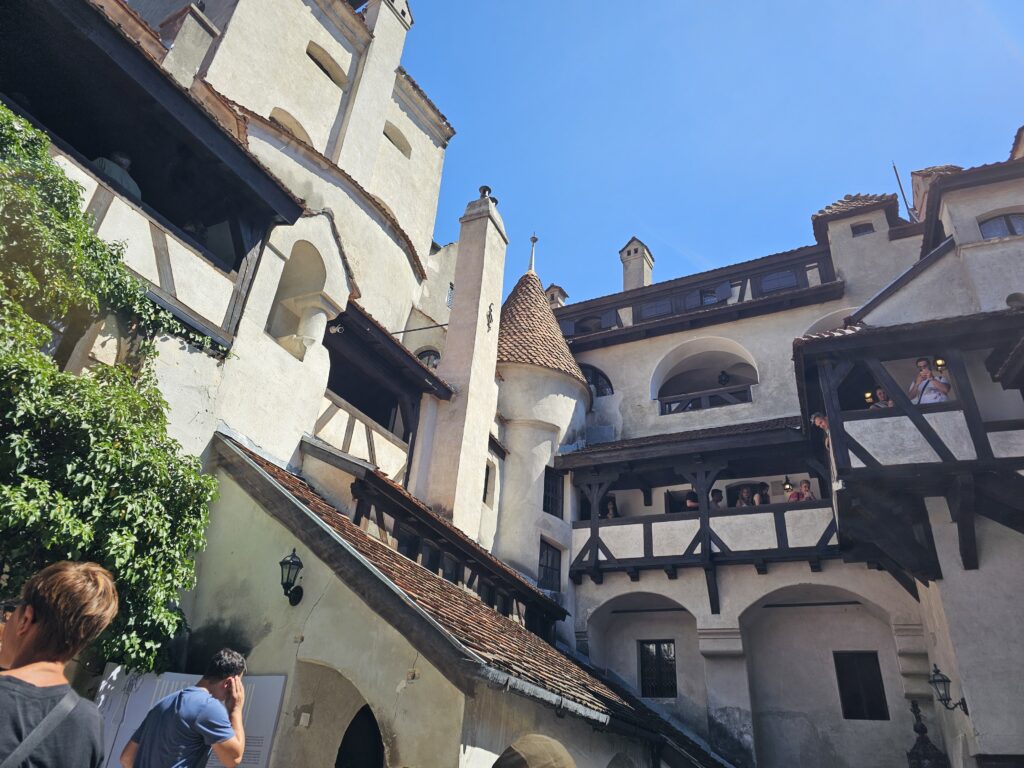
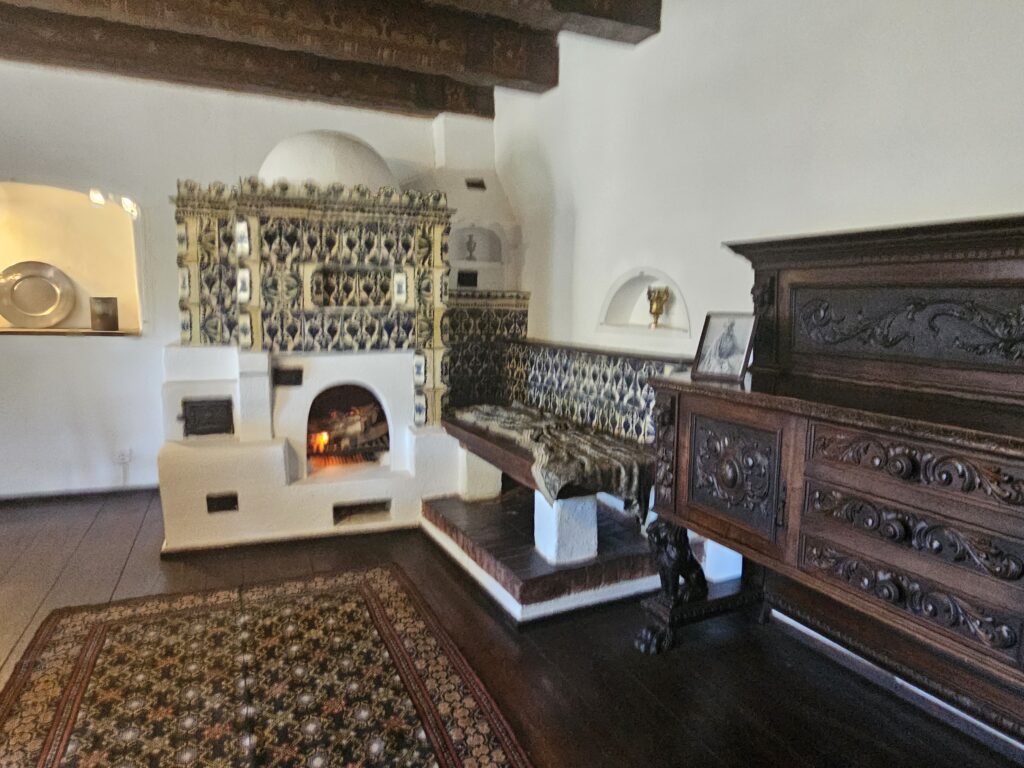
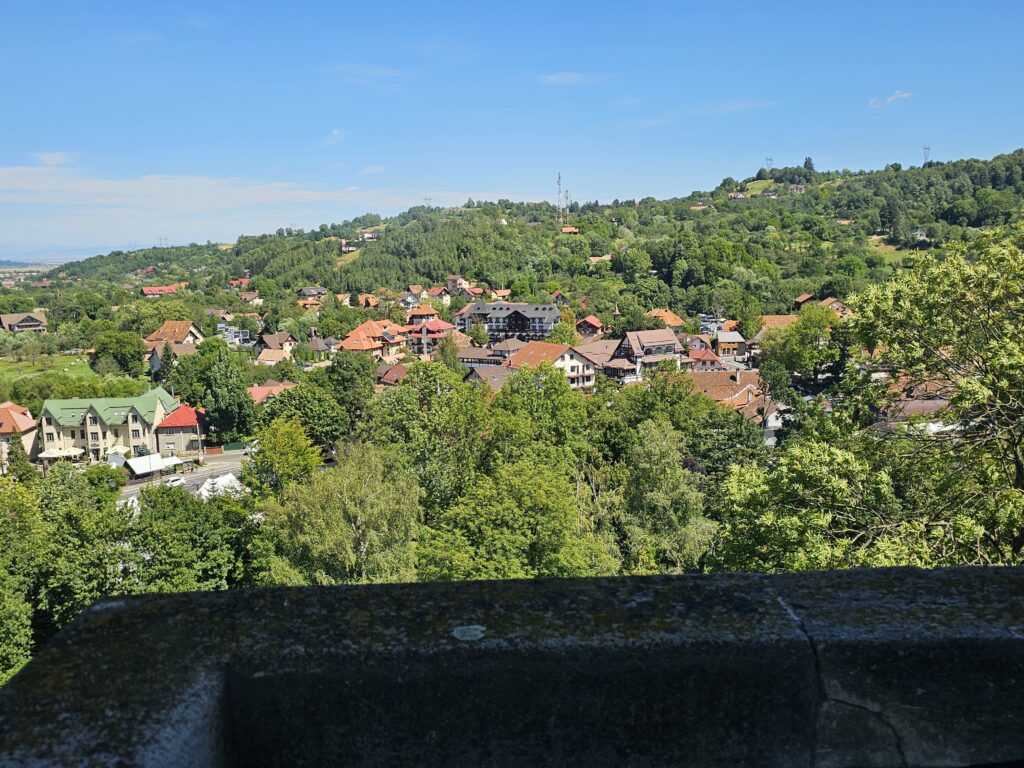
Let's talk about the most famous name associated with Romania: Dracula. Can you visit Romania without hearing about Dracula approximately 47 times? Probably not.
Bran Castle is the landmark most closely tied to the Dracula legend, and there was no way I was going to Romania without seeing it. But here's the fun twist: Dracula never actually lived at Bran Castle.
Author Bram Stoker never visited Romania, and his novel Dracula never identifies Bran Castle as the Count's home. The connection comes from later associations with Vlad III Dracula, better known as Vlad the Impaler—a real 15th-century ruler with a rather grim reputation, though there is little historical evidence he ever lived here either.
Still, the moment you see the fortress perched dramatically on a rocky cliff—with its medieval stone towers, secret narrow staircases, and creaking wooden hallways—it's easy to see why the legend stuck.
The site's history goes back centuries: after early fortifications by the Teutonic Knights, King Louis I of Hungary authorized the Saxons of Brașov in 1377 to build a stone fortress to guard a strategic mountain pass and trade route. Centuries later, in 1920, Bran Castle was gifted to Queen Marie of Romania, who transformed it into a cozy, wood-paneled royal summer retreat. Medieval fortress, military stronghold, royal residence, and Dracula icon—that's a pretty impressive résumé for one castle.
Eating Around Bran Castle
Bran Castle is busy—very busy. The roads leading into town were packed, and the bazaar outside the castle gates was lined with restaurants, street-food stalls, souvenir stands, and crowds of tourists.
I had hoped to linger and sample local street food around Bran before heading on to explore and eat my way through Brașov's medieval streets. Unfortunately, between the crowds and the traffic delays, something had to be cut from the schedule—and it was Brașov. As someone who plans trips around food, I was disappointed, though knowing Peleș Castle (and dinner!) was waiting up the road helped soften the blow.
Peleș Castle: A Castle Worth the Traffic

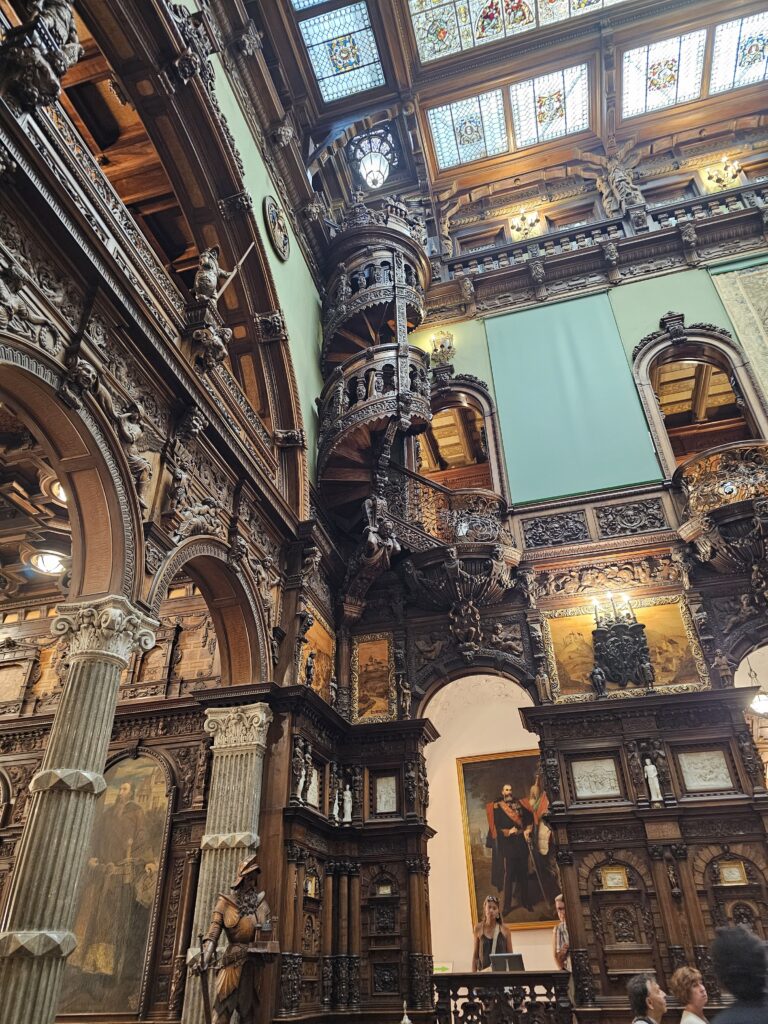
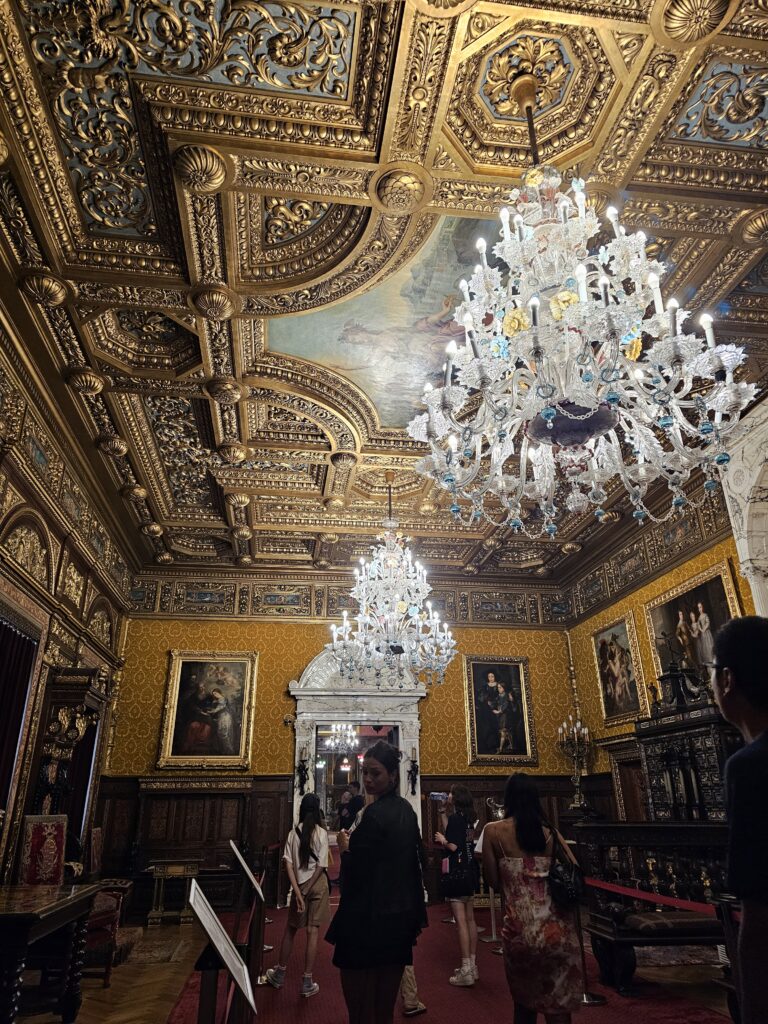
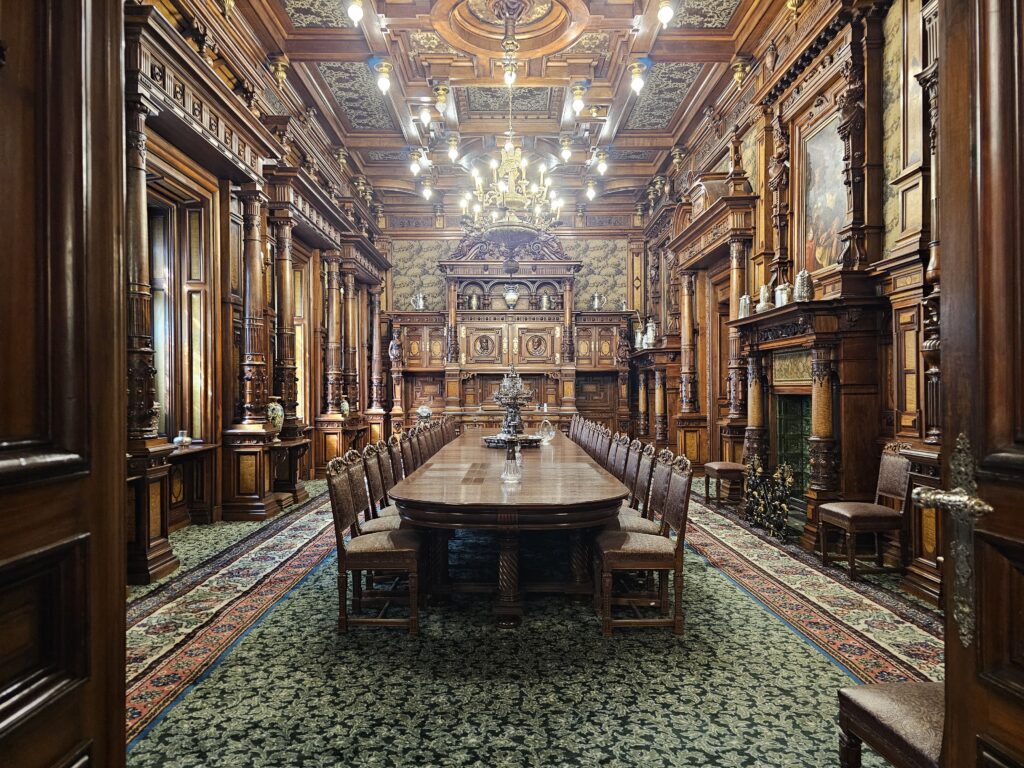
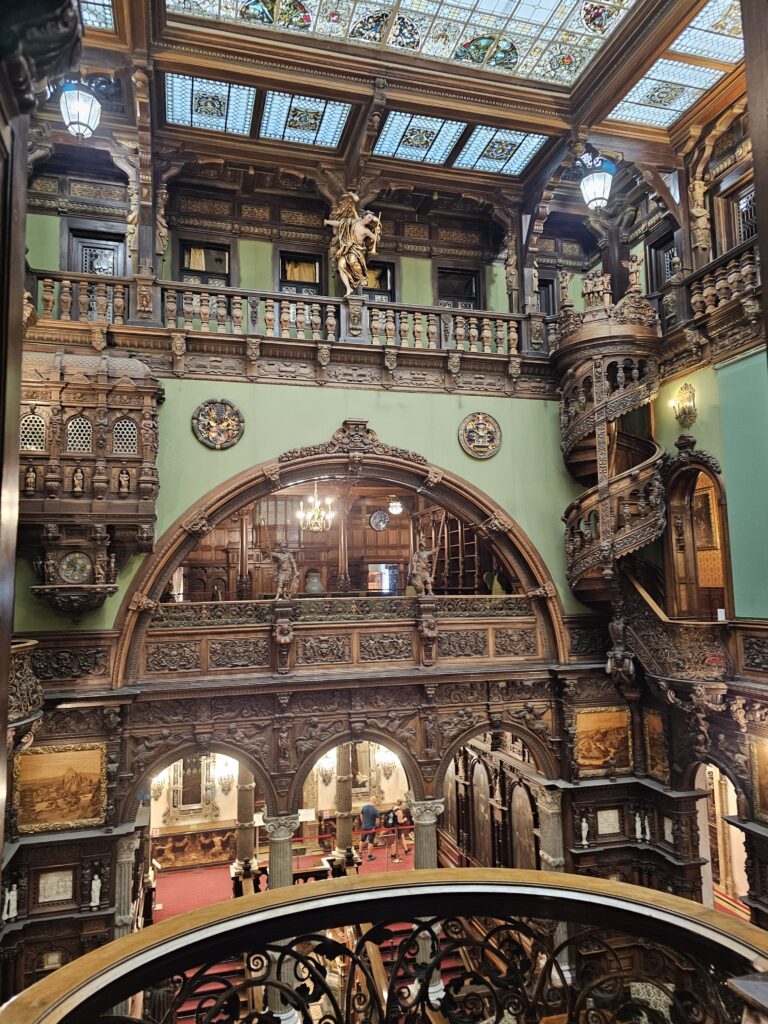
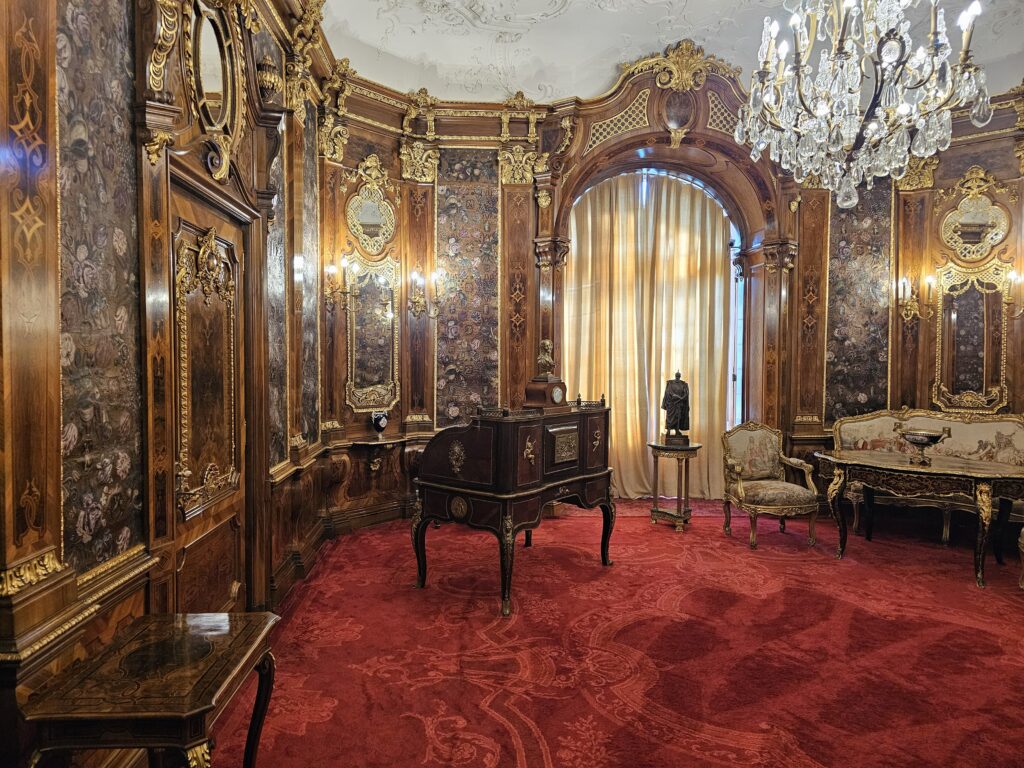
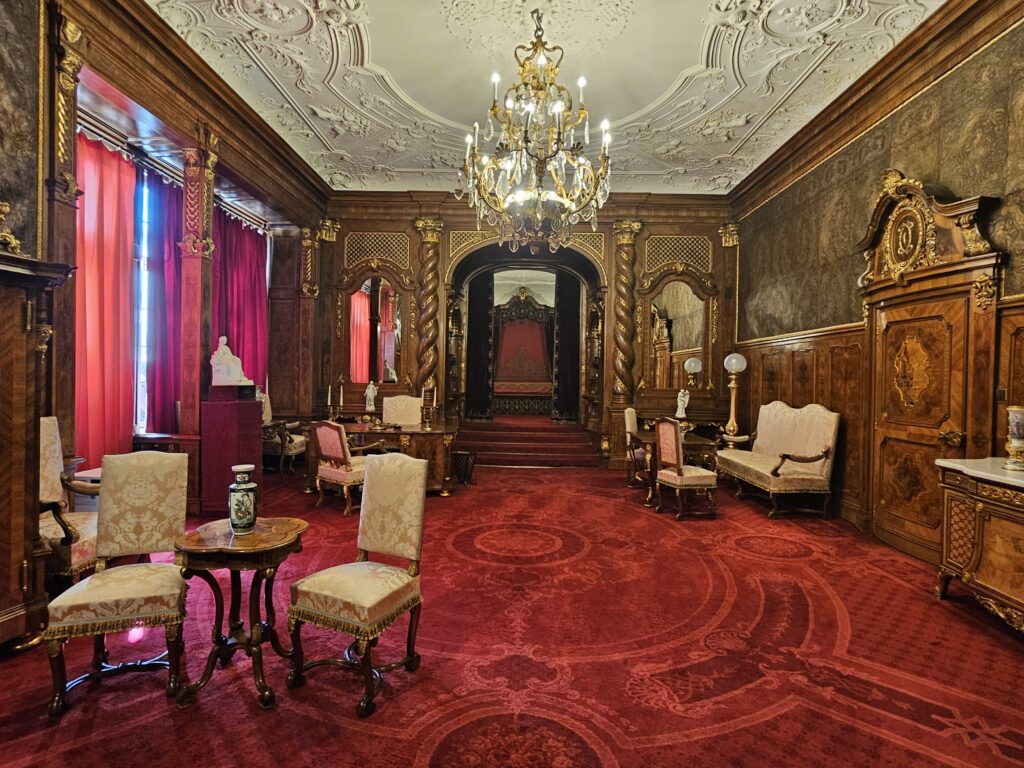
The ornate facade of Peleș Castle, a Neo-Renaissance royal palace located in Sinaia, Romania The stunning wooden interior in the Hall of Honor is so beautiful. The hall features three floors of intricate hand-carved dark walnut woodwork, elegant balconies, a delicate spiral staircase, and a retractable stained-glass ceiling. The Florentine room features an intricate, hand-carved wooden ceiling covered in gold leaf. The large Murano Chandeliers, hanging from the center are crafted from famous Italian Murano glass. The majestic Royal Dining Room inside Peleș Castle The ornate facade of Peleș Castle The ornate wooden interior hall and central staircase of the historic Peleș Castle The opulent Imperial Drawing Room inside Peleș Castle The Imperial Suite (Apartamentul Imperial) inside Peleș Castle A beautifully carved dark wooden statue holding a torch lamp stands on the main staircase inside Peleș Castle
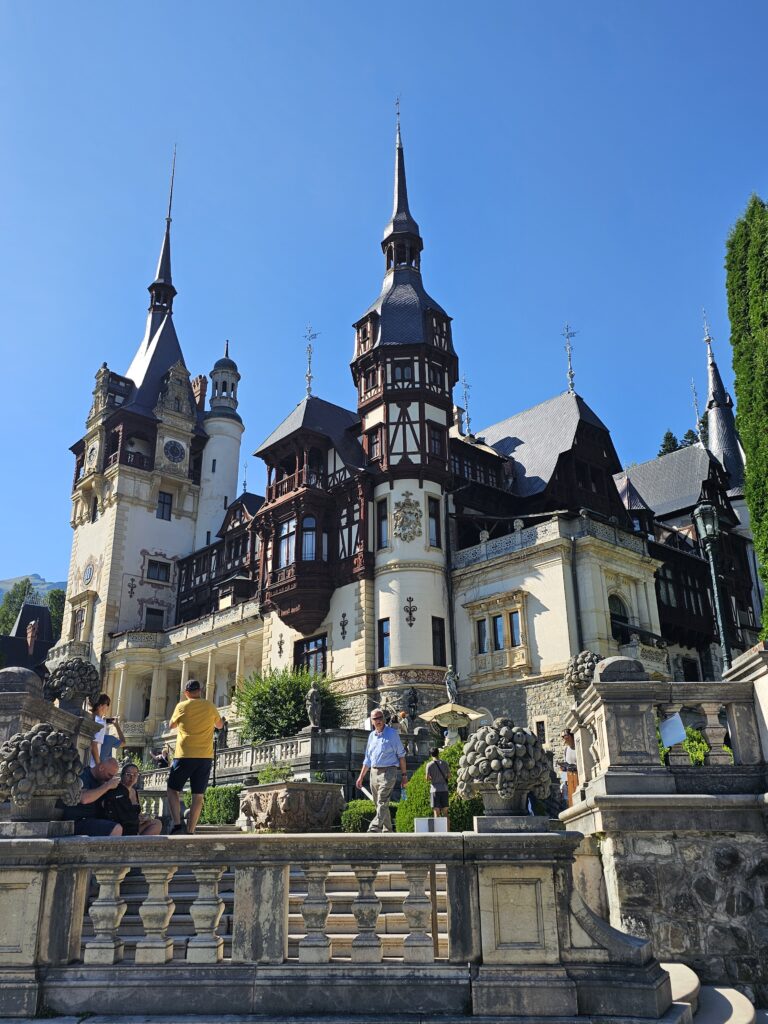
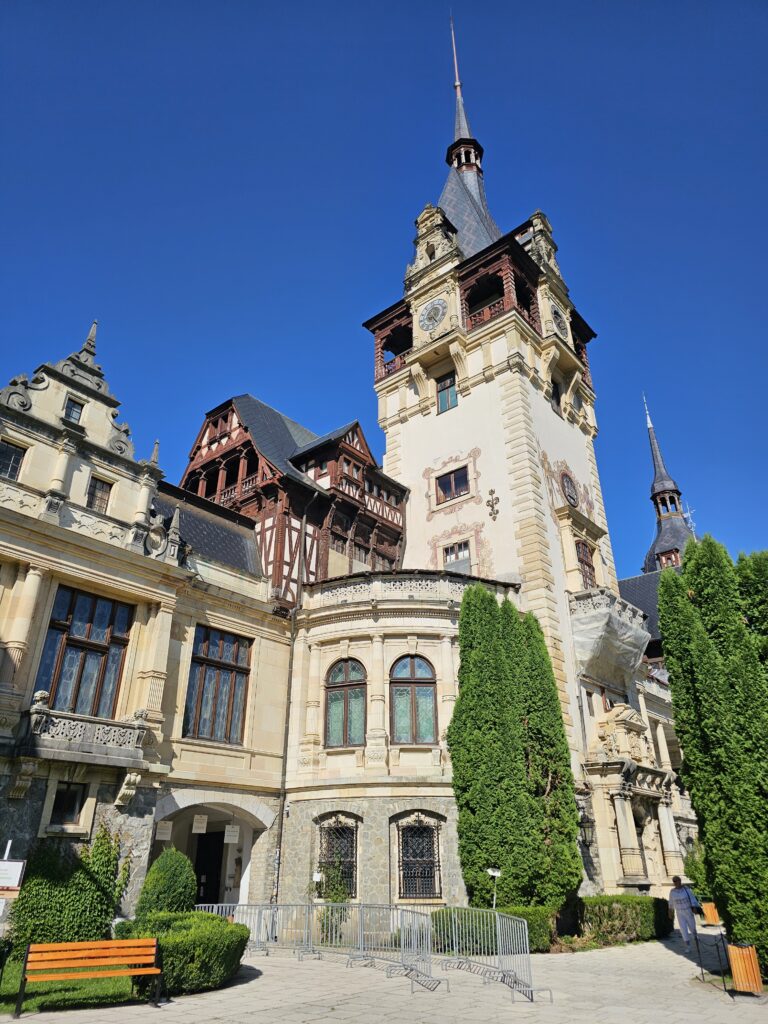
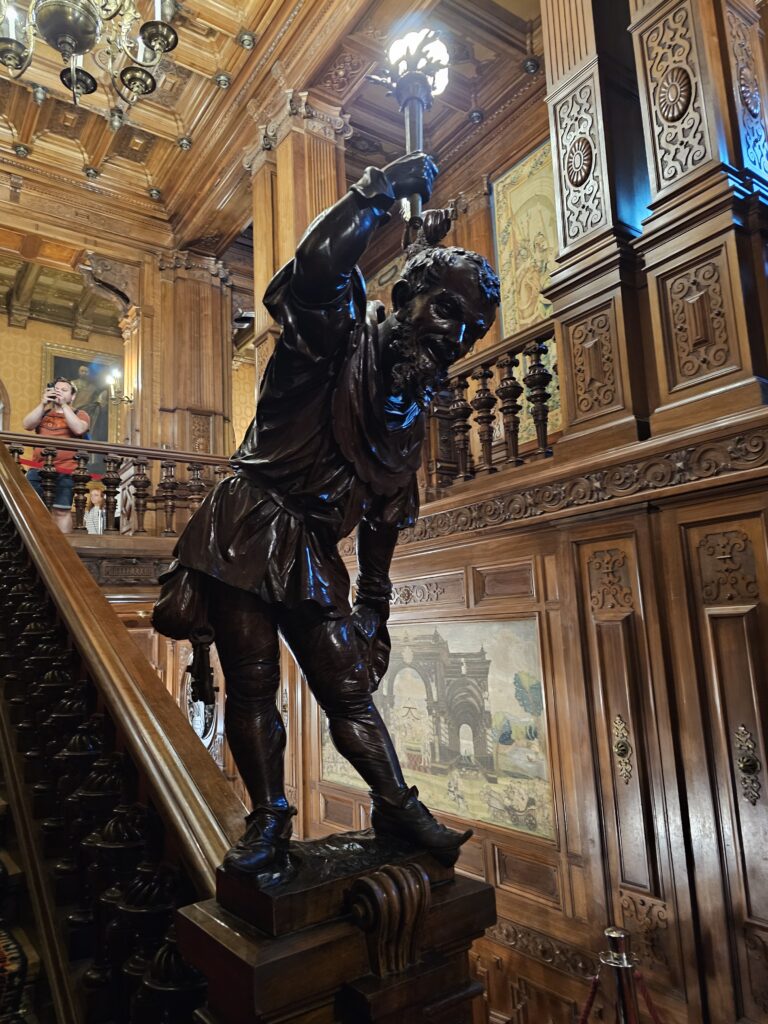
After the chaos of getting to Bran, Peleș Castle felt like a breath of fresh mountain air. Tucked into the Carpathian Mountains near Sinaia, Peleș is an absolute showstopper—and unlike Bran, the wooded setting feels serene and peaceful.
After Romania gained independence in the 1870s, King Carol I and Queen Elisabeth commissioned Peleș Castle as a royal summer palace. Designed in a German Neo-Renaissance style, the interior is packed with intricate hand-carved walnut woodwork, retractable stained-glass ceilings, Murano crystal chandeliers, and enough ornate details to make you feel sorry for whoever was in charge of dusting the place.
When the Romanian monarchy was abolished in 1947, the communist regime seized the estate, and today it stands as one of Romania's premier historic landmarks. After spending hours stuck in traffic, stretching our legs along the forested castle grounds—and spotting cozy restaurants nearby—was pure bliss. Which, naturally, brings me to my favorite part: dinner.
What I Ate Near Peleș Castle
The chicken schnitzel was tender and juicy on the inside with a golden, crispy coating on the outside. It was lightly seasoned, letting the chicken shine without being overly heavy. The crunchy breading made every bite satisfying. Zander, a freshwater fish commonly found throughout Central and Eastern Europe, coated in crispy cornflakes and fried until golden.
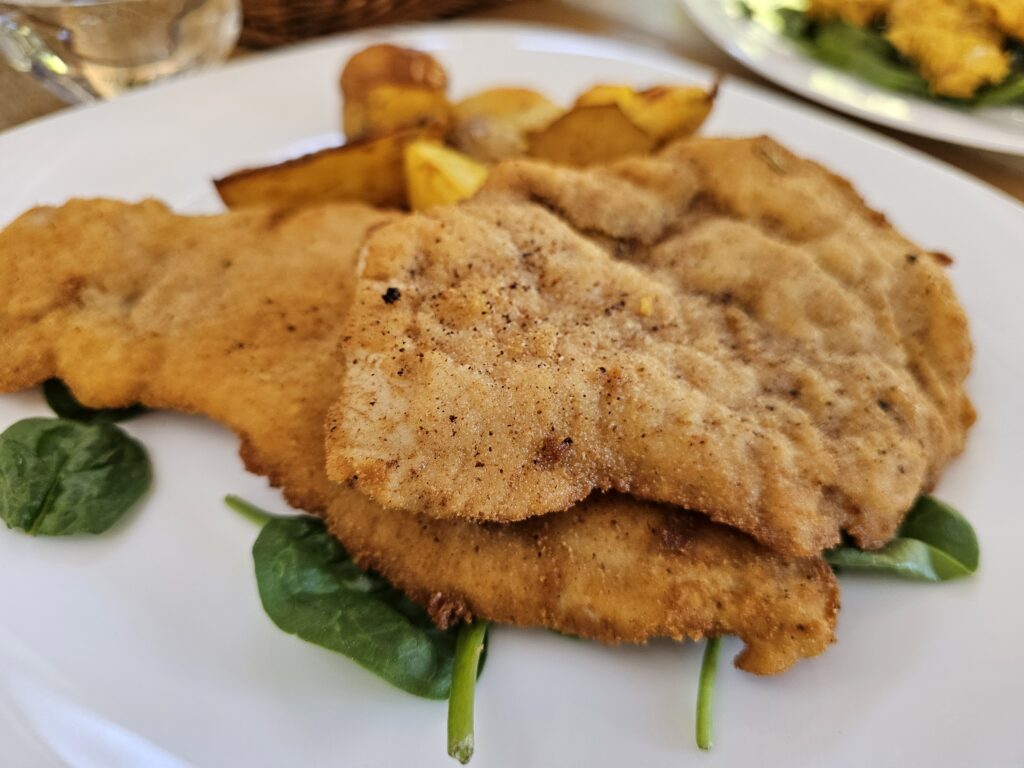
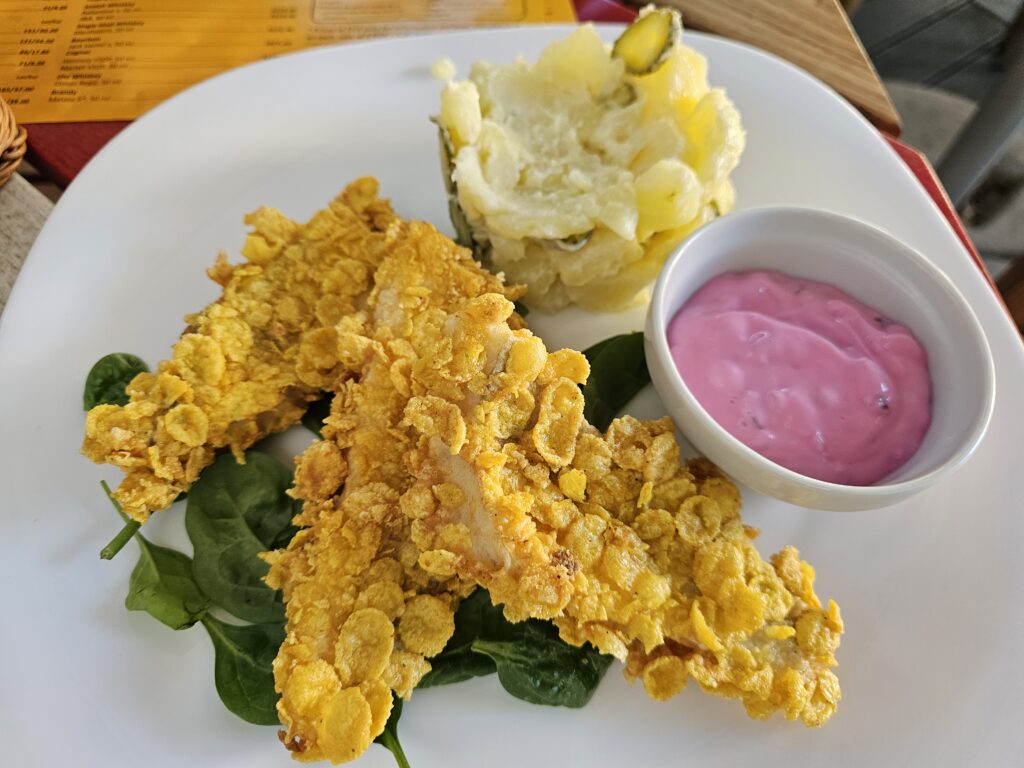
After a marathon day of driving and sightseeing, we were starving. We stopped at Carol Gastro Bierhaus for dinner, where I ordered chicken schnitzel and my husband ordered zander fillet.
My chicken schnitzel was tender and juicy inside with a light, golden, shattering-crisp breading—simple, comforting, and exactly what I needed after battling mountain traffic.
My husband's zander fillet—a mild freshwater fish prized across Central and Eastern Europe—was dipped in egg and flour, coated in crushed cornflakes (yes, cornflakes!), and fried until super crunchy. The cornflake crust added an incredible crispness with just a hint of sweet corn flavor—such a clever twist I might have to recreate at home!
The fish came with a tangy potato salad tossed with pickled cucumbers, onions, and mayonnaise, plus a side of bright pink tartar sauce. Naturally, I had questions—turns out the pink hue came from beet juice, while the flavor stayed classic and tangy. Both meals were hearty, satisfying, and hit the spot.
What I Ate in Bucharest
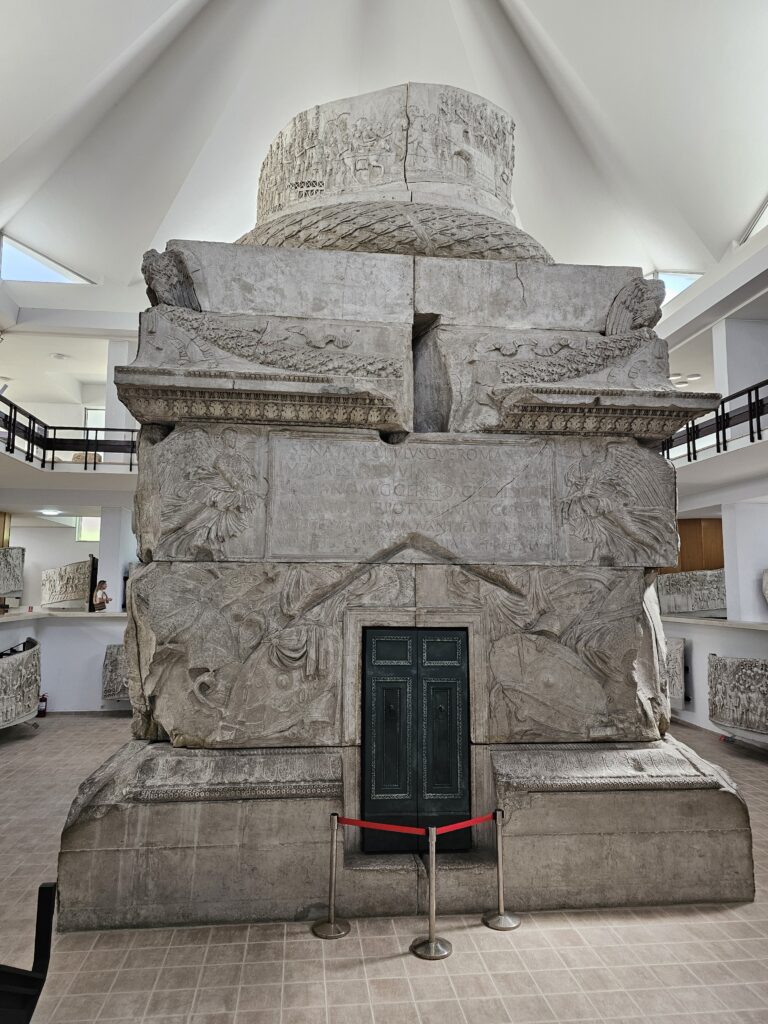
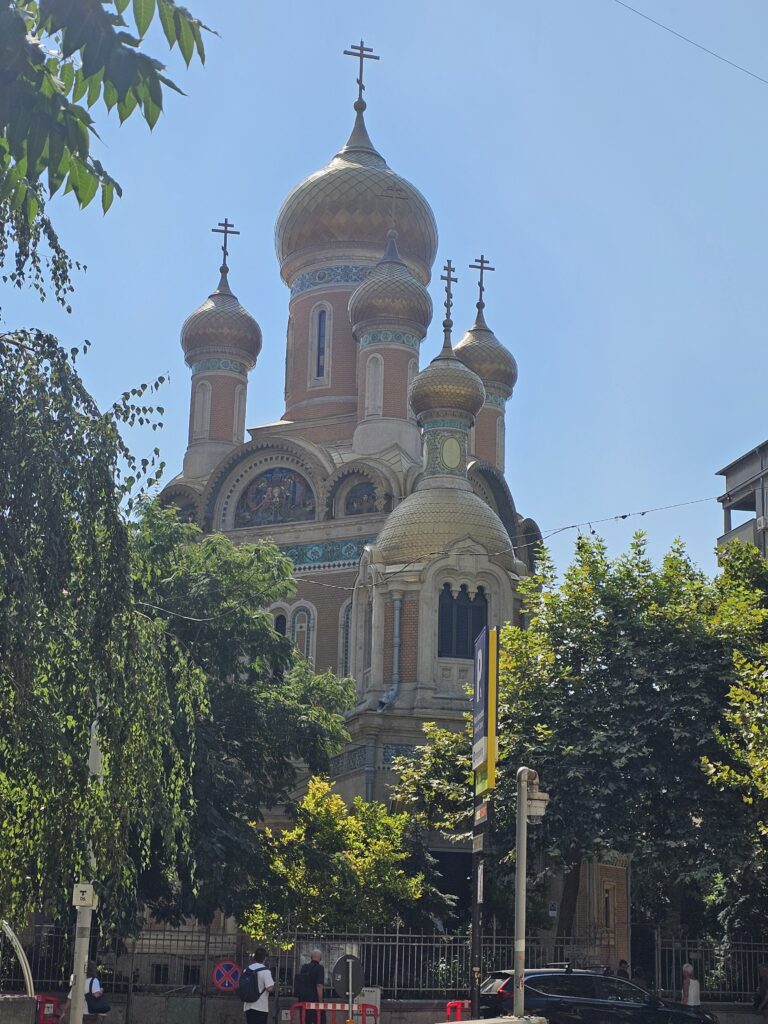
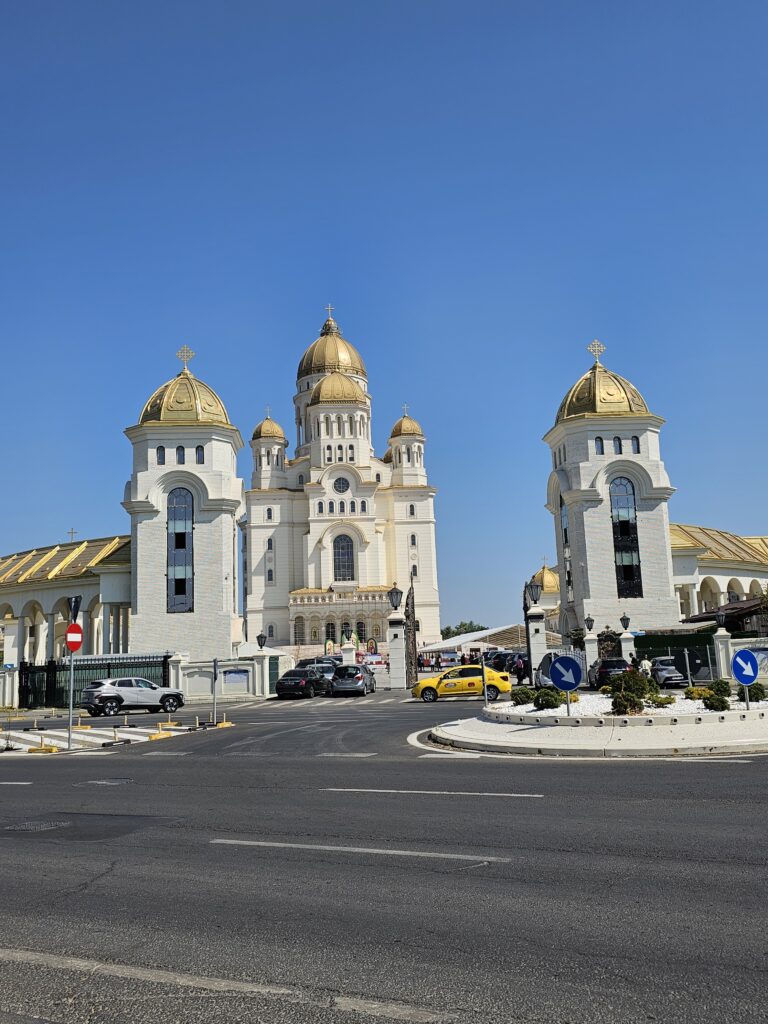
The interior of the historic Curtea Veche Church (also known as the Church of St. Anthony) in Bucharest. The interior features traditional Eastern Orthodox mural paintings, dark wood paneling, and an ornate gilded iconostasis at the front holding sacred icons. A cobblestone street lined with outdoor cafes and historic multi-story buildings in the Old Town of Bucharest Tucked between the buzzing streets of Bucharest's Old Town, the Villacrosse–Macca Passage is one of the city’s most photogenic and atmospheric corners. With its yellow glass roof, Parisian vibe, and eclectic cafes. Historic Stavropoleos Monastery located in the Old Town of Bucharest. Such a beautiful church and courtyard. CEC Palace, a historic Beaux-Arts bank building located on Calea Victoriei in Bucharest. One of the many cobblestone streets in the historic Lipscani District of Bucharest. Old Town is such a beautiful place to wander and explore. Life-size plaster cast replica of the base and lower portion of Trajan’s Column inside the National Museum of Romanian History. These intricate Roman bas-relief carvings were commissioned by Roman Emperor Trajan and completed in AD 113. Bucharest Russian Church, officially known as the Church of Saint Nicholas, located in central Bucharest The National Cathedral of Romania, also known as the People's Salvation Cathedral, located in Bucharest. Palace of the Parliament (Palatul Parlamentului), built in the 1980s.
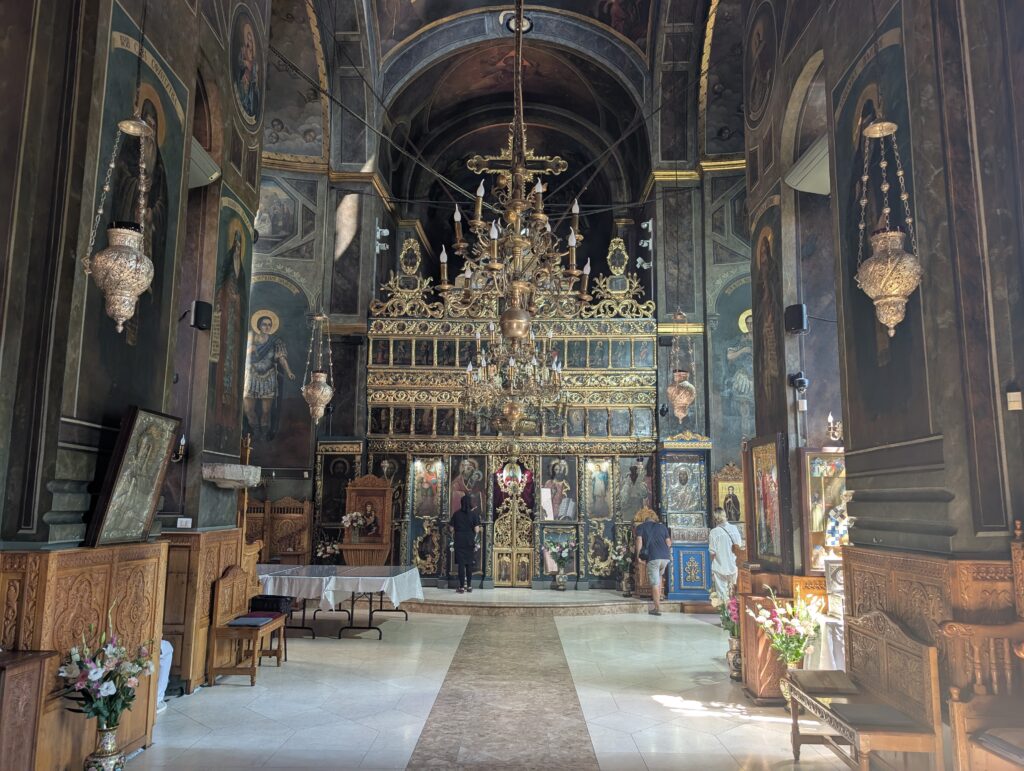
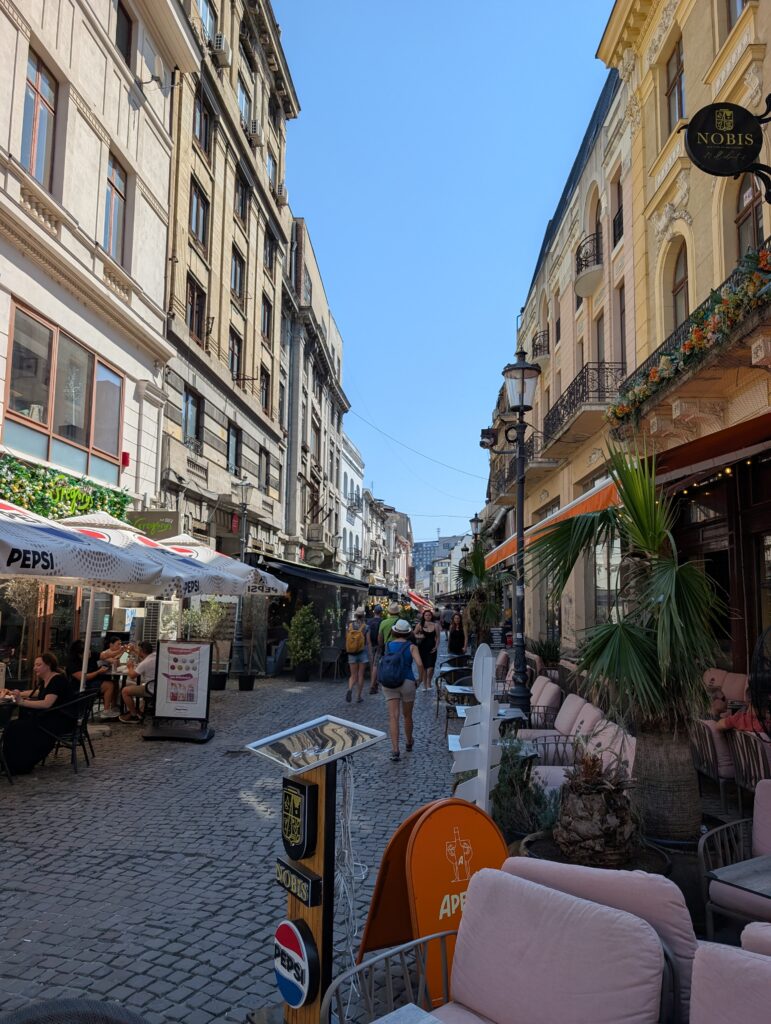
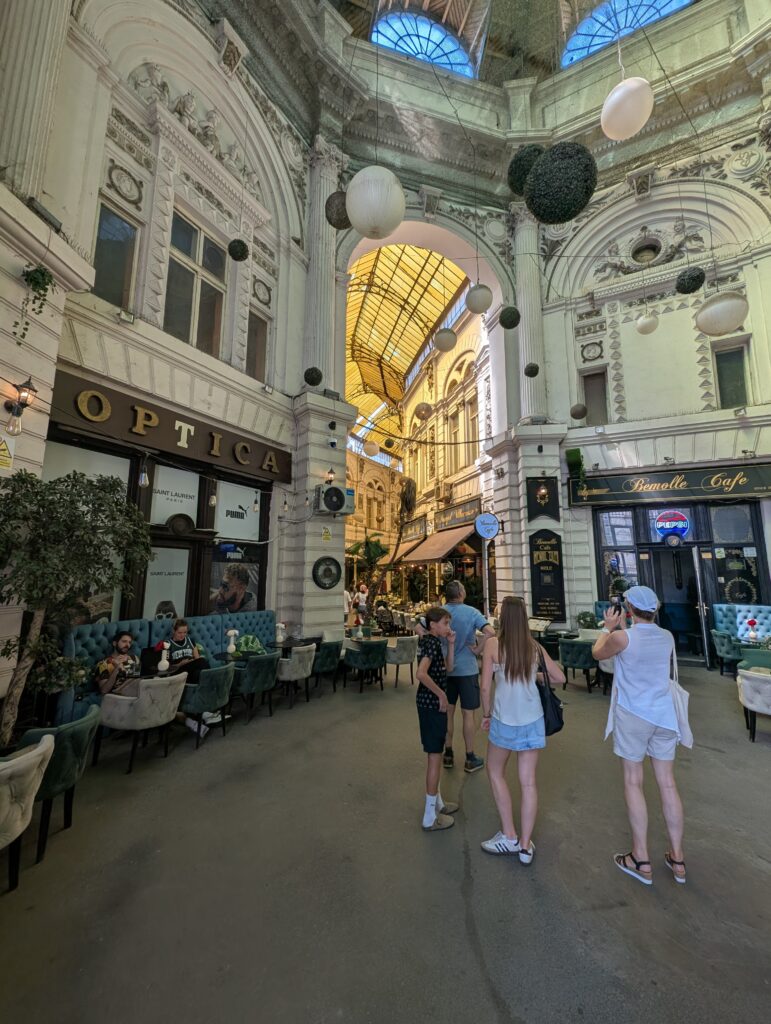
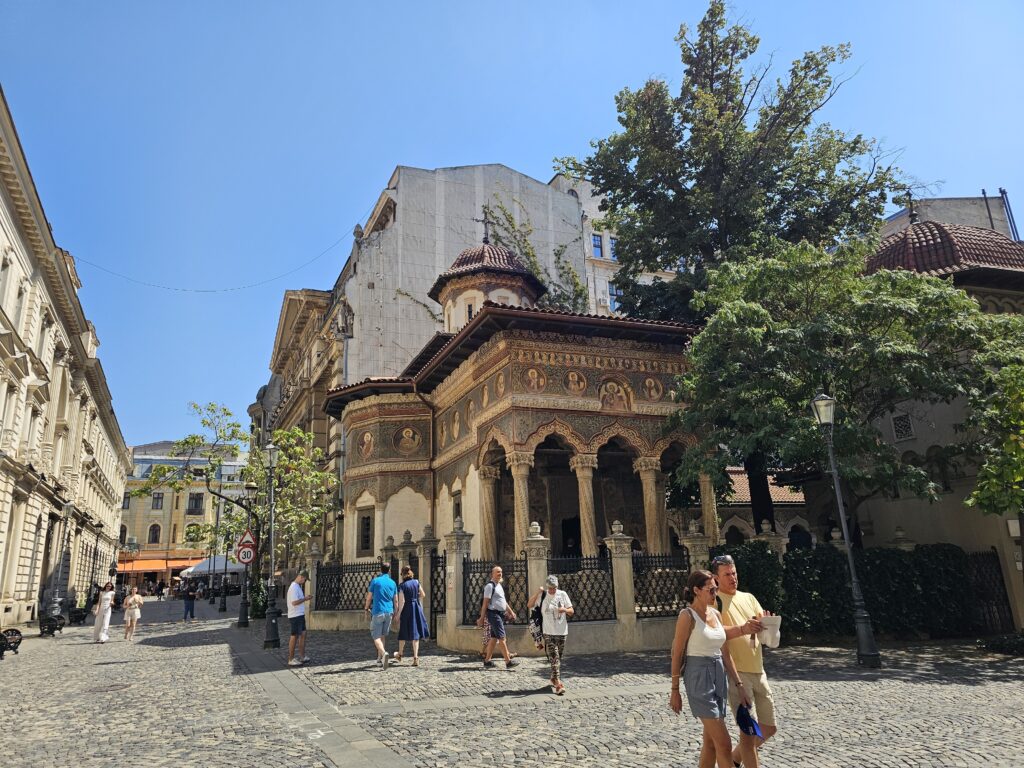
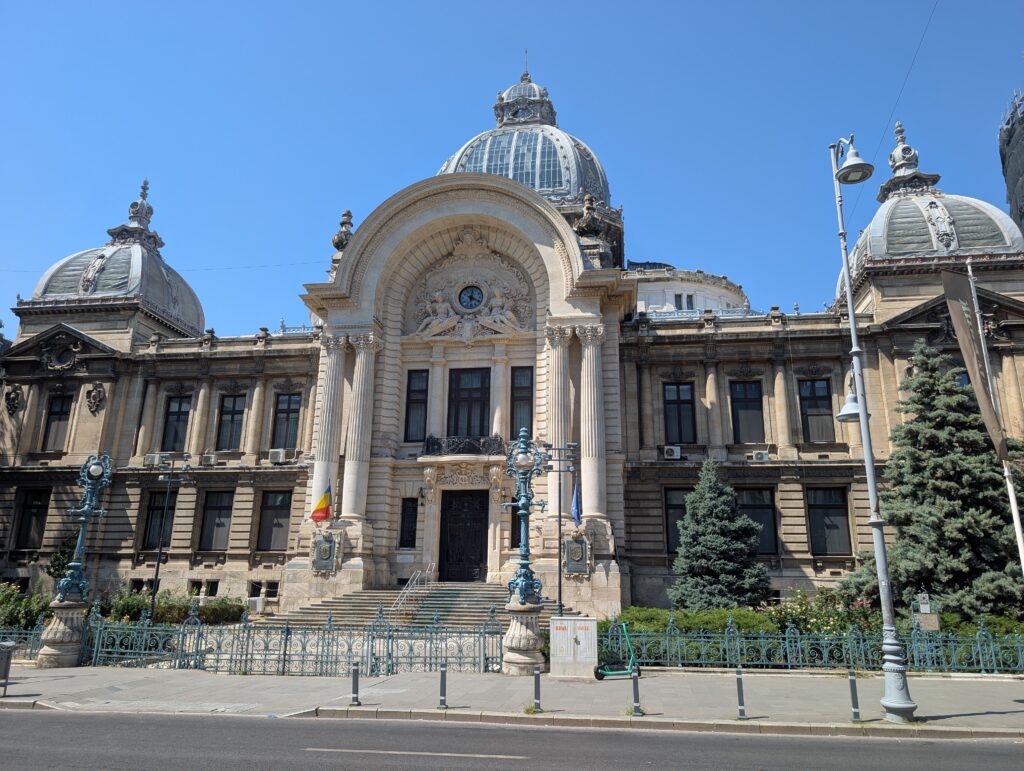
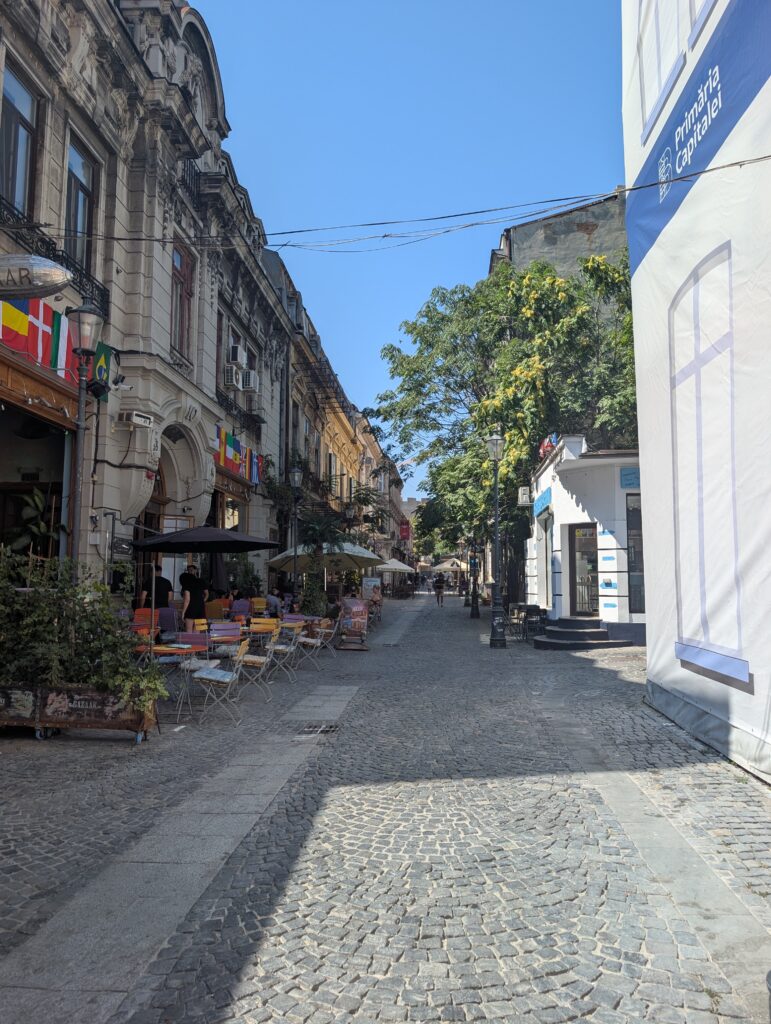
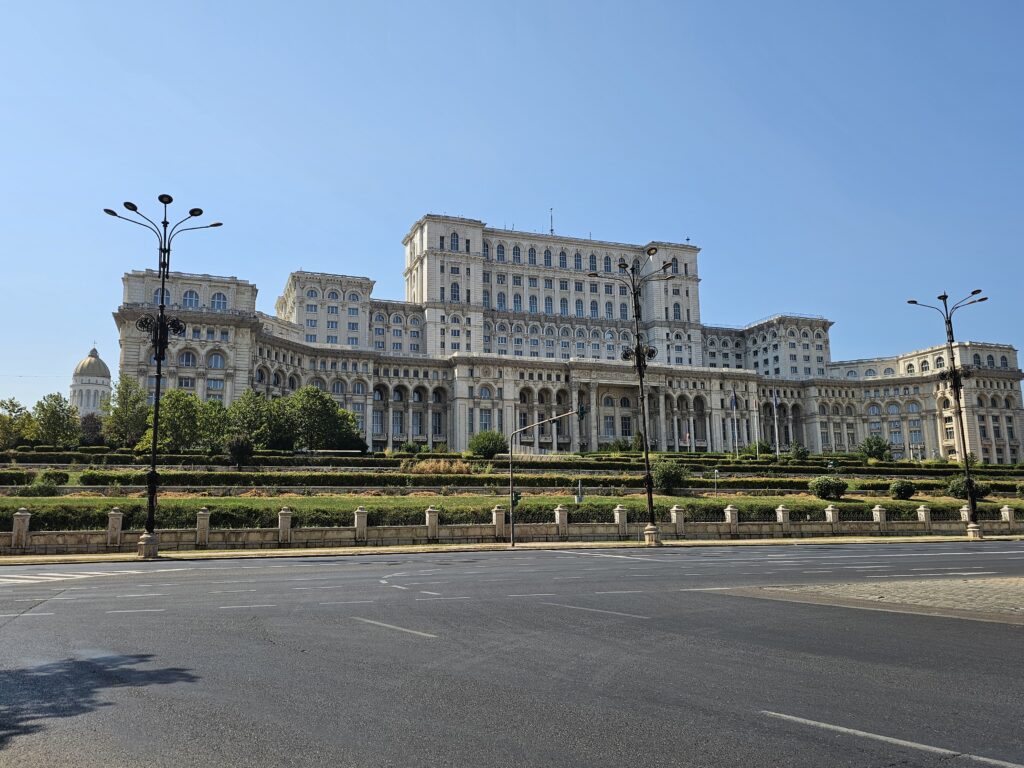
After our castle adventures, we returned to Bucharest. One of my favorite ways to explore a city is to wander without too rigid a schedule—okay, that's not entirely true, because I usually have a food plan.
We took a self-guided audio walking tour of Bucharest's Old Town using GPSMyCity, strolling past the Bucharest Russian Church, Macca-Villacrosse Passage, National Museum of Romanian History, Stavropoleos Monastery, and Smârdan Street. Inside the Museum of Romanian History, we saw impressive Roman ruins and a massive full-scale plaster cast of Trajan's Column—you can check out the intricate Roman carvings in the video below:
Wandering the cobblestone streets and glass-roofed passages of the Lipscani district felt like stepping into another era—until my stomach reminded me that we weren't just there for architecture. It was time to eat.
Crispy Olives: My Unexpected Romanian Food Obsession
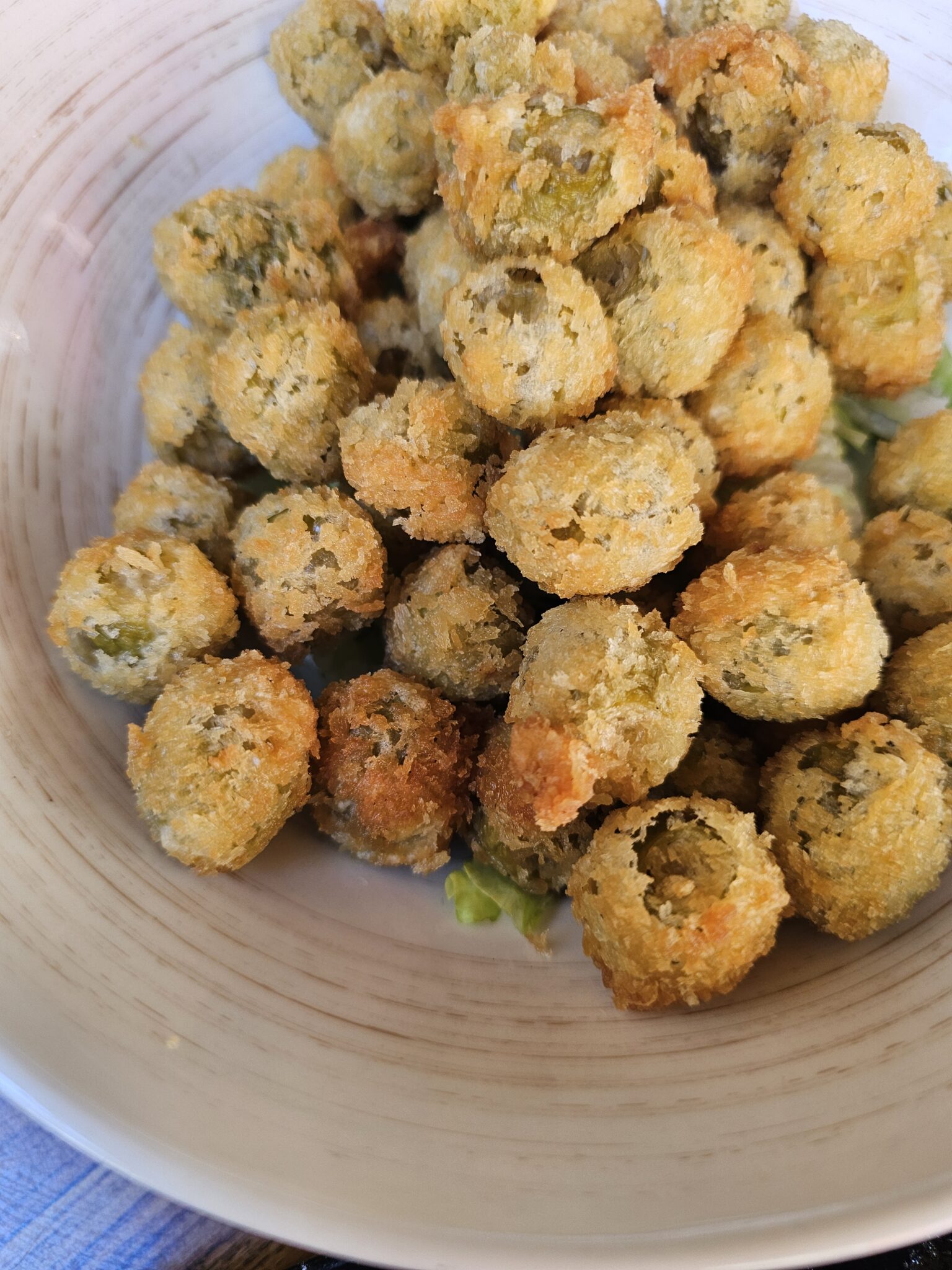
We stopped at a cozy restaurant in Old Town and ordered an appetizer while waiting for our mains. That's when I spotted crispy olives on the menu—described simply as olives coated in breadcrumbs.
When the plate arrived, I thought they'd brought enough food to feed an entire family: plump green olives coated in seasoned breadcrumbs and deep-fried until golden. I could not stop eating them! The salty, briny olive inside the crunchy fried shell was ridiculously addictive, making them one of my favorite unexpected bites of what I ate in Romania.
Ciorbă de Pui: Romanian Comfort Food
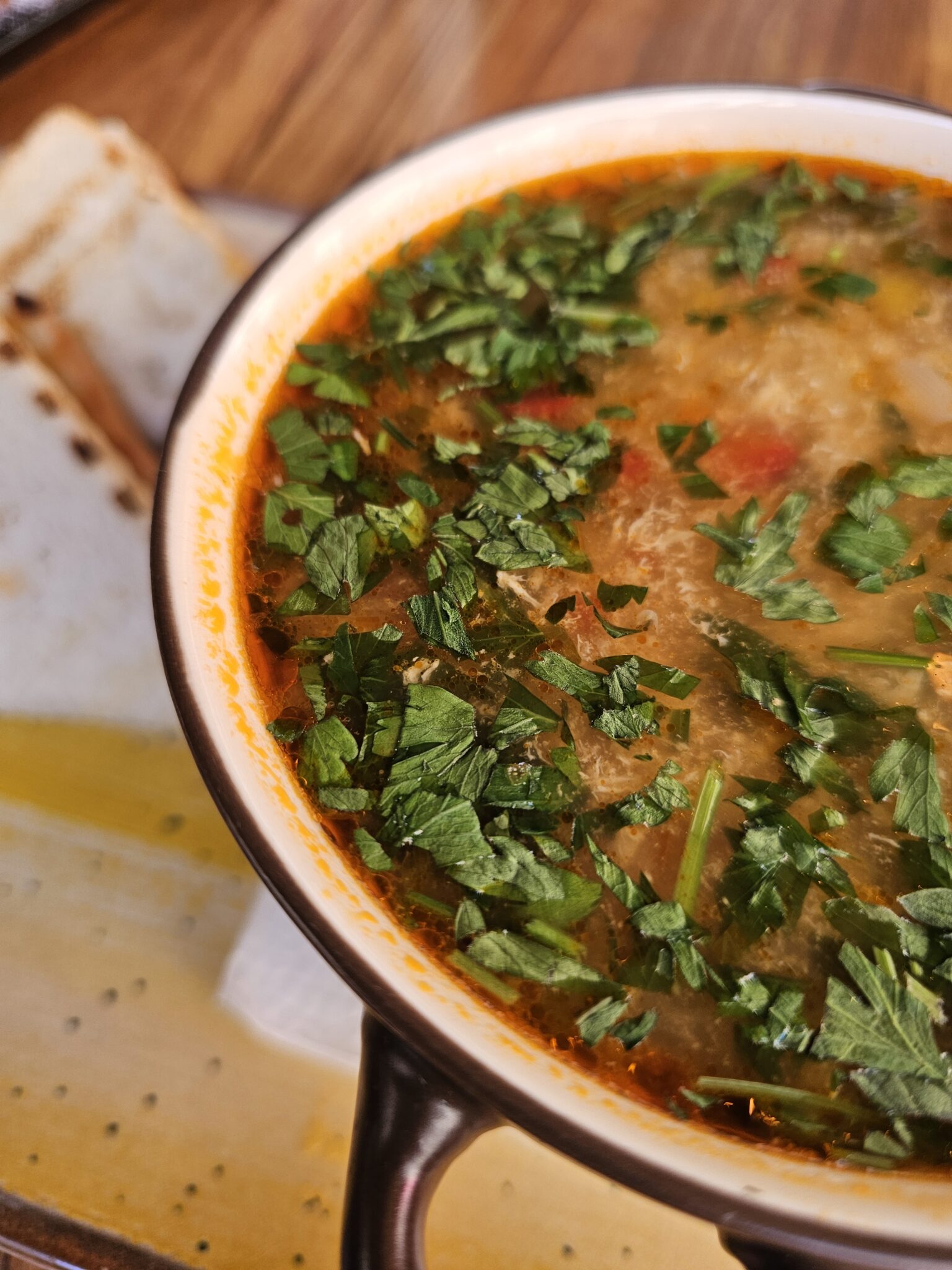
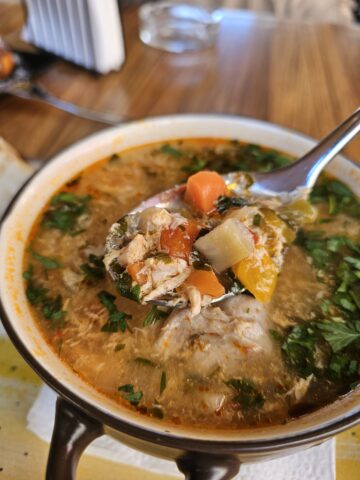
For my main course, I wanted something classic, so I ordered ciorbă de pui—traditional Romanian sour chicken soup. This isn't your average chicken noodle soup: it was brimming with tender chicken, potatoes, carrots, celery, parsnips, onions, peppers, tomatoes, and fresh parsley, soured with borș (a fermented wheat- or barley-bran liquid that gives Romanian soups their unmistakable bright tang).
That sourness immediately stopped me in my tracks—it tasted just like my grandmother's soup. Her family came from the region and spoke Hungarian, so sitting in Bucharest eating a hearty, tangy soup that tasted like childhood was one of those unforgettable travel moments that sticks with you forever.
Ciuperci cu Smântână: Mushrooms & Creamy Goodness
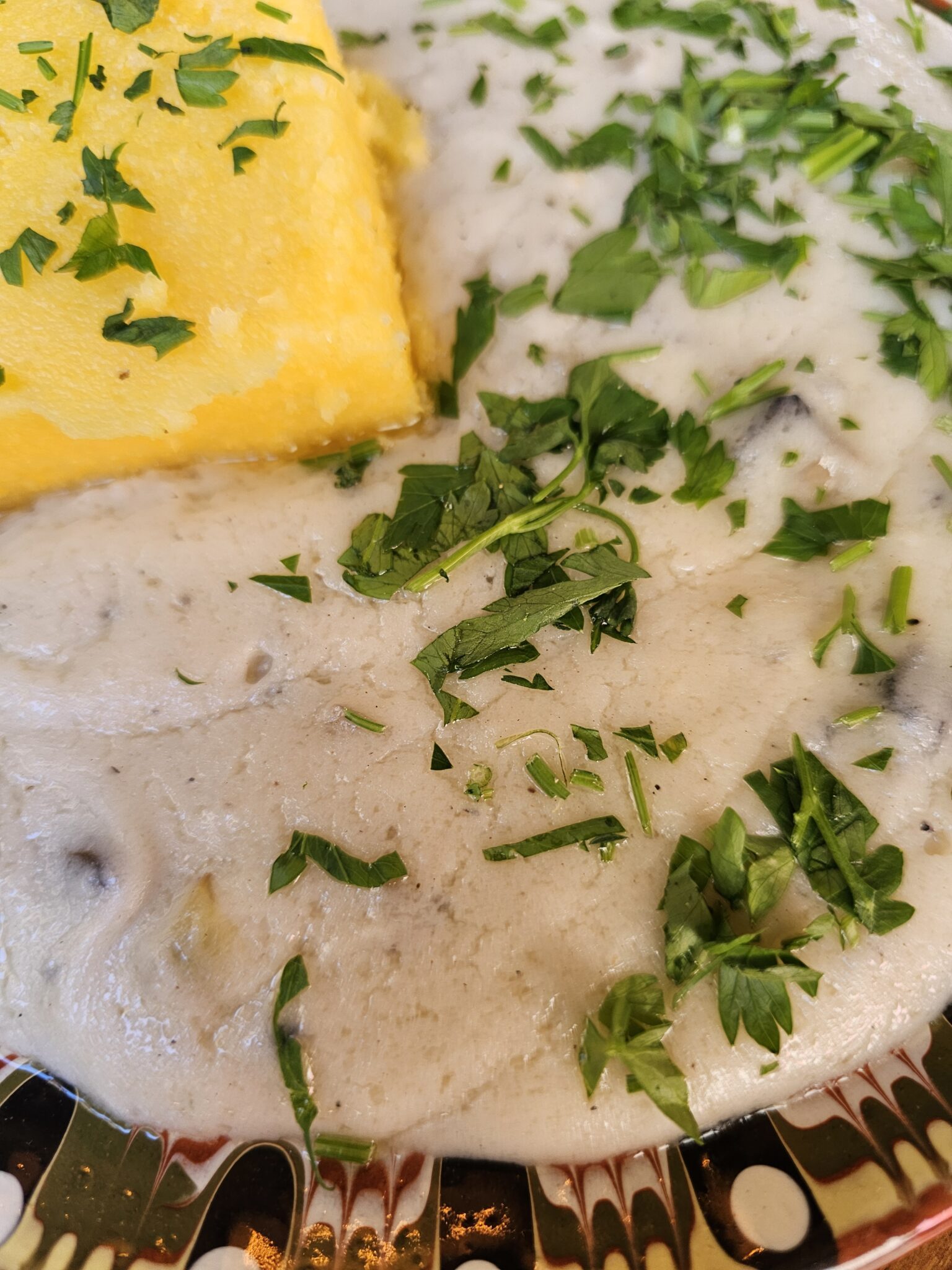
My husband ordered ciuperci cu smântână, sautéed mushrooms simmered in a rich garlic and sour cream sauce, served alongside traditional Romanian mămăligă (firm yellow cornmeal polenta topped with fresh parsley). Naturally, I had to steal a bite—or three.
The creamy mushroom sauce paired with the warm, hearty polenta tasted like the ultimate rustic comfort food—rich, earthy, and ideal after miles of walking on cobblestones.
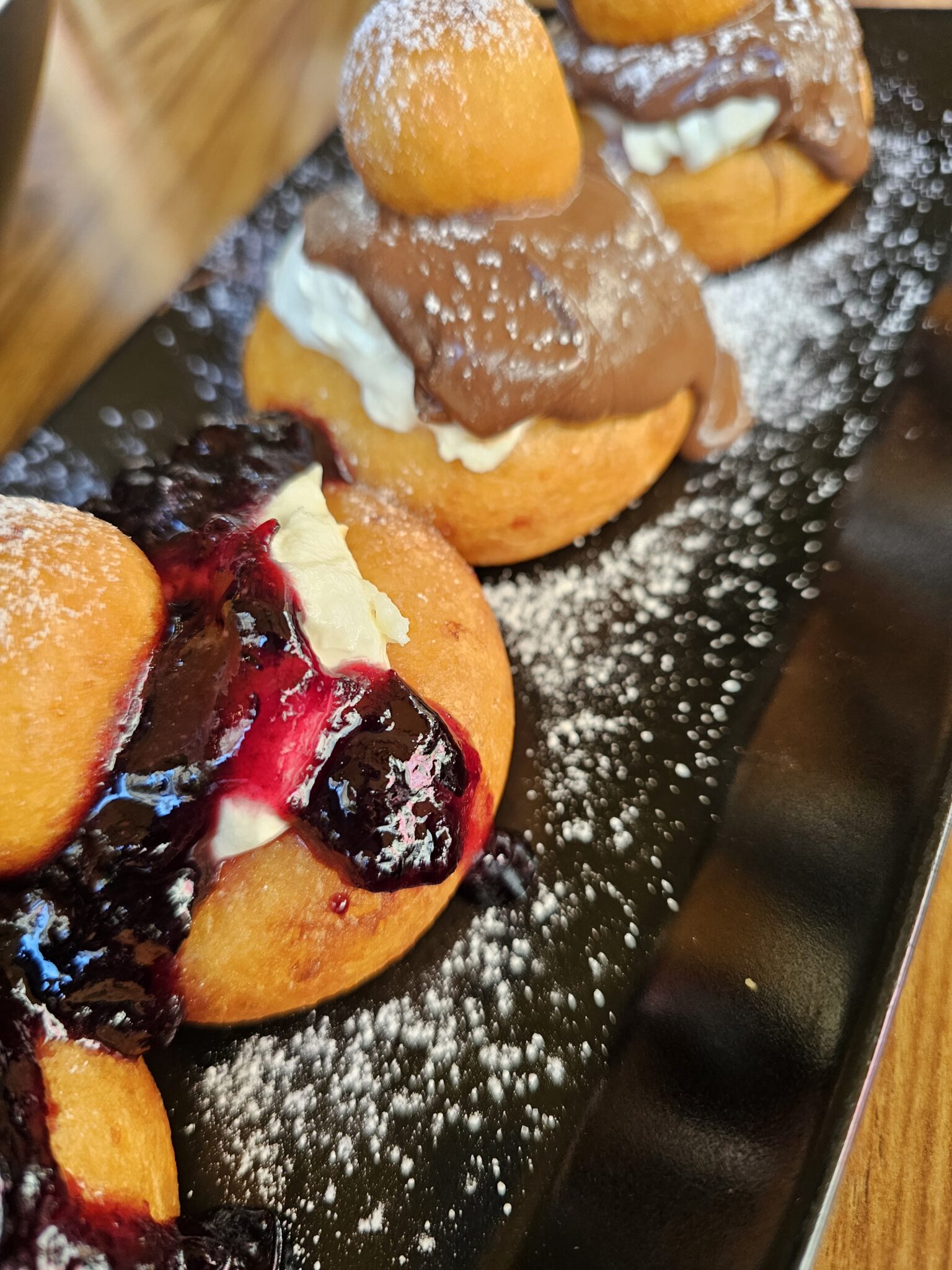
Papanași: Because Every Good Meal Needs Dessert
And then came dessert: papanași. If you visit Romania, put these on your culinary bucket list immediately—they are extraordinary.
Made from a dough of flour, eggs, and sweet Romanian cottage cheese, papanași are fried until golden and traditionally crowned with cool sour cream and fruit preserves. Our plate arrived with four generous pieces: two topped with blueberry and sour cherry jam, and two drizzled with Nutella.
By the time we finished, we were unbutton-your-pants-and-question-your-life-choices stuffed—and every single bite was worth it.
Romanian Wine & One Last Snack
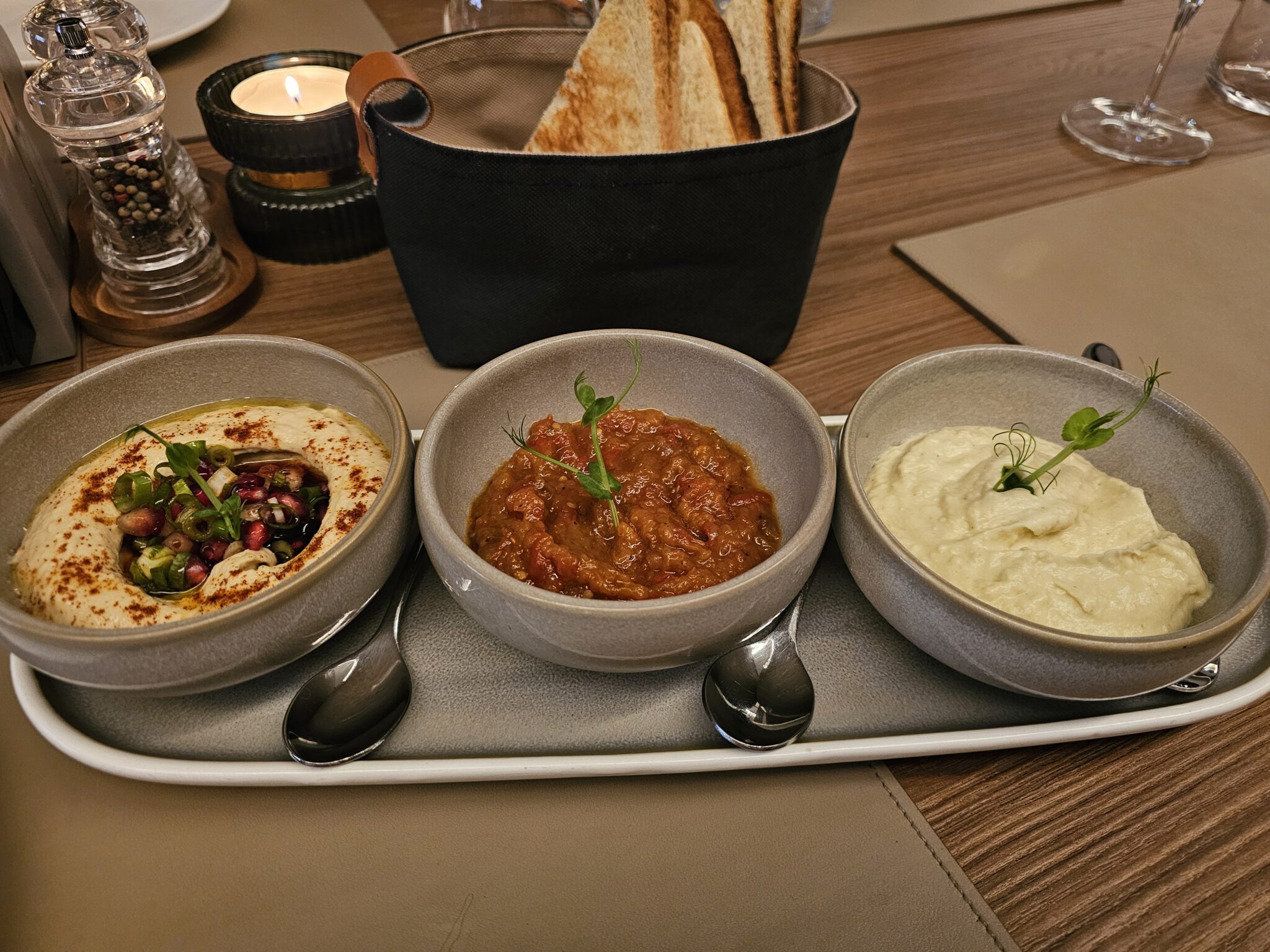
After walking off our giant Old Town dinner, we headed back to our hotel, Cavar Aparthotel—and promptly decided we needed a nightcap, because apparently we had learned nothing from dinner.
The hotel restaurant, Morfeo, was a relaxed spot to unwind over a glass of crisp Romanian white wine and a trio of dips: hummus topped with pomegranate seeds, green onions, and balsamic; a smoky roasted vegetable spread; and an eggplant spread seasoned with onion, green bell pepper, garlic, and spices. It was the ideal way to cap off the evening.
What I Wish I'd Eaten in Romania
Three days simply wasn't enough time to taste everything on my culinary wish list. Here are the traditional Romanian dishes I missed this time—and am already planning a return trip to try:
- Mici (Mititei): Romania's famous skinless grilled minced-meat rolls, seasoned with garlic, black pepper, and savory herbs, usually served with mustard and crusty bread.
- Sarmale: Traditional sour-cabbage rolls stuffed with seasoned pork, beef, and rice, slow-simmered and served hot with sour cream and mămăligă.
- Authentic Homemade Zacuscă: I want to sample traditional jarred or homemade zacuscă and compare it side-by-side with the roasted eggplant spreads we enjoyed in Bucharest.
- Cozonac: A slice of Romania's beloved sweet brioche-style bread swirled with walnuts, cocoa, or Turkish delight alongside morning coffee.
- Traditional Romanian Cheeses: From brined telemea to aged sheep's-milk cașcaval and brânză de burduf, paired with another glass of Romanian wine.
- More Romanian Desserts: After falling in love with papanași, I'm officially committed to sampling every pastry and dessert in the country—strictly for research, of course!
My Takeaways From Romania
Our Romania trip was unforgettable—and completely exhausting. Trying to squeeze Bran Castle, Brașov, Peleș Castle, Bucharest, and a side trip to Bulgaria into three days was definitely too ambitious.
My biggest piece of advice? Give yourself more time. And if you're visiting Bran and Peleș Castles from Bucharest, strongly consider booking an organized day tour rather than driving yourself unless you truly want to experience mountain highway gridlock firsthand.
Even with a whirlwind schedule, what I ate in Romania—from tangy ciorbă de pui and creamy ciuperci cu smântână to crispy fried olives, cornflake-crusted zander, and warm papanași—made every mile worth it. Next time, I'm giving myself at least a full week—and Brașov, mici, and sarmale are going straight to the top of the itinerary!
More Great Central European Destinations
- Salzburg Day Trip from Vienna: Food, History & Things to Do
- Exploring Krakow Through Food: Polish Dishes, Historic Old Town & Wieliczka Salt Mine
- Vienna Austria: Imperial History, Elegant Architecture & Incredible Food
- Exploring Budapest Through Food: A Food Lover's Guide to Hungary's Capital
- What I Ate in Romania: Castles, Bucharest & Traditional Romanian Food
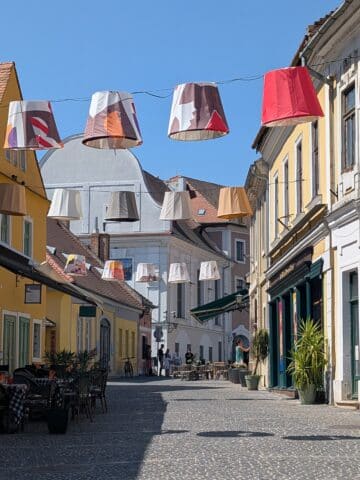
- Szentendre: A Colorful Day Trip from Budapest
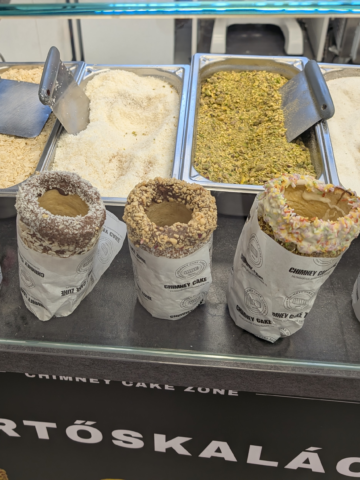
- Hungarian Chimney Cake (Kürtőskalács)
- Bratislava Food Guide: Exploring Slovak Food from Old Town to Devín Castle



EMANUEL PETROPOULOS says
Romania is a beauty !!!!!!
Tara says
It is and we really enjoyed our visit!