
Our first trip after arriving in Budapest was to Vienna, Austria, and we were so excited to explore that we decided to take a day trip from Vienna to Salzburg. The train ride took about 2.5 hours, giving us roughly six hours to explore Salzburg before heading back to Vienna.
Six hours was definitely not enough time to experience everything Salzburg has to offer. In hindsight, we wish we had stayed overnight, but we still managed to see several of the city's highlights, enjoy some traditional Austrian food, and get a taste of Salzburg's fascinating history.
Once we arrived at the train station, we successfully navigated Salzburg's public transportation system and took a bus into the historic center. Our first stop was beautiful Residenzplatz (Residence Square), located in the heart of Salzburg's Old Town.
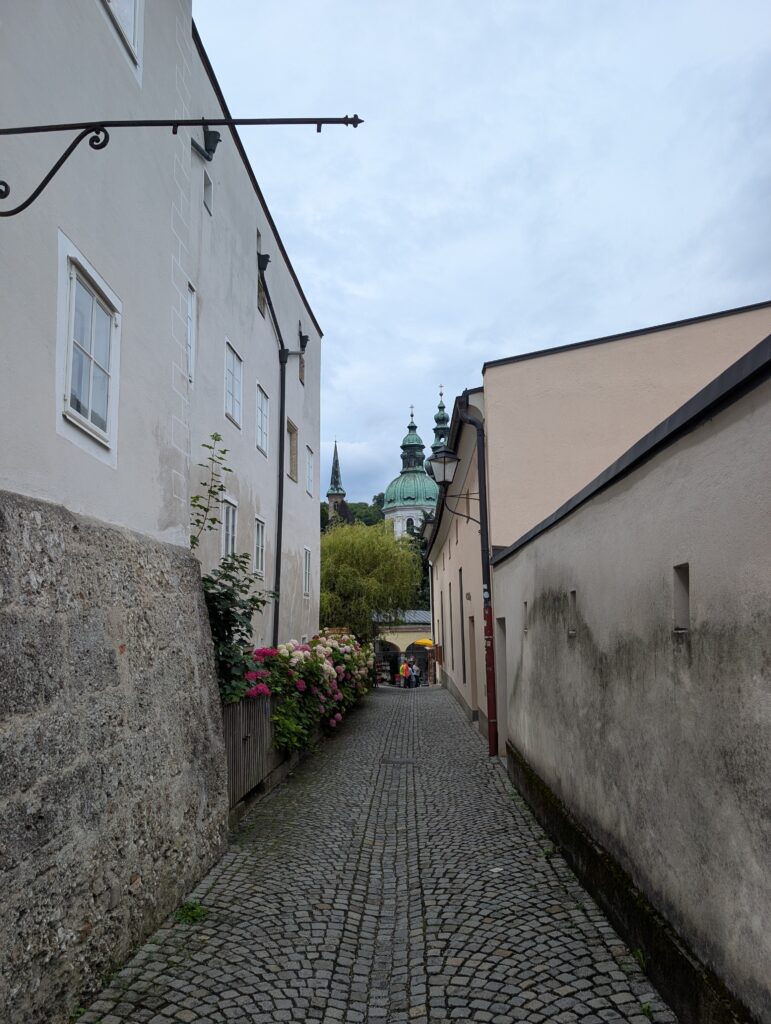
From here, we wandered through the cobblestone streets and narrow alleys, exploring the shops, historic buildings, and beautiful squares that make Salzburg such a charming city to explore on foot.
Of course, one of the biggest highlights was Hohensalzburg Fortress (High Salzburg Fortress), which towers above the Old Town. You can take the funicular up to the fortress or, like we did, walk up the steep hillside.
Salzburg is also famously known as the birthplace of Wolfgang Amadeus Mozart, who was born here in 1756 and lived in Salzburg for much of his early life. You'll find Mozart's name throughout the city, including at Mozartplatz (Mozart Square).
Jump to:
Food in Salzburg

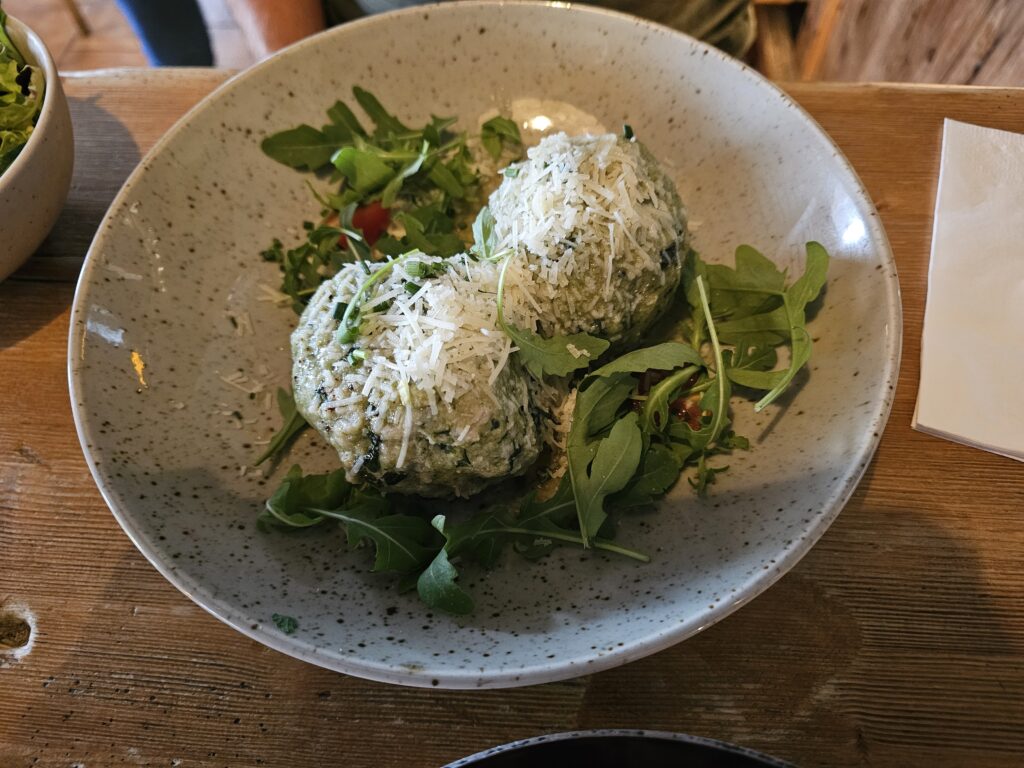
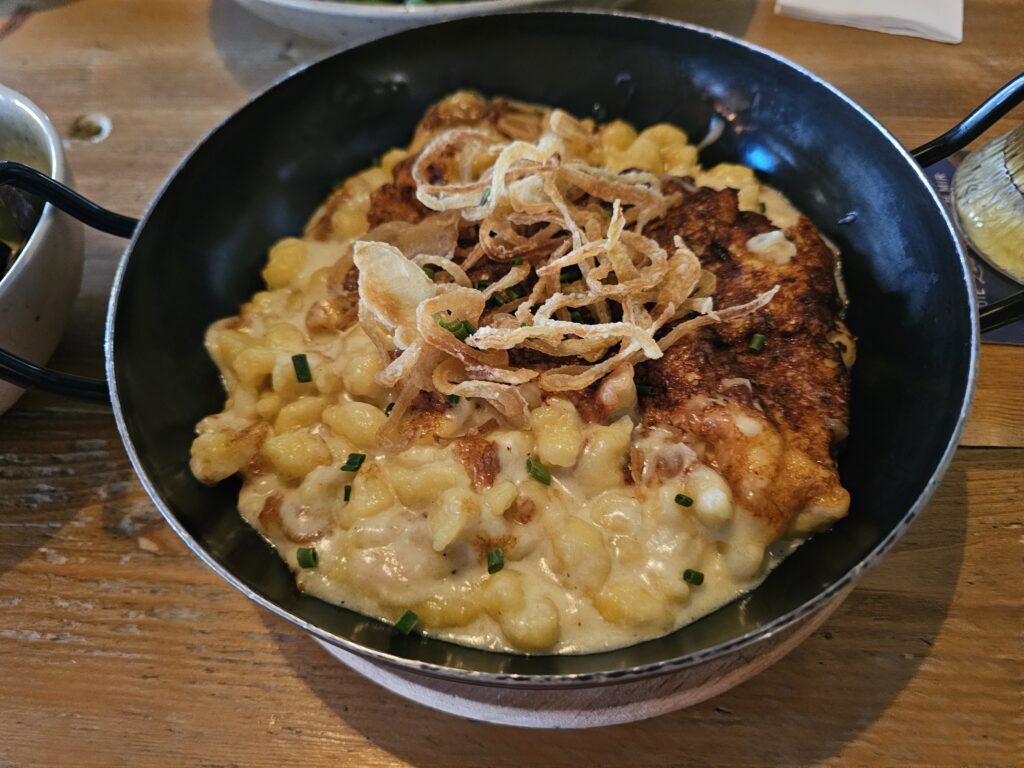
Austrian spinach dumplings, topped with melted butter and freshly grated Parmesan. Käsespätzle, homemade cheese spaetzle topped with crispy onions. 
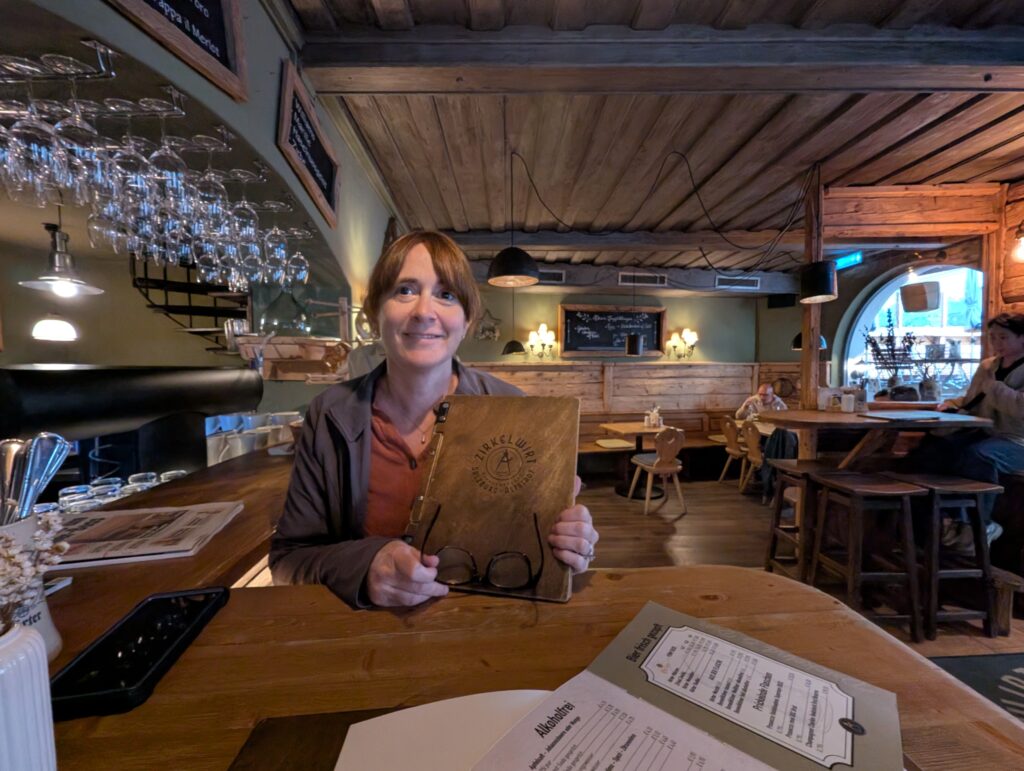
Lunch at Wirtshaus zum Zirkelwirt Salzburg 
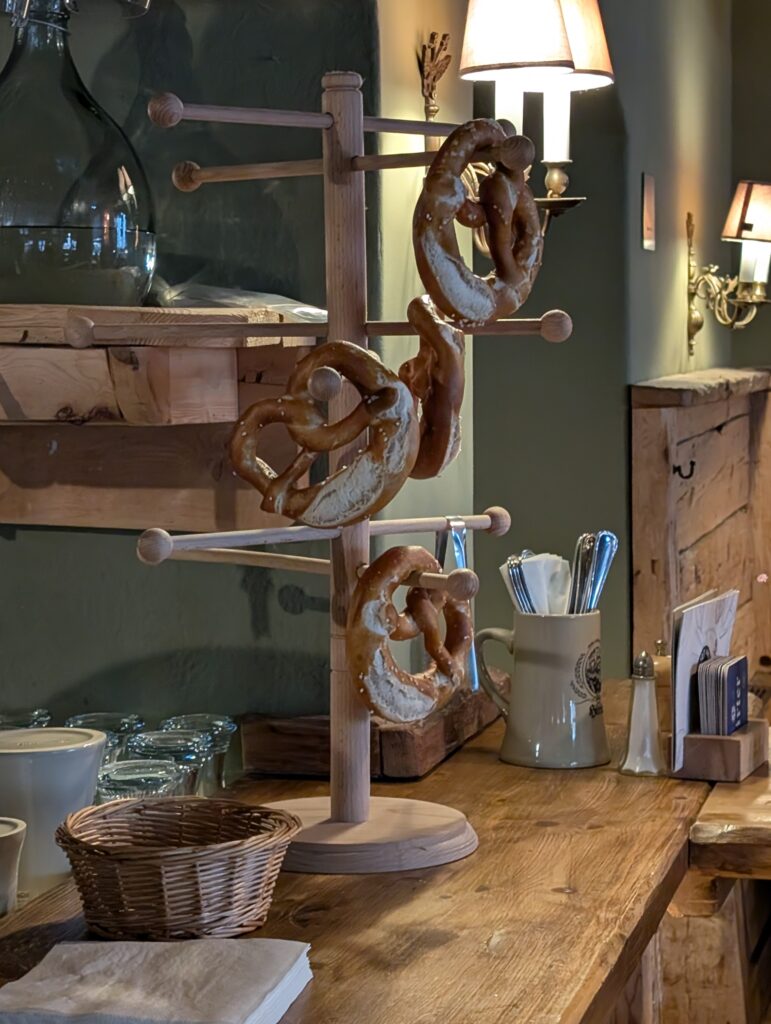
Austrian pretzels (Brezen or Brezel) are soft, twisted baked pastries with a deep brown crust and a soft, chewy interior Wirtshaus zum Zirkelwirt Salzburg
We arrived around lunchtime and took a public bus into Salzburg's Old Town. After spending the morning exploring, we were ready for some traditional Austrian food.
We wandered through the cobblestone streets around Residenzplatz, looking at the different restaurants and cafés, until we stumbled upon a beautiful restaurant that immediately caught our attention. The charming atmosphere and traditional Austrian character convinced us to stop for lunch.
I ordered traditional Austrian spinach dumplings, topped with melted butter and freshly grated Parmesan, while my husband enjoyed a plate of rich and comforting Käsespätzle, homemade cheese spaetzle topped with crispy onions.
To wash it all down, we tried a Hirter Kräuterradler, a refreshing combination of beer and sparkling lemonade with a hint of herbs. It was something completely different from the beers and radlers we're used to drinking back home.
Everything was delicious, but I think the atmosphere was just as memorable as the food. Sitting in a traditional Austrian restaurant surrounded by the historic buildings of Salzburg made the experience feel like much more than just lunch.
If you're visiting Salzburg, make sure to leave time to experience some of the traditional Austrian food in Salzburg. There are plenty of opportunities to try local dishes as you explore the Old Town.
Want to Save This Recipe?
Enter your email & I'll send it to your inbox. Plus, get great new recipes from me every week!
By submitting this form, you consent to receive emails from Went Here 8 This.
Salzburg Day Trip from Vienna Itinerary
| 10:30 AM | Arrive Salzburg |
| 11:00 AM | Old Town & Residenzplatz |
| 11:45 AM | Austrian lunch |
| 12:45 PM | Walk to Hohensalzburg Fortress |
| 1:00–2:15 PM | Explore fortress & viewpoints |
| 2:15 PM | Walk through Old Town |
| 2:45 PM | Uber to Hellbrunn Palace |
| 3:30–4:15 PM | Hellbrunn & Trick Fountains |
| 4:15 PM | Return to train station |
A Brief History of Salzburg
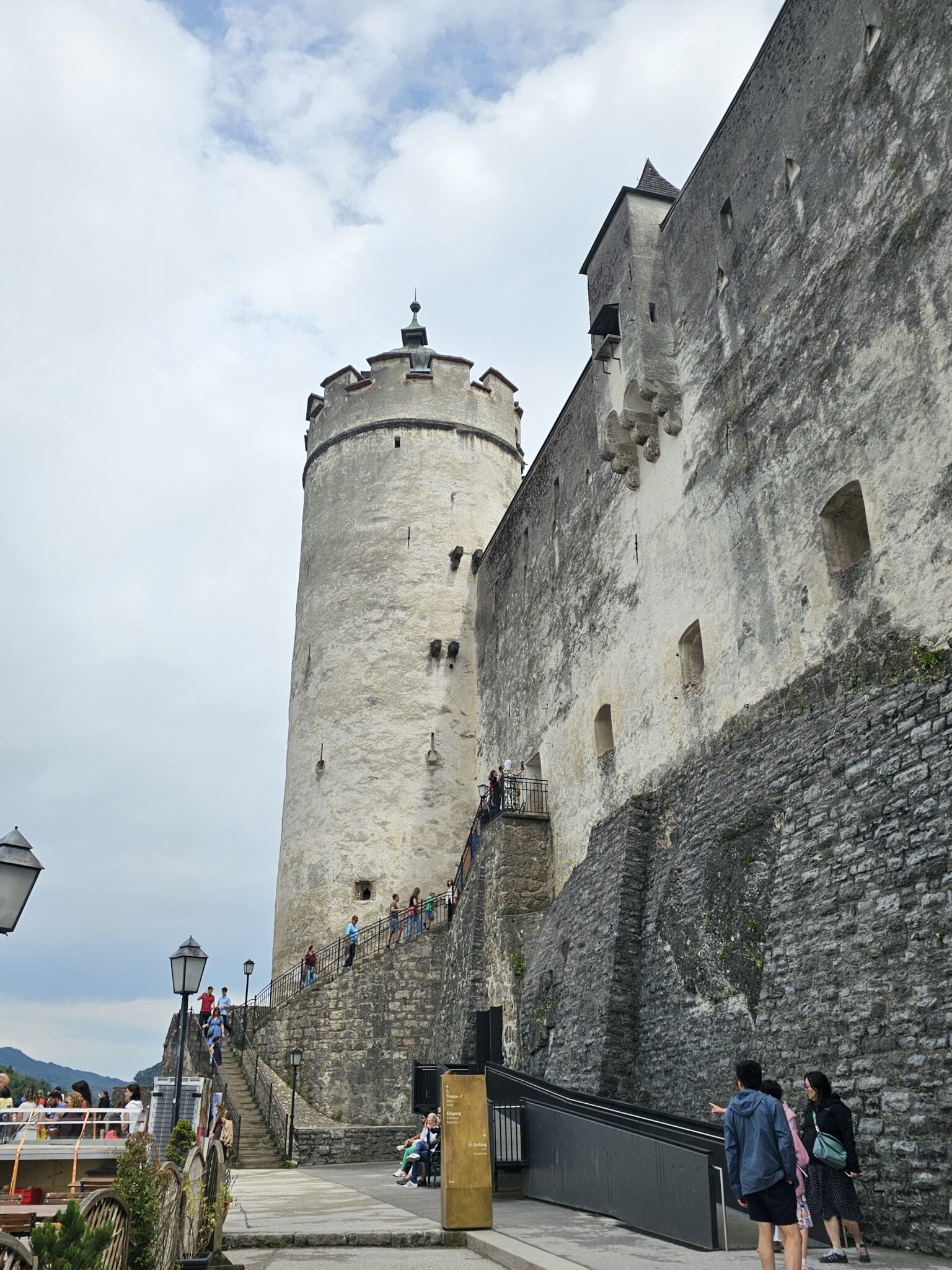
Salzburg's history stretches back more than 2,000 years. The Romans established the settlement of Juvavum around the 1st century AD, and its location along the Salzach River and near important salt deposits helped the city develop into an important center of trade.
In the 8th century, Salzburg became an important religious center when Saint Rupert established a monastery here. For centuries, the city was ruled by powerful Catholic archbishops rather than secular rulers. Much of their wealth came from the region's valuable salt trade, helping transform Salzburg into the magnificent Baroque city we see today.
Construction of Hohensalzburg Fortress began in 1077 under Archbishop Gebhard. The fortress was expanded over the centuries and became a powerful symbol of the archbishops' wealth and influence.
Salzburg eventually became part of the Austrian Empire in 1816 following the Napoleonic Wars and has remained part of Austria ever since.
Today, Salzburg is known for its beautiful historic architecture, musical heritage, traditional Austrian cuisine, and spectacular Alpine setting. Exploring the city is a wonderful way to experience Austrian history and culture one street—and one bite—at a time.
Hohensalzburg Fortress

paved pathway toward the entrance gate of the historic Hohensalzburg Fortress. You can see how the fortress is build right into the rock. This steep, paved walking path is one of the main pedestrian routes up to the castle grounds for visitors who choose to hike rather than take the funicular railway. Me standing by the vaulted entry tunnels near the Rosspforte of the historic Hohensalzburg Fortress 
The stone gateway along the walking path leading up to Hohensalzburg Fortress 
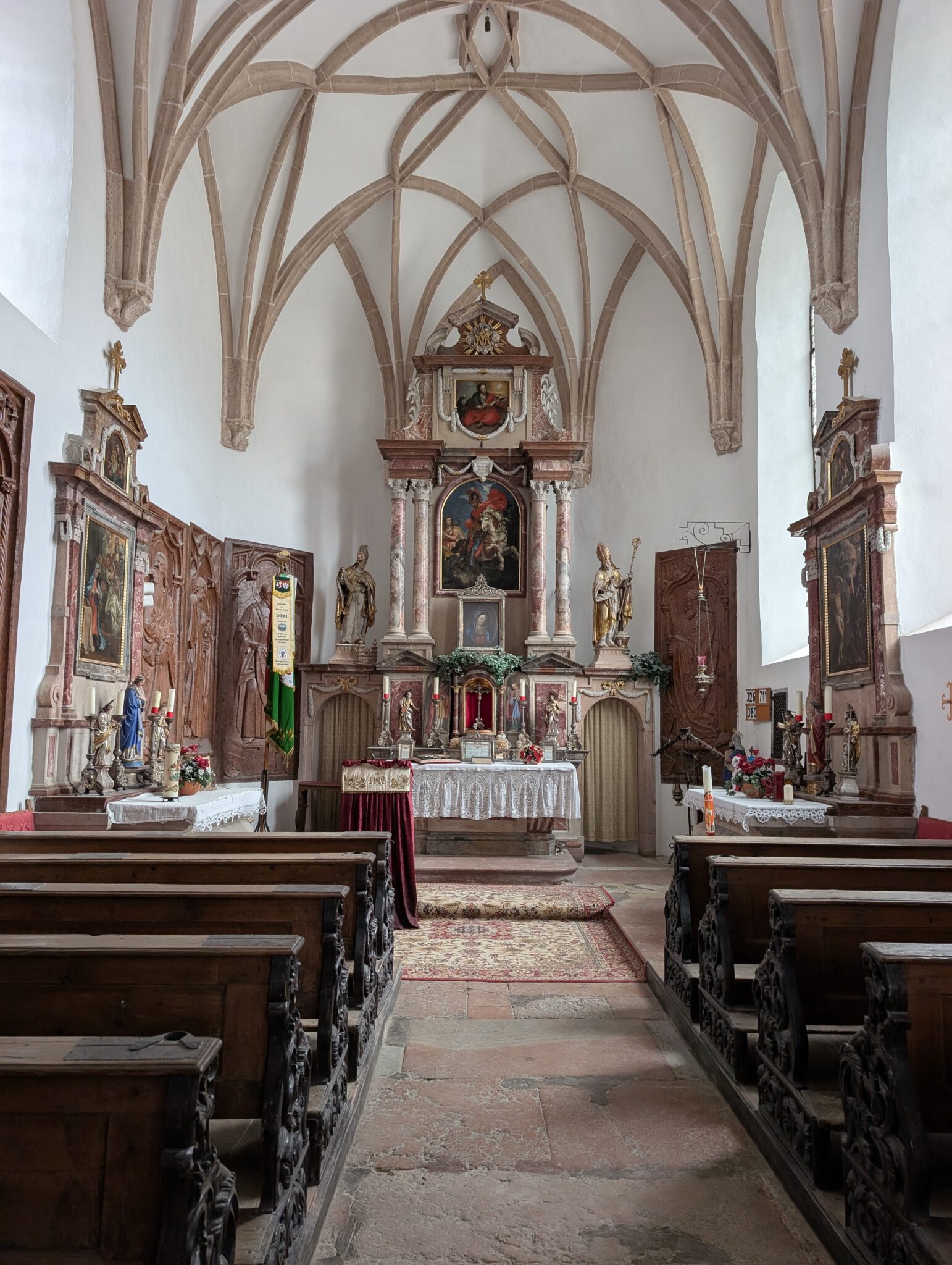
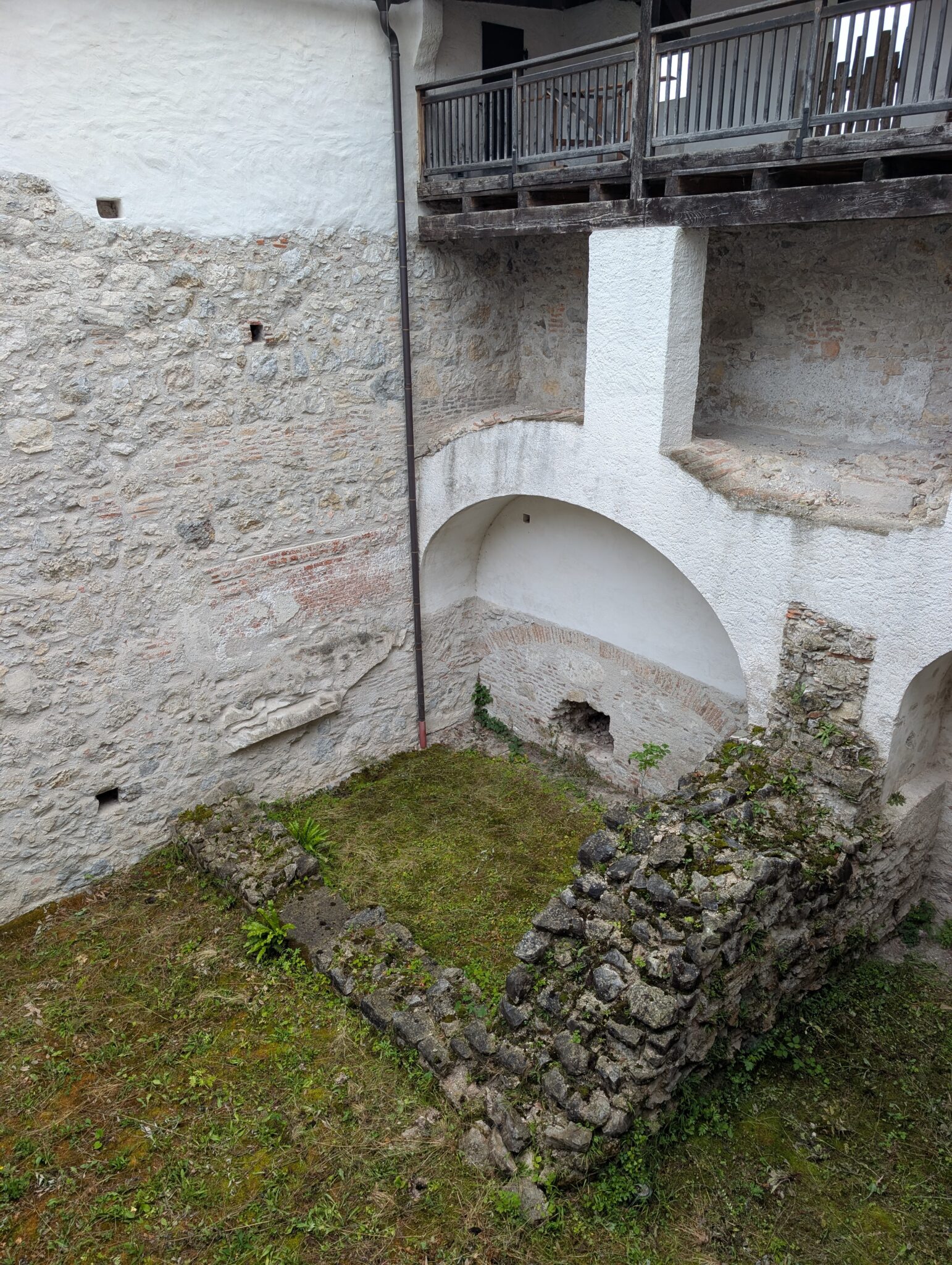
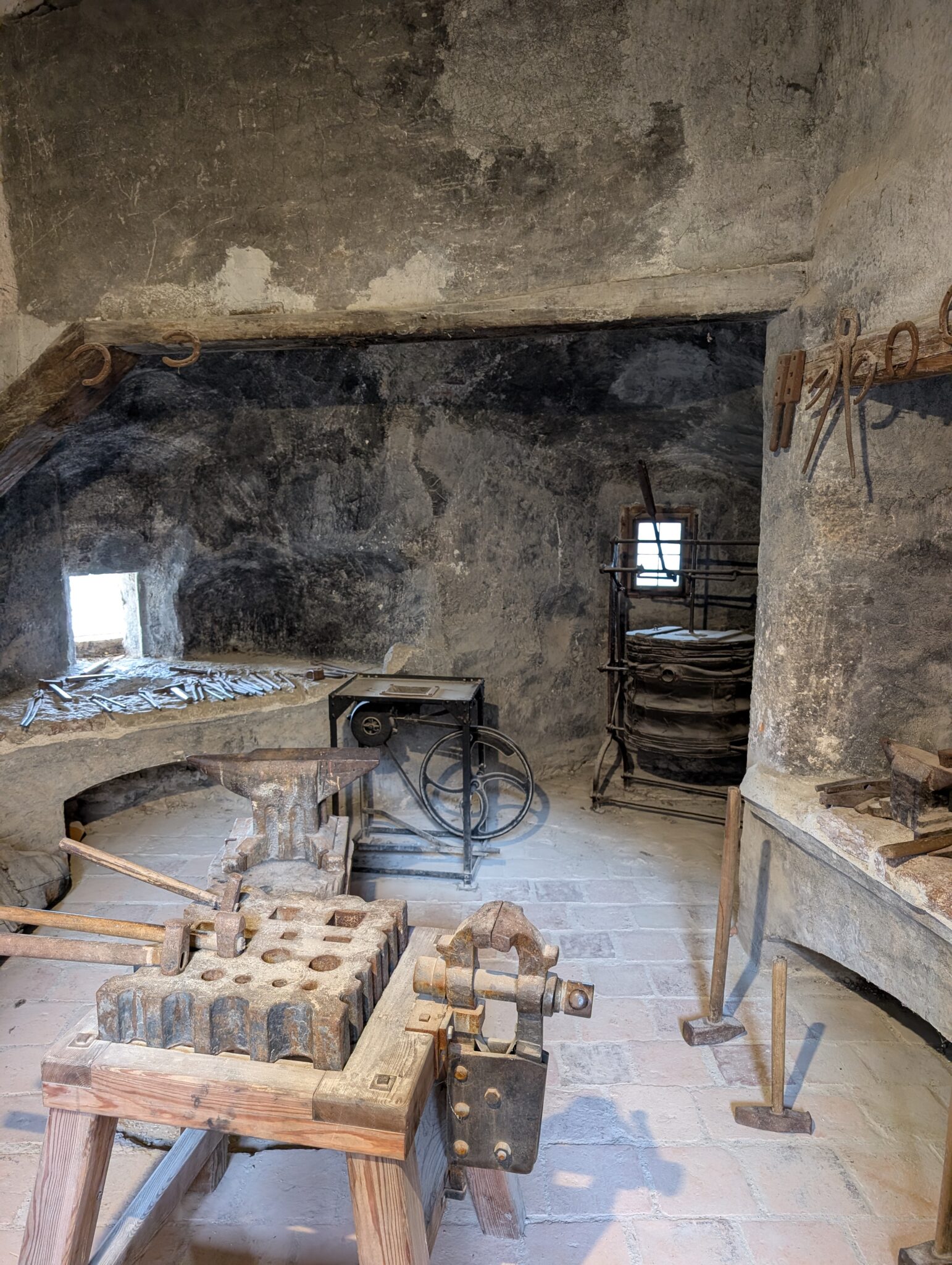
View from atop the tower in the fortress Inner courtyard area of the Hohensalzburg Fortress Interior of St. George's Church (St. Georgs Kirche) inside Hohensalzburg Fortress. An interior courtyard or structural section of the historic Hohensalzburg Fortress Blacksmith workshop inside the Hohensalzburg Fortress.
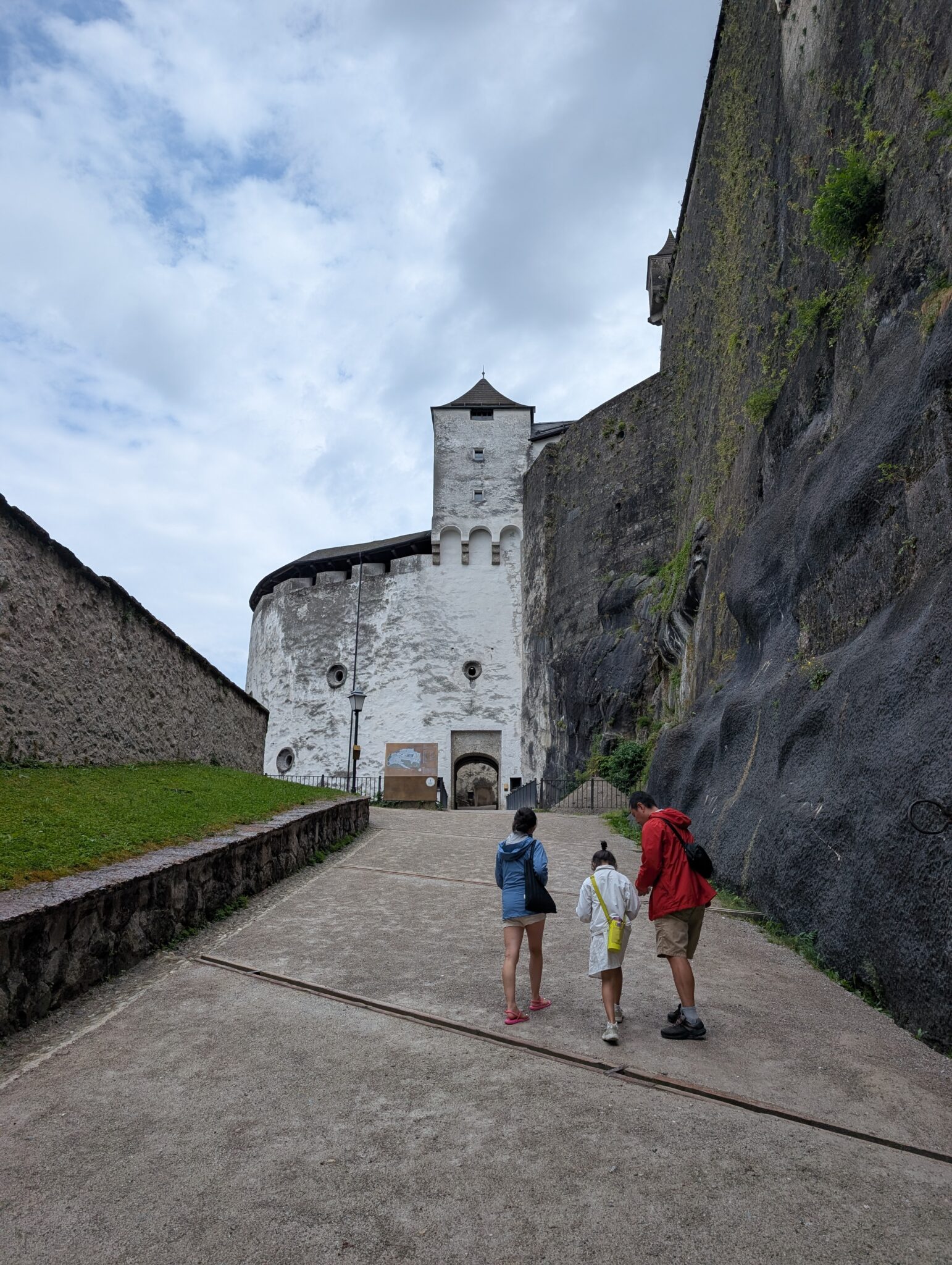
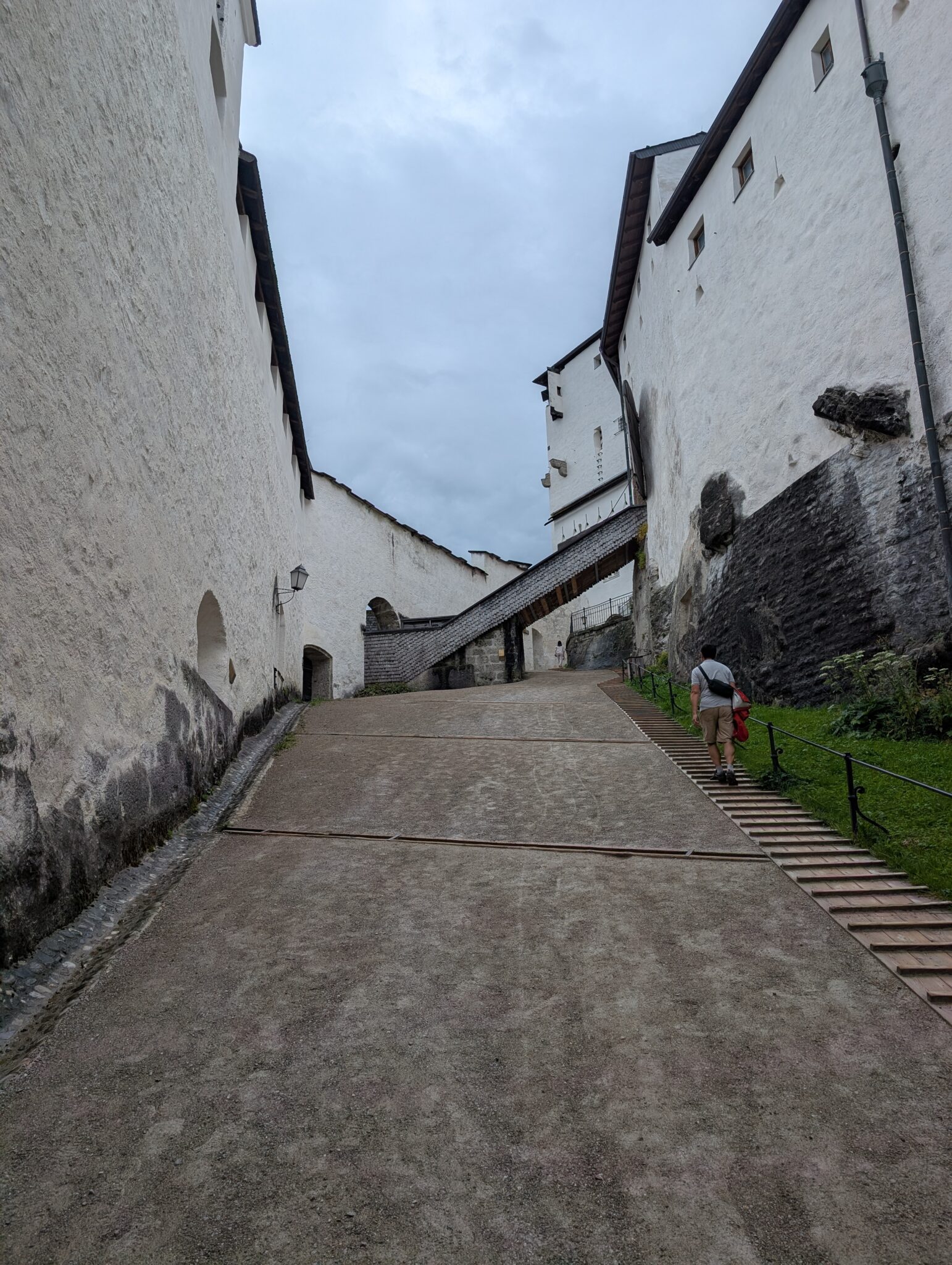
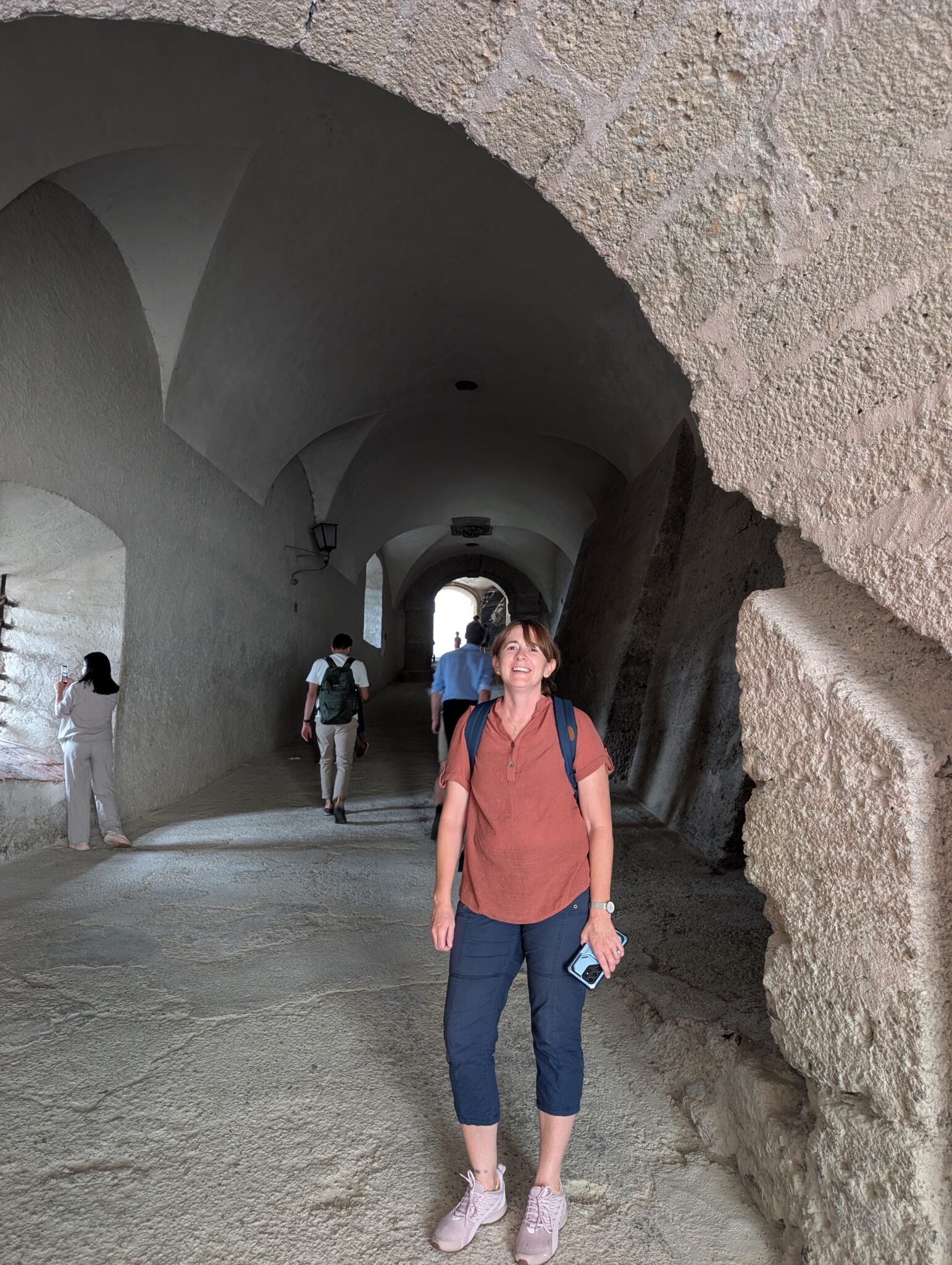
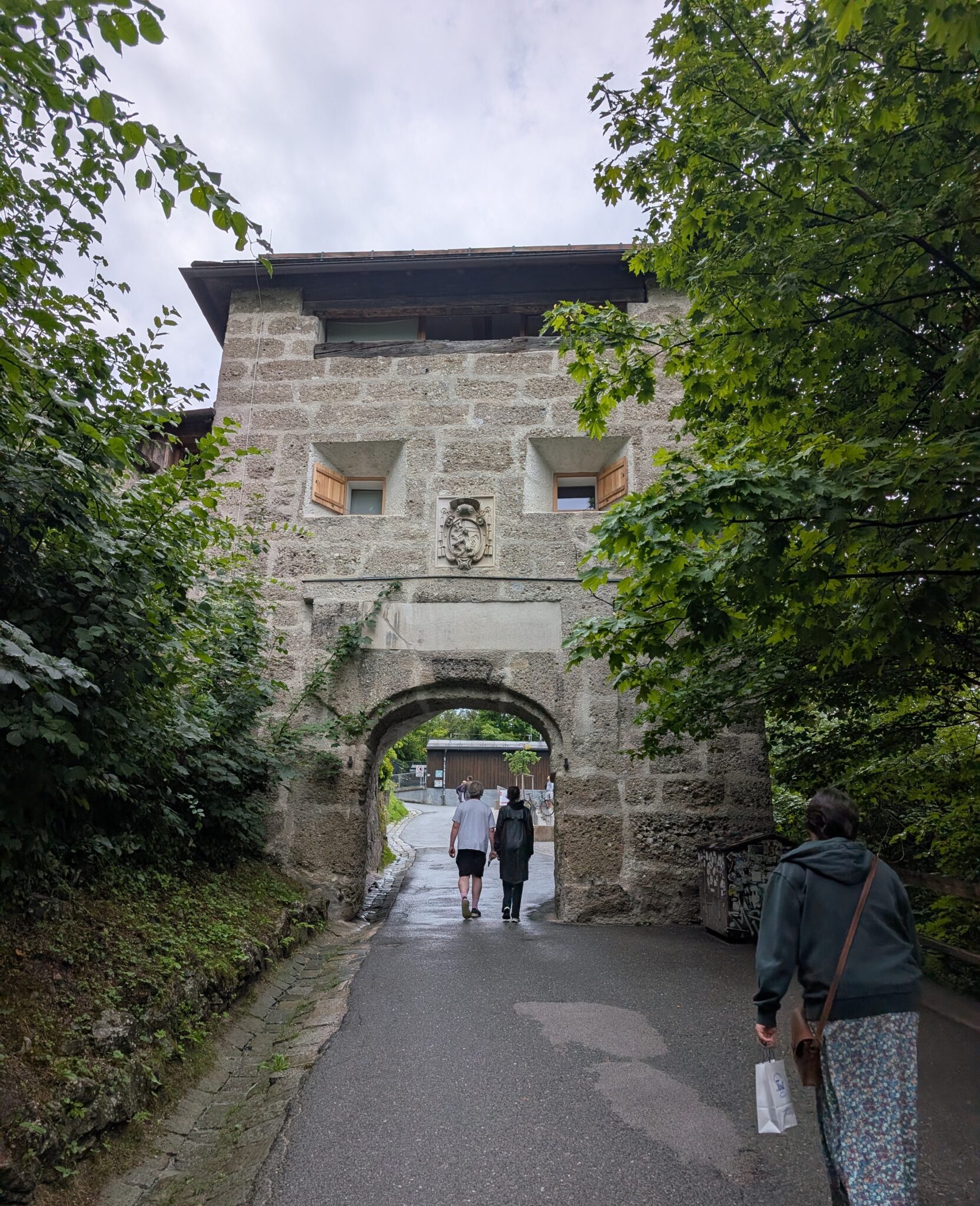
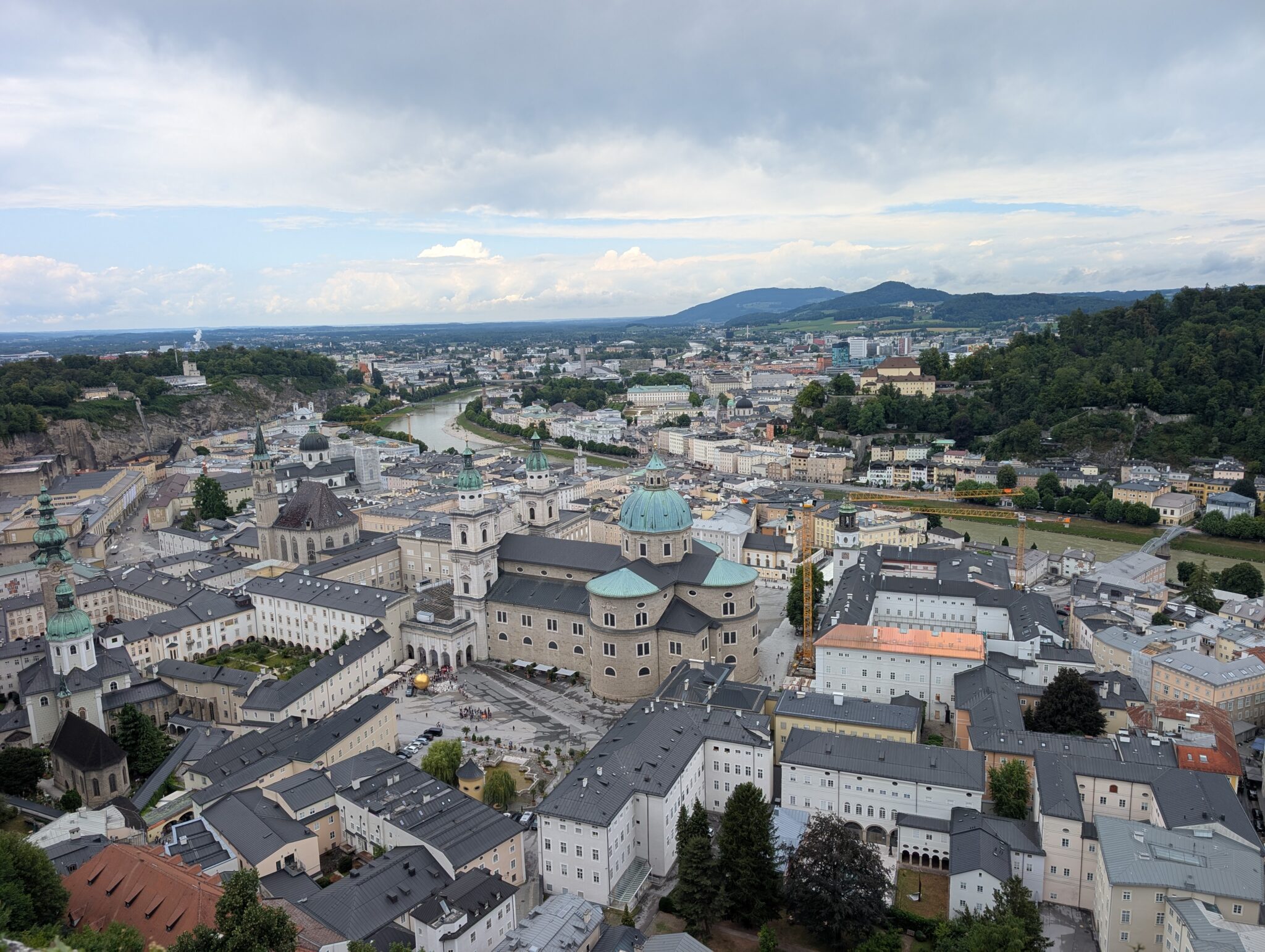
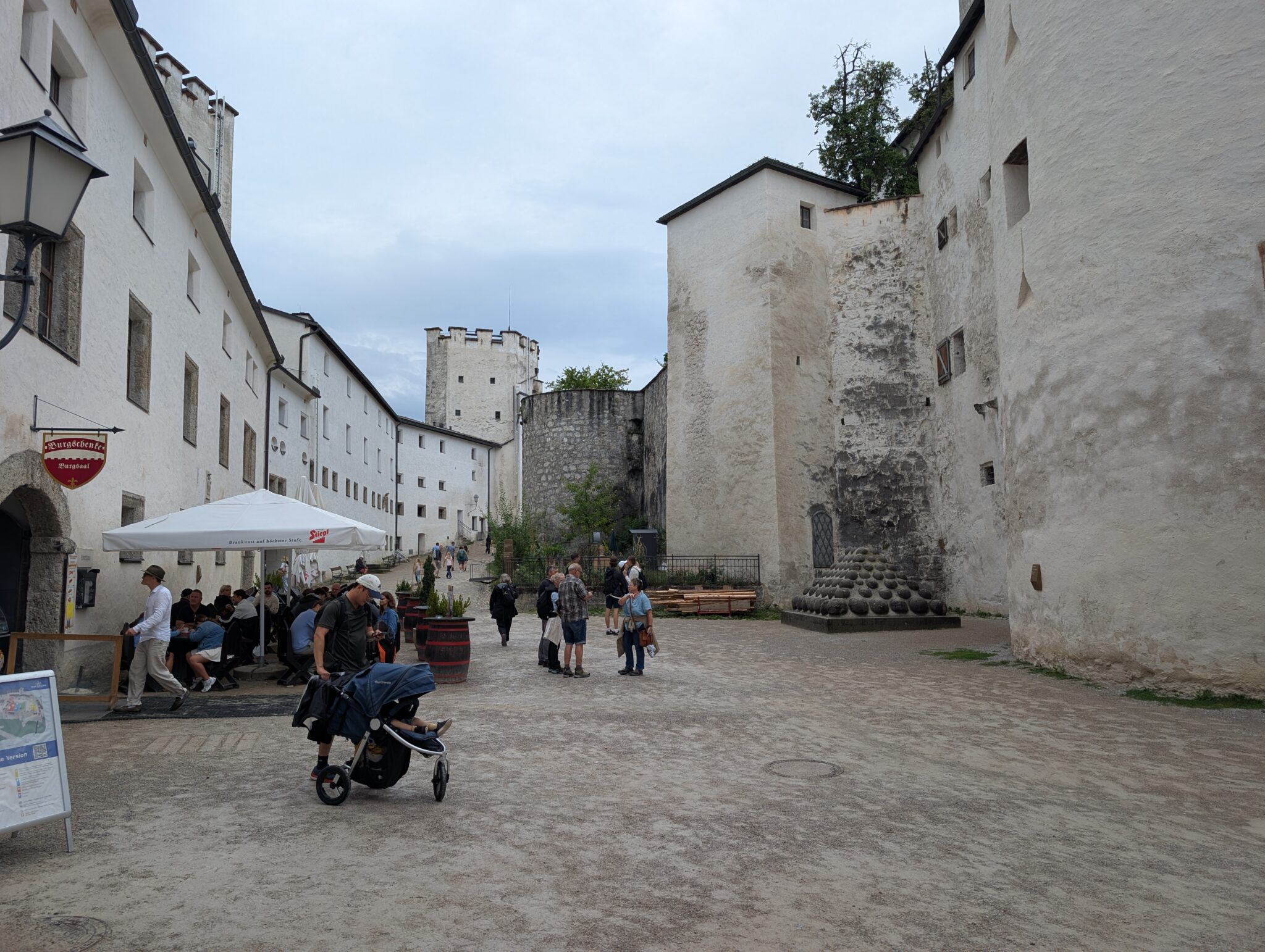
After lunch, we decided to walk up the steep slopes to Hohensalzburg Fortress (High Salzburg Fortress) to work off our lunch.
The walk can be quite steep in places, but it was also beautiful. Parts of the path follow cobblestone streets while other sections wind through trees. Since we were visiting on a warm day, the shade from the trees was a welcome break from the sun.
Once we reached the top and entered the fortress gates, we were greeted by massive medieval walls, courtyards, towers, and historic buildings.
Walking through the courtyards, I could easily imagine all the activity that must have taken place here during the Middle Ages. The fortress was essentially a self-contained medieval stronghold, with everything needed to protect and house its inhabitants.
As we continued through the fortress, we entered St. George's Church, a small Gothic church with ornate details and unusual carved decorations on the exterior.
From there, we made our way into the Golden Hall, one of the most impressive interiors in the fortress. The elaborate ceiling and decorative details provide a glimpse into the wealth and influence of Salzburg's archbishops. Nearby, the Golden Chamber contains some of the fortress's most distinctive late-Gothic features.
And, of course, every great fortress needs somewhere for the elite to live. The Princes' Apartments offer a glimpse into how Salzburg's archbishops lived, entertained guests, and enjoyed their privileged position.
The Best Views in Salzburg
One of the highlights of visiting Hohensalzburg Fortress is climbing to the towers and viewpoints.
From the top, we had a bird's-eye view over Salzburg's historic center, the Salzach River, and the mountains stretching into the distance. Seeing the city from above really gave us a better appreciation for how beautifully Salzburg is situated.
For us, the views alone made the climb worthwhile.
Tip: If you want to explore Hohensalzburg Fortress without rushing, allow at least 1–2 hours. You can take the funicular to the top, but if you're up for a walk, hiking up and then walking back down is a great way to experience more of the historic city.
Hellbrunn Palace and the Trick Fountains
With only a few hours left before our train back to Vienna, we had enough time to visit one more major attraction: Hellbrunn Palace.
Located just outside Salzburg's historic center, Hellbrunn Palace was one of the most fun and unexpected stops of our day.
The palace was built in the early 17th century as a pleasure palace for Markus Sittikus von Hohenems, the Archbishop of Salzburg. It wasn't designed as a permanent residence but rather as a place where the archbishop could escape the responsibilities of court life, entertain guests, and enjoy the countryside.
After visiting the palace, I couldn't help but think that Markus Sittikus must have had quite a playful side.
The first stop on our tour was the Trick Fountains, and they were so much fun. Hidden water mechanisms activate fountains, sculptures, and moving figures, creating unexpected surprises for visitors.
We had a great time watching all of the interactive and playful water features. What makes them even more fascinating is that many of the mechanisms operate using water pressure rather than modern machinery.
It was such a quirky contrast to the grand palace and formal gardens, and definitely one of the most memorable experiences of our short visit to Salzburg.
If you're wondering what to do in Salzburg beyond the traditional castles, churches, and museums, I highly recommend adding Hellbrunn Palace to your itinerary.
Our Salzburg Day Trip from Vienna
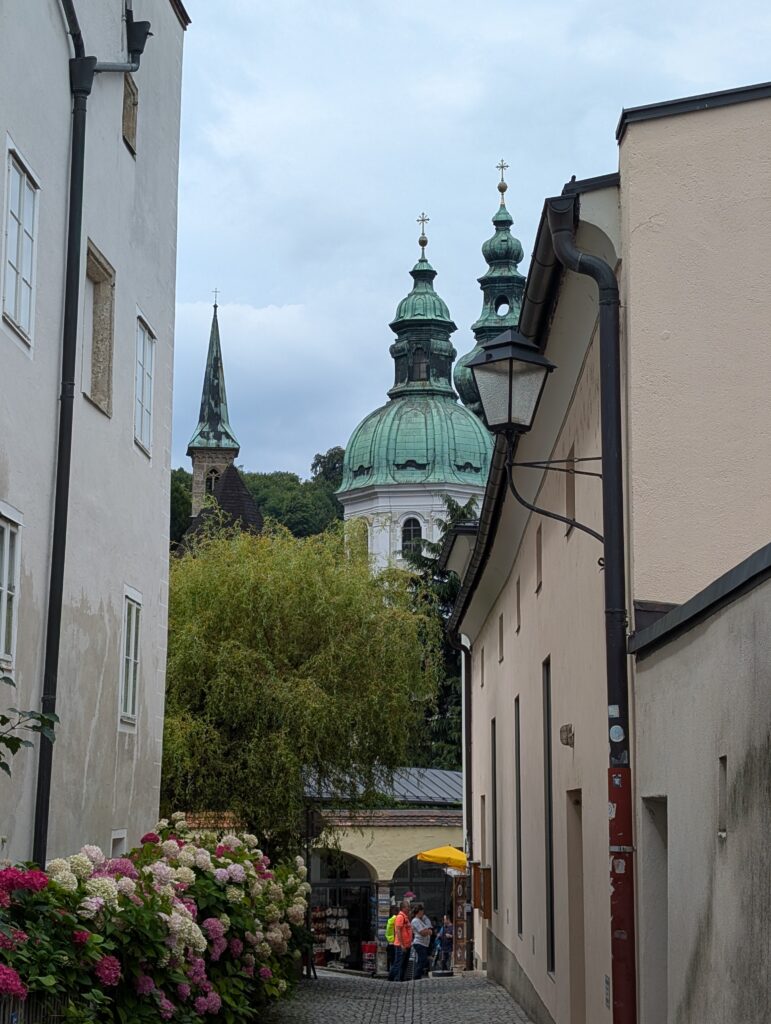
Austria—and the cities throughout the country—offer such a rich combination of history, culture, and food. You may be familiar with many traditional Austrian dishes from restaurants in the United States, but eating them in Austria is a completely different experience.
The traditional flavors, local ingredients, and cooking techniques give familiar dishes a different character, and one of our favorite parts of traveling is discovering those differences firsthand.
We really enjoyed our short time on our Salzburg Day Trip from Vienna, but six hours for definitely wasn't enough. There was so much more we wanted to see, and even more Austrian food we wanted to try.
If we could do it again, I would spend at least two days in Salzburg rather than visiting as a day trip from Vienna. That would give us more time to explore the Old Town, visit additional attractions, enjoy more traditional Austrian food, and experience Salzburg at a slower pace.
Still, our quick visit gave us a wonderful introduction to this beautiful Austrian city—and plenty of reasons to come back.
More Great Central European Destinations and Regional Food Recipes
Exploring Budapest Through Food: A Food Lover's Guide to Hungary's Capital
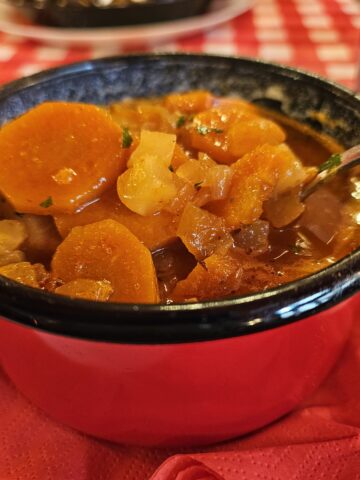
Authentic German Goulash Recipe
German Paprika Schnitzel With Spicy Paprika Sauce
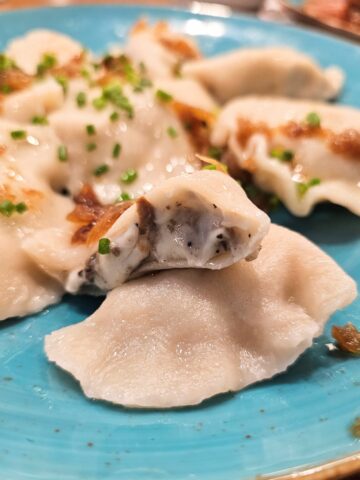
Exploring Krakow Through Food: Polish Dishes, Historic Old Town & Wieliczka Salt Mine
Coming Soon
- Szentendre: A Colorful Day Trip from Budapest
- Bucharest Romania
- Bulgaria

Comments
No Comments