
Most trips only give you a snapshot of a city. You see the major sights, eat a few memorable meals, and leave just as you're beginning to understand the place. My husband and I wanted something different, so we made a much bigger leap—we moved to Budapest for a year to immerse ourselves in Hungarian culture, exploring Budapest through food, and use the city as a base for exploring Hungary and the rest of Eastern Europe.
My husband is teaching English in the local school system, while I’m documenting our food and travel experiences and developing recipes inspired by the places we visit. Instead of rushing from attraction to attraction, we’ve had the rare opportunity to experience Budapest as temporary locals.
During our very first week, we walked mile after mile through the city’s neighborhoods, crossing the Danube, wandering the cobblestone streets of the Buda Castle District, getting lost in the Jewish Quarter, and stopping whenever the smell of fresh bread, paprika, grilled sausage, or chimney cake pulled us toward a bakery or market stall. Those walks became our introduction to Budapest.
We quickly realized that the city reveals itself through its food. Every neighborhood has its own personality, and every market, café, and restaurant tells part of Hungary’s story. A bowl of goulash connects you to centuries of Hungarian cooking traditions, a crispy piece of lángos introduces you to the country’s beloved street-food culture, and a warm chimney cake fresh from the oven feels like a taste of Budapest itself.
From exploring centuries-old castles and grand cafés to sampling traditional dishes and discovering modern Hungarian food experiences, Budapest has become one of our favorite cities to explore one bite at a time. The best part is that these experiences don’t feel like a vacation anymore—they feel like everyday life, because for this year, Budapest is home.
Jump to:
Budapest: A City Where History and Food Come Together
A Brief History of Who Controlled Hungary influencing its traditions and food
| Time Period | Ruling Group / Empire | Influence on Hungary |
| Before 1st Century AD | Celtic Tribes | Early settlements, trade routes, and agricultural traditions in the Carpathian Basin. |
| 1st–5th Century | Roman Empire | Established the province of Pannonia along the Danube. Built roads, towns, and Aquincum (modern Budapest), introducing Roman architecture and infrastructure. |
| 5th Century | Huns | Controlled parts of the region under Attila the Hun. Later Hungarian legends connected the Magyars with the Huns. |
| 6th–9th Century | Avars, Slavs & Germanic Tribes | Several groups controlled the region, leaving cultural and archaeological influences before the arrival of the Hungarians. |
| 895–896 | Magyars (Hungarians) Arrive | The Magyar tribes settled the Carpathian Basin in the Hungarian Conquest (Honfoglalás), forming the foundation of modern Hungary. |
| 1000–1526 | Kingdom of Hungary | Established by King Stephen I. Hungary became a powerful medieval kingdom with its own language, culture, and traditions. |
| 1526–1699 | Ottoman Empire & Habsburgs | After the Battle of Mohács, Hungary was divided. Ottoman rule introduced influences like Turkish baths, coffee culture, and new spices. |
| 1699–1867 | Habsburg Monarchy | Hungary became part of the Habsburg Empire. Austrian influence shaped architecture, government, and café culture. |
| 1867–1918 | Austro-Hungarian Empire | Budapest entered a golden age with major landmarks built, including the Parliament Building, Chain Bridge, and grand cafés. |
| 1918–1945 | Independent Hungary (interwar period) | After WWI and the Treaty of Trianon, Hungary lost significant territory and faced political instability. |
| 1945–1989 | Soviet Influence / Communist Hungary | Hungary became a communist state under Soviet influence, shaping politics, economy, and daily life. |
| 1989–Present | Modern Republic of Hungary | Hungary transitioned to democracy, joined NATO (1999) and the European Union (2004), becoming a major cultural and travel destination. |
How This History Shaped Budapest Today
Walking through Budapest is like walking through centuries of history. Roman ruins, medieval castles, Ottoman baths, Habsburg architecture, Jewish heritage sites, and elegant cafés all exist side by side. This rich blend of cultures is reflected in Hungarian cuisine, from paprika-rich stews and hearty comfort foods to delicate pastries, coffeehouse traditions, and modern fusion dishes.
One thing I've quickly discovered while exploring Budapest through food is just how much Hungarians love their pastries. Bakeries seem to be on nearly every corner, tempting passersby with flaky croissants, strudels, chimney cakes, sweet rolls, and puff pastries. Another surprise has been the popularity of Nutella—it's used in everything from crêpes and pastries to chimney cakes and breakfast treats. After seeing it featured in so many local bakeries, It reminded me of my own easy dessert: 3 Ingredient Banana & Nutella Puff Pastry. It's a simple recipe that captures the city's love of buttery pastry and rich chocolate-hazelnut flavor, making it easy to bring a little taste of Budapest into your own kitchen.
How This History Shaped Hungarian Food
Hungarian cuisine is really a reflection of these centuries of cultural exchange:
- Romans: agriculture, vineyards, and trade routes
- Magyars: meat-based dishes, stews, paprika traditions
- Ottomans: paprika peppers, coffee culture, spices
- Austrians: pastries, café culture, desserts
- Jewish communities: breads, pastries, and regional dishes
- Balkan influences: grilled meats and flavors
This is why exploring Budapest through food is so fascinating—each dish carries a piece of Hungary's complicated and diverse history.
Want to Save This Recipe?
Enter your email & I'll send it to your inbox. Plus, get great new recipes from me every week!
By submitting this form, you consent to receive emails from Went Here 8 This.
Exploring Budapest One Neighborhood at a Time
When we first arrived in Budapest, our apartment was on the Buda side of the Danube River. While Buda is generally quieter and less touristy than Pest, it was the perfect home base—centrally located with easy access to both sides of the city.
Budapest is divided by the Danube River, with Buda to the west and Pest to the east. During our first week, we weren't quite ready to tackle the city's bus and metro system, so we simply walked everywhere. Those miles of exploring turned out to be one of the best decisions we made. We wandered through quiet residential streets, stumbled across neighborhood cafés, found local markets and restaurants, and slowly began to understand how each district has its own unique personality.
Once we discovered the BudapestGO app, getting around became even easier. For about $30 per month, we could ride buses, trams, and the metro throughout the city, making it simple to reach nearly any attraction in Budapest in under 30 minutes. While we still love walking whenever possible, Budapest's public transportation system is one of the easiest and most affordable we've used.
Buda Castle District

Buda Castle (Royal Palace) complex situated on Castle Hill in Budapest with the Danube River in the foreground. Historic Buda Castle with the Szechenyi Chain Bridge in the foreground connecting Buda to Pest Matthias Church in Budapest, a landmark famous for its ornate Gothic Revival architecture and colorful roof tiles 
Fortuna Street located in the historic Castle Hill district of Budapest. Tower of the Church of Saint Mary Magdalene, also known as the Buda Tower, located in the Buda Castle district 
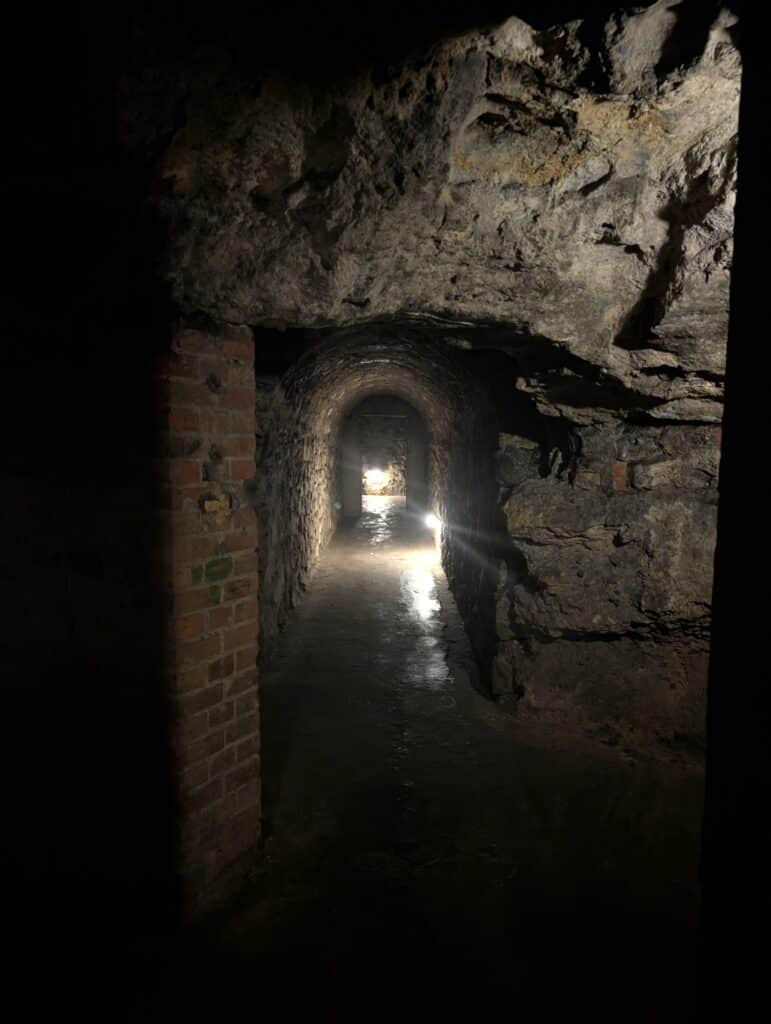
View from atop Mary Magdalene Tower overlooking the ruins around the tower Entrance to Fisherman's Bastion in the Buda Castle District of Budapest. Underground passage within the historical Buda Castle Caves Scenic panoramic view of Budapest, Hungary, featuring the Danube River dividing the city into Buda and Pest from Buda Castle. Panoramic view features the Hungarian Parliament Building, a prominent Neo-Gothic landmark located on the Pest side of the Danube River taken from Buda castle
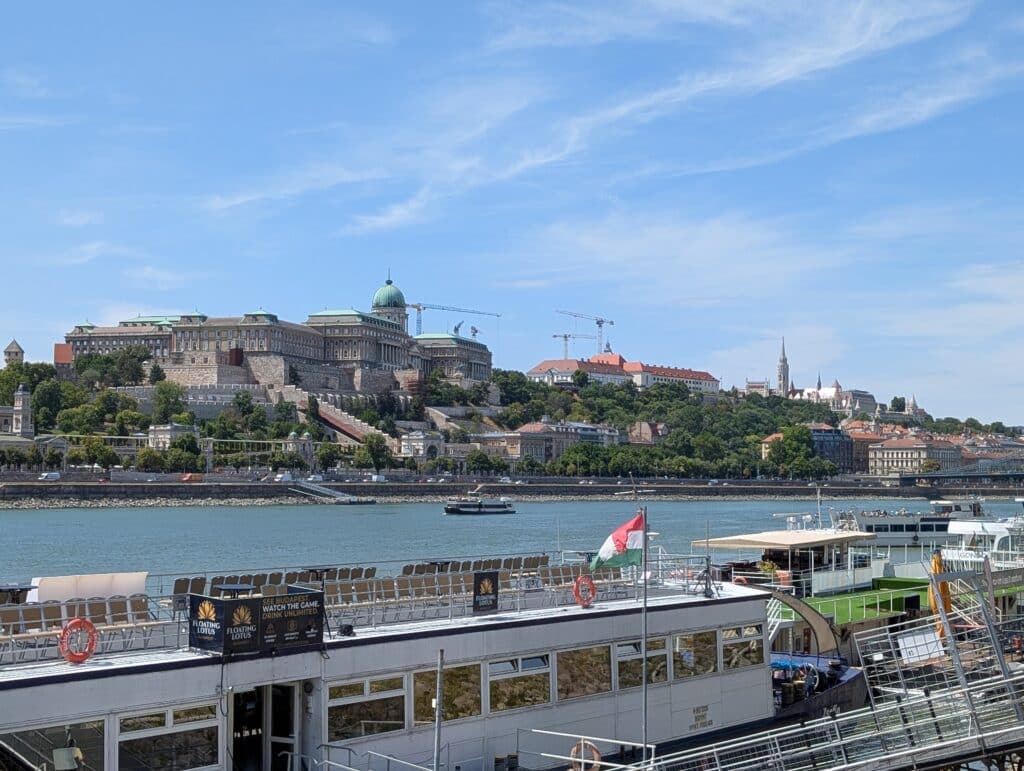
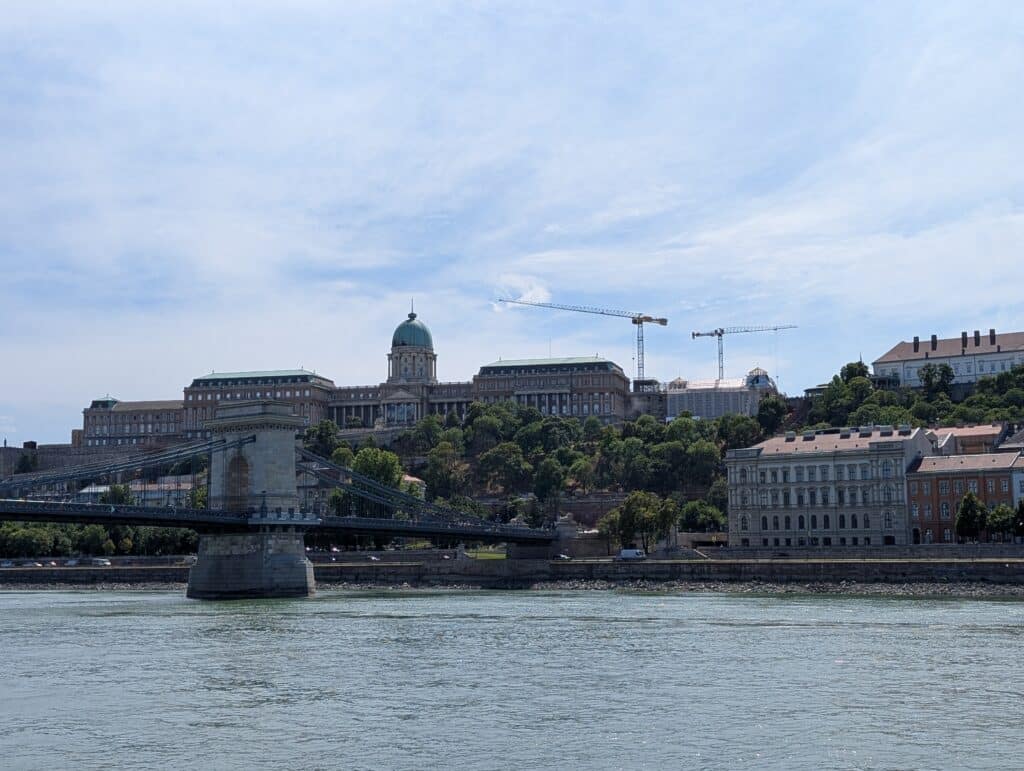
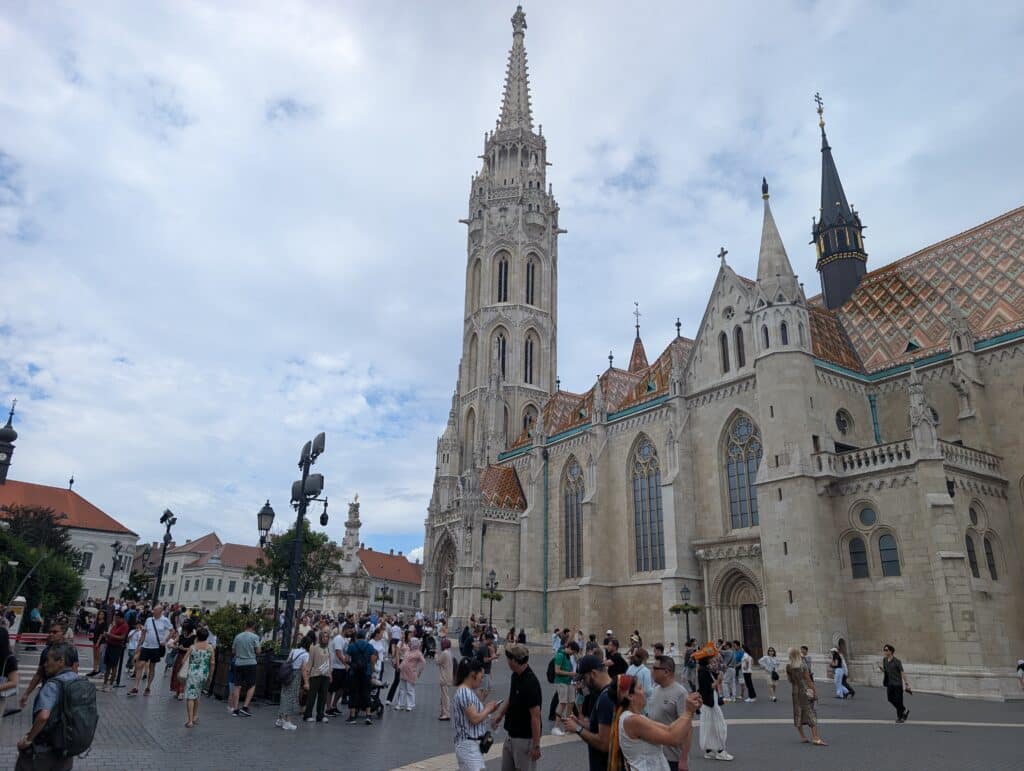
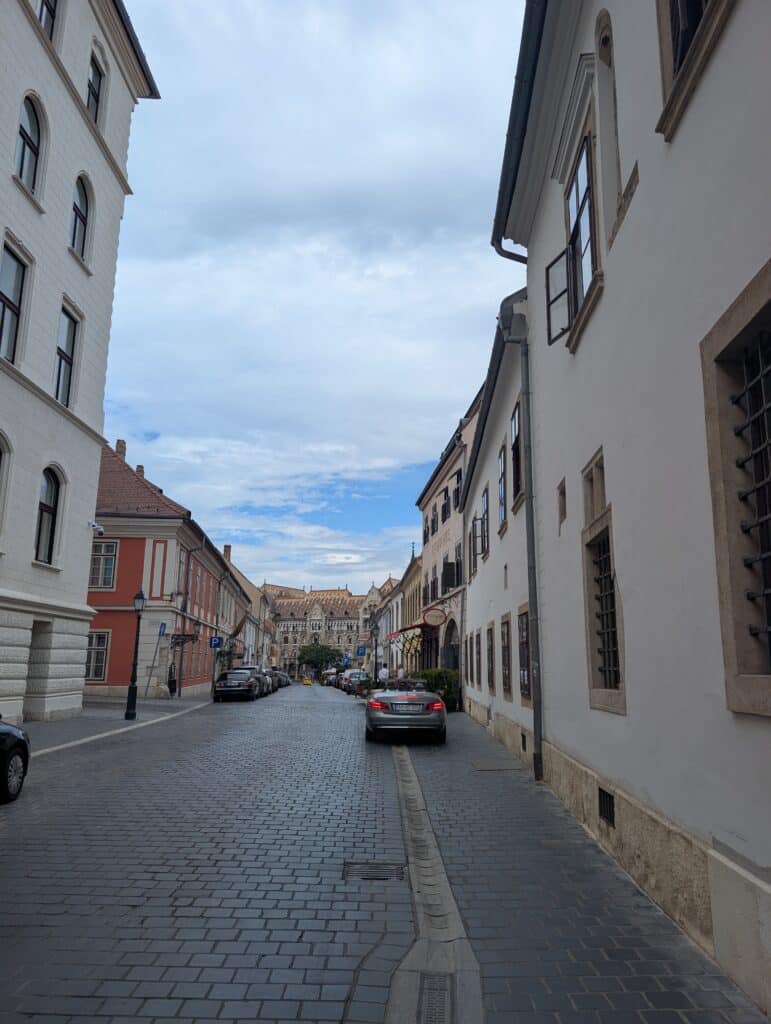
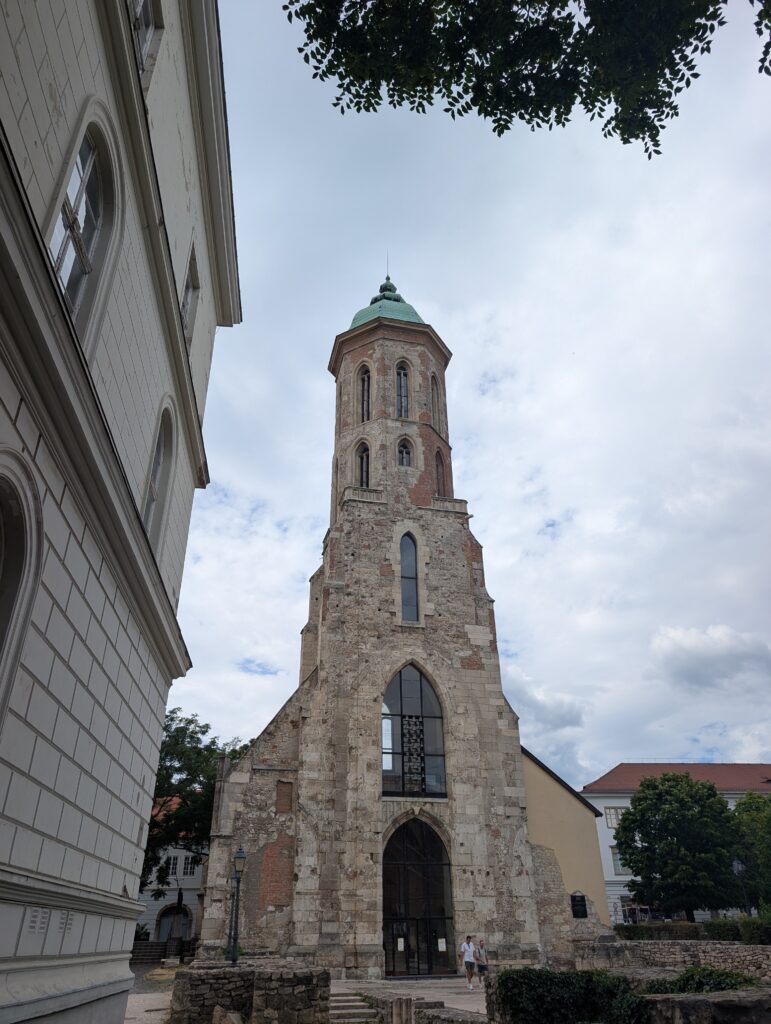
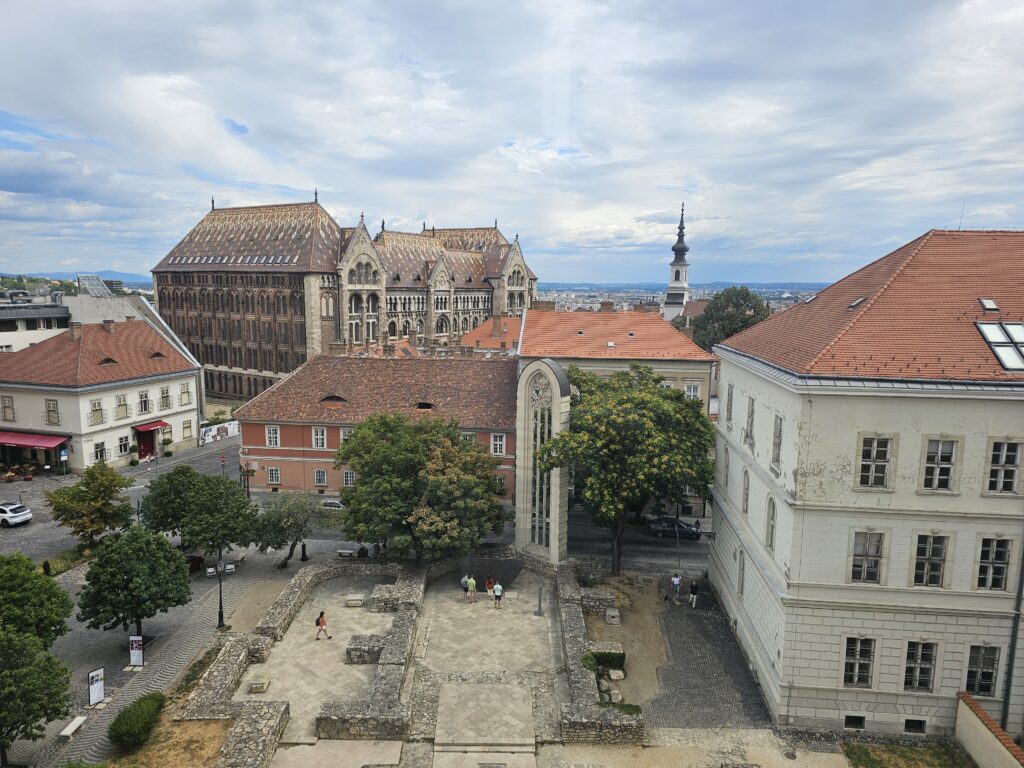
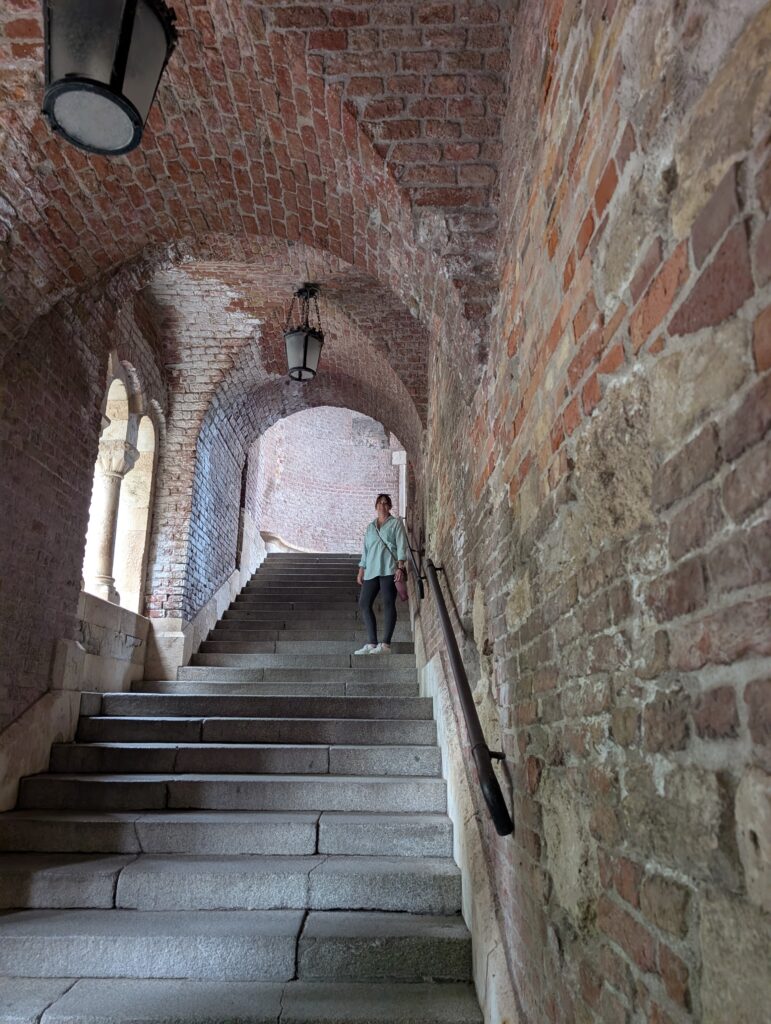
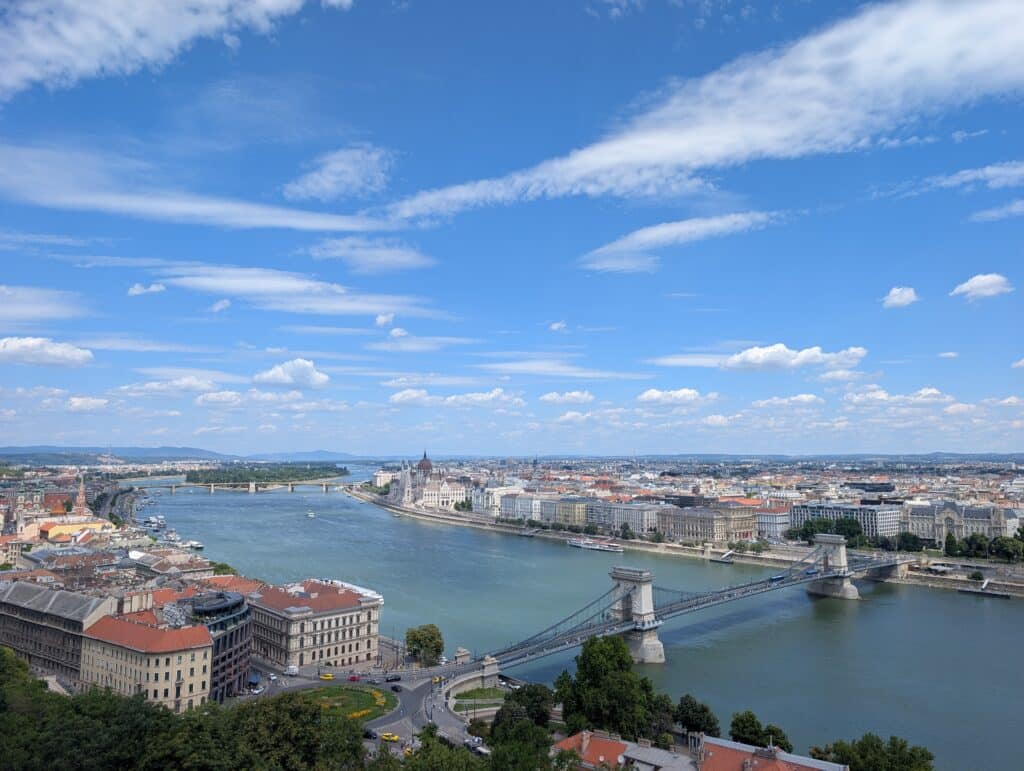
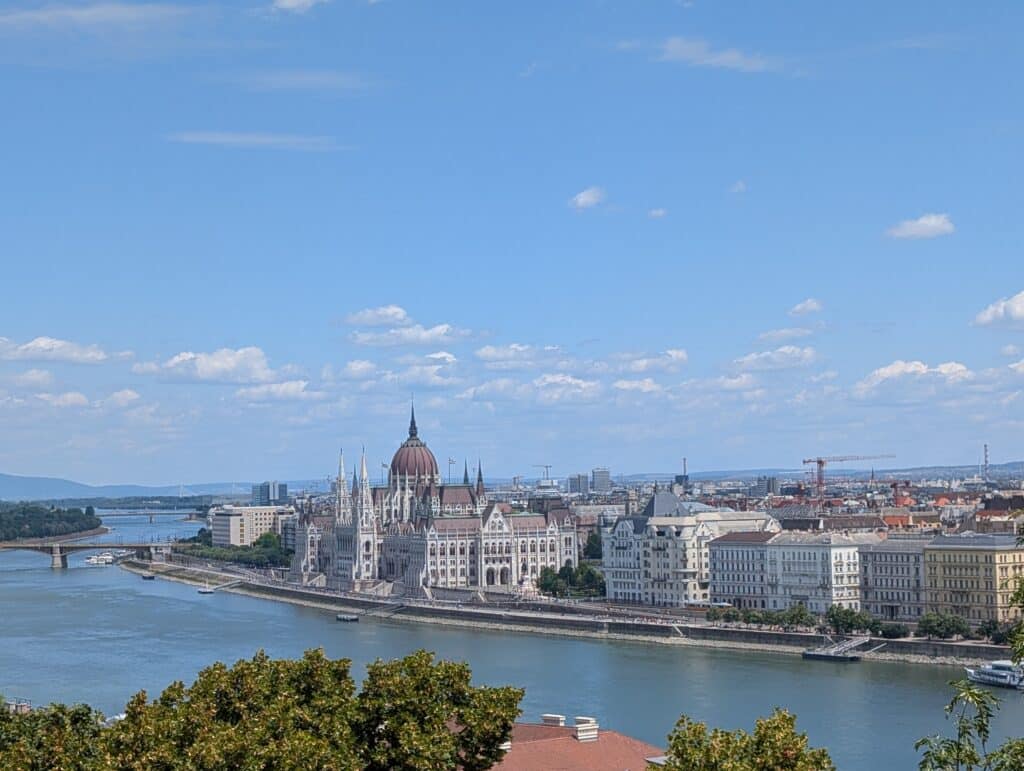
One of our first adventures was exploring the historic Buda Castle District. Perched high above the Danube, it's easy to spend an entire day wandering its cobblestone streets, medieval buildings, and spectacular viewpoints.
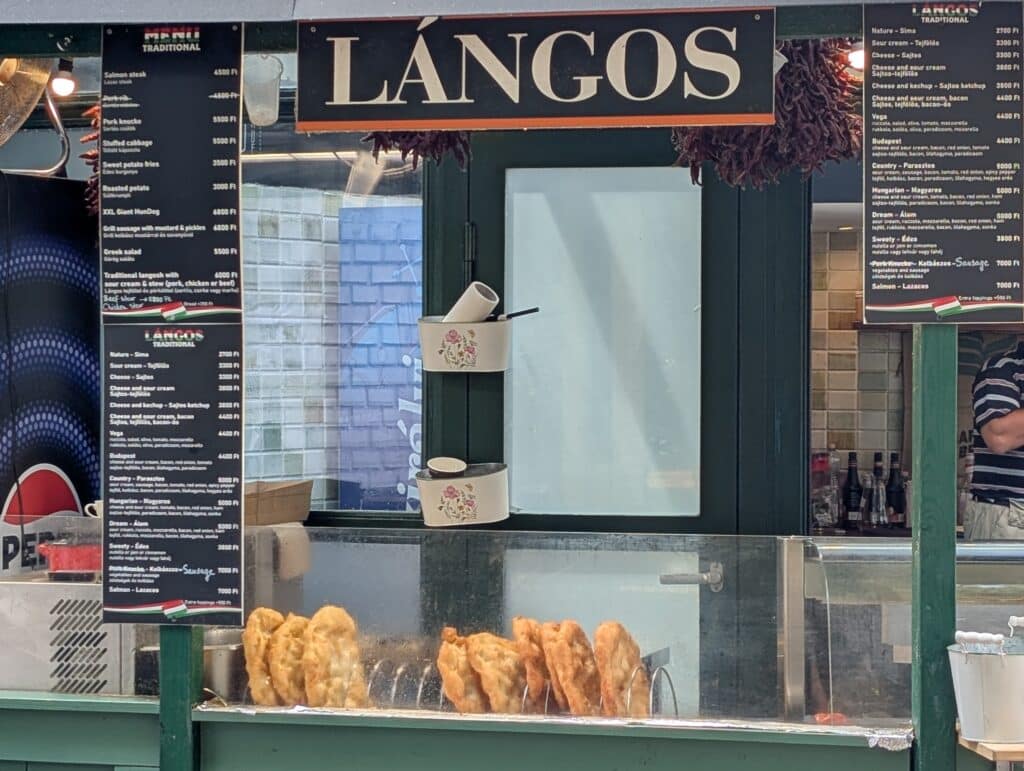
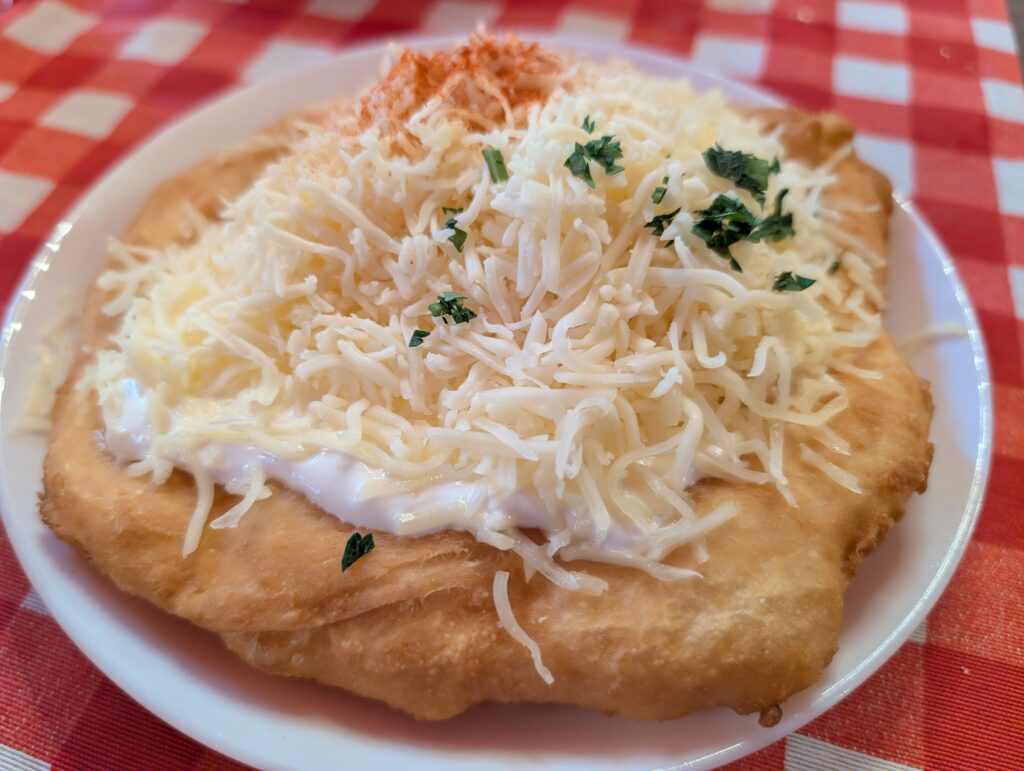
Of course, no visit would be complete without trying lángos, one of Hungary's most beloved street foods. Today it's known as deep-fried flatbread topped with everything from sour cream and cheese to bacon and onions. Traditionally, however, lángos was made from leftover bread dough and baked near the opening of a brick or clay oven before being served warm.
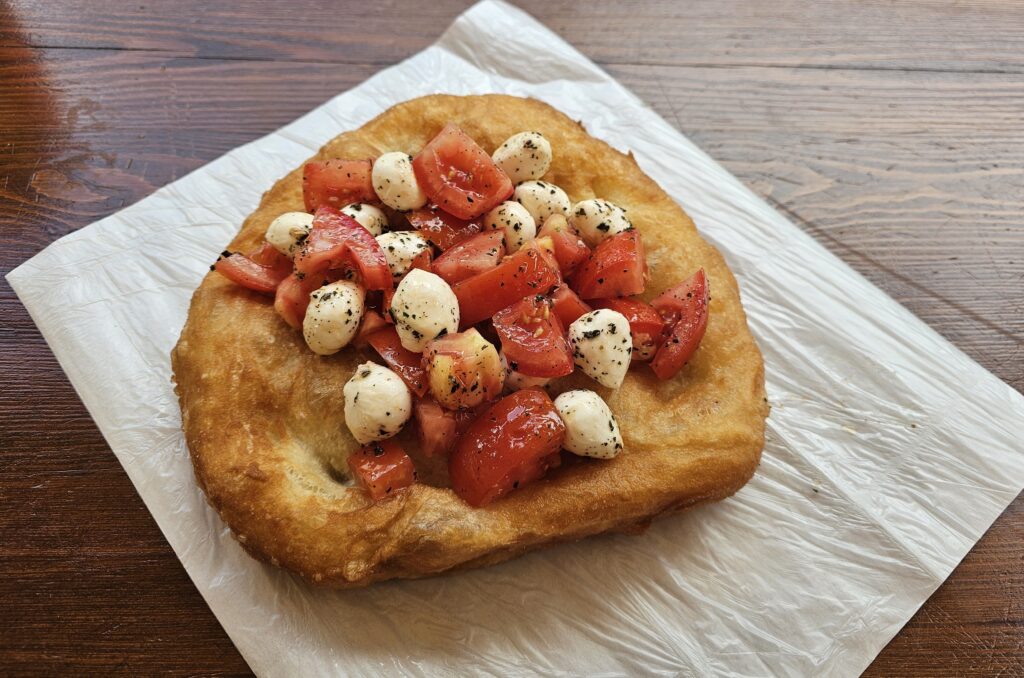
My first lángos came from a stand near the base of the Buda Castle Funicular, topped with fresh tomatoes, mozzarella, basil, and balsamic glaze—a Caprese-inspired version that was absolutely delicious. Later, I tried a more traditional version with sour cream, onions, and bacon. Exploring Budapest through food introduced me to this beloved Hungarian street food, and with so many topping combinations available, it's easy to see why lángos has become a favorite comfort food throughout the country.
Lángos is a traditional Hungarian deep-fried flatbread and available everywhere. 
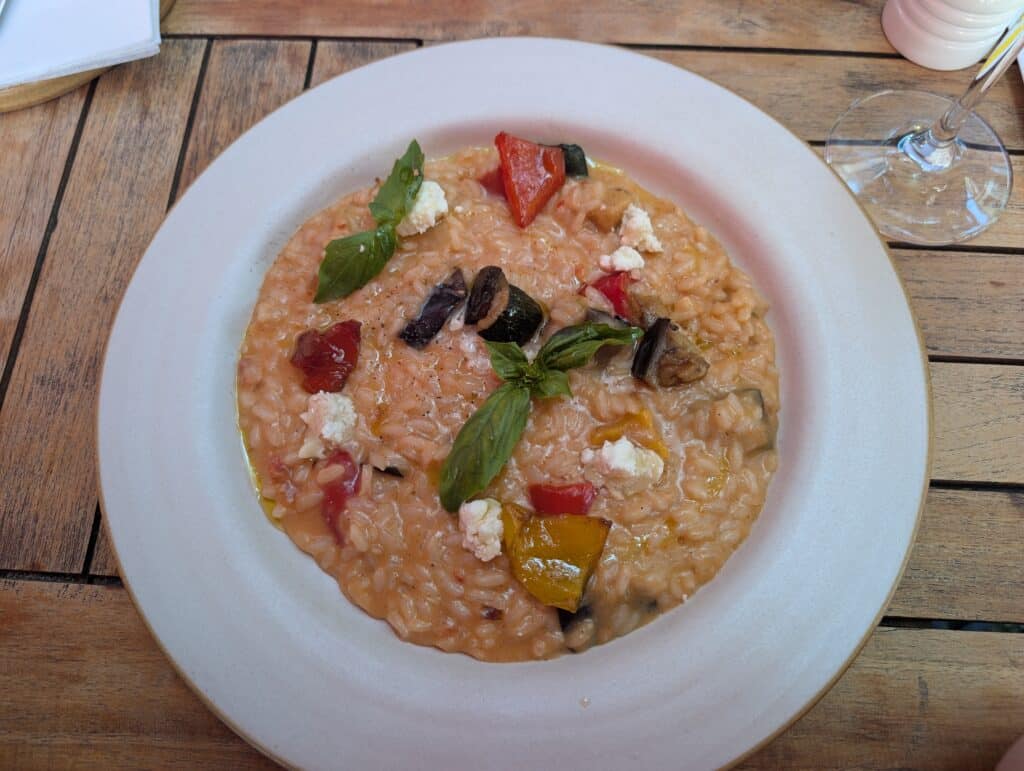
I had this delicious Caprese Lángos which is a modern, refreshing fusion twist on traditional Hungarian deep-fried flatbread, topped with fresh tomatoes, mozzarella cheese, and sweet basil. Had this Ratatouille Risotto, a creamy risotto loaded with tomatoes, eggplant, and zucchini, then topped with fresh basil leaves and crumbled cheese in the Buda Castle District. Lángos with sour cream and cheese is a famous Hungarian street food made of deep-fried yeast dough, rubbed with garlic, and topped with cold sour cream and grated cheese. I got this one at at Retro Goulash House
Whether you hike the winding paths or ride the historic funicular, the Buda Castle District is packed with incredible sights. Fisherman's Bastion offers breathtaking panoramic views over the Danube and Parliament, Matthias Church showcases stunning Gothic architecture, and the expansive Buda Castle complex is home to both the Hungarian National Gallery and the Budapest History Museum. Walking these streets feels like stepping through centuries of Hungarian, Ottoman, and Habsburg history.
For history enthusiasts, don't miss the fascinating underground cave system beneath Castle Hill. These natural caves were expanded into tunnels and later used as shelters and military facilities during World War II, offering another glimpse into Budapest's remarkable past.
The Buda Castle District is home to a wide variety of restaurants, offering everything from traditional Hungarian cuisine to Italian, Mediterranean, and other international favorites. After an afternoon of exploring the historic streets on foot, we stopped at Jamie Oliver's Italian Buda Castle and grabbed a table outside so we could relax and enjoy a little people-watching.
We shared the Ratatouille Risotto, a creamy risotto loaded with tomatoes, eggplant, and zucchini, then topped with fresh basil leaves and crumbled cheese. It was light, flavorful, and exactly what we needed after spending the afternoon wandering through one of Budapest's most beautiful neighborhoods.
Hiking to the Citadel
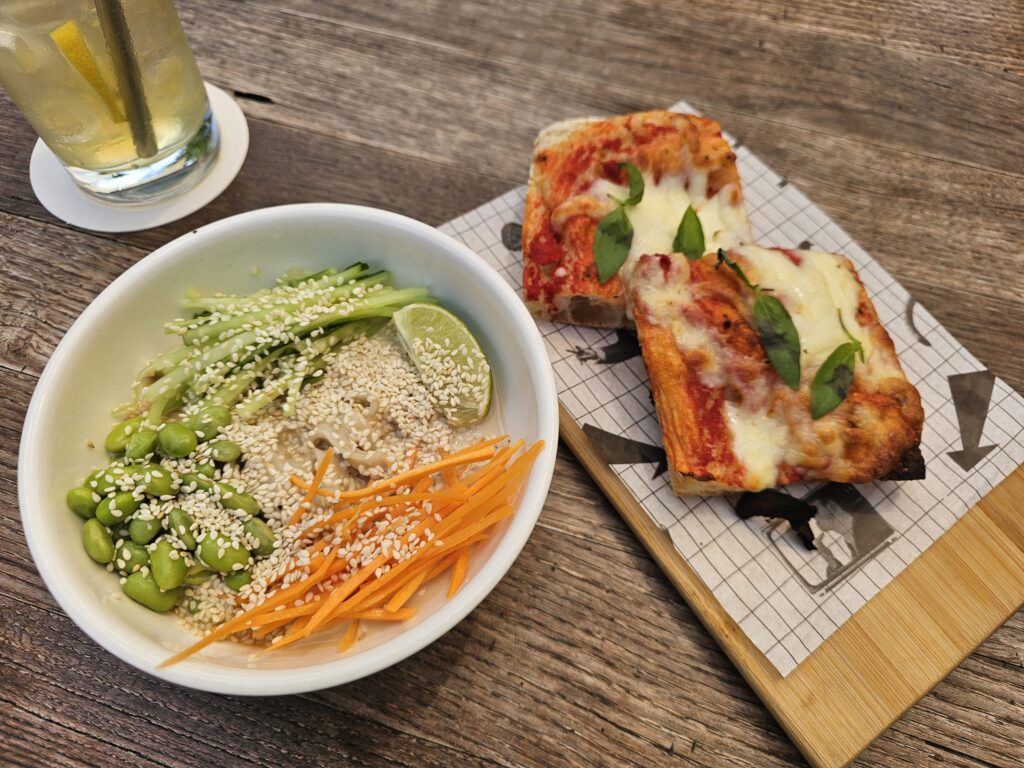
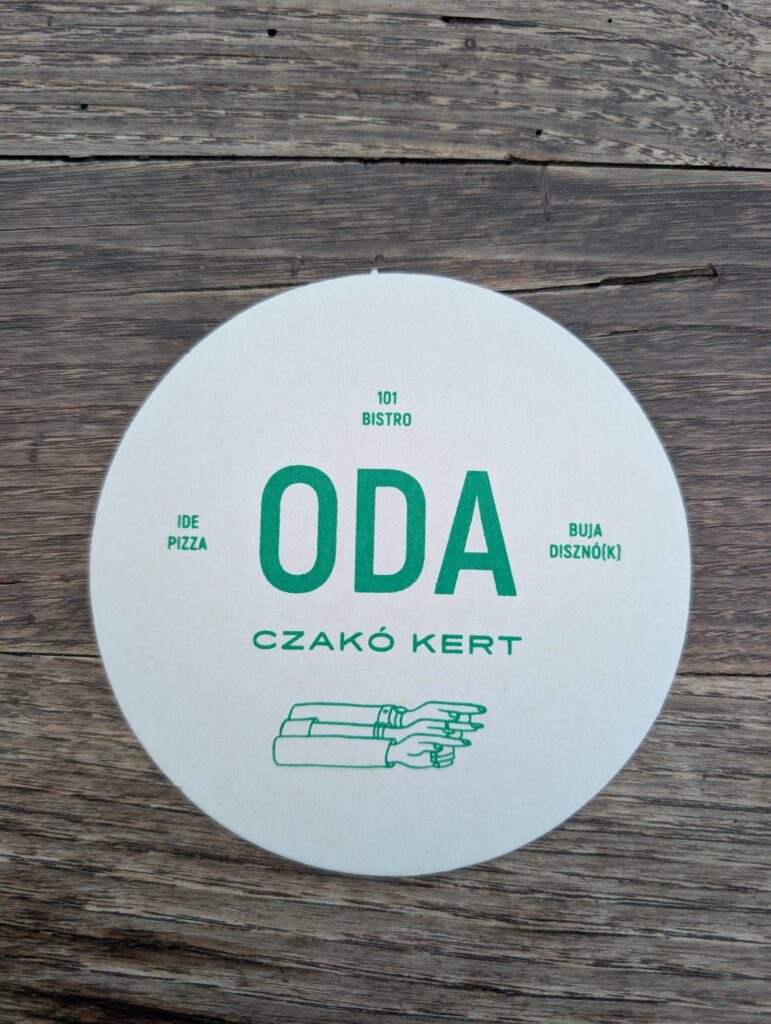
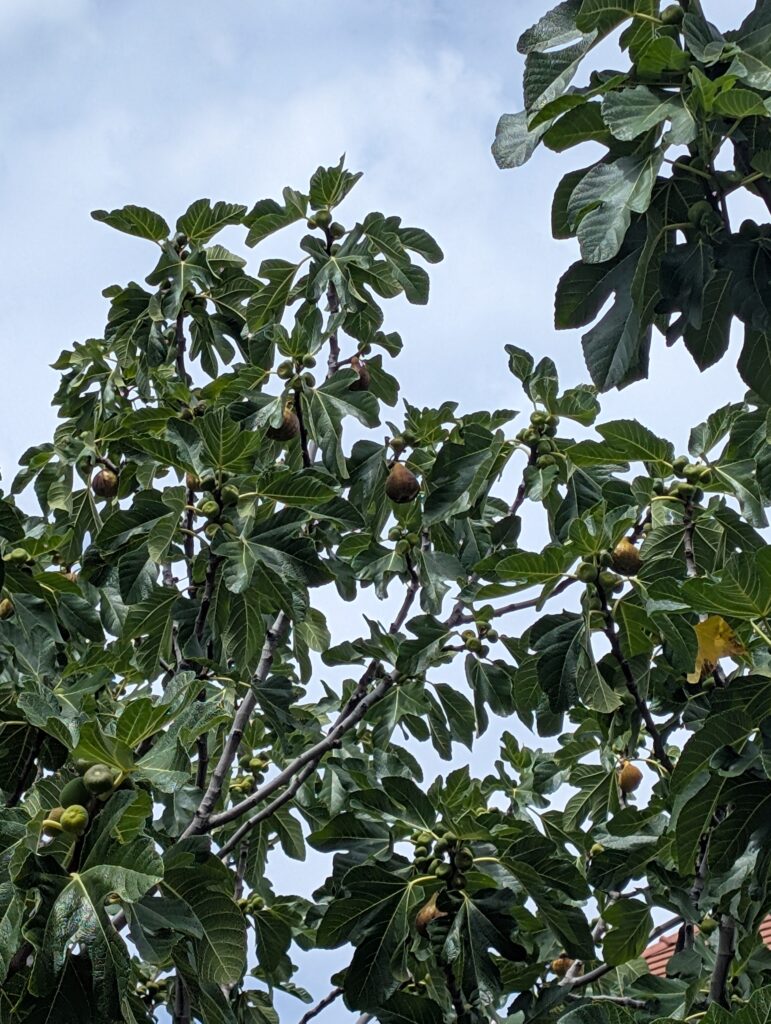
Had lunch at Oda Czakó Kert on my way up to the Citadel, had a Margherita pizza with tomato sauce, mozzarella, basil, and oregano, along with a refreshing sesame cold noodle salad filled with carrots, cucumbers, edamame, and a flavorful sesame dressing. ODA, a restaurant located in the Czakó kert garden in Budapest, Hungary Fig Tree on the streets of Budapest
Just south of Buda Castle sits the Citadel, another hilltop landmark overlooking the city. I decided to hike there from our apartment, and while the steep climb definitely tested my legs, it came with an unexpected reward.
Halfway up the winding hillside, we discovered Oda Czakó Kert, a charming café tucked among the trees. It turned out to be the perfect place to recharge before finishing the climb. We shared a classic Margherita pizza with tomato sauce, mozzarella, basil, and oregano, along with a refreshing sesame cold noodle salad filled with carrots, cucumbers, edamame, and a flavorful sesame dressing. Both dishes were outstanding and gave us the energy we needed to continue to the summit.
This is Liberty Statue that stands atop Gellért Hill, atop the Citadella fortress. A panoramic view from the Citadella on Gellért Hill in Budapest Panorama of Budapest taken from Gellért Hill and the Citadel. Such a great spot to view Budapest from high above. 
Liberty Statue (Szabadság-szobor) located on Gellért Hill in Budapest at the Citadel
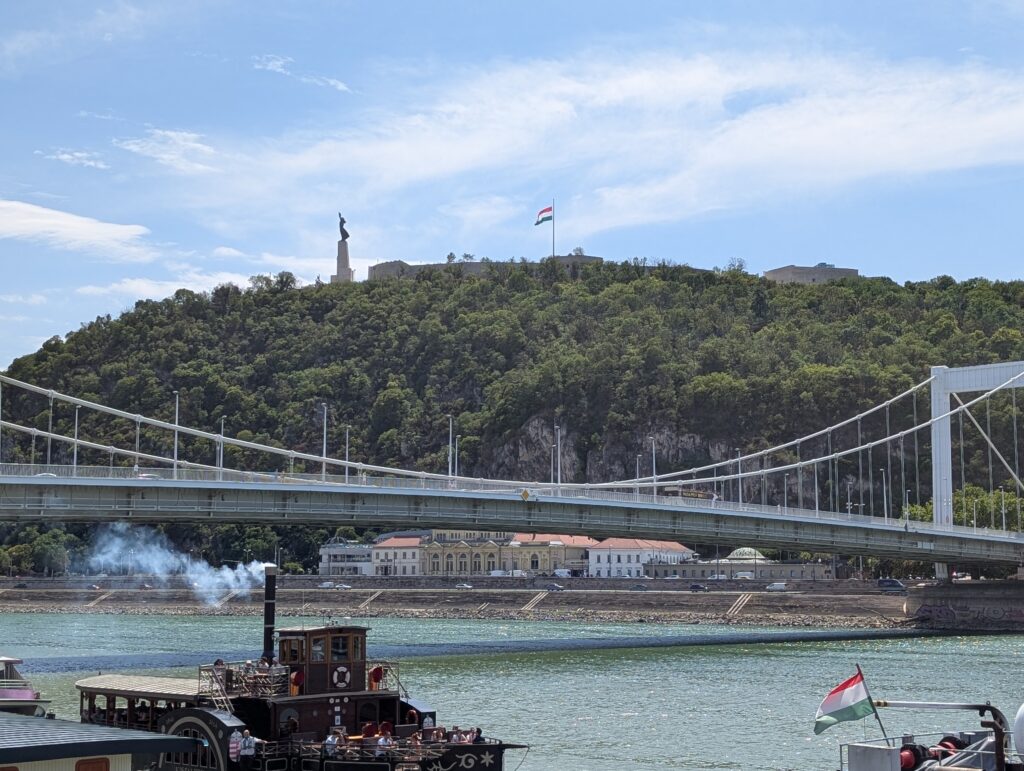
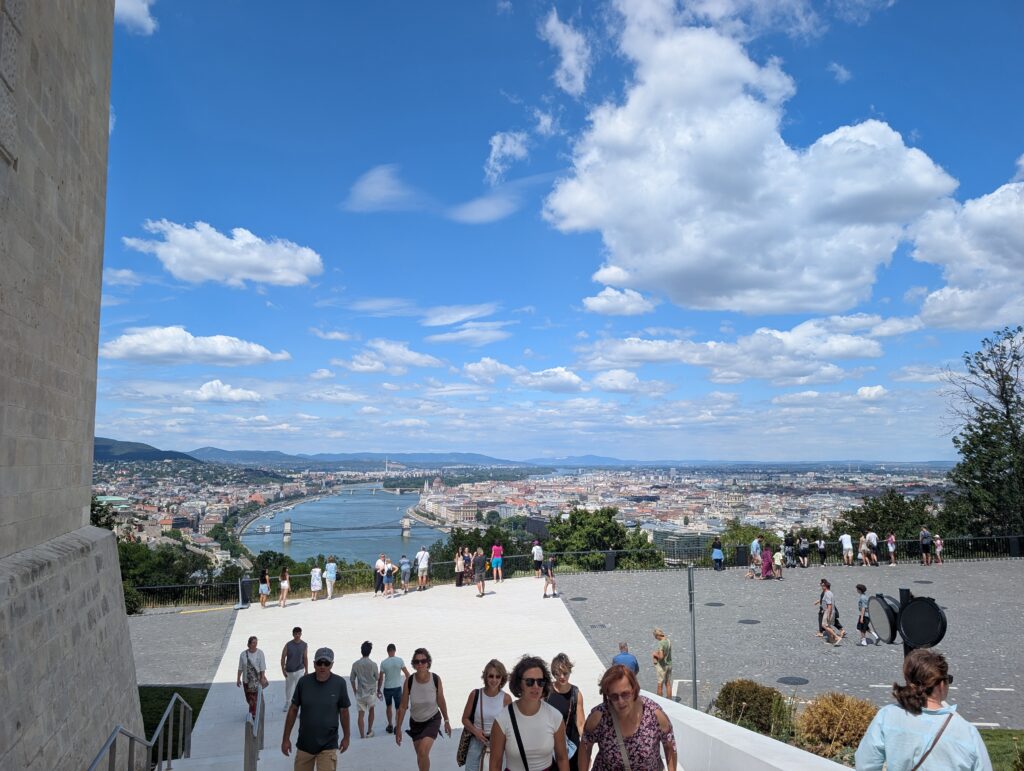
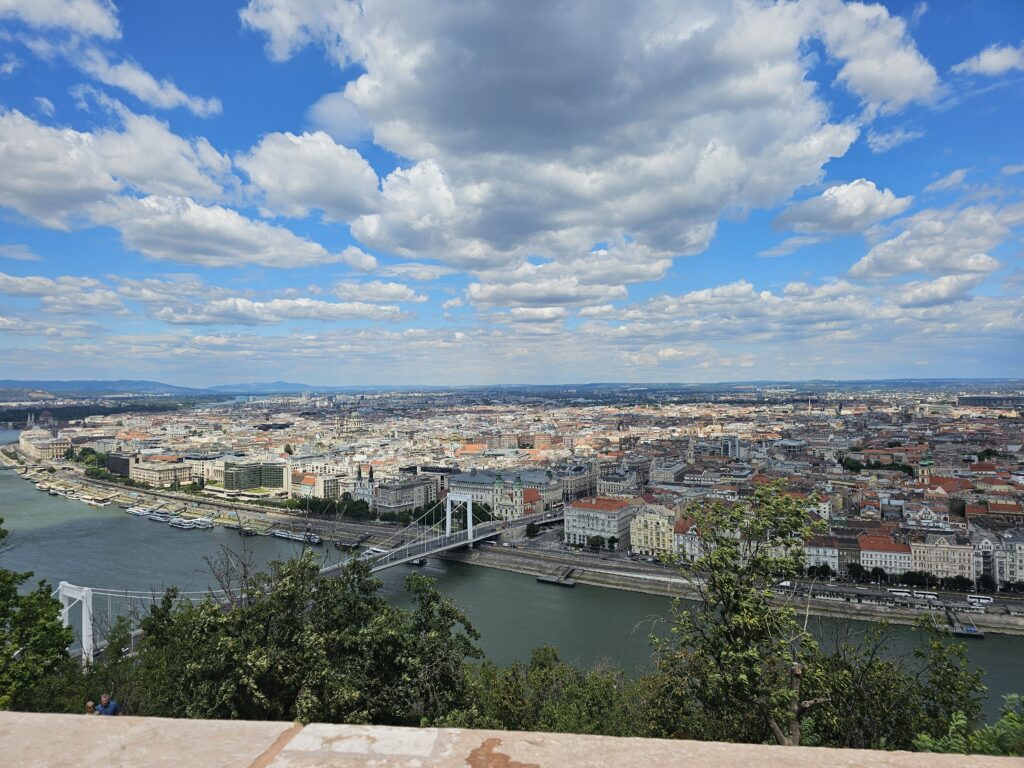
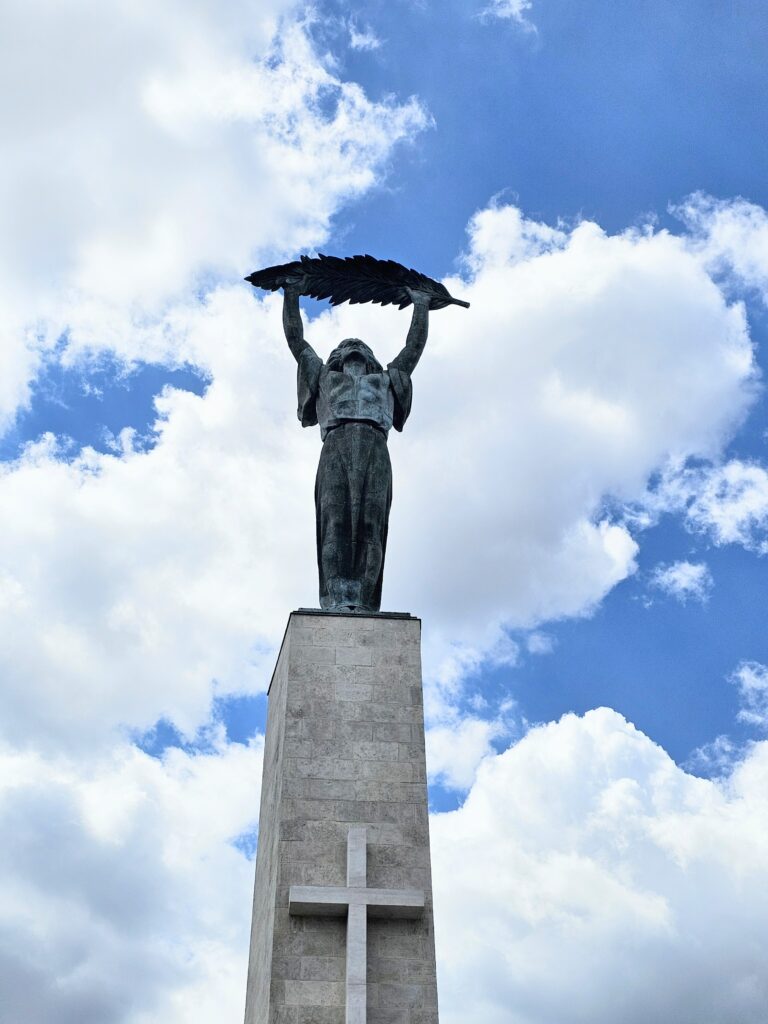
The views from the Citadel were worth every step. Looking out across the Danube, you can see nearly all of Budapest spread before you. Rather than retrace our route, we followed one of the peaceful walking paths that winds through the wooded hillside before descending to the riverbank for a leisurely stroll back to our apartment.
Discovering the Pest Side
Hungarian Parliament Building on the Pest side of the Danube, It is the largest building in Hungary and serves as the seat of the National Assembly. B 
Hungarian Parliament Building in Budapest, beautifully illuminated at night. Kossuth Lajos Square offers one of the best views of the Hungarian Parliament Building. This spacious pedestrian-only square provides the perfect vantage point to admire the building's stunning Neo-Gothic architecture, with its intricate stonework, soaring spires, and ornate façade overlooking the Danube River. I enjoyed my Danube River cruise, with great views of the city. This image shows the historic Chain Bridge and Buda Castle in the background. Interior of the Dohány Street Synagogue in Budapest, the largest synagogue in Europe Tree of Life Memorial (also known as the Holocaust Tree of Life), located in the Raoul Wallenberg Holocaust Memorial Park. Aquincum archaeological site in Budapest. It features the remains of an ancient Roman city located in the Óbuda district. Hercules Villa which features well-preserved Roman-era mosaics. The villa is part of the Aquincum Museum archaeological park. Beautiful area to walk around and take in the sites and learn about the Romans in Budapest.
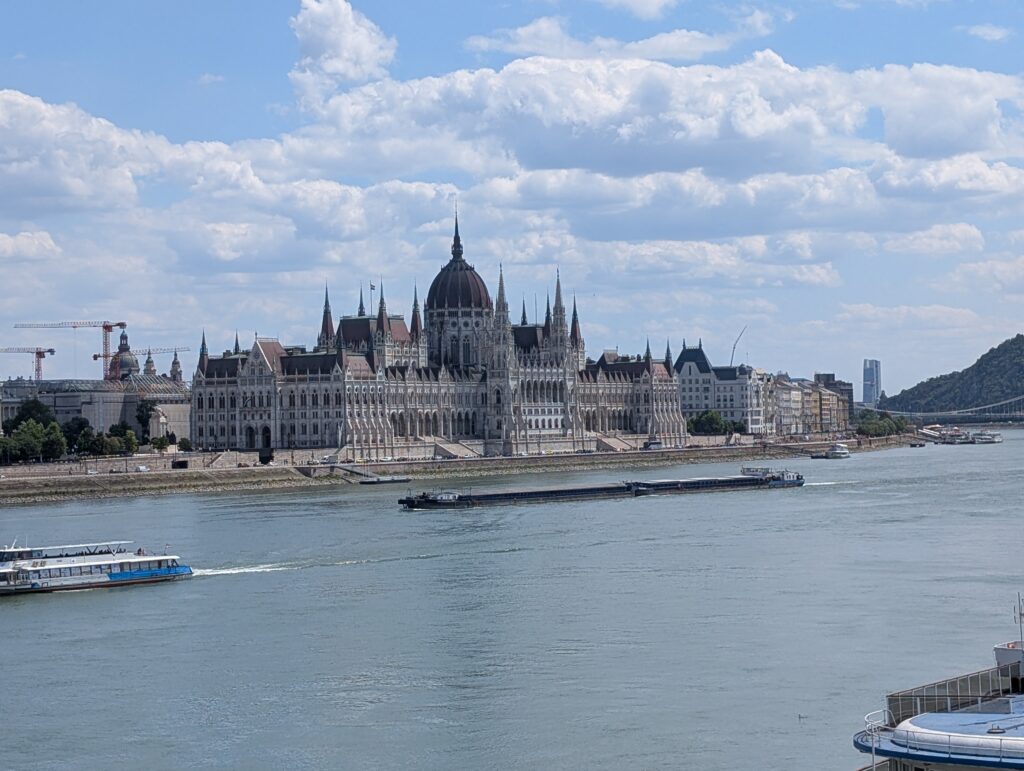
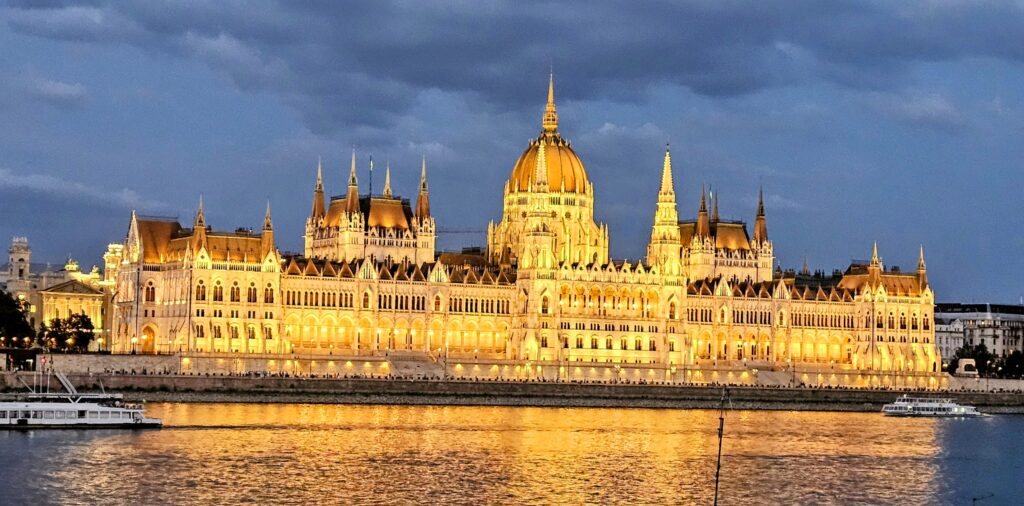
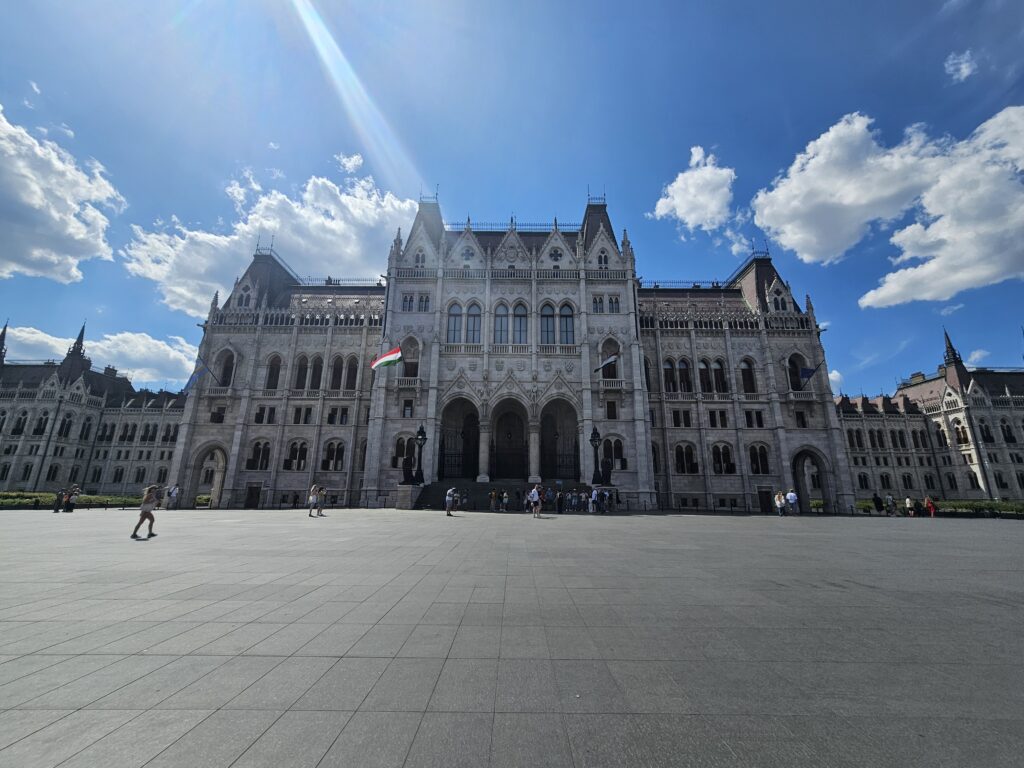
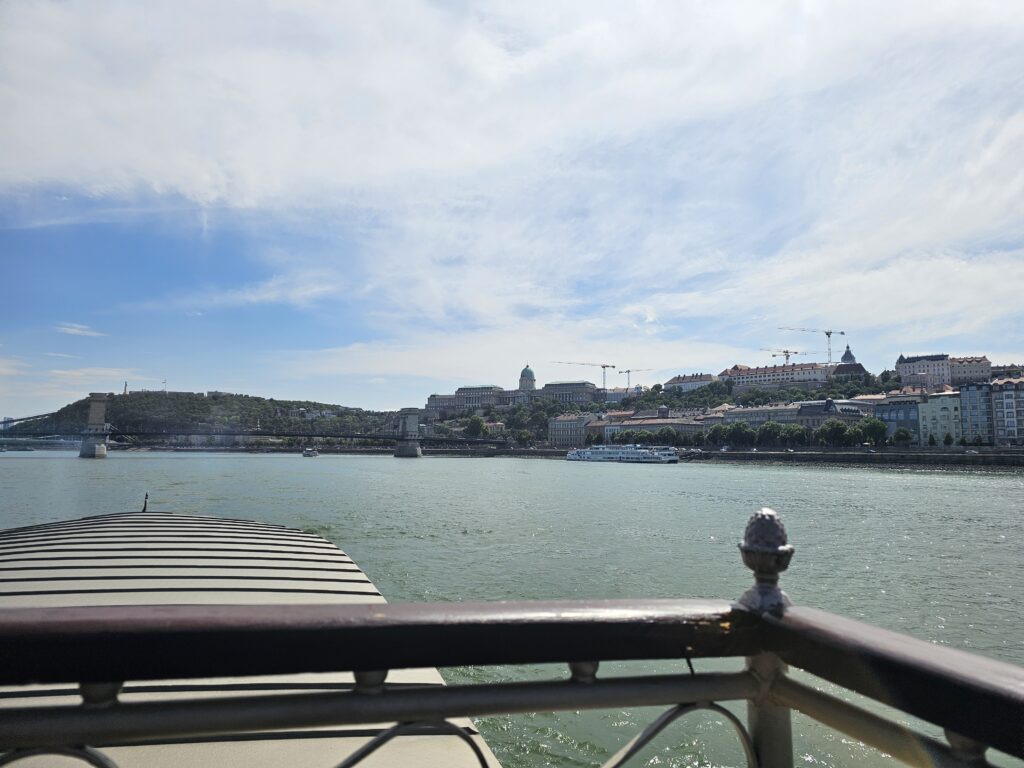
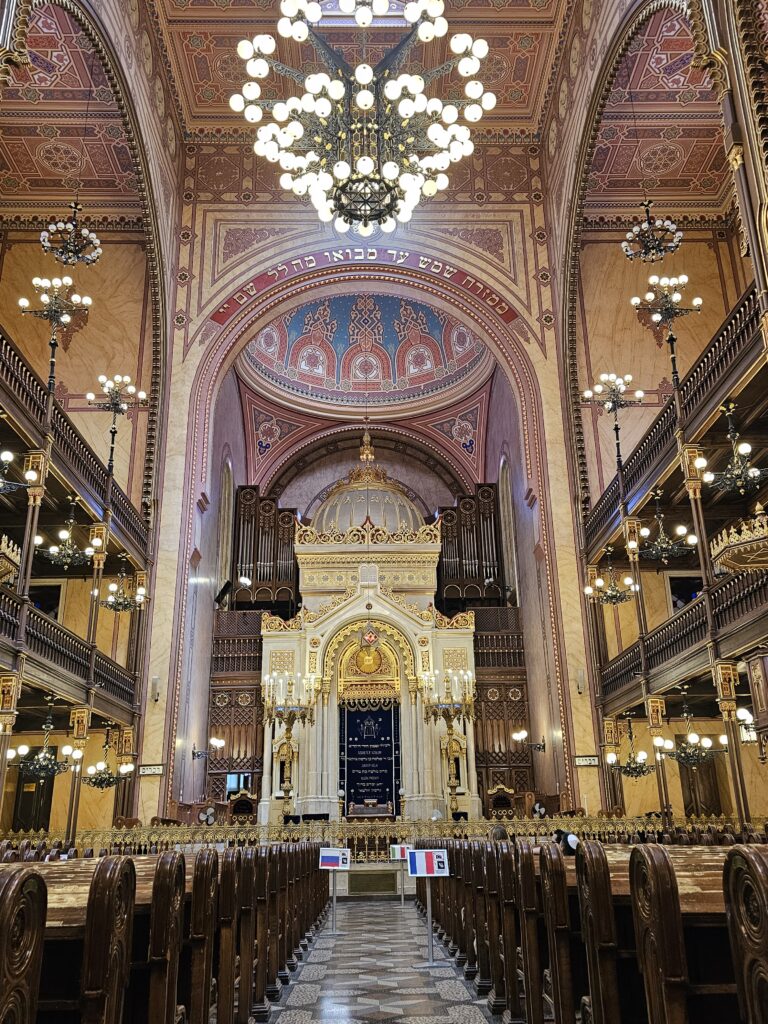
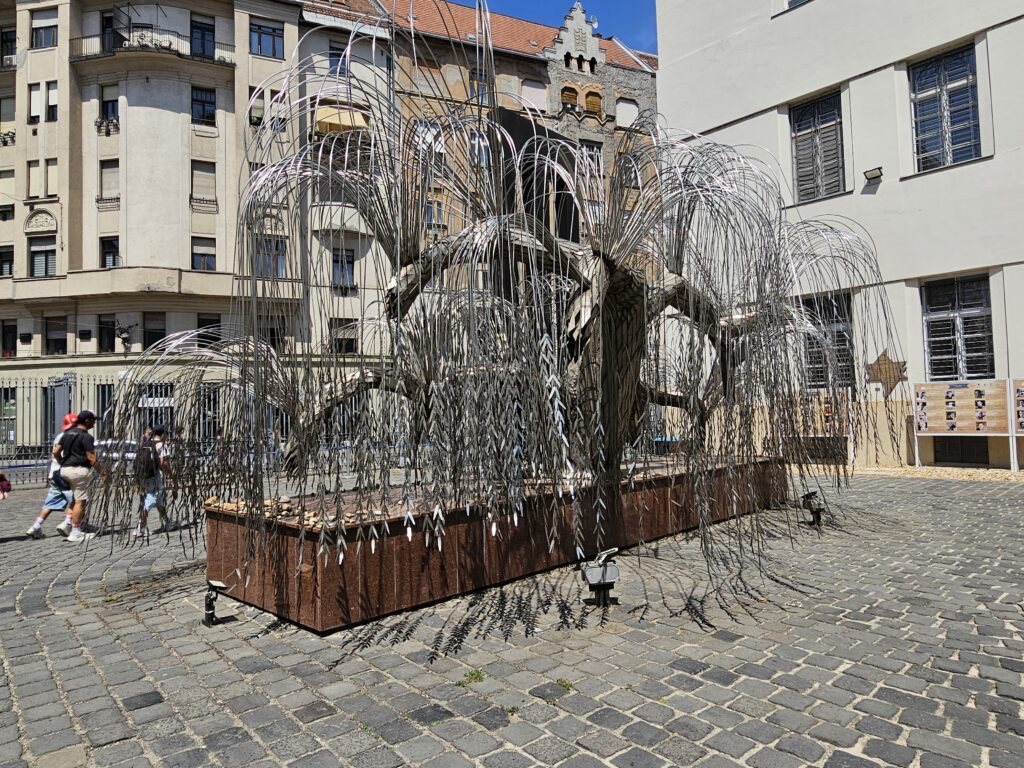
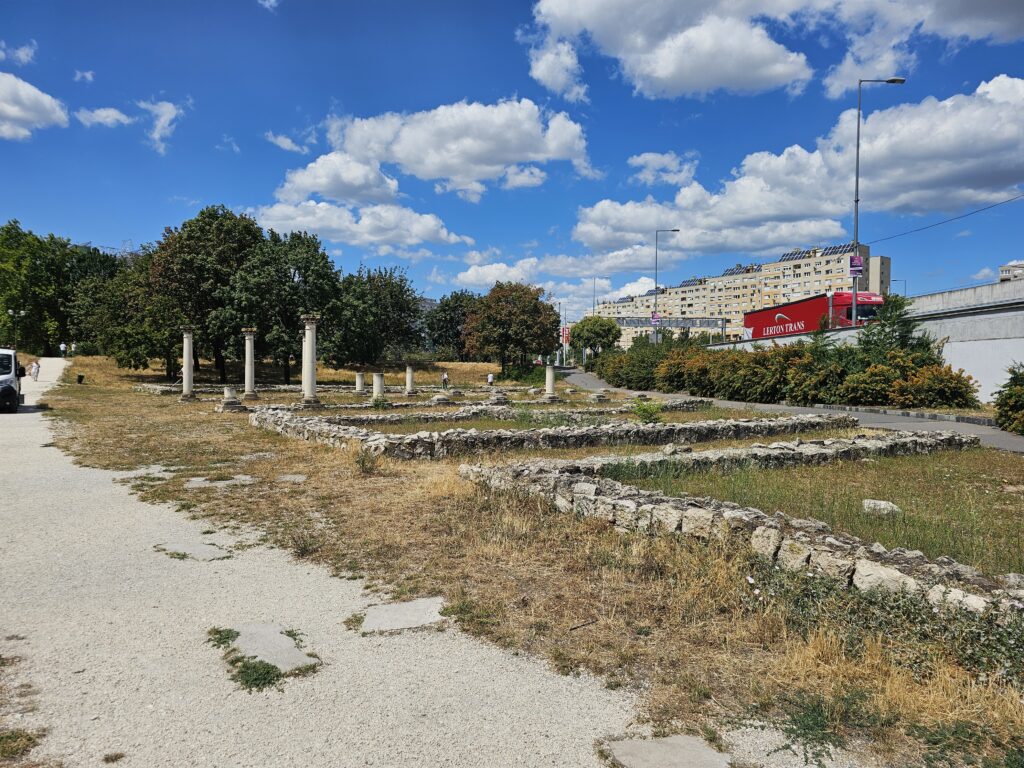
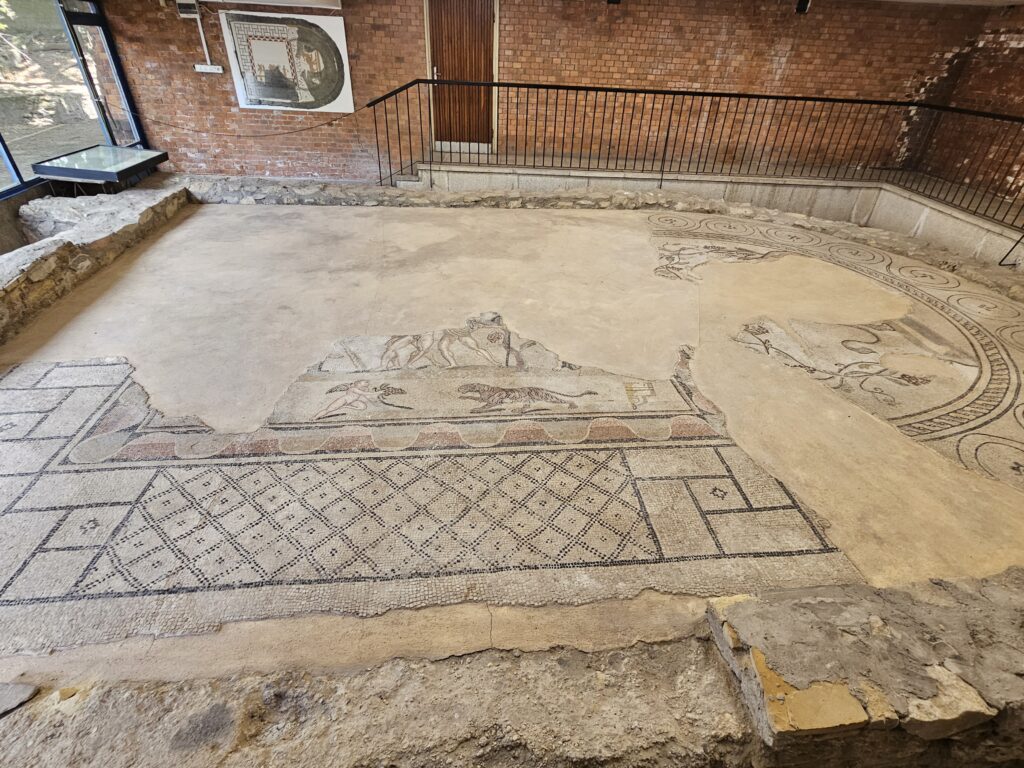
Crossing the Danube into Pest feels like entering a completely different city. This is where you'll find many of Budapest's most famous landmarks, including the magnificent Hungarian Parliament Building, St. Stephen's Basilica, the Jewish Quarter, and countless cafés, restaurants, and nightlife venues.
One of the highlights of the Jewish Quarter is Budapest's famous ruin bars (romkocsmák). Built inside abandoned buildings and courtyards, these quirky pubs are filled with mismatched furniture, colorful graffiti, vintage décor, and an atmosphere unlike anywhere else. We visited Szimpla Kert, the city's original and most famous ruin bar, and quickly understood why it's considered a Budapest must-see.
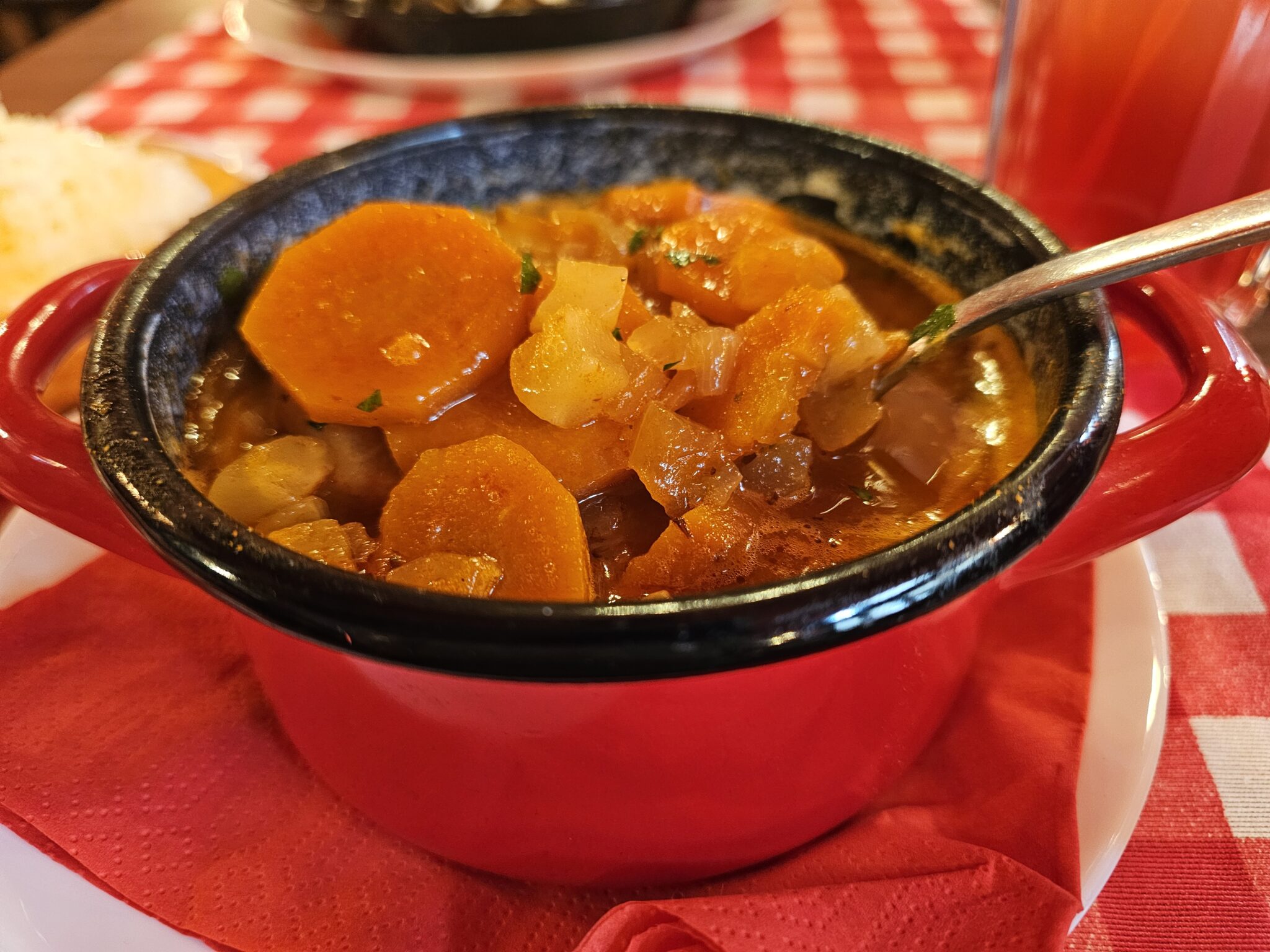
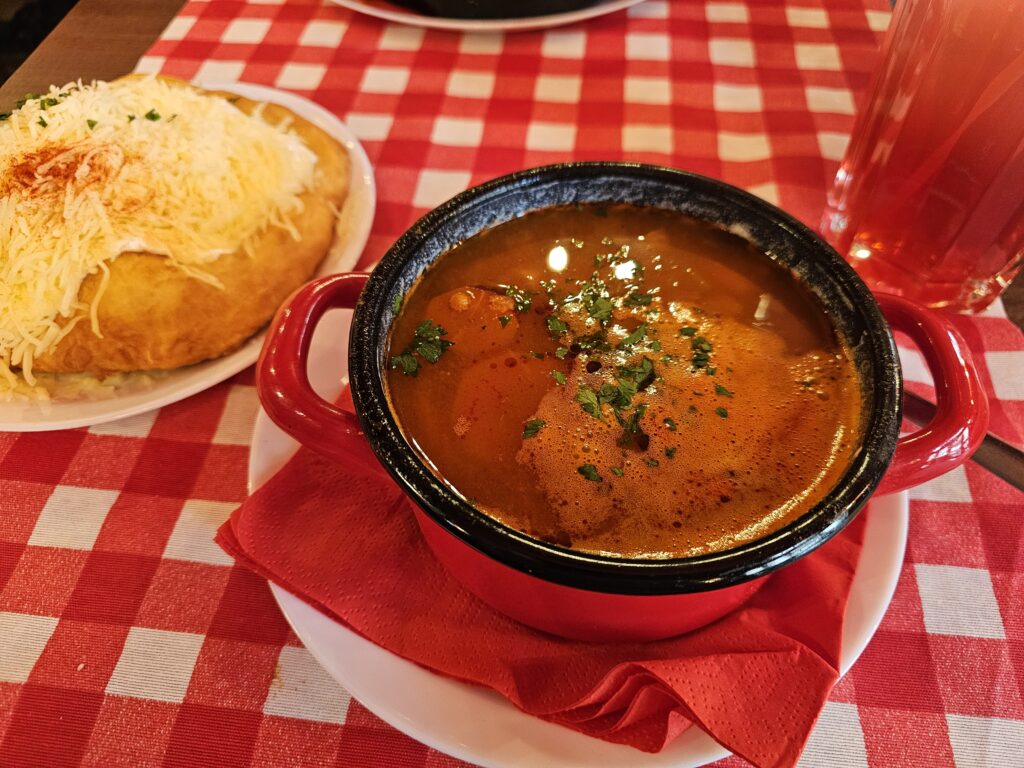
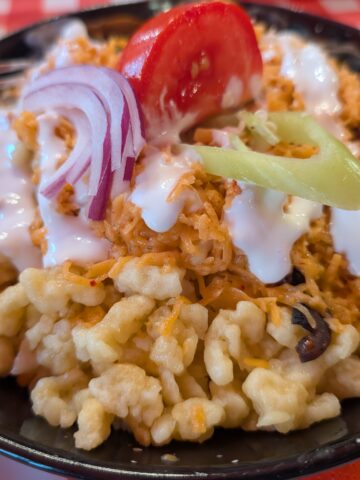
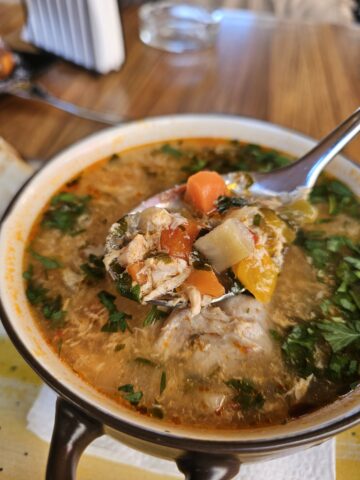
Traditional Hungarian Dish, Vega Briboka Paprikash — Hot & Spicy at Retro Goulash House Specialty spicy paprika cheese, onion, mushroom, creamy paprika sour cream sauce, traditional paprika sauce, traditional dumplings Traditional Vega Goulash Soup at Retro Goulash House Traditional Vega Goulash Soup paired with Sour Cream & Cheese Lángos at Retro Goulash House Lángos with sour cream and cheese is a famous Hungarian street food made of deep-fried yeast dough, rubbed with garlic, and topped with cold sour cream and grated cheese. I got this one at at Retro Goulash House I love Mexican food and was glad to see Budapest has many Mexican restaurants. I tried this delicious Crunchy Paquitos at Mexican Kitchen within Karavan street food Another great Mexican dish Nachos at Mexican Kitchen 
You can find just about any internal cuisine here in Budapest, I had this English style fish and chips at a local pub. The Pea mash was unique but taisted great!
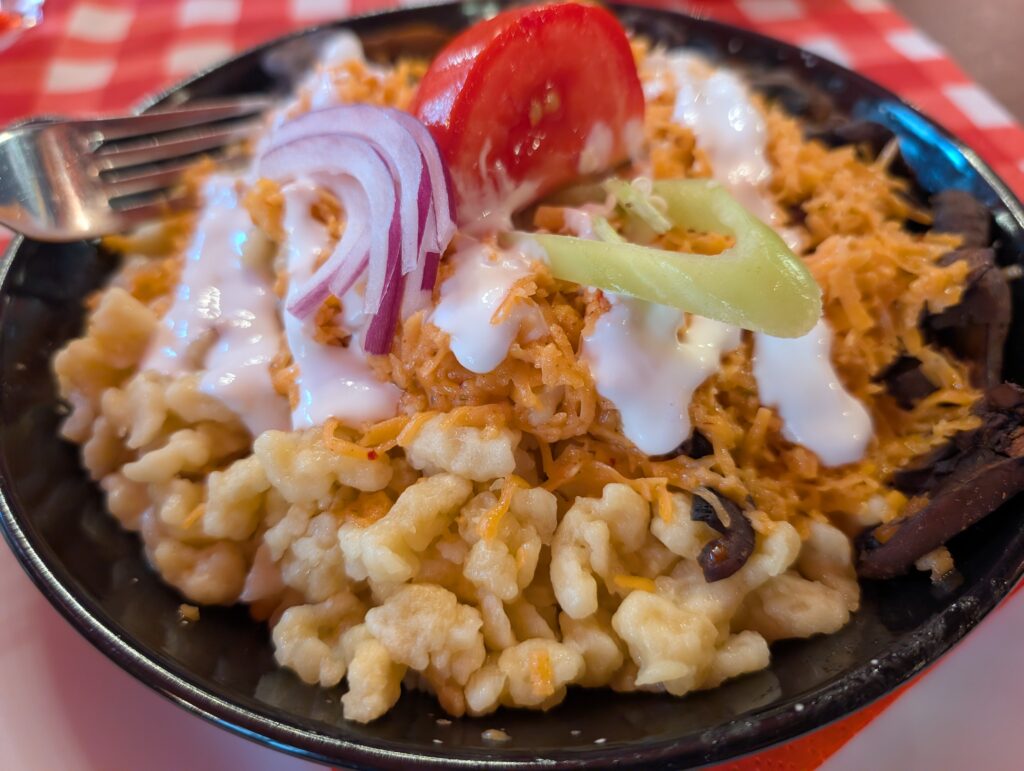
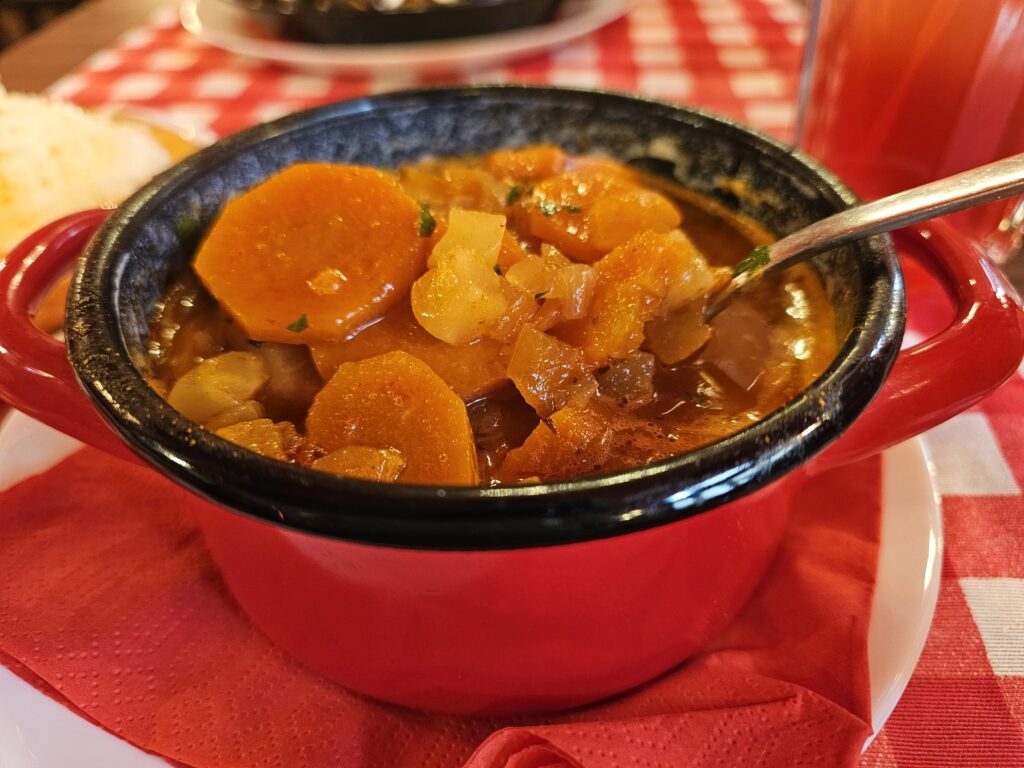
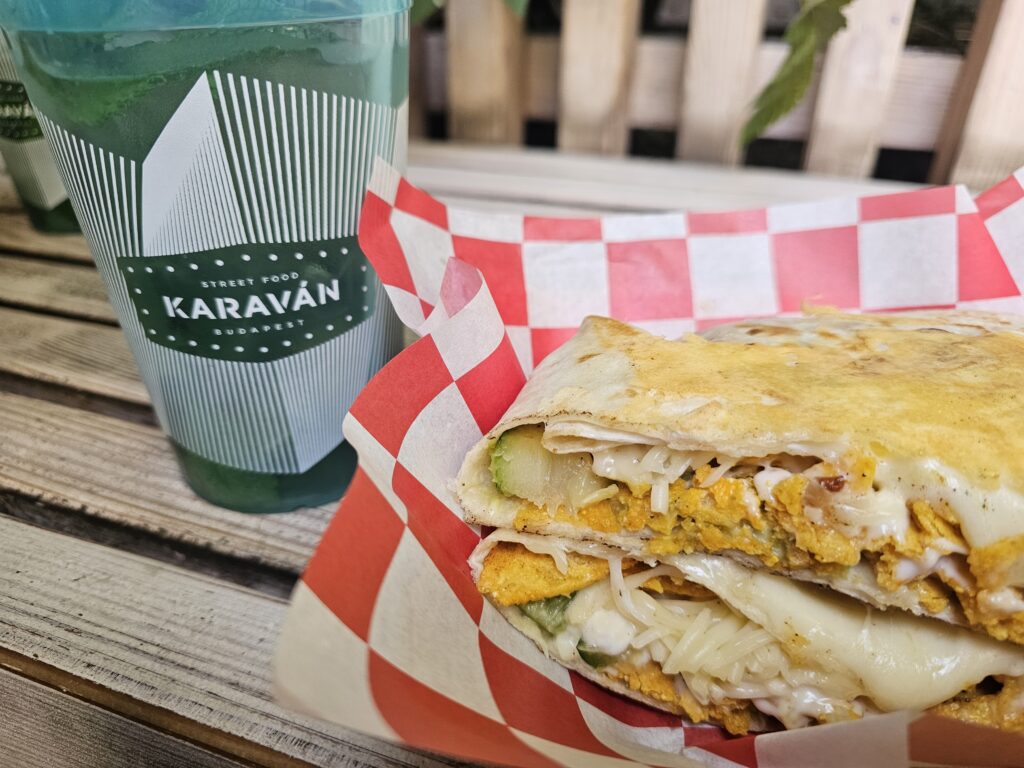
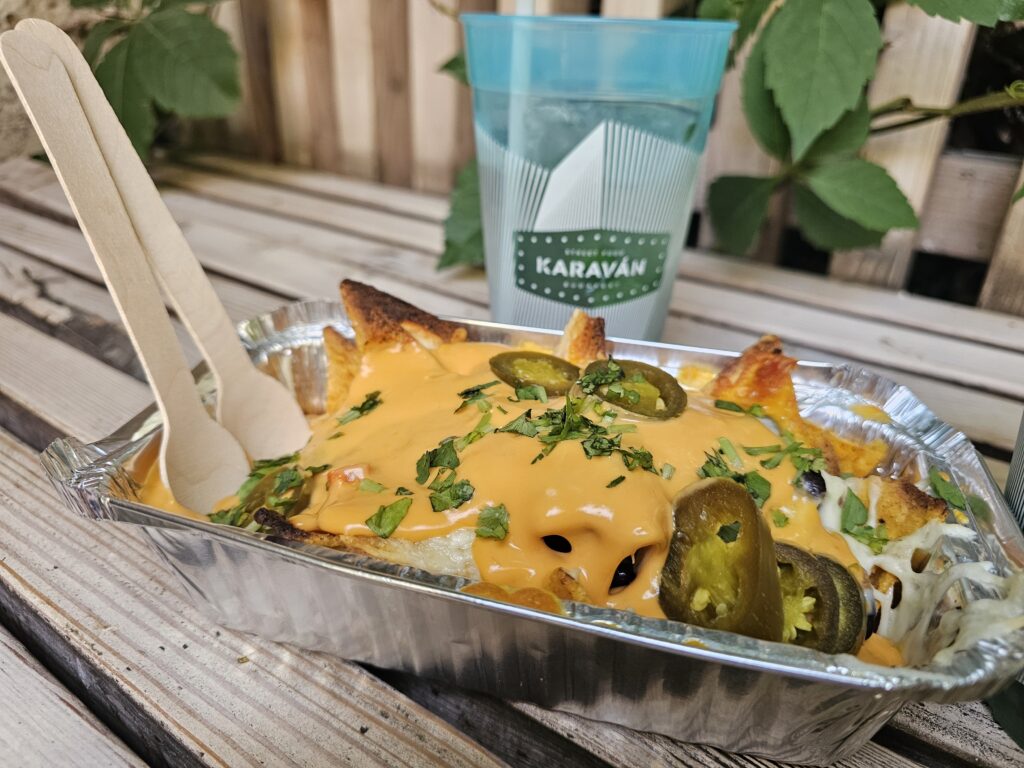

Right next door is Karaván Street Food Court, an outdoor collection of food vendors serving everything from traditional Hungarian dishes to international cuisine. We sampled a Hungarian-style Mexican crispy wrap along with loaded nachos, both of which were excellent. Exploring Budapest through food has shown us that while the city proudly celebrates its culinary traditions, it also embraces flavors from around the world, making every meal a chance to discover something new.
If you're looking for a more refined dining experience, simply walk about ten minutes north from the ruin bars. The neighborhood is filled with upscale restaurants and cozy bistros serving everything from classic Hungarian cuisine to Italian, Asian, Middle Eastern, and modern European fare.
One evening we enjoyed dinner at Retro Goulash House, where I ordered a rich bowl of traditional Hungarian goulash soup accompanied by sour cream and cheese Lángos, if your interest in goulash try my authentic German goulash recipe which is similar while I am working on my Hungarian goulash recipe. My husband chose brindzás paprikás, a comforting Hungarian dish made with paprika, spicy sheep's cheese, onions, a creamy paprika sauce, and soft dumplings similar to German Spätzle. It was another reminder that Hungarian cuisine offers much more than just goulash. Paprika is used in a lot of Hungarian dish, try this easy to make Instant Pot Chicken Paprika for those typical Hungarian flavors.
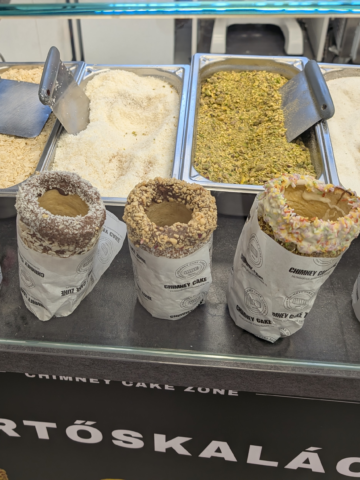
Of course, no visit to Budapest is complete without stopping at one of its many cafés or bakeries for a Hungarian chimney cake (kürtőskalács). Made from strips of yeasted dough wrapped around a wooden spit, brushed with butter, coated in sugar, and roasted until perfectly caramelized, chimney cakes are one of Hungary's most iconic sweet treats. Traditional versions are coated in toppings like cinnamon sugar, walnuts, or cocoa, while modern versions are often filled with ice cream, fruit, Nutella, or pastry cream.
I even took a class to learn how to make authentic Hungarian chimney cakes from scratch. It was one of my favorite experiences in Budapest and gave me a much deeper appreciation for the history behind this iconic dessert. If you'd like to try making them yourself, be sure to check out my full recipe and class experience.
Great Market Hall (Nagy Vásárcsarnok)
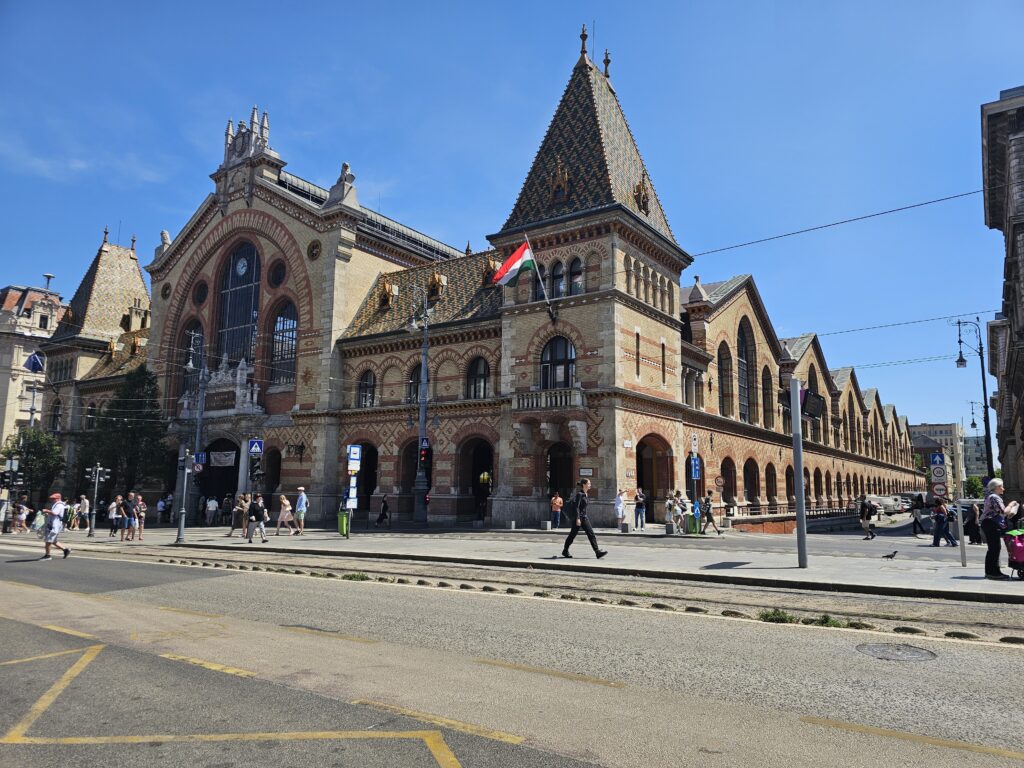
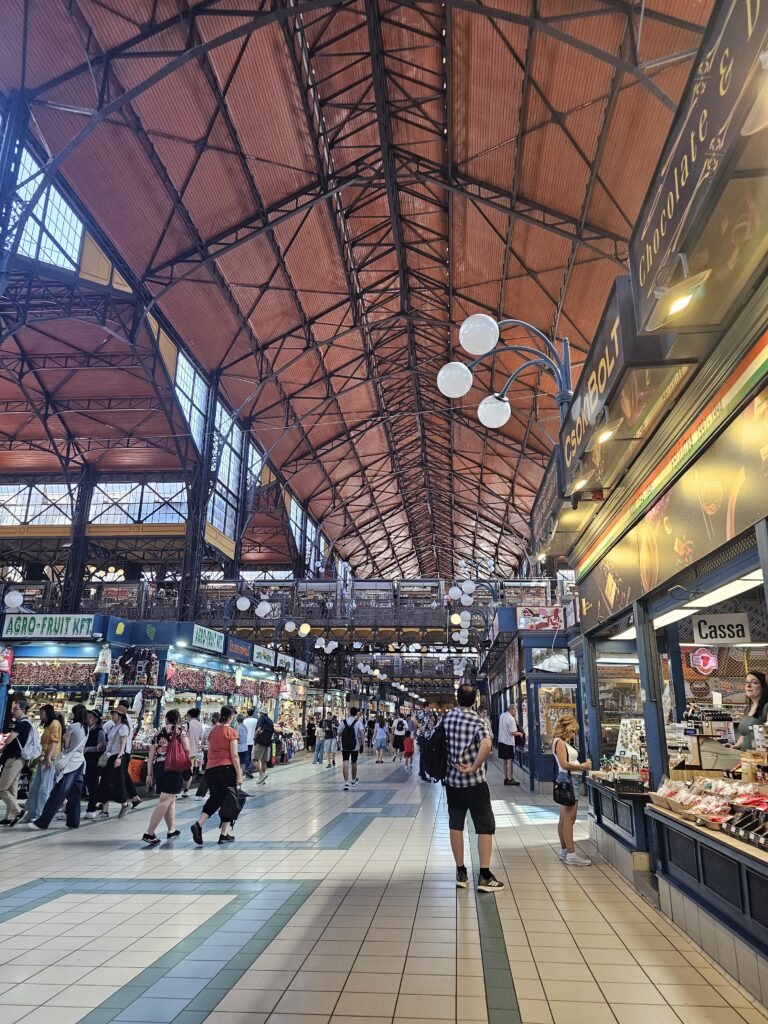
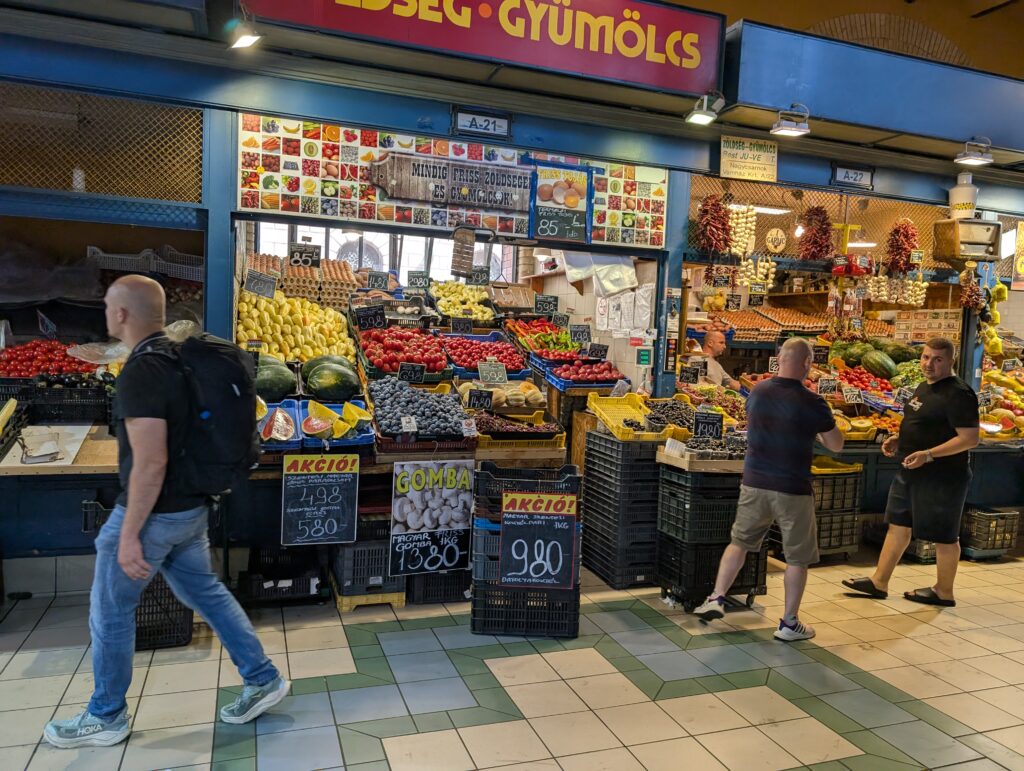
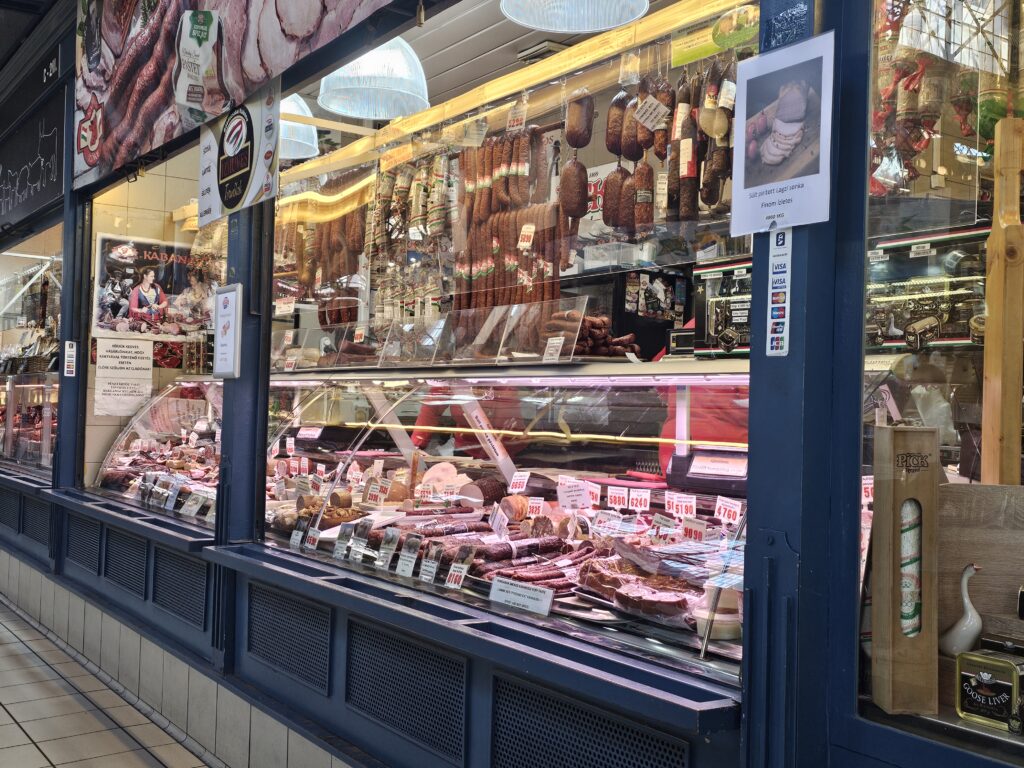
Great Market Hall the largest and oldest indoor market in Budapest, operating since 1897. The building features a distinctive roof adorned with Zsolnay ceramic tiles. You can explore multiple levels, including a basement with fish mongers and ground-floor food stalls with meats and fresh vegetables and fruits. The second floor has many tourist souvenir shops Interior of the Great Market Hall, the building is known for its neo-gothic gate, steel structural frame. It is centrally located in the Pest side of the Liberty Bridge, right at the end of the Váci utca shopping street. One of the many vegetable and fruit vendors in the Great Market Hall One of many meat vendors in the Great Market Hall
Living in Budapest has completely changed the way I shop for groceries. Unlike the large supermarkets I'm used to back home, most neighborhood grocery stores here are relatively small. There are larger supermarkets outside the city, but without a car—and with only a small apartment refrigerator—it simply isn't practical to stock up for weeks at a time. Instead, I shop every few days, buying only what we'll need for our next few meals which means I am cooking with more fresh ingredients.
One of my favorite places to shop has become the Great Market Hall (Nagy Vásárcsarnok). More than just a grocery market, it's an architectural masterpiece and one of Budapest's most iconic landmarks.
Located at Vámház körút 1–3, at the southern end of Váci Street, the market has been serving locals and visitors since 1897. Designed by renowned Hungarian architect Samu Pecz, the impressive three-story building is instantly recognizable by its Neo-Gothic architecture, colorful Zsolnay ceramic tile roof, and beautiful steel-and-glass interior that fills the market with natural light.
Although the building suffered significant damage during World War II, it was carefully restored in the 1990s and has once again become one of Budapest's most popular attractions.
The ground floor is packed with vendors selling fresh produce, seasonal vegetables, locally made cheeses, cured meats, fresh sausages, baked goods, spices, and Hungarian wines. It's the perfect place to experience everyday life in Budapest while discovering the ingredients that make Hungarian cuisine so distinctive.
Upstairs, you'll find restaurants serving traditional Hungarian dishes alongside shops offering handmade crafts, paprika, embroidered linens, and other souvenirs. Even if you aren't planning to buy anything, it's well worth spending an hour wandering through the market, soaking in the atmosphere, and sampling a few local specialties.
For anyone who loves food, the Great Market Hall isn't just another tourist attraction—it's one of the best places for exploring Budapest through food. From browsing stalls filled with fresh local ingredients to sampling traditional Hungarian specialties, the market offers an authentic glimpse into the city's rich culinary culture and everyday life.
Iconic Budapest Experiences Beyond Food
Széchenyi Thermal Baths
One experience that's still on my Budapest bucket list is spending a day at the Széchenyi Thermal Baths. As soon as I visit, I'll update this section with my own photos, tips, and firsthand experience.
Budapest is often called the "City of Spas," and for good reason. The city's thermal bath culture dates back nearly 2,000 years to the Romans, who built the first public baths in Aquincum, their settlement in what is now the Óbuda district. During the 16th and 17th centuries, the Ottoman Turks expanded this bathing tradition by constructing several of Budapest's famous Turkish baths, many of which are still operating today. By the late 19th and early 20th centuries, thermal bathing had become an important part of Hungarian life as the health benefits of mineral-rich waters attracted visitors from across Europe.
The Széchenyi Thermal Bath is the largest medicinal bath complex in Europe and one of Budapest's most recognizable landmarks. Designed by Hungarian architect Győző Czigler, construction began in 1909, and the stunning Neo-Baroque building officially opened in 1913. Fed by two natural thermal springs, the complex features numerous indoor and outdoor pools, thermal baths of varying temperatures, saunas, steam rooms, and spa treatments, making it a favorite destination for both locals and visitors year-round.
From everything I've seen, the bright yellow Neo-Baroque architecture and steaming outdoor pools create one of the most beautiful settings in Budapest. I can't wait to spend a relaxing afternoon soaking in the mineral-rich waters and experiencing one of Hungary's most cherished traditions for myself.
If you're looking for something a little different, Széchenyi is also known for its popular "Sparty" events, where the thermal baths transform into an evening party complete with music, laser lights, and visual effects on select Saturday nights—a unique way to experience one of Budapest's most famous attractions.
Final Thoughts: Exploring Budapest through food
When we decided to move to Budapest for a year, we hoped to experience the city beyond its famous landmarks. What we didn't expect was how much we would learn simply by exploring its food.
Every meal has become an opportunity to discover another piece of Hungary's history. Whether it's enjoying a crispy lángos beneath the walls of Buda Castle, wandering through the Great Market Hall in search of fresh local ingredients, relaxing at a neighborhood café with coffee and pastry, or learning to make authentic chimney cakes from scratch, each experience has deepened our appreciation for Hungarian culture.
Budapest is a city where Roman ruins, medieval castles, Ottoman baths, grand Habsburg architecture, and vibrant modern neighborhoods all exist side by side. That same rich history is reflected in its cuisine, where centuries of cultural influences have shaped everything from hearty goulash and paprika-seasoned dishes to elegant pastries (like my Apple Puff Pastry) and bustling café culture.
One of the greatest joys of living here has been discovering that some of our favorite memories weren't made at the city's most famous attractions—they happened while wandering into a neighborhood bakery, sharing lunch at a small family-run restaurant, or chatting with local vendors at the market. Those everyday moments have given us a much deeper connection to Budapest than we ever could have experienced during a short vacation.
If you're planning a trip to Budapest, don't just check off the major sights. Wander the neighborhoods, browse the markets, linger over coffee at a local café, and don't be afraid to try something you've never heard of. Exploring Budapest through food will lead you to some of the city's most memorable experiences—many of which are found far from the guidebooks.
For us, Budapest has become much more than a destination. It's become our home for this chapter of our lives, and every day brings another opportunity to discover its history, culture, and people through its incredible cuisine—exploring Budapest through food, one delicious bite at a time.
More Great Central European Destinations
- Salzburg Day Trip from Vienna: Food, History & Things to Do
- Exploring Krakow Through Food: Polish Dishes, Historic Old Town & Wieliczka Salt Mine
- Vienna Austria: Imperial History, Elegant Architecture & Incredible Food
- Exploring Budapest Through Food: A Food Lover's Guide to Hungary's Capital
- What I Ate in Romania: Castles, Bucharest & Traditional Romanian Food
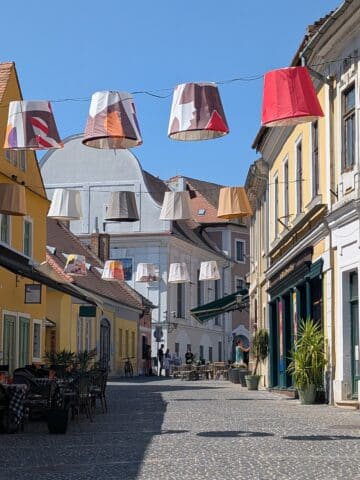
- Szentendre: A Colorful Day Trip from Budapest
- Hungarian Chimney Cake (Kürtőskalács)




Comments
No Comments