
Since moving to Hungary, I've been making it a priority to experience the country's culture through its incredible food. One of the highlights so far has been taking a traditional baking class to learn how to make Hungarian Chimney Cake, or Kürtőskalács, one of Hungary's most beloved street foods.
I was surprised by how simple this sweet pastry is to make. Chimney cake starts with a rich yeast dough that's wrapped around a cylinder to create its signature hollow center, the feature that gives it its name. Before baking, the dough is brushed with butter or oil and rolled in sugar. As it bakes, the sugar caramelizes into a crisp, golden crust while the inside stays soft, fluffy, and buttery.
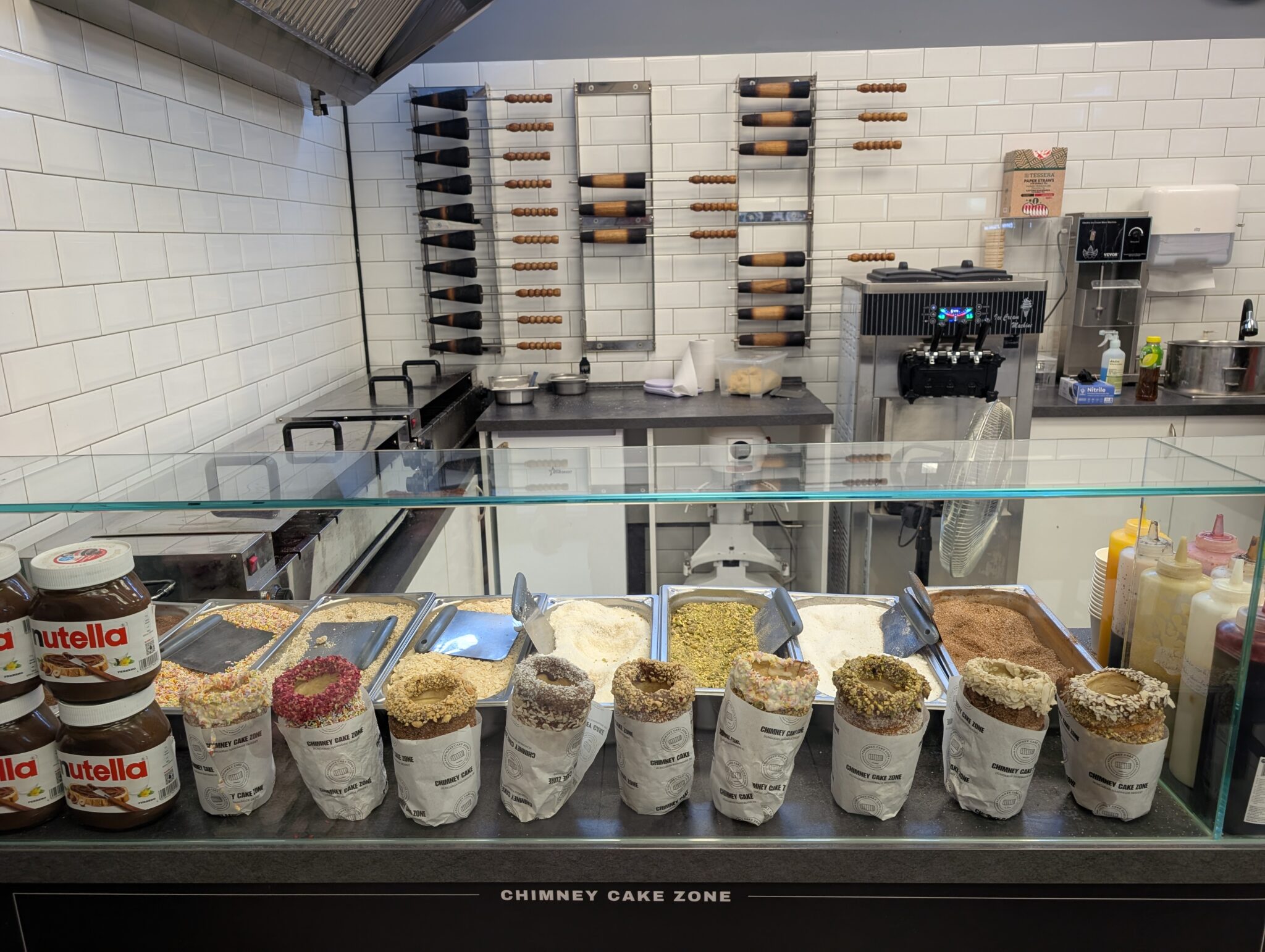
Traditionally, chimney cake is served plain or coated with toppings like cinnamon, walnuts, vanilla sugar, coconut, or cocoa. Today, you'll also find modern versions filled with everything from Nutella and chocolate to whipped cream, fruit, and even ice cream. Whether you enjoy it the traditional way or loaded with decadent fillings, it's an unforgettable dessert that's as fun to make as it is to eat.
If you've ever wanted to recreate this iconic Hungarian treat at home, this step-by-step chimney cake recipe will show you exactly how to do it—even if you don't own a traditional chimney cake spit.
Jump to:
- Why You'll Love This Recipe
- What is Chimney Cake?
- The History of Hungarian Chimney Cake (Kürtőskalács)
- What Does Chimney Cake Taste Like?
- Ingredients for Hungarian Chimney Cake dough (4pcs)
- Step By Step Instructions
- Wrapping and Baking Steps
- Best Toppings for Hungarian Chimney Cake
- Chimney Cake Filling Ideas
- Expert Tips for Perfect Chimney Cake
- Why Did My Chimney Cake Flatten?
- Common Chimney Cake Mistakes (And How to Fix Them)
- How to Store Chimney Cake
- Frequently Asked Questions
- Related Recipes
- Recipe
- 💬 Comments
Why You'll Love This Recipe
There are so many reasons to fall in love with homemade Hungarian Chimney Cake (Kürtőskalács)! While it looks like something you'd only find at a European bakery or Christmas market, it's surprisingly easy to make at home.
- Surprisingly Easy to Make: Don't let the unique shape fool you—this recipe is beginner-friendly and walks you through every step.
- No Special Equipment Required: You don't need a traditional chimney cake spit. I'll show you how to make your own baking rollers using common kitchen items, or you can pick up an inexpensive chimney cake baking kit.
- Authentic Hungarian Flavor: Learn the same traditional techniques used to create one of Hungary's most iconic desserts.
- Perfect Texture: Every bite has a crisp, caramelized sugar crust with a soft, fluffy, buttery interior that's slightly chewy.
- Endless Topping & Filling Options: Keep it traditional with cinnamon or walnuts, or get creative with Nutella, pistachio cream, ice cream, fresh fruit, cookie butter, and more.
- Great for Entertaining: These impressive pastries are perfect for holidays, birthdays, parties, BBQs, and family gatherings.
- A Fun Baking Project: Kids love helping wrap the dough around the rollers, brushing on the butter, and rolling the cakes in sugar and toppings. It's a fun recipe the whole family can enjoy together.
Once you make your first homemade Hungarian Chimney Cake, you'll be amazed at how simple it is—and you'll be looking for excuses to make them again and again!
Want to Save This Recipe?
Enter your email & I'll send it to your inbox. Plus, get great new recipes from me every week!
By submitting this form, you consent to receive emails from Went Here 8 This.
What is Chimney Cake?
Chimney cake, known in Hungary as kürtőskalács, is one of the country's most iconic desserts and a favorite street food found at markets, festivals, and bakeries throughout Hungary. This sweet pastry is made from an enriched yeast dough that's wrapped around a cylindrical baking spit, coated in sugar, and slowly baked until golden brown.
The pastry gets its name from its distinctive shape. Once baked, the dough forms a hollow cylinder that resembles a chimney. As it cooks, the sugar coating caramelizes into a crisp, golden crust while the inside remains soft, buttery, and fluffy. When the warm cake is removed from the baking spit, steam rises from the hollow center, making it look like smoke is coming from a chimney.
Traditionally, chimney cake is served warm and coated in simple toppings like cinnamon, vanilla sugar, ground walnuts, cocoa powder, or shredded coconut. The focus is on the rich flavor of the buttery dough and its signature caramelized exterior.
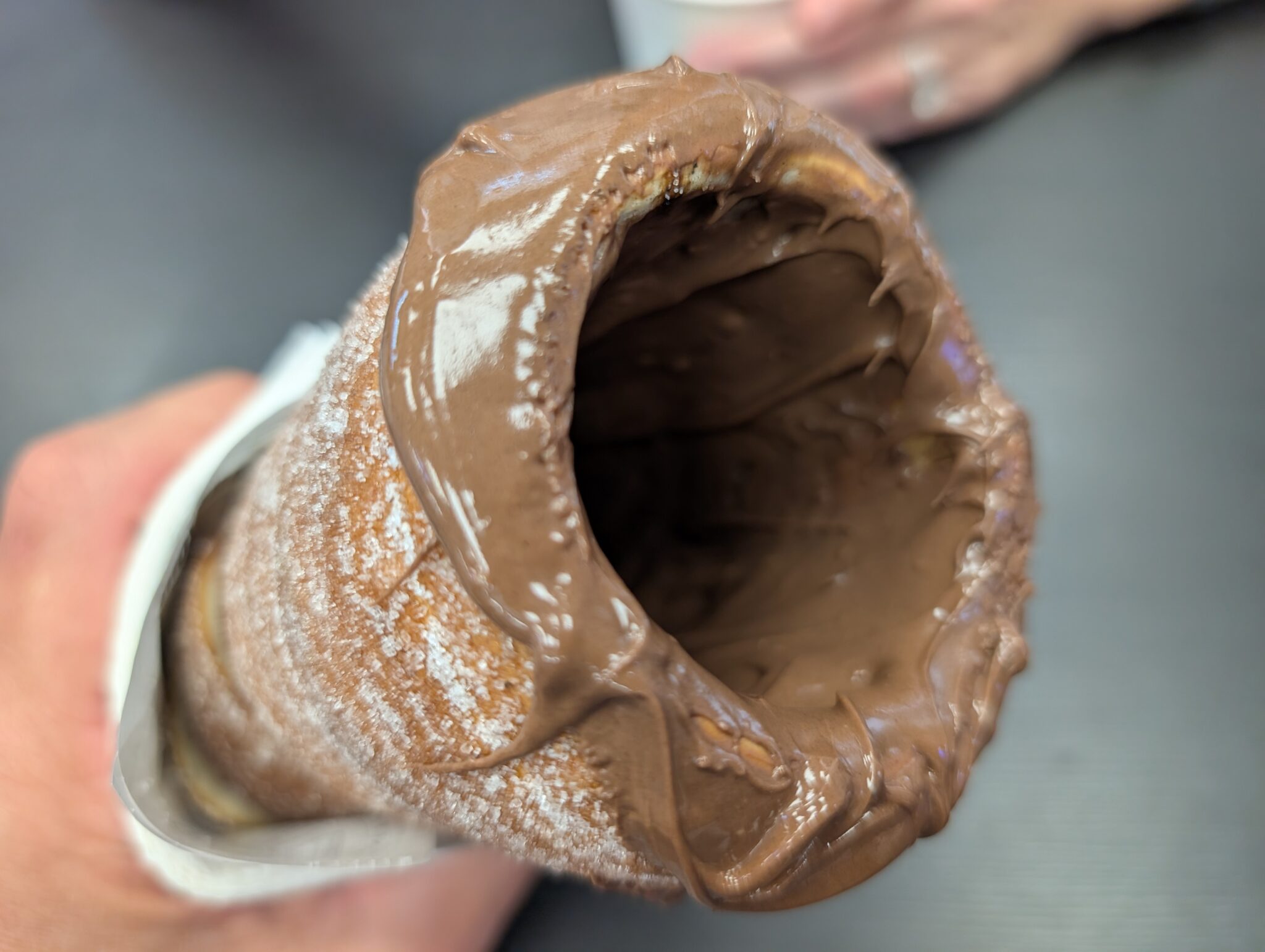
In recent years, modern bakeries and street vendors have reinvented chimney cake by filling the hollow center with sweet treats like Nutella, pistachio cream, whipped cream, soft-serve ice cream, fresh fruit, or fruit preserves. While these stuffed versions aren't traditional, they've become incredibly popular and are a fun twist on the classic Hungarian dessert.
Whether you enjoy it the traditional way or loaded with decadent fillings, Hungarian chimney cake is a delicious combination of soft bread, crunchy caramelized sugar, and endless flavor possibilities—making it one of the most memorable treats you'll find in Hungary.
The History of Hungarian Chimney Cake (Kürtőskalács)
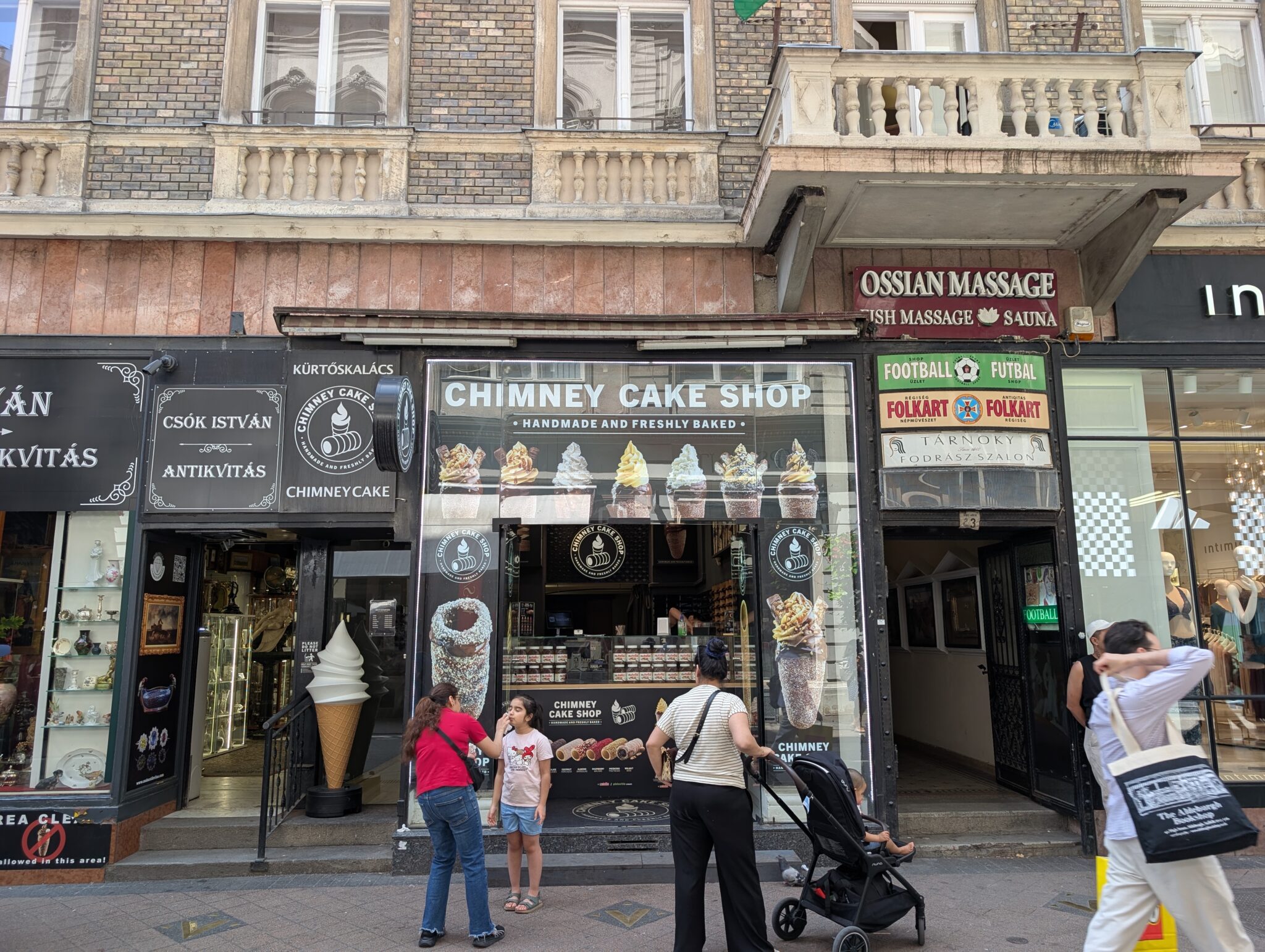
The story of Hungarian chimney cake, known locally as kürtőskalács, stretches back more than 300 years. What started as a simple celebratory bread has evolved into one of Hungary's most iconic street foods. Here's how this delicious pastry came to be.
1600s – The Origins in Transylvania
Chimney cake originated in the historic region of Transylvania, an area that today is part of Romania but was once part of the Kingdom of Hungary. It was created by the Székely (Szekler) people, an ethnic Hungarian community known for preserving many traditional customs and recipes.
Unlike today's sweet version, the earliest chimney cakes were simple yeast breads baked over an open fire for holidays, weddings, and special family celebrations.
1679 – The First Written Record
The earliest known written reference to chimney cake dates back to 1679. A manuscript discovered in the Transylvanian village of Úzdiszentpéter (today Sânpetru de Câmpie, Romania) mentions a dough wrapped around a wooden spit and roasted over hot coals.
This is considered the first documented evidence of what would eventually become modern kürtőskalács.
1781 – The First Recorded Recipe
The first known recipe appeared in 1781 in the cookbook of Countess Mária Mikes. At this time, chimney cake was still relatively plain and did not yet feature the signature caramelized sugar coating that makes it famous today.
Instead, it was simply brushed with butter before baking over charcoal.
1800s – The Caramelized Sugar Revolution
During the 19th century, bakers discovered that rolling the buttered dough in granulated sugar before roasting created a crisp, shiny caramelized crust as the sugar melted over the fire.
This simple innovation completely transformed the pastry. The crunchy exterior paired with the soft, buttery interior quickly made chimney cake a favorite throughout the Kingdom of Hungary.
As sugar became more affordable during the Industrial Revolution, chimney cake became accessible to everyday families instead of being reserved primarily for celebrations.
Late 1800s – New Flavor Coatings
As chimney cake spread throughout Central Europe, bakers began experimenting with different coatings.
Ground walnuts became one of the earliest and most popular additions, followed by cinnamon, cocoa powder, vanilla sugar, and shredded coconut. These toppings are still considered traditional today.
1900s – From Holiday Dessert to Street Food
Throughout much of the 20th century, chimney cake transitioned from a dessert baked mainly for festivals and family gatherings into one of Hungary's most recognizable street foods.
Visitors could watch vendors prepare the cakes by wrapping fresh dough around rotating spits and slowly roasting them over charcoal until golden brown. The warm cakes were then rolled in flavored sugar while still hot, creating their signature crispy coating.
Today, you'll find chimney cake at Christmas markets, festivals, and food stalls throughout Hungary and neighboring countries.
Modern Day – Endless Creative Variations
Traditional kürtőskalács is served completely hollow, allowing the flavor of the buttery dough and caramelized sugar to shine. However, modern street food vendors have taken the dessert in a whole new direction.
Many bakeries now line the inside of the warm cake with Nutella, pistachio cream, peanut butter, or fruit preserves before filling the center with soft-serve ice cream, whipped cream, fresh fruit, cheesecake filling, or warm cinnamon apples.
The outside has also become a canvas for creativity, with coatings like crushed pistachios, freeze-dried raspberries, crushed cookies, colorful sprinkles, and even edible glitter.
While these decadent versions aren't traditional, they're incredibly popular and show how this centuries-old pastry continues to evolve.
More than 300 years after it was first created, Hungarian chimney cake remains one of the country's most beloved desserts—a perfect blend of history, tradition, and innovation.
What Does Chimney Cake Taste Like?
If you've never had Hungarian chimney cake (kürtőskalács) before, imagine your favorite bakery treats combined into one irresistible dessert.
The dough is rich and buttery, with a soft, fluffy texture that's similar to brioche bread. It's light and airy on the inside, yet sturdy enough to hold its signature cylindrical shape. As you bite into it, you'll notice a slight chewiness that's reminiscent of a freshly made donut or the soft layers of a cinnamon roll.
What truly sets chimney cake apart is its exterior. Before baking, the dough is brushed with butter and coated in granulated sugar. As it roasts, the sugar melts and caramelizes into a thin, golden crust that adds a delicate crunch with every bite. The contrast between the crispy, caramelized outside and the soft, buttery interior is what makes chimney cake so addictive.
Traditional coatings like cinnamon, vanilla sugar, walnuts, cocoa powder, or coconut add another layer of flavor without overpowering the pastry. The result is a dessert that's sweet but not overly sugary, allowing the rich buttery dough and caramelized sugar to shine.
If you've never tasted one before, think of it as a cross between:
- A warm cinnamon roll without the frosting
- A fluffy brioche with a caramelized sugar crust
- A freshly made yeast donut with a slightly chewy bite
- Sweet, buttery bread baked until perfectly golden
Whether you enjoy it plain or filled with chocolate, ice cream, fruit, or whipped cream, chimney cake is best served warm when the outside is perfectly crisp and the inside is still soft and pillowy. It's easy to understand why this centuries-old Hungarian dessert has become one of the country's most beloved street foods.
Ingredients for Hungarian Chimney Cake dough (4pcs)
- 2 ⅓ cup Plain flour
- ⅔ cup lukewarm milk
- 2 ½ tablespoon butter or sunflower oil
- 2 tablespoon icing sugar
- 1 tablespoon fresh yeast
- 3 egg yolks
- pinch of salt
Ingredients for the outside layer of the Chimney Cake
- 1 ½ tablespoon sugar
- 1 teaspoon cinnamon or cocoa powder, or pack of vanilla sugar
Step By Step Instructions
I took a class in Budapest on how to make a Chimney cake from Hungarian Horizons, if your ever in Budapest try the class as its a lot of fun. See the section below on How to Make DIY Chimney Cake Rollers or you can buy spit from Amazon and use a deep baking pan to bake in your over without a rotisserie. Its also a fun treat make with the kids.
Step1: Mix yeast, milk, and a teaspoon of icing sugar 1 teaspoon together
Step2: Whisk butter or oil with 3 egg yolks into a froth, add flour and the remaining sugar 2tsp, and mix together.
Step3: Add the activated yeast mixture to the flour mixture and knead until the dough is smooth and elastic, about 8–10 minutes. Cover the bowl with a clean kitchen towel or plastic wrap and let the dough rise in a warm place for 30–45 minutes, or until doubled in size.
Step4: Split your dough into 4 equal size pieces
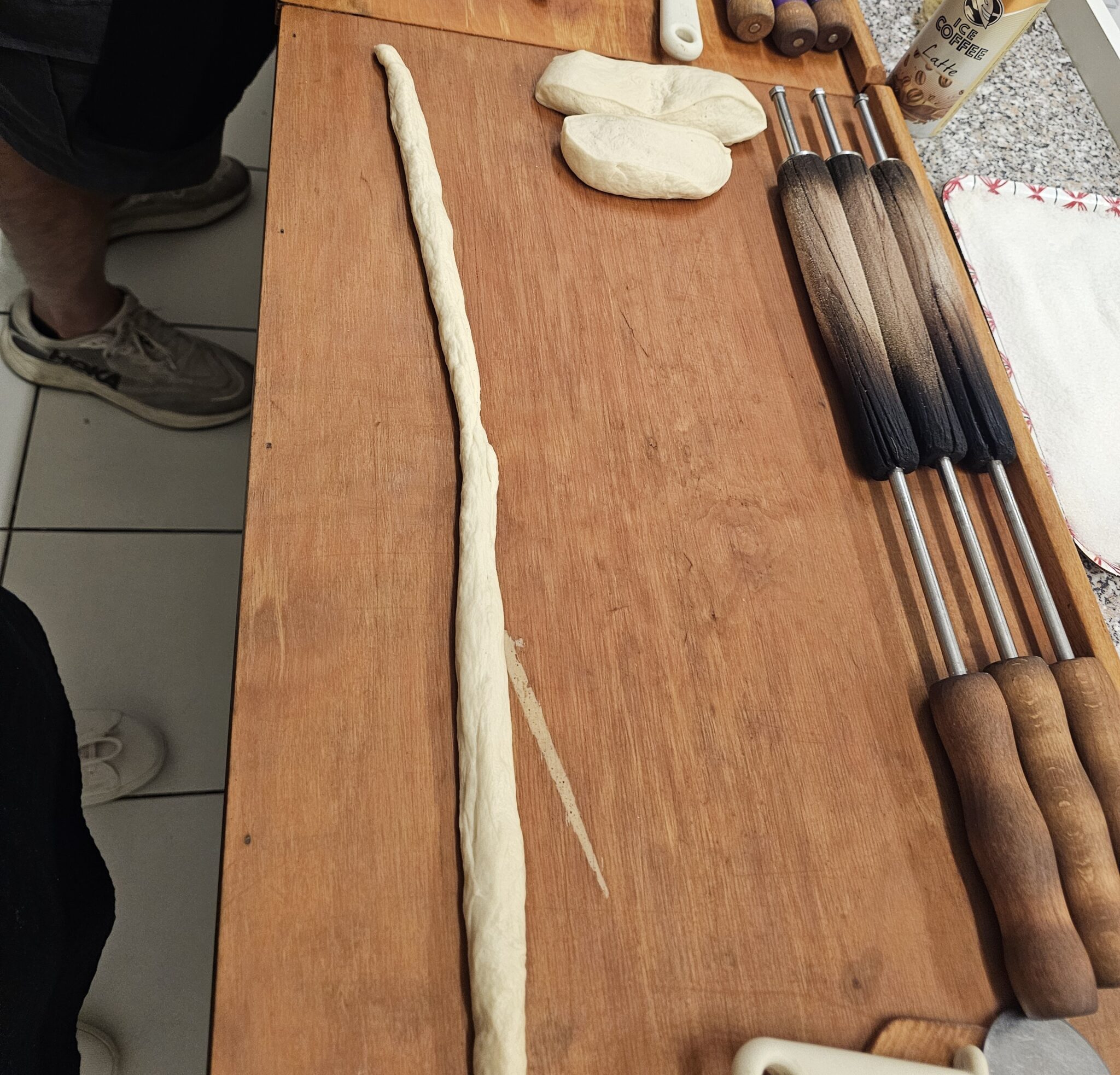
Step5: Using your hands take 1 of the 4 pieces of dough and roll it out into a long skinny string with the ends a smaller and pointy (Repeat for all 4 dough pieces)
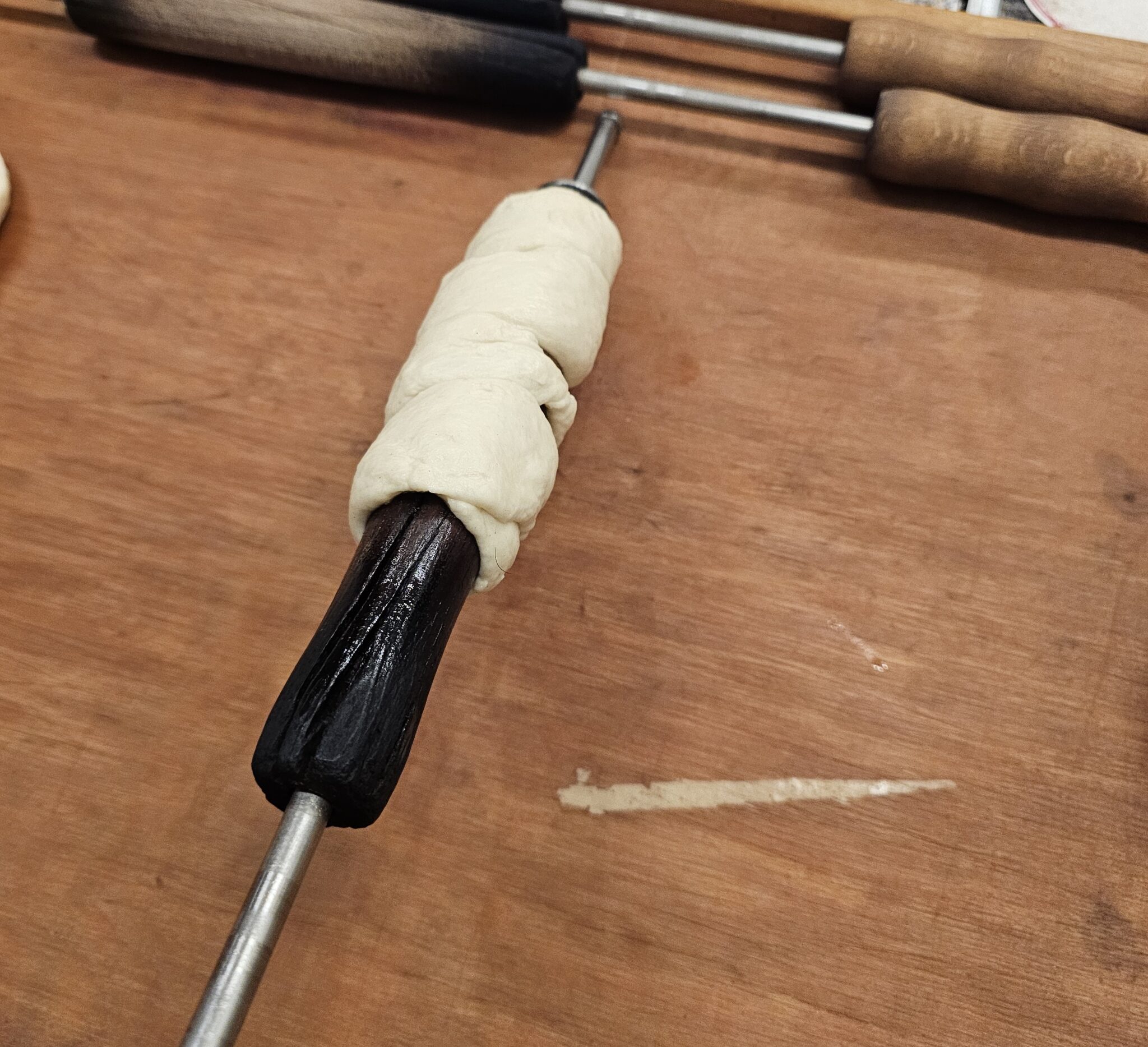
Step6: Brush melted butter or oil on your roller. Wrap the Roller: Wind the dough ribbon tightly around your prepared foil roller. Ensure the edges overlap slightly so the cake holds together and doesn't gap while baking.
Make you own sptil (see below) or buy a spit online
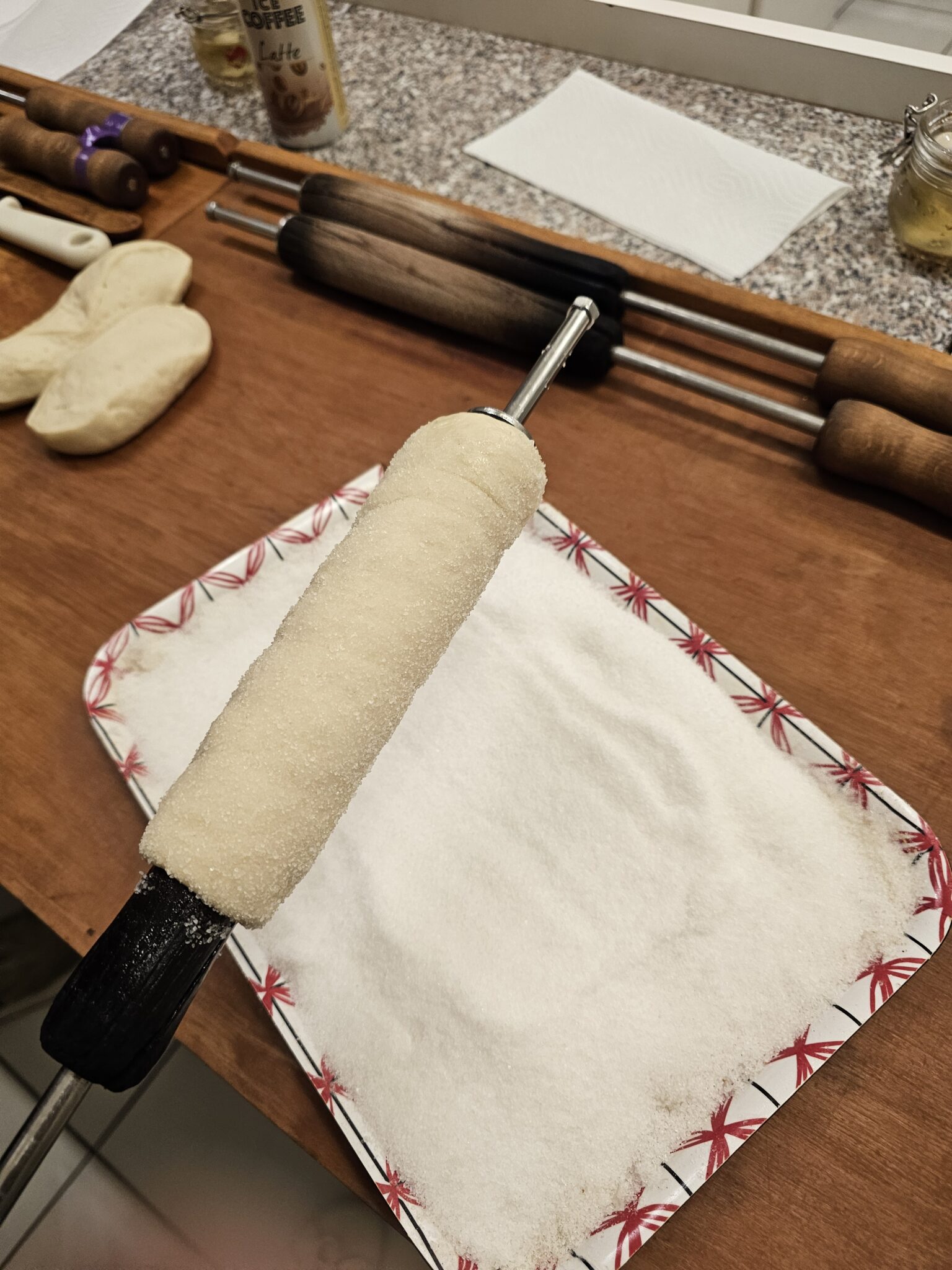
Step7: Roll and Coat: Gently roll the dough-covered cylinder on your countertop to press the seams flat. Brush the outside with melted butter, then roll it directly in your sugar and cinnamon mixture.
Step8: Bake and Turn: Place the roasting pan* into the oven. Bake at 400°F** for 10-15 mins Rotate the rollers 180° halfway through the baking time to ensure an even, golden-brown caramel crust.
* The Suspension Trick: Do not place the dough directly onto a baking sheet, or it will flatten out. Instead, place your rolling pin or cans suspended across the rims of a deep baking dish or roasting pan so the dough hangs in mid-air.
** The time required for cooking and intervals for rotating the spit may vary depending on your type of oven!
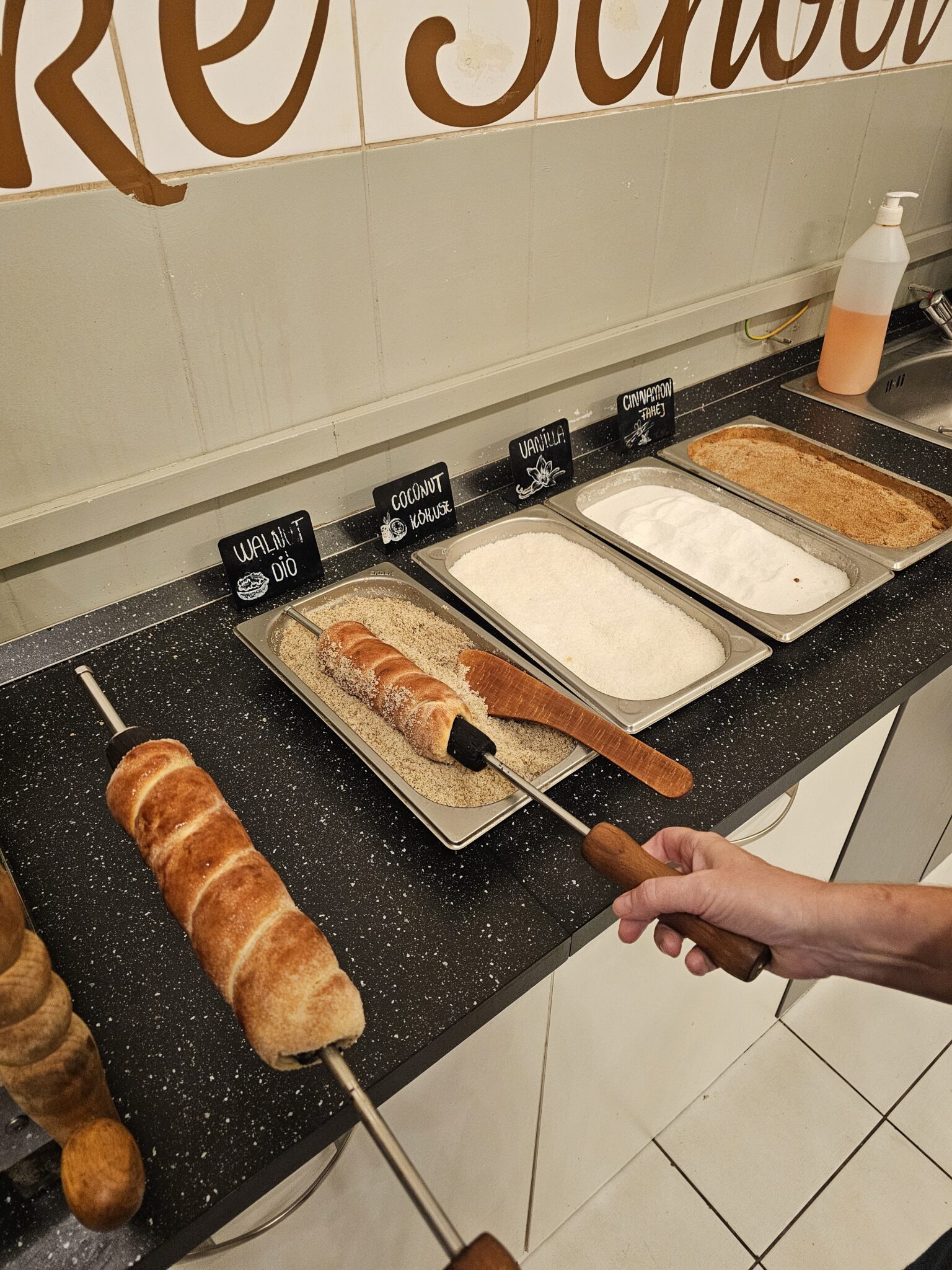
Step9: Roll your freshly baked cake in the mixture of sugar and cinnamon etc.
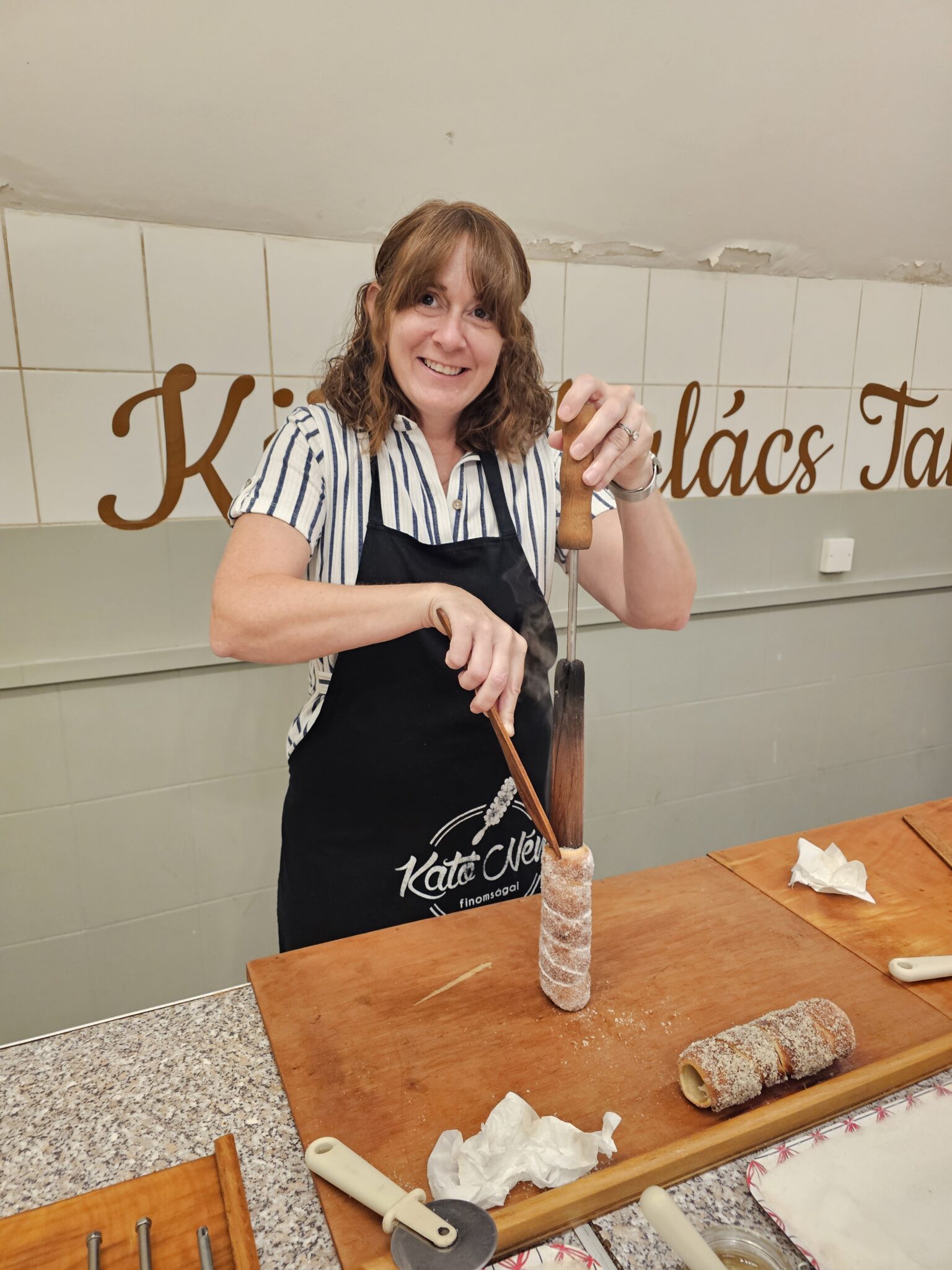
Step10: Carefully slide the chimney cake off the foil immediately after baking! with a wood spatula
Wrapping and Baking Steps
Here is how to successfully bake your Chimney Cake (Kürtőskalács) at home using regular kitchen tools, along with the precise oven temperature settings.
Oven Temperature Conversion
Preheat your oven before you begin shaping the dough:
- Conventional Oven: 400°F (equivalent to 200°C)
- Convection (Fan) Oven: 375°F (equivalent to 180°C)
How to Make DIY Chimney Cake Rollers
Since you likely do not have a commercial rotating spit, you can easily build your own rollers using everyday items. Pick one of these two methods:
Method A: The Rolling Pin (Best for baking across a deep pan)
- Grab a standard wooden rolling pin (ensure it has no plastic parts).
- Wrap the wooden barrel tightly in aluminum foil.
- Coat the foil generously with melted butter or oil so the dough doesn't stick.
Method B: Empty Soda Cans, I like using a long skinny can (Best for vertical baking)
- Take two empty, clean 12 oz aluminum soda cans.
- Wrap each can completely in aluminum foil.
- Coat the outside heavily with melted butter or oil.
Equipment Needed
- rolling pin (for horizontal baking)
- chimney cake spit (or use a 12oz aluminum soda can for vertical baking)
- aluminum foil
- pastry brush (any brush will work)
- baking pan
Best Toppings for Hungarian Chimney Cake
One of the best parts about making Hungarian chimney cake (kürtőskalács) is customizing the outside coating. After the cake comes out of the oven, it's brushed with a little melted butter and rolled in your favorite topping while it's still warm. The buttery caramelized sugar helps the coating stick, adding even more flavor and texture.
Whether you want to keep your chimney cake traditional or create a modern dessert, these toppings are all delicious options.
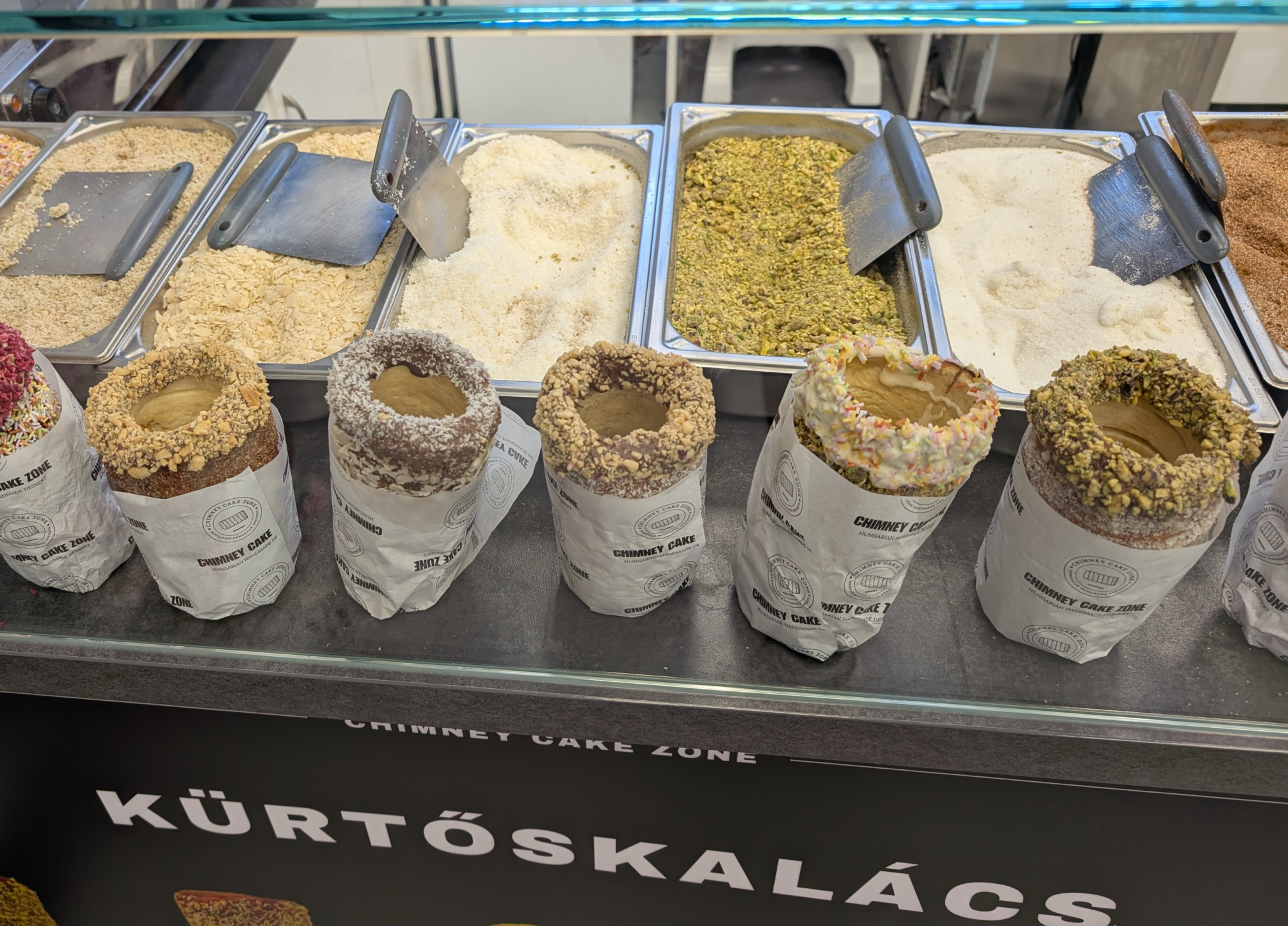
Traditional Chimney Cake Toppings
These are the classic coatings you'll commonly find at Hungarian bakeries and street vendors.
| Topping | Flavor Profile | Best Paired With |
| Cinnamon Sugar | Warm, sweet, and slightly spicy. The most popular traditional topping. | Plain, Nutella, apples |
| Ground Walnuts | Rich, earthy, and slightly crunchy. A longtime Hungarian favorite. | Chocolate, vanilla ice cream |
| Shredded Coconut | Lightly sweet with tropical flavor and chewy texture. | Chocolate, pineapple, whipped cream |
| Cocoa Powder | Rich chocolate flavor without being overly sweet. | Vanilla ice cream, whipped cream |
| Vanilla Sugar | Sweet with delicate vanilla flavor that lets the buttery dough shine. | Almost any filling |
| Poppy Seeds | Nutty flavor with a subtle crunch, commonly used in Hungarian baking. | Lemon curd, vanilla cream |
Premium Gourmet Toppings
These toppings add extra texture, vibrant colors, and bakery-quality flavor.
| Topping | Flavor Profile | Best Paired With |
| Crushed Pistachios | Rich, buttery, and slightly salty. | Pistachio cream, vanilla ice cream |
| Freeze-Dried Raspberries | Bright, tart flavor that balances the sweetness. | White chocolate, cheesecake filling |
| Toasted Almonds | Crunchy with a mild nutty flavor. | Honey, peaches, whipped cream |
| Vanilla Bean Sugar | Fragrant vanilla flavor with visible vanilla bean specks. | Traditional chimney cake |
| Dark Chocolate Shavings | Rich chocolate flavor with elegant presentation. | Strawberries, whipped cream |
| Toffee Bits | Crunchy caramel flavor that complements the caramelized crust. | Salted caramel, chocolate |
Fun & Creative Toppings
Perfect for kids, parties, or creating an over-the-top dessert.
| Topping | Flavor Profile | Best Paired With |
| Crushed Oreo Cookies | Chocolate cookie crunch with sweet cream filling. | Vanilla ice cream, chocolate sauce |
| Crushed Biscoff Cookies | Caramelized cinnamon cookie flavor. | Cookie butter, whipped cream |
| Graham Cracker Crumbs | Honey graham flavor reminiscent of s'mores. | Marshmallow fluff, chocolate |
| Matcha Powder | Earthy green tea flavor that balances sweetness. | White chocolate, vanilla cream |
| Rainbow Sprinkles | Colorful and sweet, perfect for celebrations. | Vanilla ice cream |
| Mini Chocolate Chips | Extra bursts of chocolate in every bite. | Nutella, peanut butter |
| Crushed Pretzels | Salty crunch for a sweet-and-salty combination. | Salted caramel, chocolate |
| Colored Sugar Crystals | Sparkly finish for birthdays and holidays. | Any filling |
My Favorite Topping Combinations
If you can't decide, try one of these delicious combinations:
| Topping | Filling |
| Cinnamon Sugar | Warm cinnamon apples |
| Ground Walnuts | Nutella |
| Pistachios | Pistachio cream |
| Cocoa Powder | Vanilla ice cream |
| Freeze-Dried Raspberries | Cheesecake filling |
| Oreo Crumbs | Cookies & cream ice cream |
| Biscoff Crumbs | Cookie butter |
| Coconut | Chocolate ganache |
| Matcha | White chocolate |
| Graham Crackers | Marshmallow fluff and chocolate |
No matter which topping you choose, the best time to coat your chimney cake is immediately after baking. The warm, buttery exterior helps the toppings stick while adding even more flavor to the crispy caramelized crust.
Chimney Cake Filling Ideas
While traditional Hungarian chimney cake (kürtőskalács) is served warm and completely hollow, modern bakeries and street vendors have turned it into the ultimate handheld dessert. The hollow center is perfect for filling with everything from rich chocolate spreads to fresh fruit and creamy ice cream.
Whether you want to keep it simple or create an over-the-top dessert, here are some delicious filling ideas to inspire you.
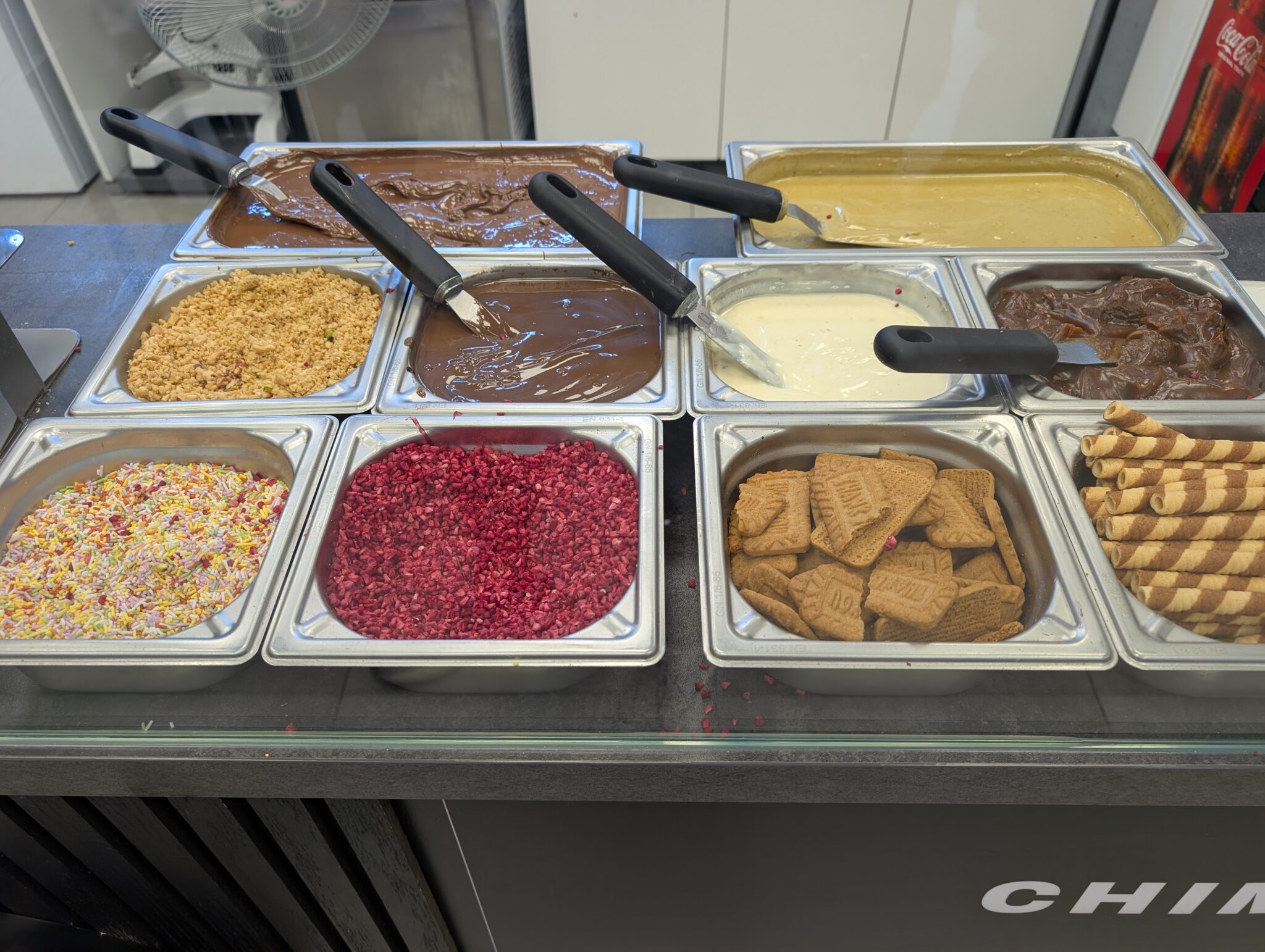
Chocolate Lovers
Perfect for anyone with a sweet tooth.
- Nutella – The most popular modern filling, warm and creamy.
- Melted Chocolate – Milk, dark, or white chocolate for an indulgent treat.
- Chocolate Ganache – Rich and silky with an intense chocolate flavor.
- Chocolate Pudding – Smooth, creamy, and kid-friendly.
- Chocolate Hazelnut Mousse – Light, fluffy, and decadent.
Ice Cream Creations
Serve your chimney cake warm with a cold filling for the ultimate contrast.
- Vanilla Ice Cream
- Chocolate Ice Cream
- Strawberry Ice Cream
- Salted Caramel Ice Cream
- Pistachio Ice Cream
- Coffee Ice Cream
- Soft Serve Ice Cream
- Frozen Yogurt
Fruity Fillings
Fresh fruit helps balance the sweetness of the caramelized sugar crust.
- Fresh Strawberries
- Blueberries
- Raspberries
- Blackberries
- Sliced Peaches
- Fresh Cherries
- Bananas
- Mixed Berry Compote
Fruit Pie Fillings
These warm fillings make chimney cake taste like your favorite pie.
- Apple Pie Filling
- Cherry Pie Filling
- Blueberry Pie Filling
- Peach Pie Filling
- Mixed Berry Filling
- Cinnamon Apples
Creamy Fillings
These rich fillings make chimney cake taste like a bakery dessert.
- Homemade Custard
- Vanilla Pastry Cream
- Cheesecake Filling
- Whipped Cream
- Mascarpone Cream
- Bavarian Cream
- Diplomat Cream
Sweet Spreads
Easy, delicious, and perfect for spreading inside the warm cake.
- Peanut Butter
- Cookie Butter (Biscoff)
- Pistachio Cream
- Salted Caramel
- Dulce de Leche
- Marshmallow Fluff
- Lemon Curd
- Raspberry Jam
- Strawberry Jam
- Apricot Preserves
- Plum Jam
Create Your Own Combination
One of the best things about chimney cake is mixing flavors. Here are a few of my favorite combinations:
- 🍓 Nutella + Fresh Strawberries
- 🍌 Peanut Butter + Banana
- 🍑 Vanilla Custard + Peaches
- 🍒 Cheesecake Filling + Cherry Pie Filling
- 🍦 Vanilla Ice Cream + Salted Caramel
- 🍏 Cinnamon Apples + Whipped Cream
- 🍪 Cookie Butter + Vanilla Ice Cream
- 💚 Pistachio Cream + Chopped Pistachios
- 🍋 Lemon Curd + Fresh Blueberries
- 🍫 Chocolate Ganache + Marshmallow Fluff
There really isn't a wrong way to fill a chimney cake. Whether you keep it traditional with no filling at all or pile it high with ice cream, fruit, and your favorite sweet spreads, this Hungarian dessert is the perfect blank canvas for creating your own delicious masterpiece.
Expert Tips for Perfect Chimney Cake
These simple tips will help you get a bakery-quality chimney cake with a soft, fluffy interior and a crisp caramelized crust every time.
Don’t Overproof the Dough - Let the dough rise until it has roughly doubled in size, but don’t let it keep rising far beyond that. Overproofed dough can become too airy and may collapse or lose its shape when wrapped around the roller and baked.
Stretch the Dough Evenly - When cutting your dough into long strips, try to keep the width consistent from end to end. Uneven strips can create thin spots that overbake and thick spots that remain doughy. Aim for strips about 1 inch (2.5 cm) wide and ¼ inch (6 mm) thick.
Roll the Dough Tightly - Wrap the dough snugly around the roller or spit, overlapping the edges slightly. A tight wrap helps the cake hold its cylindrical shape and prevents gaps from forming as the dough expands during baking.
Seal the Seams Well - After wrapping, gently roll the dough-covered roller on the countertop with light pressure. This helps flatten and seal the seams so the layers bake together into one smooth chimney cake. If the seams are left loose, the cake may split open while baking.
Rotate While Baking - For the most even browning, rotate the chimney cake 180° halfway through baking. If your oven has hot spots, you may want to rotate it a quarter turn every 5 minutes. This ensures the sugar caramelizes evenly all the way around.
Remove It Immediately After Baking - As soon as the cake comes out of the oven, carefully slide it off the roller while it’s still hot. If it cools on the roller, the caramelized sugar can harden and make it much more difficult to remove without tearing the pastry.
Coat It While It’s Warm - Roll the chimney cake in your cinnamon sugar, walnuts, cocoa, coconut, or other toppings immediately after removing it from the roller. The warm, buttery surface acts like glue and helps the toppings stick evenly for the best flavor and texture.
Bonus Tip: Serve It Fresh - Chimney cake is at its absolute best within 15–20 minutes of baking when the outside is still crisp and the inside is warm and pillowy. If you’re adding fillings like Nutella or ice cream, do so just before serving for the best texture and presentation.
Common Chimney Cake Mistakes (And How to Fix Them)
Making Hungarian chimney cake (kürtőskalács) at home is easier than you might think, but a few common mistakes can affect the shape, texture, and caramelized crust. Here are the most common problems and how to fix them.
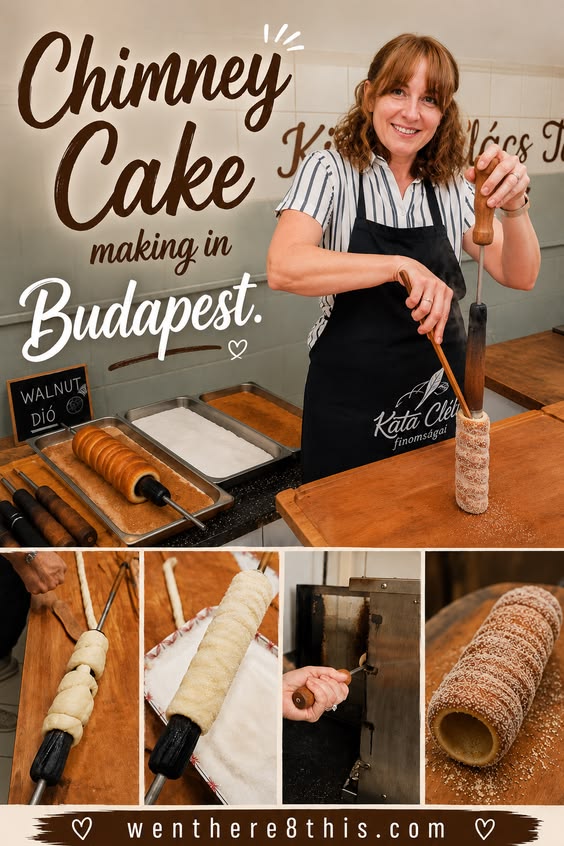
Why Did My Chimney Cake Flatten?
A chimney cake gets its signature hollow cylinder shape from being wrapped around a roller or spit while baking. If your cake flattens, it is usually caused by one of these issues:
- The dough wasn't wrapped tightly enough: Make sure the dough strips overlap slightly and are pressed together so they hold their shape.
- The dough strips were too thick: Thick layers of dough can become heavy and slide down during baking. Keep your strips around 1 inch (2.5 cm) wide and evenly thick.
- The roller wasn't suspended properly: The chimney cake should bake while hanging or rotating, not resting directly on a baking sheet where it can flatten.
- The dough was overproofed: Dough that has risen too long becomes weak and may lose its structure.
Tip: After wrapping the dough, gently roll it on the counter to help seal the layers and create an even cylinder before baking.
Common Chimney Cake Mistakes (And How to Fix Them)
Why Is My Chimney Cake Doughy Inside?
A properly baked chimney cake should have a soft, fluffy interior with a slightly chewy texture—not raw or doughy.
Common causes include:
- The oven temperature was too low: Chimney cake needs high heat to create the caramelized crust while cooking the inside.
- The dough was wrapped too thickly: Thick layers may brown outside before the inside is fully cooked.
- The cake wasn't rotated: Uneven baking can leave some sections undercooked.
- The cake was removed too early: Make sure the exterior is golden brown and the sugar has caramelized before removing it.
Tip: Baking times can vary depending on your oven, so use the color and texture of the cake as your guide rather than relying only on the clock.
Why Won't My Chimney Cake Slide Off the Roller?
This is one of the most common frustrations when making chimney cake.
Possible reasons include:
- The roller wasn't greased enough: Always coat your foil-covered roller generously with melted butter or oil before wrapping the dough.
- You waited too long to remove it: The caramelized sugar hardens as it cools and can make the cake stick.
- The dough was pressed too tightly onto the roller: Wrap firmly, but don't compress the dough excessively.
Tip: Remove the chimney cake from the roller immediately after baking while it's still warm. Use a gentle twisting motion if needed to help release it.
Why Isn't the Sugar Caramelizing?
The crunchy, golden sugar crust is what makes chimney cake special. If your sugar isn't caramelizing, check these issues:
- The oven temperature is too low: Sugar needs enough heat to melt and caramelize properly.
- The dough wasn't coated evenly: Make sure the outside is brushed with butter or oil before rolling in sugar.
- Too much moisture is present: Excess liquid can prevent the sugar from forming a crisp crust.
- The cake wasn't baked long enough: The sugar needs time to melt and turn golden brown.
Tip: Use granulated sugar rather than powdered sugar for the best caramelized coating.
Why Did My Chimney Cake Dough Crack?
Cracks usually happen when the dough is too dry or hasn't been handled properly.
Common causes include:
- The dough wasn't kneaded enough: Proper kneading develops gluten, which gives the dough flexibility.
- The dough dried out while resting: Keep the dough covered during rising and shaping.
- The dough strips were stretched too aggressively: Stretch gently to avoid tearing.
- The dough was too cold: Room-temperature dough is easier to shape and wrap.
Tip: If the dough starts cracking while shaping, let it rest for 5–10 minutes. This allows the gluten to relax and makes it easier to work with.
With a little practice and these troubleshooting tips, you'll be able to create a beautiful homemade chimney cake with the perfect combination of crispy caramelized sugar on the outside and soft, fluffy dough on the inside.
How to Store Chimney Cake
Hungarian chimney cake (kürtőskalács) is best enjoyed fresh and warm, right after baking when the outside is crisp, the sugar is caramelized, and the inside is soft and fluffy. Like many freshly baked breads and pastries, the texture changes as it sits, but with proper storage you can still enjoy leftovers.
Can You Store Chimney Cake?
Yes, you can store chimney cake, but keep in mind that the caramelized sugar coating will gradually soften over time. For the best experience, enjoy it within a few hours of baking.
Room Temperature Storage
If you have leftover chimney cake, store it at room temperature wrapped loosely in foil.
- Store for up to 2 days
- Avoid storing it in the refrigerator, as the cold temperature can dry out the dough and make the texture less tender
- Leave fillings like ice cream or whipped cream out until serving
Tip: Do not seal a warm chimney cake in an airtight container. Allow it to cool completely first, otherwise trapped steam can make the crispy sugar coating soft and sticky.
How to Reheat Chimney Cake
To bring back some of the fresh-baked texture:
- Oven: Warm at 300°F (150°C) for 5–10 minutes until heated through
- Air Fryer: Heat at 300°F (150°C) for 3–5 minutes
- Avoid the microwave: It will warm the cake but will make the caramelized exterior soft and chewy instead of crisp
Can You Freeze Chimney Cake?
Yes, chimney cake can be frozen, although it won't be quite the same as freshly baked.
To freeze:
- Allow the chimney cake to cool completely.
- Wrap tightly in plastic wrap, then place in a freezer-safe bag or container.
- Freeze for up to 2 months.
To serve:
- Thaw at room temperature.
- Reheat in the oven or air fryer to help restore some of the crisp exterior.
Storing Chimney Cake Dough
If you want to prepare ahead, the dough can be made in advance.
- Refrigerator: Store covered dough for up to 24 hours before shaping and baking.
- Freezer: Freeze dough after the first rise for up to 1 month. Thaw overnight in the refrigerator, then allow it to come to room temperature before shaping.
Best Way to Keep Chimney Cake Fresh
For the best texture and flavor:
✅ Bake just before serving
✅ Coat with toppings while warm
✅ Add fillings right before eating
✅ Serve within a few hours of baking
The magic of chimney cake is the contrast between the crunchy caramelized sugar crust and the soft, fluffy center, so fresh is always best!
Frequently Asked Questions
Chimney cake, known as kürtőskalács in Hungary, is a traditional Hungarian pastry made from sweet yeast dough wrapped around a cylinder and baked until golden brown. The outside is coated with sugar that caramelizes during baking, creating a crisp crust while the inside remains soft, fluffy, and slightly chewy.
Chimney cake gets its name from its hollow cylindrical shape. When the warm cake is removed from the baking spit, steam rises from the center like smoke coming from a chimney. The Hungarian word kürtő means "chimney" or "stovepipe," which inspired the name.
Absolutely! While traditional chimney cakes are cooked on rotating spits, you can make them at home using simple alternatives. A wooden rolling pin, aluminum foil-wrapped cans, or inexpensive chimney cake baking molds can all work well. See above for making your own.
Some easy homemade options include:
Wooden rolling pin wrapped in aluminum foil
Empty aluminum soda cans wrapped in foil
Stainless steel tubes
Specialty chimney cake molds or spits
Always coat the roller generously with butter or oil to prevent sticking.
A crispy exterior comes from the sugar caramelizing properly during baking. If your chimney cake isn't crispy:
Make sure the dough is coated evenly with sugar, Bake at a high enough temperature, Allow enough time for the sugar to caramelize, or Avoid storing it in an airtight container while still warm
Freshly baked chimney cake will always have the best crispy texture.
The best way to enjoy chimney cake is fresh and warm! Break off pieces with your hands and enjoy the crispy caramelized outside with the soft interior. If filled with ice cream, whipped cream, or other fillings, it is usually eaten like a handheld dessert.
Yes, but the texture will be different. Traditional chimney cake relies on gluten development to create its stretchy, fluffy structure. A gluten-free flour blend designed for yeast baking will work best, but you may need to adjust the liquid and binding ingredients.
Traditional chimney cake is not vegan because it usually contains butter, milk, and eggs. However, it can be adapted using plant-based milk, vegan butter, and egg substitutes.
Chimney cake is best served:
Fresh from the oven
Warm with a caramelized crust
Coated in your favorite topping
Filled just before serving
Whether enjoyed at a Budapest Christmas market or made at home, chimney cake is a fun and delicious way to experience Hungarian food culture.
Related Recipes
Authentic German Goulash Recipe
Instant Pot Chicken Paprika Recipe
Top Eastern European countries for foodies
Recipe
Hungarian Chimney Cake (Kürtőskalács)
Ingredients
Instructions
- Mix yeast, milk, and a teaspoon of icing sugar 1 teaspoon together
- Whisk butter or oil with 3 egg yolks into a froth, add flour and the remaining sugar 2tsp, and mix together.
- Add the activated yeast mixture to the flour mixture and knead until the dough is smooth and elastic, about 8–10 minutes. Cover the bowl with a clean kitchen towel or plastic wrap and let the dough rise in a warm place for 30–45 minutes, or until doubled in size.
- Split your dough into 4 equal size pieces
- Using your hands take 1 of the 4 pieces of dough and roll it out into a long skinny string with the ends a smaller and pointy (Repeat for all 4 dough pieces)
- Brush melted butter or oil on your roller. Wrap the Roller: Wind the dough ribbon tightly around your prepared foil roller. Ensure the edges overlap slightly so the cake holds together and doesn't gap while baking.Make you own sptil or buy a spit online
- Roll and Coat: Gently roll the dough-covered cylinder on your countertop to press the seams flat. Brush the outside with melted butter, then roll it directly in your sugar and cinnamon mixture.
- Bake and Turn: Place the roasting pan* into the oven. Bake at 400°F** for 10-15 mins Rotate the rollers 180° halfway through the baking time to ensure an even, golden-brown caramel crust.* The Suspension Trick: Do not place the dough directly onto a baking sheet, or it will flatten out. Instead, place your rolling pin or cans suspended across the rims of a deep baking dish or roasting pan so the dough hangs in mid-air.** The time required for cooking and intervals for rotating the spit may vary depending on your type of oven!
- Roll your freshly baked cake in the mixture of sugar and cinnamon etc.
- Carefully slide the chimney cake off the foil immediately after baking! with a wood spatula
Comments
No Comments