
If you've been following my travels on Facebook, you know that my husband and I are living in Budapest for a year. It's been the perfect opportunity to immerse ourselves in Hungarian culture while exploring neighboring countries and experiencing their history, architecture, and, of course, their food. Vienna Austria was our latest destination
Just a 2½-hour train ride from Budapest—or at least that's what the schedule promised. Like many train journeys we've taken here, ours ended up being closer to three hours thanks to delays. Before booking, I decided to upgrade us to first class, and after seeing the crowded second-class coaches, I'm so glad I did. In the middle of summer, several second-class cars had little or no air conditioning, and passengers were sitting and even lying in the hallways because the coaches were so full and hot. It made getting to the restroom nearly impossible. If you're traveling between Budapest and Vienna during the busy summer months, I'd definitely recommend spending a little extra for first class.
Thankfully, the train ride was the only hiccup because Vienna Austria itself is absolutely beautiful. The city is easy to explore and is filled with elegant architecture that reflects its rich Habsburg imperial history. Even after living in Budapest for only a few weeks, I immediately noticed how different the two capitals feel.
Budapest has a slightly smaller, more relaxed atmosphere. Its major attractions are clustered together, making it easy to explore on foot or by public transportation. The city feels youthful and energetic, with a wonderful mix of grand architecture, lively cafés, local markets, and vibrant neighborhoods.
Vienna, on the other hand, feels more polished and refined. While the historic city center is very walkable, many of the famous palaces and attractions are spread throughout the city, giving Vienna a much larger feel. During our visit, we mostly walked and took taxis, although we did try one of the electric scooters. Riding over cobblestone streets and weaving around the city's tram tracks was certainly memorable! It was fun, but by the time we finished, we realized renting two scooters had cost about the same as simply taking a taxi.
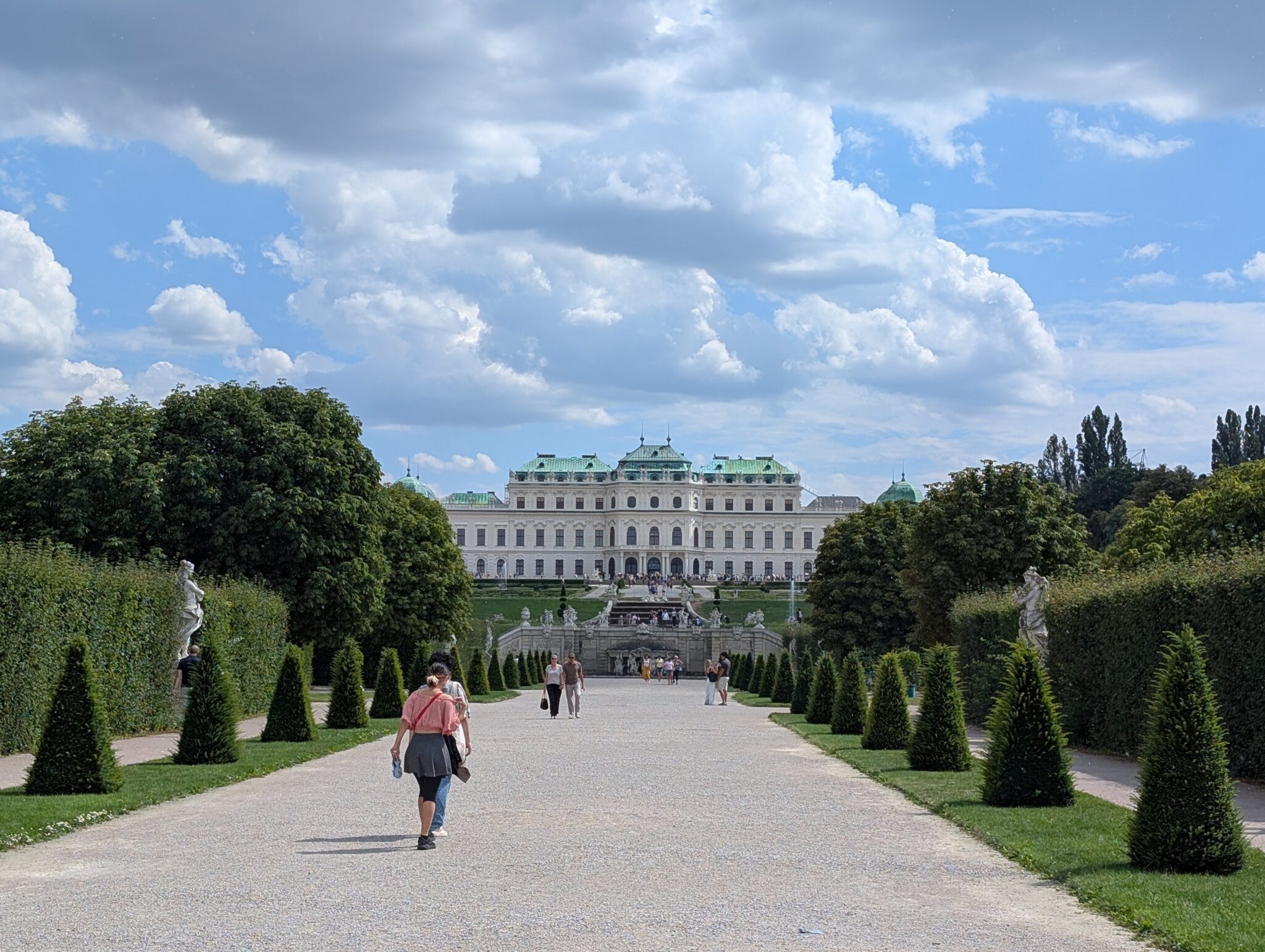
One of the first things you'll notice about Vienna, Austria is its stunning architecture. The city is known for its elegant Baroque buildings, many of which were built during the Habsburg Empire. Magnificent landmarks like Schönbrunn Palace, Hofburg Palace, and Belvedere Palace showcase Vienna's imperial past, while broad boulevards, grand museums, historic opera houses, and beautiful public squares make the city feel like an open-air museum. Walking through areas like Graben, Rathausplatz, and Michaelerplatz eventually leads you to the breathtaking St. Stephen's Cathedral, one of Vienna's most recognizable landmarks.
While Vienna offers incredible beauty and history, it is noticeably more expensive than Budapest. We found food, transportation, and accommodations all came with a higher price tag, so it's something to keep in mind when planning your trip.
Of course, one of my favorite parts of visiting any city is discovering the local food, and Vienna certainly didn't disappoint. From perfectly crispy Wiener Schnitzel and comforting Tafelspitz to rich Sachertorte, flaky apple strudel, and its world-famous coffeehouses, every meal felt like part of the experience. Whether you're stopping for a quick espresso or lingering over coffee topped with whipped cream and ice cream, Vienna's café culture is something every food lover should experience.
Why Visit Vienna Austria?
Step Into the Habsburg Empire – Vienna's rich Habsburg history comes to life through magnificent palaces, grand churches, elegant squares, and impressive museums. Everywhere you turn, you'll find reminders of the city's imperial past, from Baroque architecture and Gothic cathedrals to beautiful historic streets.
Experience the Famous Coffeehouse Culture – If you're a foodie like me, you'll love Vienna's legendary coffeehouse culture. These historic cafés are more than places to grab a coffee—they're part of the city's way of life. Slow down with a cup of Viennese coffee, indulge in a pastry, and enjoy one of Vienna's most delicious traditions.
Want to Save This Recipe?
Enter your email & I'll send it to your inbox. Plus, get great new recipes from me every week!
By submitting this form, you consent to receive emails from Went Here 8 This.
Walking Tour of Vienna Austria's City Center

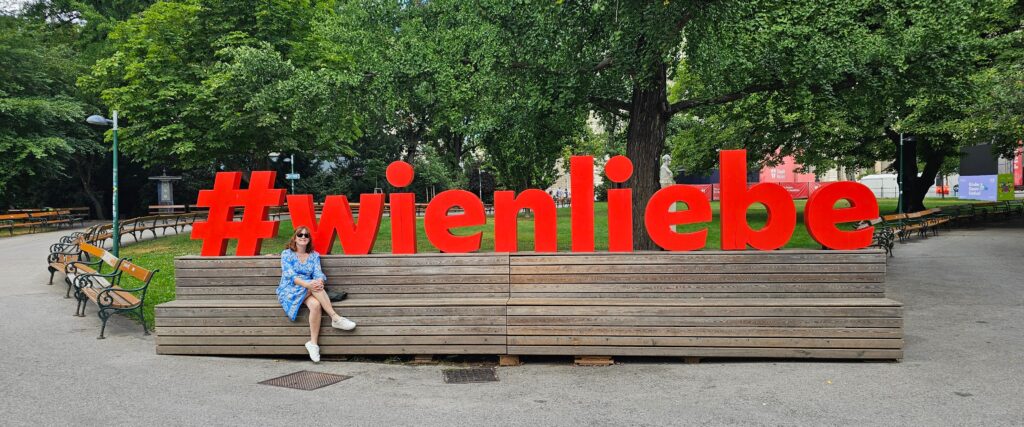
Wienliebe (Vienna Love) sign is a popular tourist spot located in the Rathauspark. in front of the Vienna City Hall (Rathaus) 
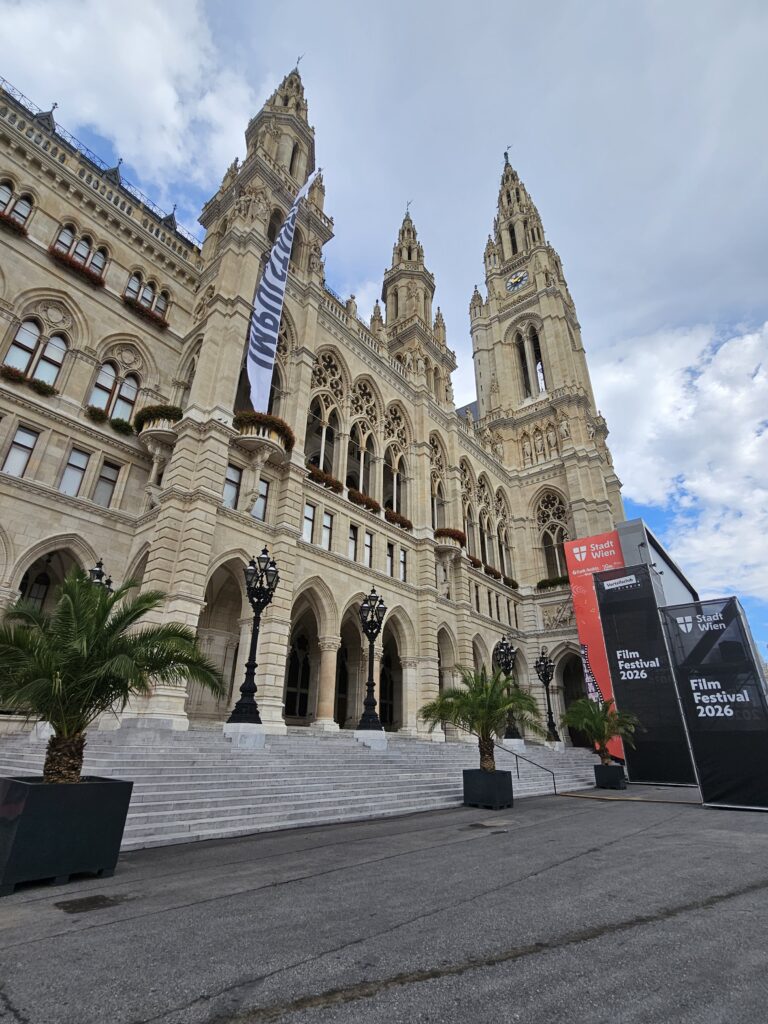
The grand Gothic Revival facade of the Vienna City Hall (Wiener Rathaus). Designed by Friedrich von Schmidt and built between 1872 and 1883. 
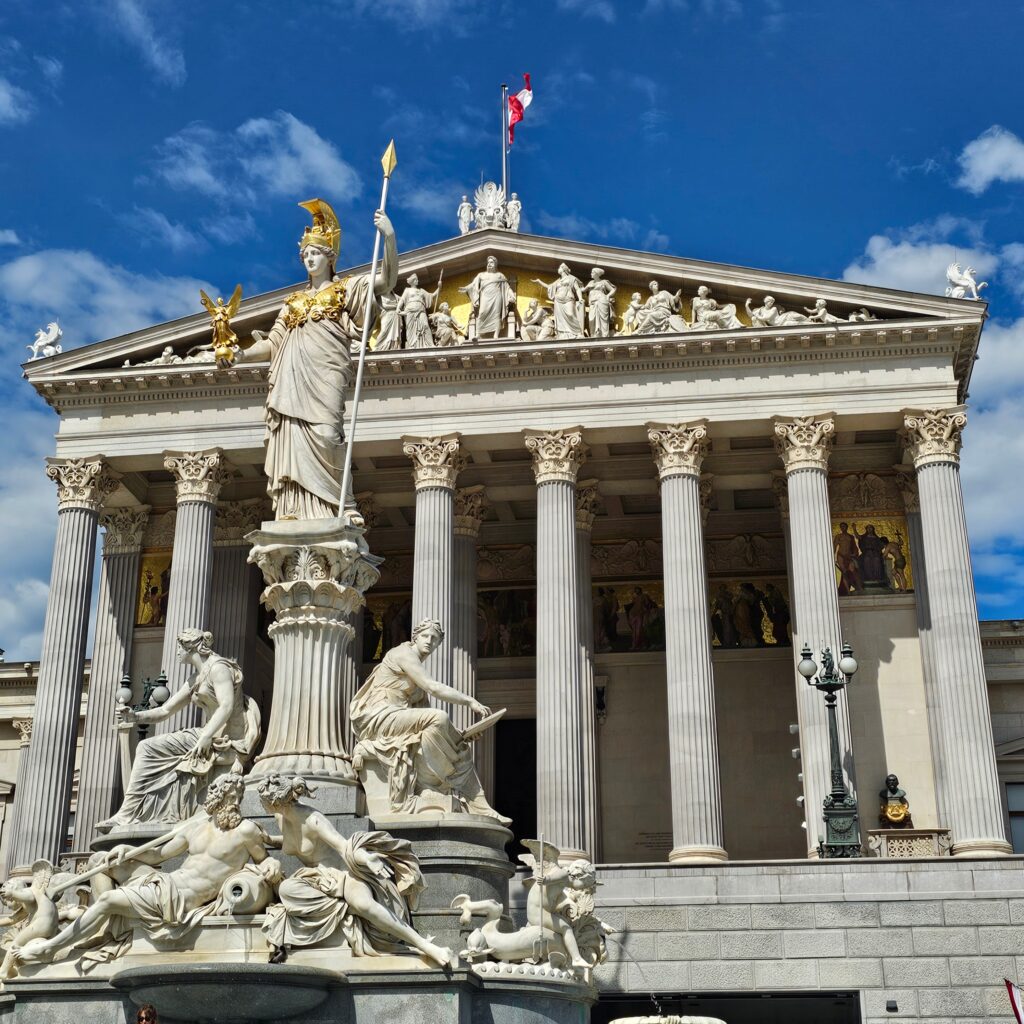
Pallas Athena Fountain (Pallas-Athene-Brunnen) located directly in front of the Austrian Parliament Building 
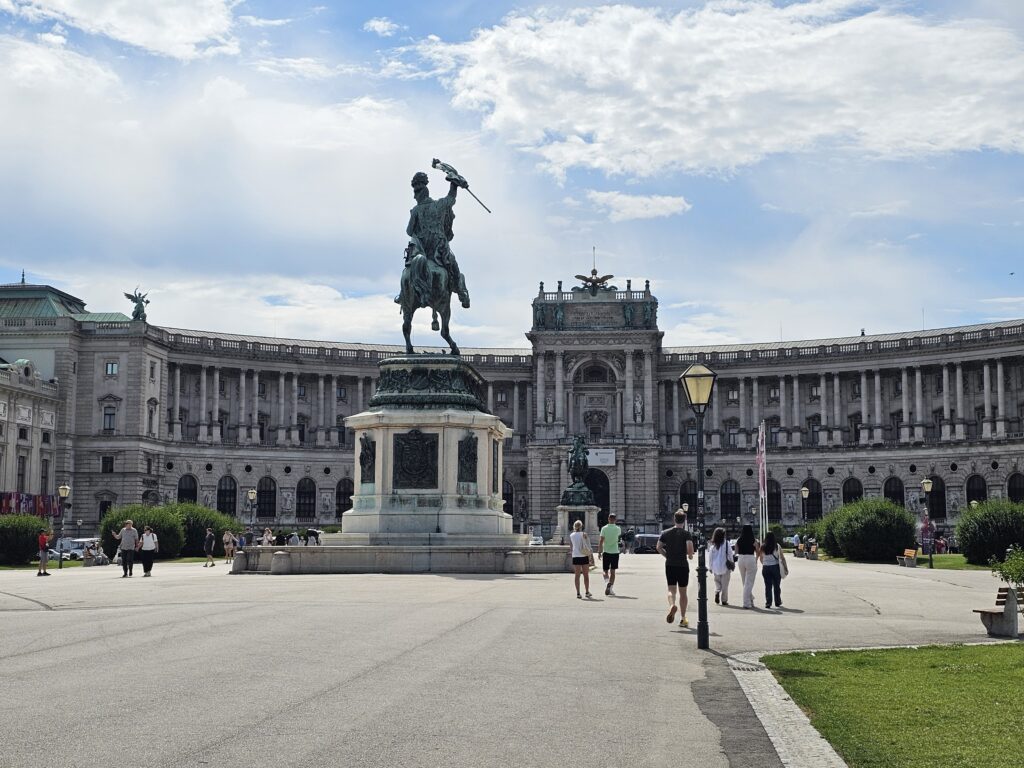
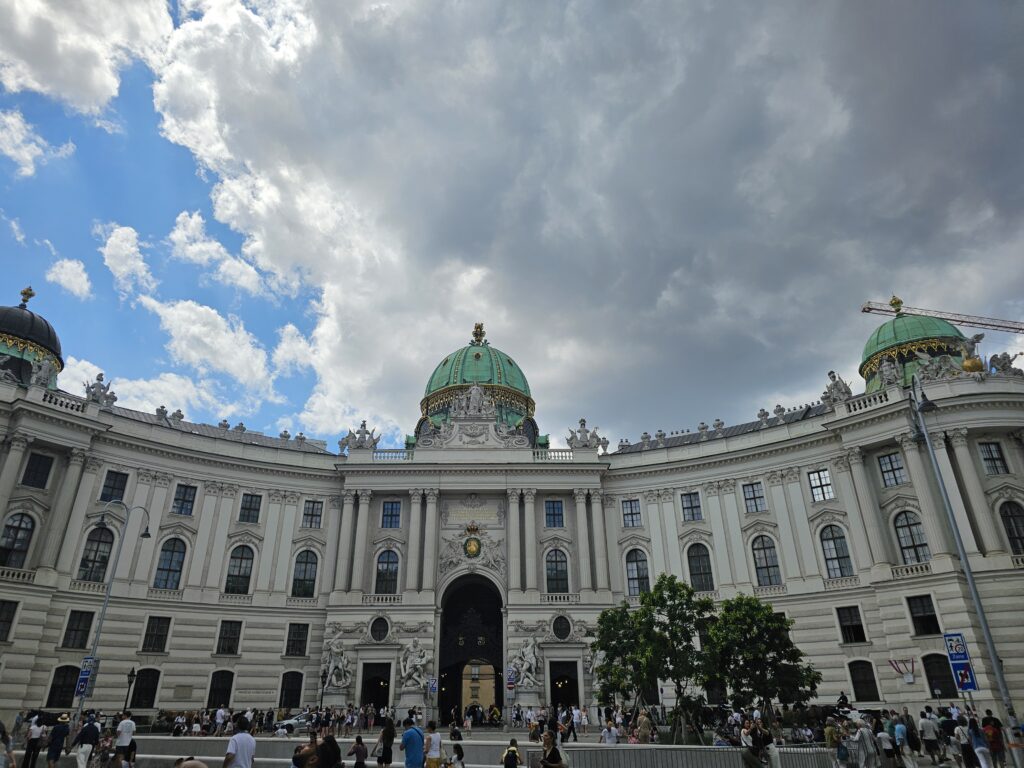
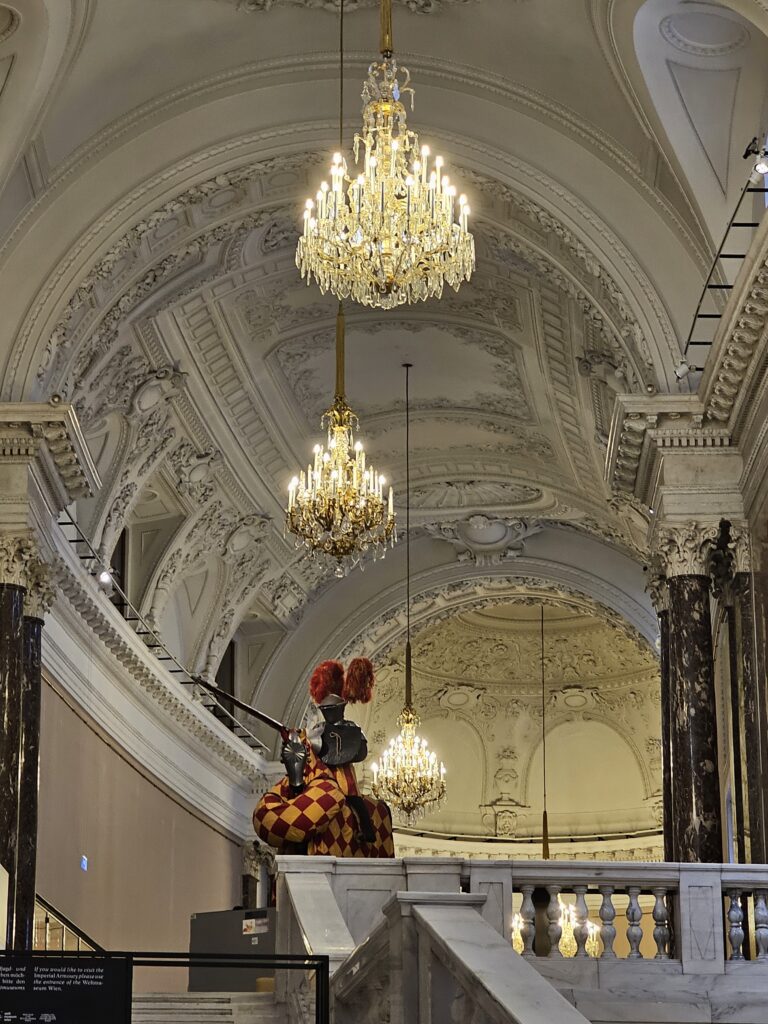
Heldenplatz (Heroes' Square) in Vienna featuring the grand Neue Burg wing of the Hofburg Palace and the iconic equestrian statue of Archduke Charles. The Neue Burg (New Burg) is the newest part of the Hofburg Palace complex, built between 1881 and 1913 in the neo-Baroque style. Michaelertrakt (St. Michael's Wing) of the Hofburg Palace facing Michaelerplatz. This area Serves as a grand monumental entrance to the historic imperial palace complex and connects the Winter Riding School with the Imperial Chancellery Wing. The grand interior of the Neue Burg wing within the Hofburg Palace complex. 
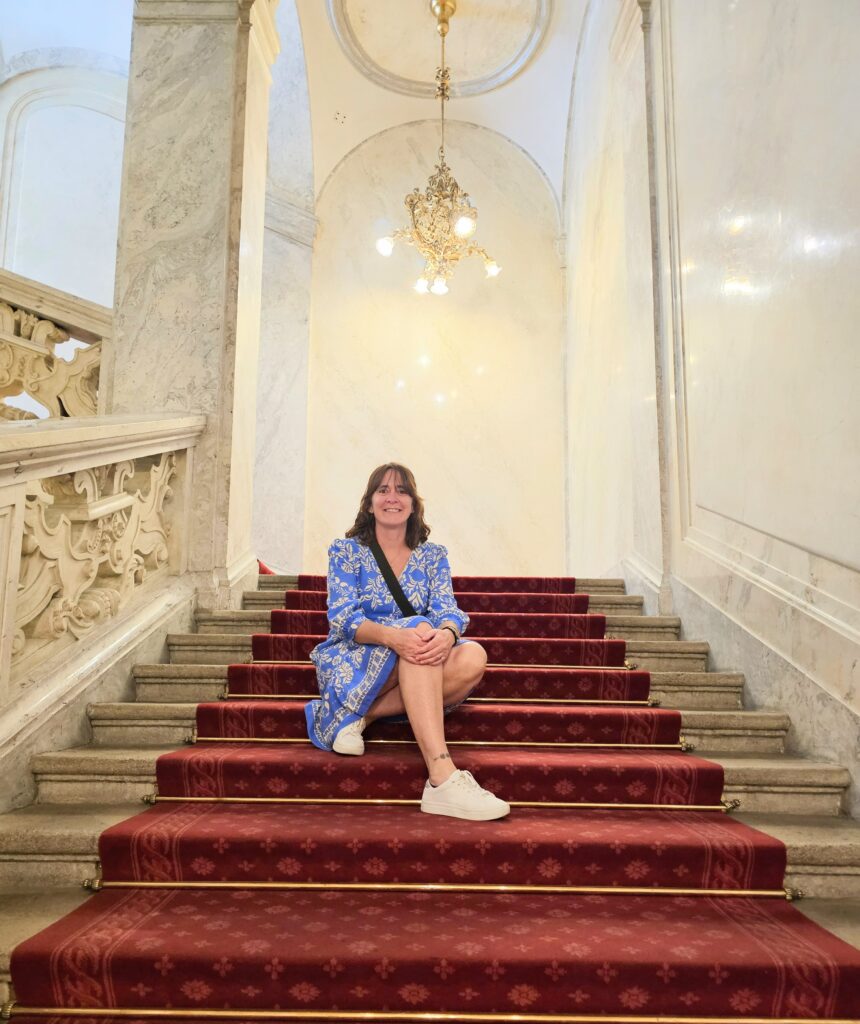
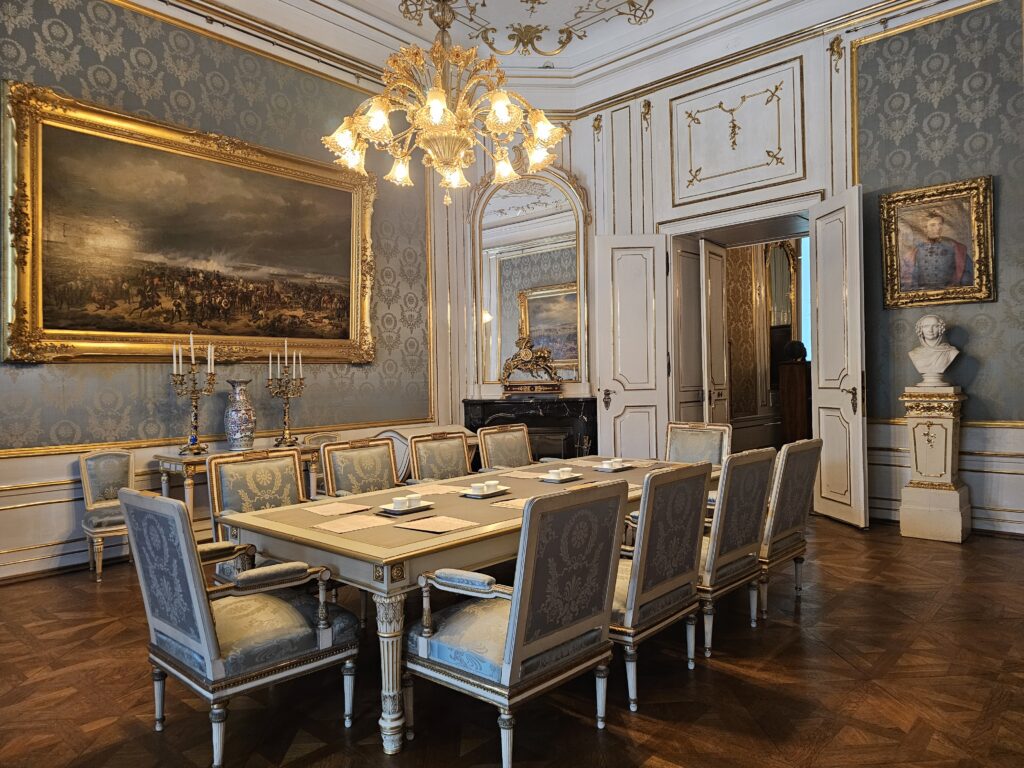
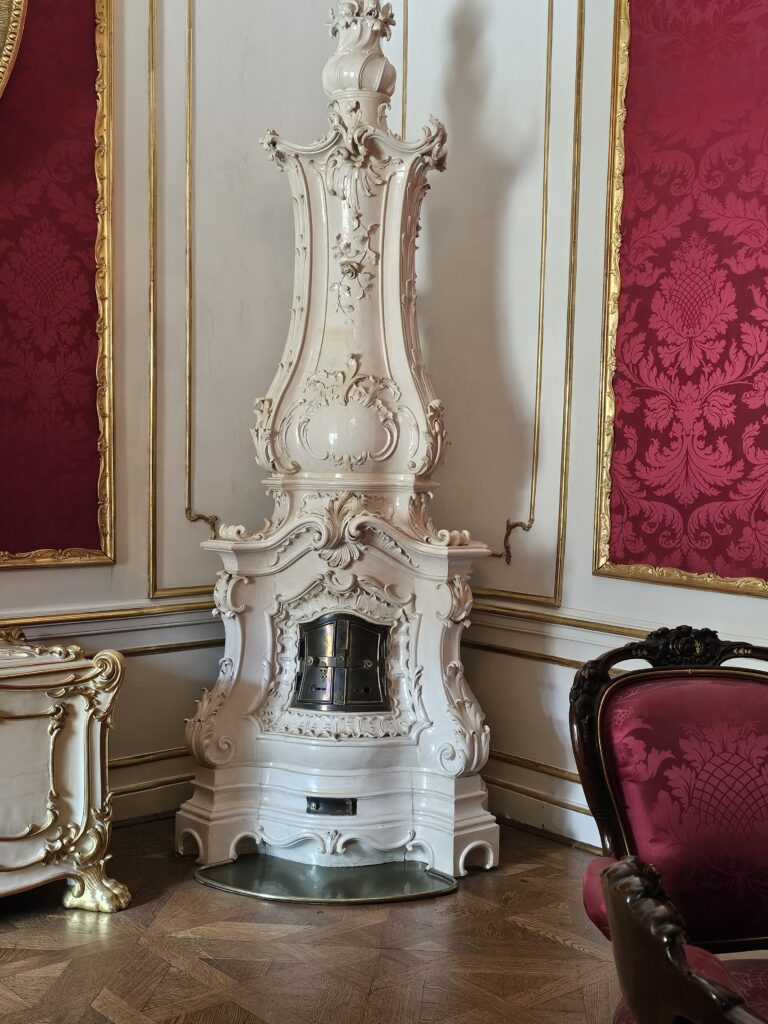
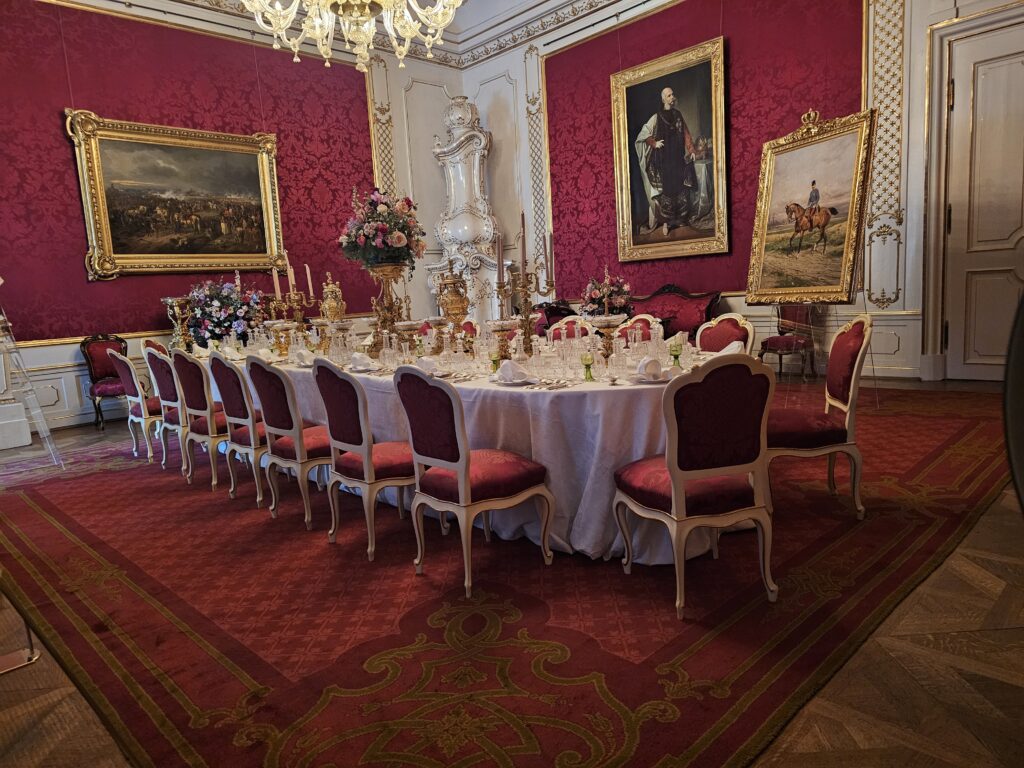
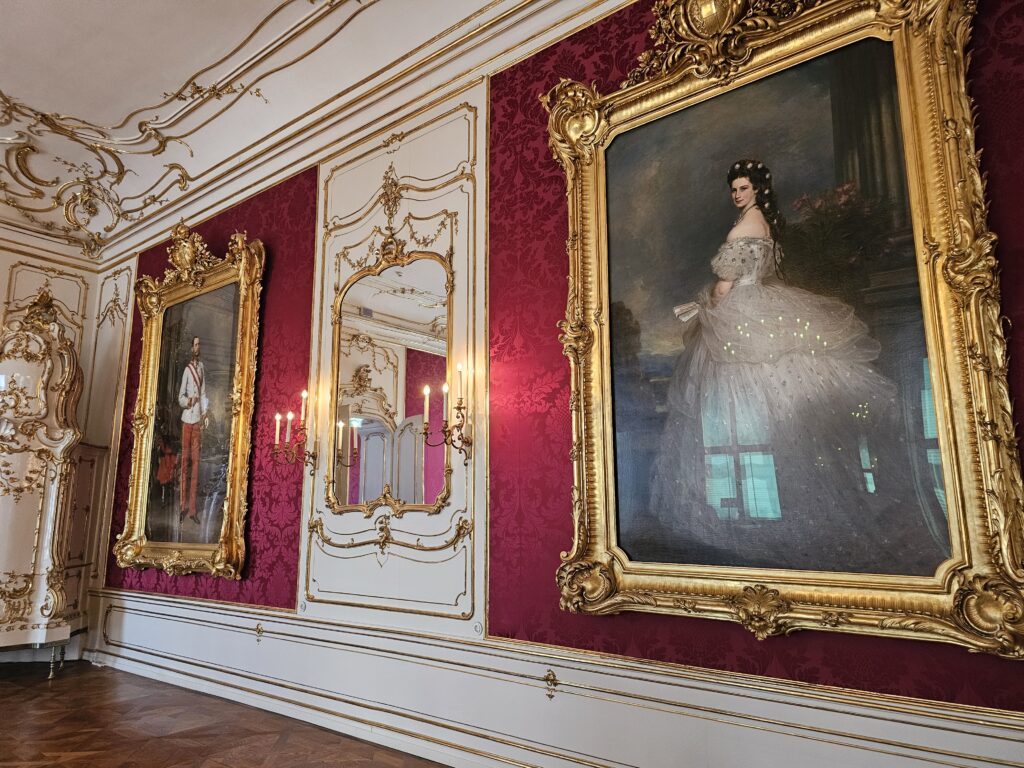
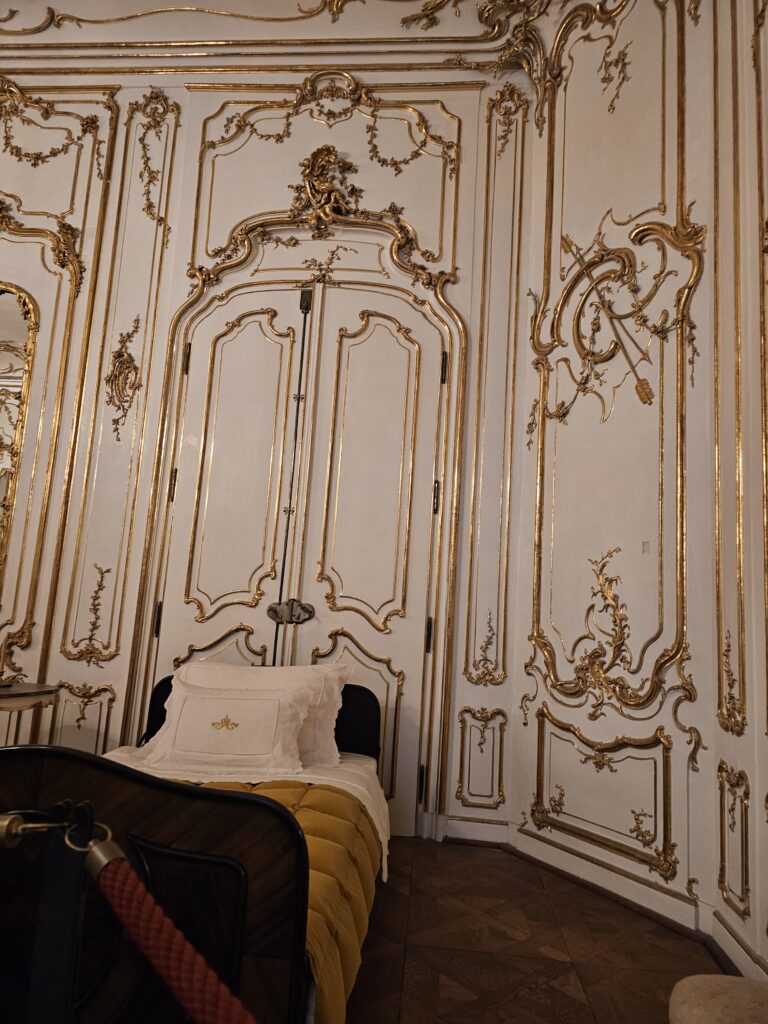
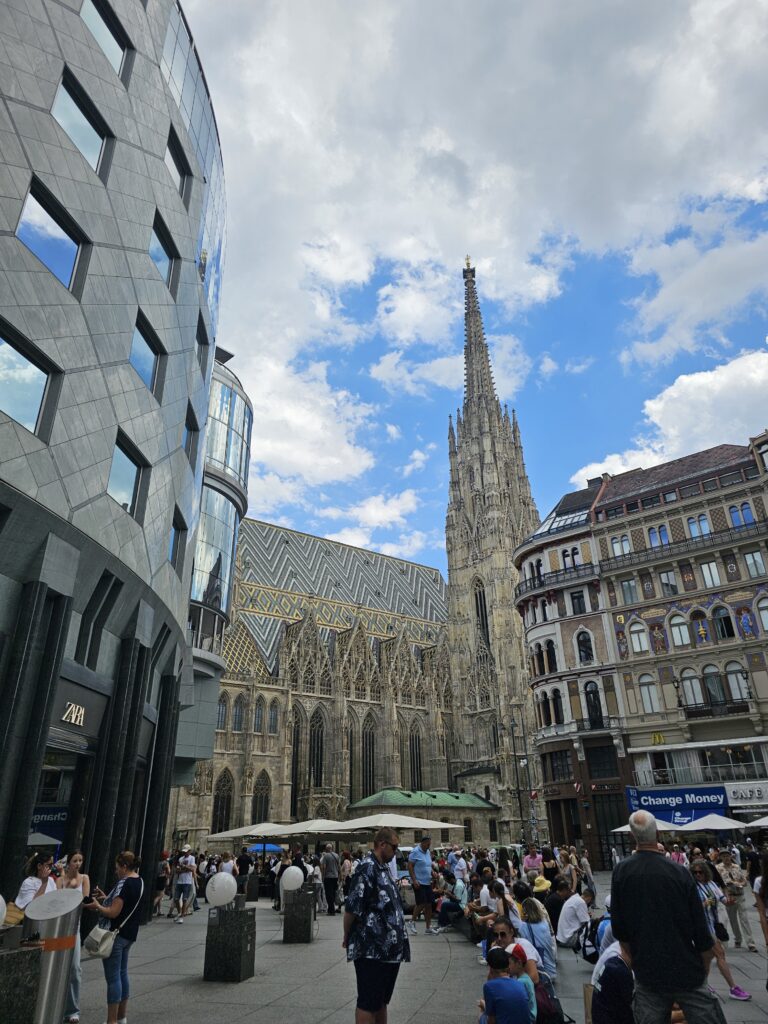
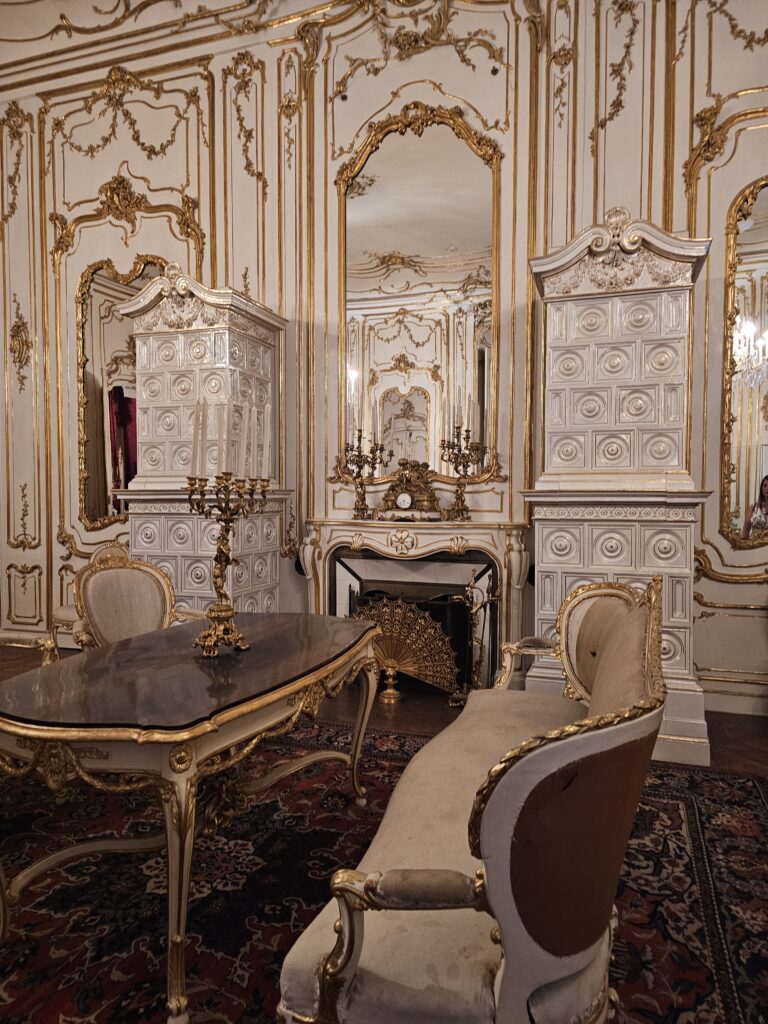
The grand staircase of the Sisi Museum within the Hofburg Palace. The Hofburg Palace served as the principal imperial winter residence of the Habsburg dynasty. The Imperial Apartments ornate dining room which is located within the Hofburg Palace in Vienna This ornate, multi-tiered white ceramic tile stove (Kachelofen) in the Rococo or Baroque revival style, is typically found in 18th to 19th-century Central European palaces and historic mansions. This particular stove is located in the Sisi Museum. Dining Room in the Imperial Apartments of the Hofburg Palace in Vienna Portraits of Empress Elisabeth, also known as Sisi the smaller portrait on the left is Emperor Franz Joseph her husband. Empress Elisabeth's Bed Contrary to expectations of a luxurious royal bed, Empress Elisabeth slept in a simple iron bed frame, reflecting her austere personal preferences regarding healthy sleeping habits. St. Stephen's Cathedral (Stephansdom), pictured from Stephansplatz. 
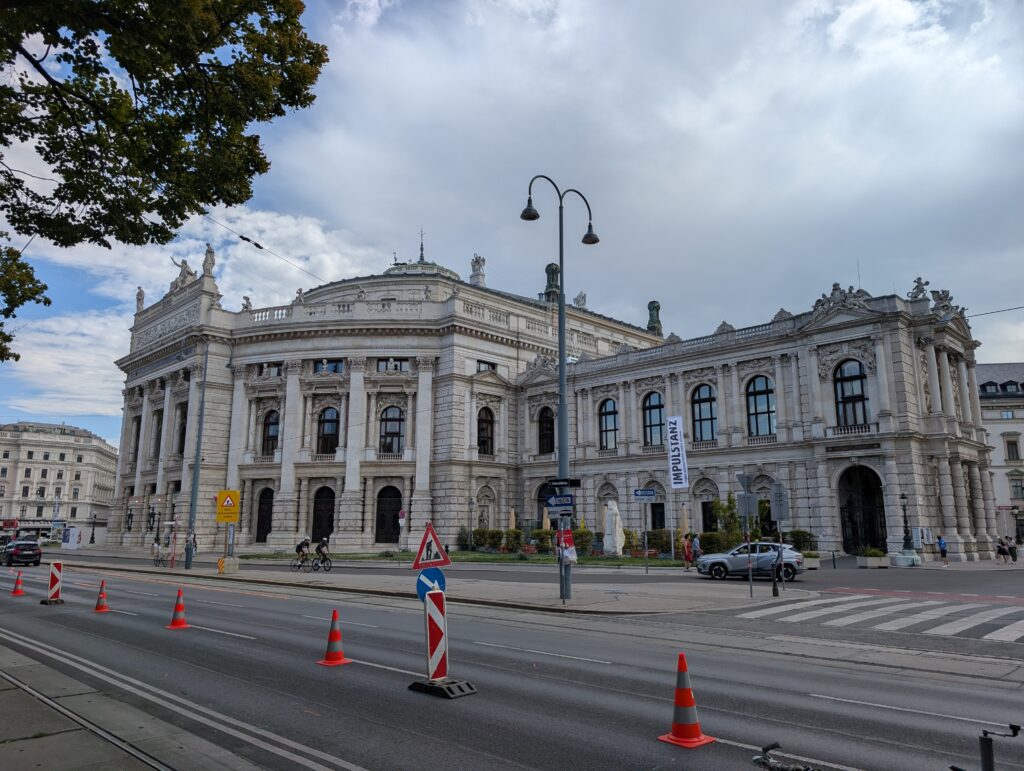
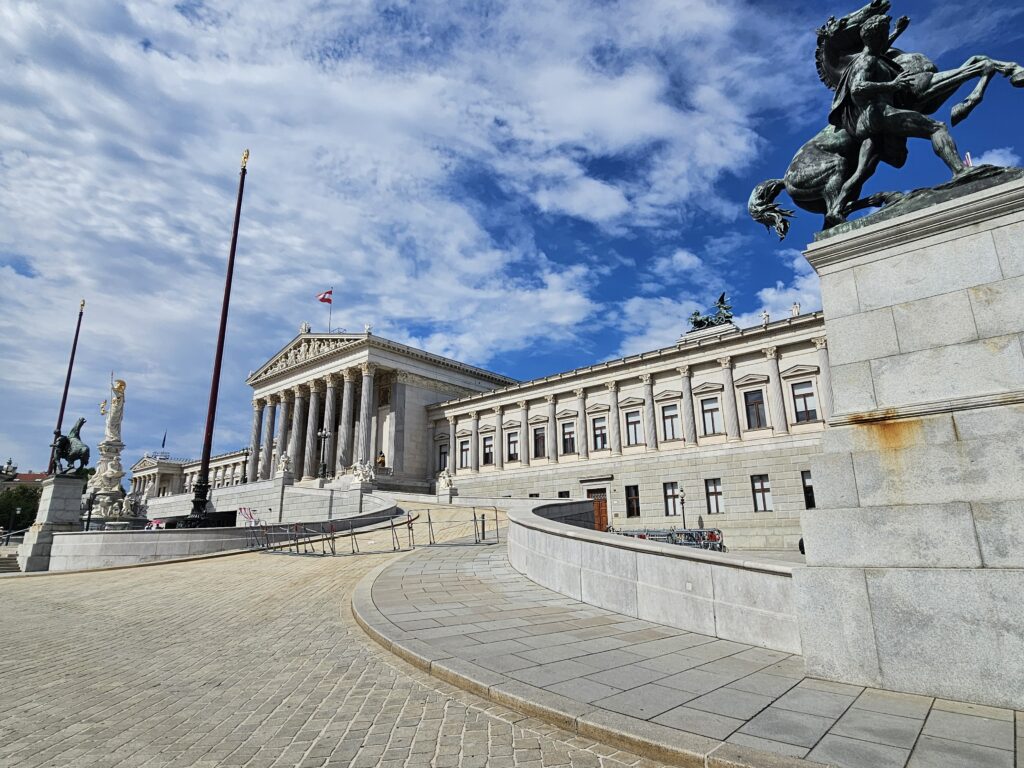
The image shows the historic Burgtheater (Austrian National Theatre) located on the Universitätsring in Vienna, Austria. Originally opened in 1741 under Empress Maria Theresa, this current magnificent Renaissance Revival building opened in 1888. It is the Austrian national theatre and widely considered one of the most important German-language stage venues in the world. Austrian Parliament Building (Parlamentsgebäude) located on the Ringstraße was built in the neo-classical style and completed in 1883, it serves as the seat of the two houses of the Austrian Parliament and is a beautiful building. 
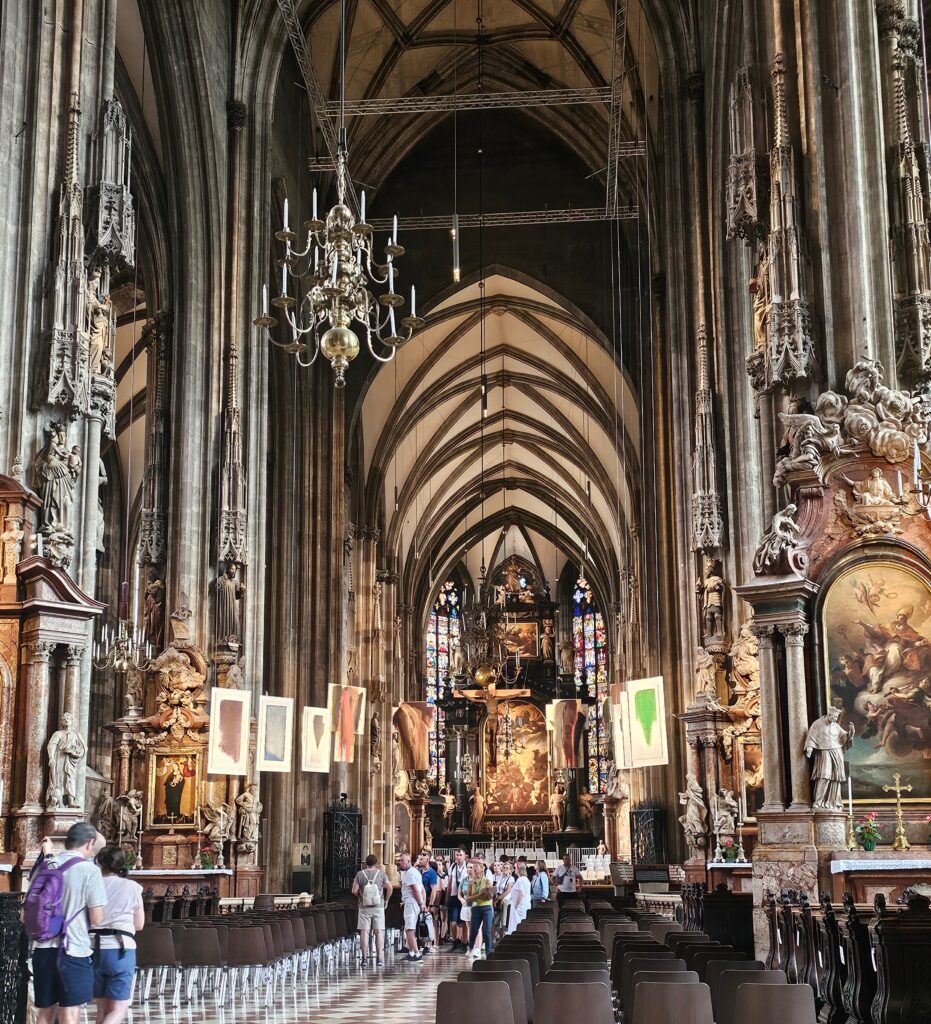
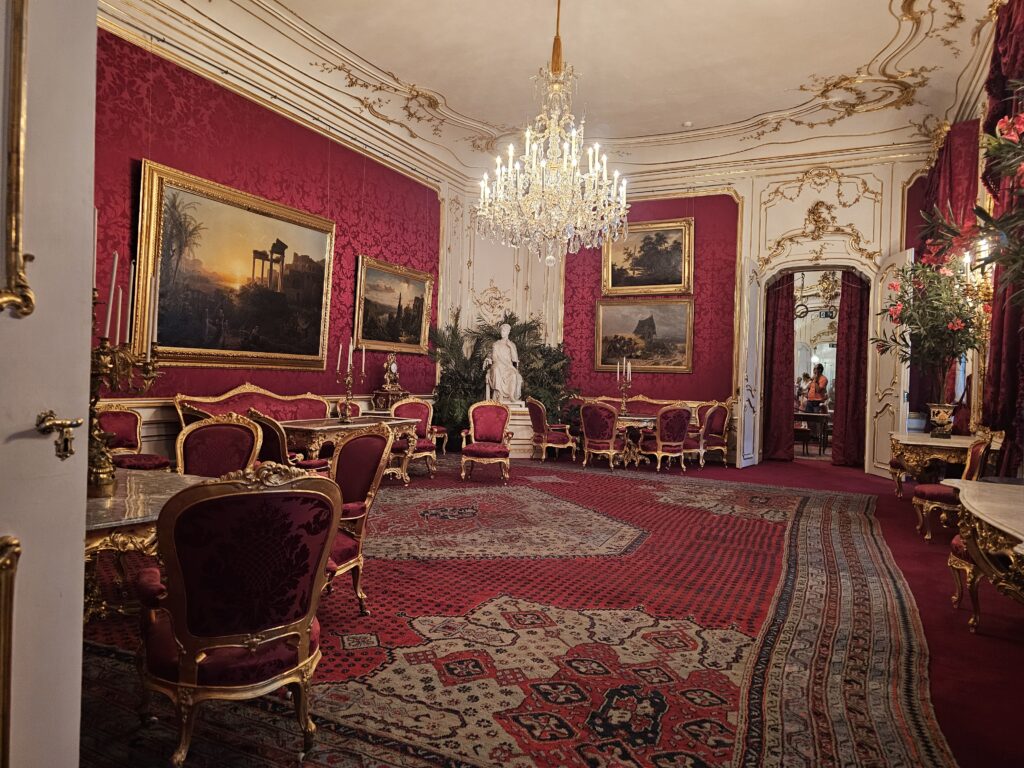
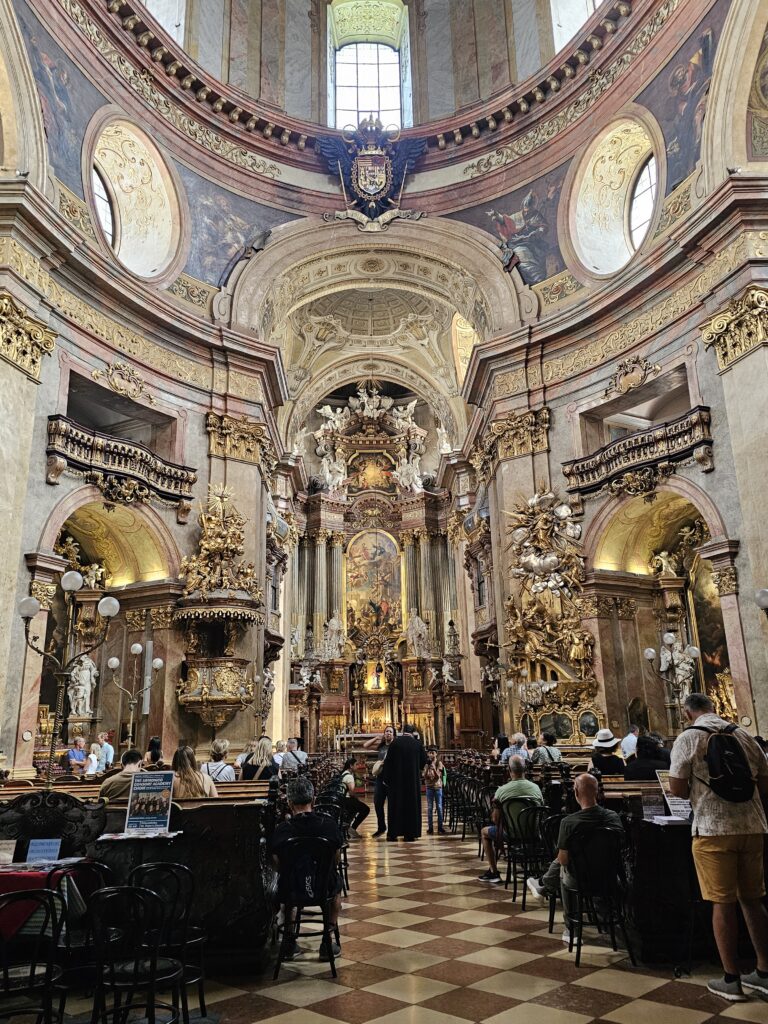
This is the stunning Gothic interior of St. Stephen's Cathedral (Stephansdom) This is the Large Salon of Empress Elisabeth (Sisi's Apartment) inside the Hofburg Palace This room is part of the Imperial Apartments within the Sisi Museum located within the historic Hofburg imperial complex St. Peter's Church (Peterskirche) in Vienna is an ornate, 18th-century Baroque Roman Catholic parish church located near the Graben in the historic city center. Inspired by St. Peter's Basilica in Rome, it features a richly decorated interior with dramatic illusionistic dome frescoes, gilded woodwork, and an elaborate high altar.
Whenever I visit a new city, I like to start with a self-guided walking tour. One of my favorite resources is GPSMyCity, which offers walking routes in cities around the world. The app includes navigation, offline maps, and audio guides with an annual subscription, while the website offers free walking guides you can use to plan your own route. For Vienna, I used their Vienna Introduction Walking Tour as the foundation for our day.
We stayed at arte Hotel Wien Stadthalle. One travel tip: if you're visiting Europe in the summer and air conditioning is important to you, be sure to confirm your hotel has it before booking—not every European hotel does.
To save some time, I rented an electric scooter outside our hotel and rode to the tour's starting point at Rathaus (Vienna City Hall).
Vienna Walking Tour Highlights
The route takes you through Vienna's historic center and past many of the city's most impressive landmarks:
- Rathauspark & Wienliebe Sign: The popular "Wienliebe" (Vienna Love) sign sits in front of the magnificent Vienna City Hall.
- Vienna City Hall (Rathaus): This impressive Gothic Revival building was designed by Friedrich von Schmidt and built between 1872 and 1883.
- Pallas Athena Fountain: Located in front of the Austrian Parliament Building, this striking fountain features the Greek goddess Athena.
- Austrian Parliament: Built in a grand Neoclassical style and completed in 1883, the Parliament building is one of Vienna's most beautiful landmarks.
- Heldenplatz: This historic square is home to the grand Neue Burg wing of Hofburg Palace and the famous equestrian statue of Archduke Charles.
- Hofburg Palace: The Michaelertrakt provides a dramatic entrance to the former winter residence of the Habsburgs. Inside, you'll find the Sisi Museum, Imperial Apartments, grand staircases, ornate dining rooms, and beautifully preserved royal furnishings.
- Sisi Museum: Learning about Empress Elisabeth, or Sisi, was one of the highlights of the tour. I was especially fascinated to discover that despite her royal status, Sisi slept on a simple iron bed because of her personal beliefs about healthy sleeping habits.
- Burgtheater: Vienna's magnificent national theater dates back to 1741, with the current Renaissance Revival building opening in 1888.
- St. Stephen's Cathedral (Stephansdom): One of Vienna's must-see landmarks, this Gothic cathedral dominates Stephansplatz and features a stunningly ornate interior.
- St. Peter's Church (Peterskirche): This beautiful Baroque church near the Graben features lavish gilded details, dramatic ceiling frescoes, and an elaborate altar inspired by St. Peter's Basilica in Rome.
Lunch at the Rathaus Summer Film Festival
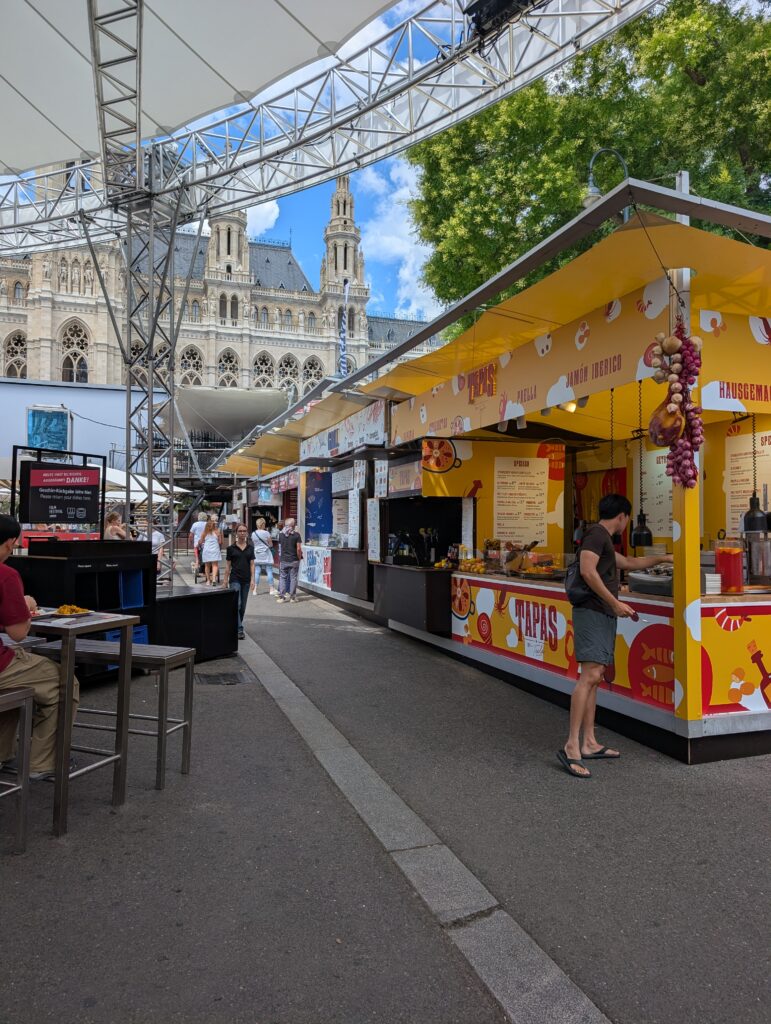
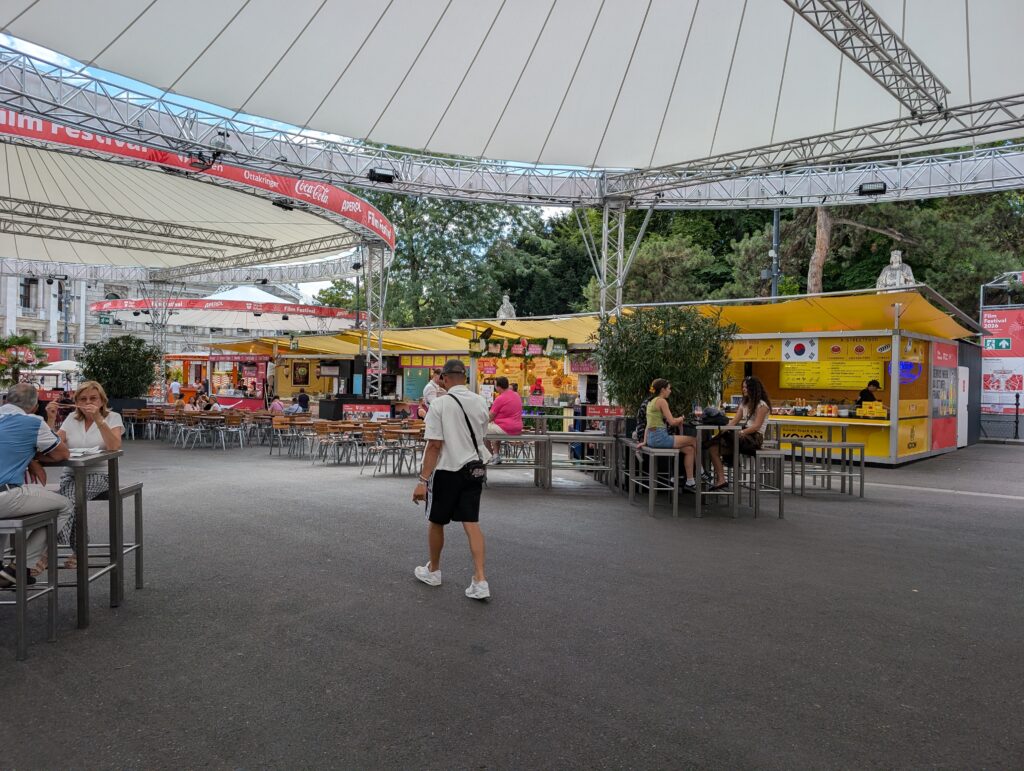
When we arrived at Rathaus, I was pleasantly surprised to find the square transformed for Vienna's annual Summer Film Festival. Food vendors lined the plaza, offering everything from Austrian specialties to Indian, Korean, Japanese, Mexican, and other international cuisines.
We've noticed throughout our travels in Europe that cities often offer an incredible variety of international food alongside their traditional dishes. Since my husband is vegetarian and Austrian cuisine tends to be meat-heavy, we decided to try Indian food; you can find many Indian recipes on my site.
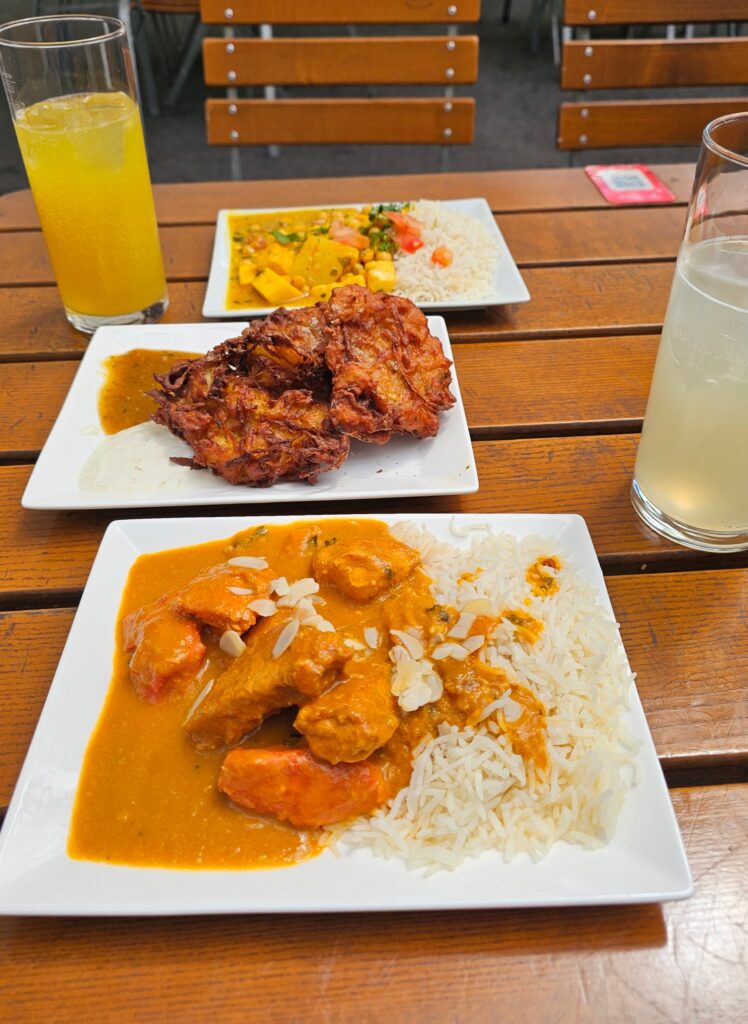
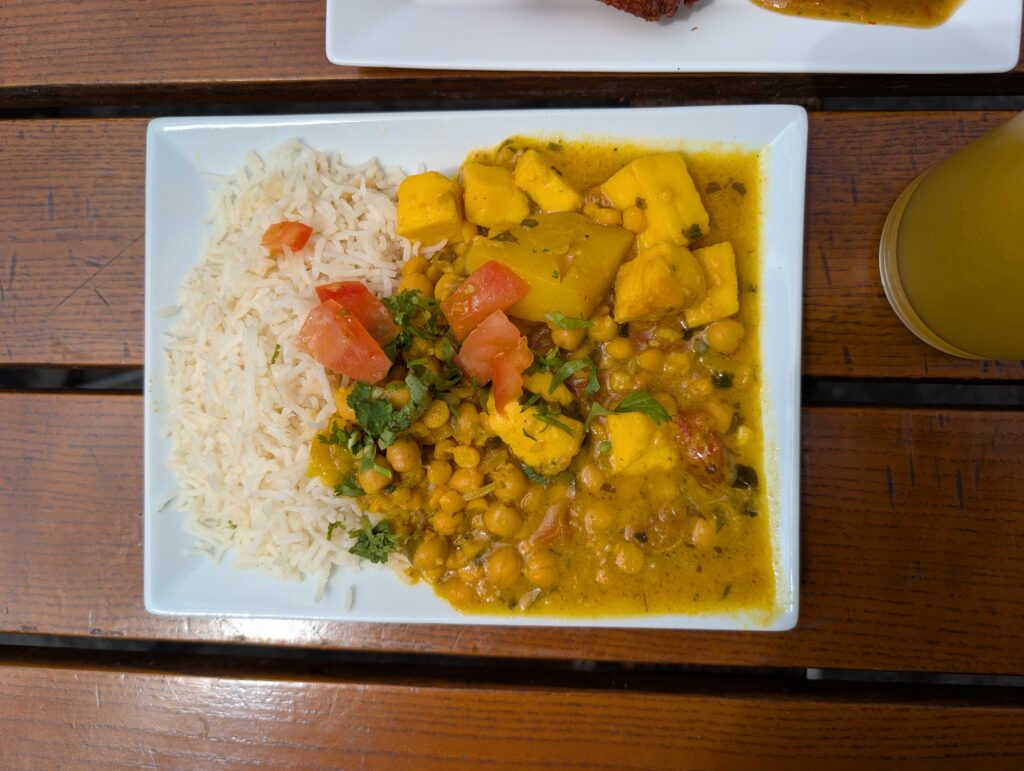
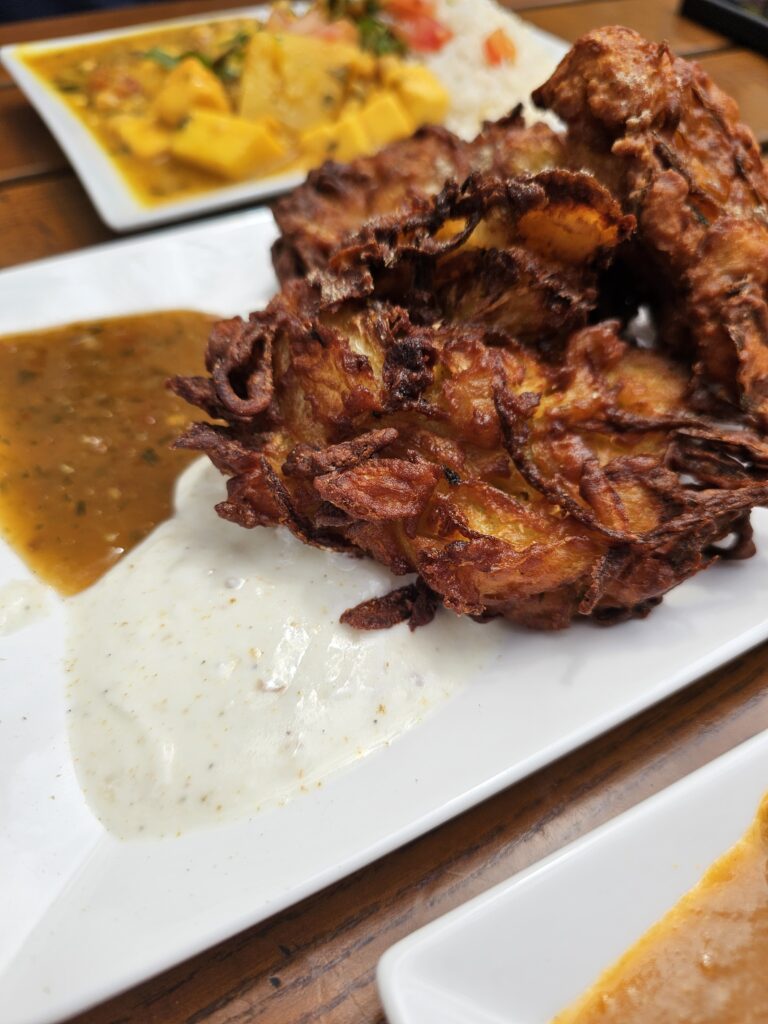
It ended up being one of our favorite meals in Vienna. I ordered Butter Chicken, while my husband enjoyed Aloo Chana with basmati rice. We also shared crispy Onion Bhaji, and everything was delicious.
Butter Chicken (Murgh Makhani) is chicken cooked in a rich, creamy tomato and butter-based sauce. It's similar to chicken tikka masala.
Aloo Chana is a flavorful chickpea and potato curry served with basmati rice and fresh herbs.
Onion Bhaji are crispy, spiced Indian onion fritters that make the perfect snack or side.
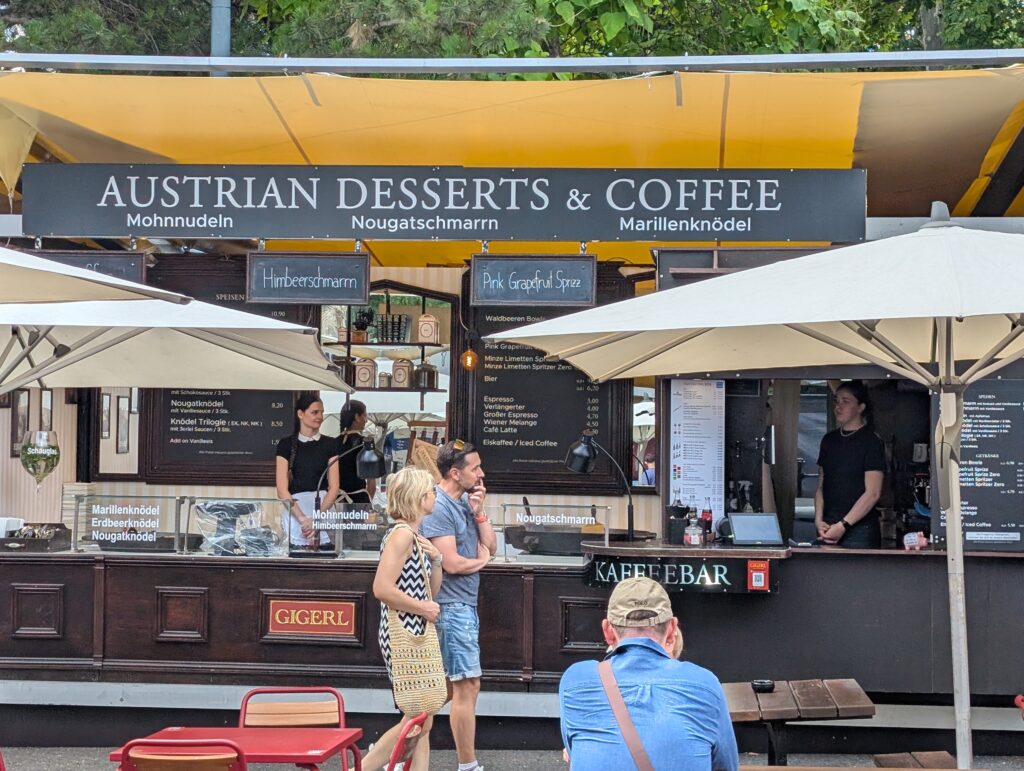
Other vendors at the festival included Austrian food, desserts, cocktails, pizza, and tapas, making Rathaus a fun and unexpected place to stop for lunch during our walking tour.

Chicken Tikka Masala also known as butter chicken in a rich, creamy orange-red tomato sauce with tender pieces of chicken garnished with sliced almonds served alongside a side of fluffy white basmati rice Chickpea Curry also known as chana masala, served alongside white basmati rice, and garnished with fresh tomatoes, and herbs. Freshly fried, crispy onion bhaji, an Indian spiced onion fritter. Austrian Food and Desert food vendor 
Tapas street vendor View of the food court at the Vienna summer film festival
First-Timer's Guide to Vienna Austria
If you're visiting Vienna for the first time, come hungry! The city is famous for its imperial history, elegant cafés, and comforting Austrian cuisine. Here are the must-try foods that made our day trip unforgettable:
Must-Try Viennese Dishes
🥩 Wiener Schnitzel
The city's signature dish! A thin veal cutlet breaded and fried until perfectly golden and crispy. Traditionally served with potato salad or parsley potatoes and a slice of lemon.
🥘 Goulash
A rich, slow-cooked beef stew seasoned with paprika and onions. While it originated in Hungary, Vienna has made its own delicious version that's perfect for cooler days.
🌭 Käsekrainer
A smoked sausage filled with melted cheese that oozes with every bite. Grab one from a traditional sausage stand for a classic Viennese street food experience.
🥞 Kaiserschmarrn
A fluffy shredded pancake dusted with powdered sugar and served with plum compote or applesauce. Legend says it was Emperor Franz Joseph's favorite dessert.
🌭 Austrian Sausages
From Bratwurst to Frankfurters and Bosna, Vienna's sausage stands are an institution. They're affordable, delicious, and perfect for a quick bite while sightseeing.
🥨 Fresh Pretzels (Brezeln)
Soft on the inside with a chewy crust and coarse salt, Viennese pretzels make a great snack as you explore the city's beautiful streets.
Vienna's Coffee Culture: More Than Just a Cup of Coffee
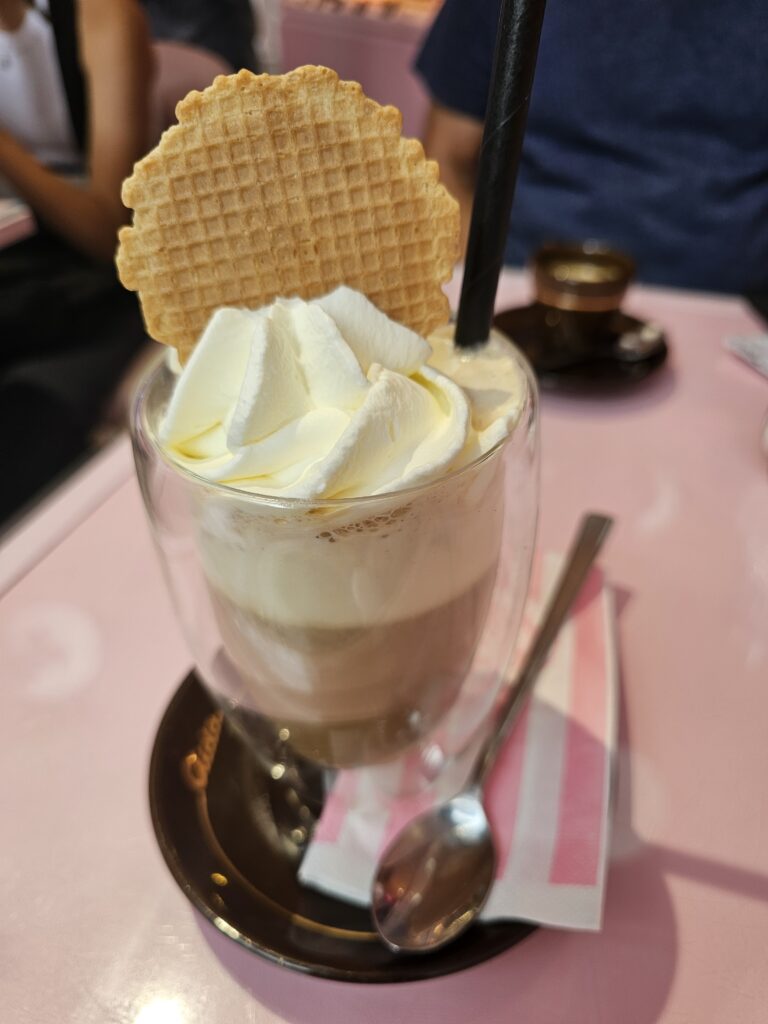
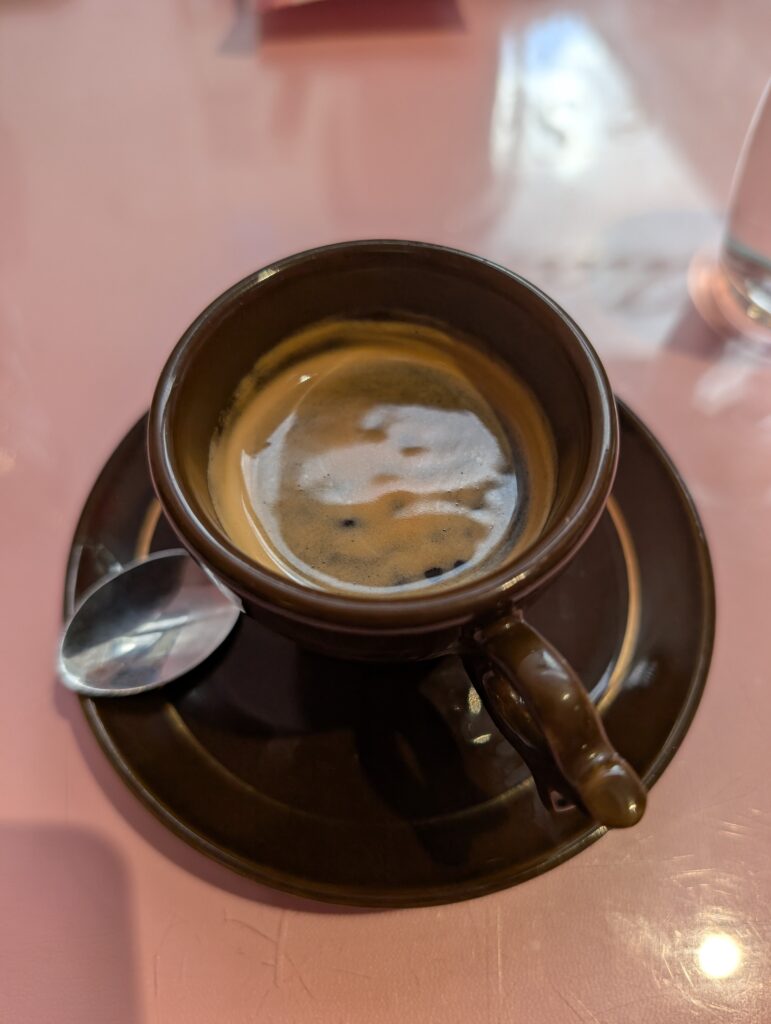
A visit to Vienna isn't complete without embracing the slower pace of café life. Instead of rushing through your itinerary, take time to sit, people-watch, and enjoy your surroundings. Many cafés also serve beautiful pastries like Sachertorte and Apfelstrudel, making them the perfect place for an afternoon break between sightseeing. Think of it like spending a few hours at Panera Bread or Starbucks in the U.S.—bringing your laptop, reading a book, catching up with friends, or simply relaxing over a cup of coffee. In Vienna, however, this isn't just a modern trend; it's a centuries-old tradition and an important part of the city's culture.
Vienna's coffeehouses invite you to linger. It's perfectly acceptable to order a single cup of coffee and spend an hour or two relaxing while soaking in the elegant surroundings. Marble tabletops, crystal chandeliers, velvet seating, and attentive table service create an atmosphere that feels timeless.
If you want to experience this tradition the way locals do, choose a café away from the main tourist attractions. Neighborhood coffeehouses tend to be more relaxed and are better suited for lingering over a coffee, reading a book, or simply people-watching. In the busiest tourist areas, especially during peak travel season, cafés often have a steady flow of customers, so spending several hours at a table may not be as practical or appreciated.
How Long Should You Stay?
If it's your first visit, I'd recommend spending 2–3 days in Vienna. That gives you enough time to explore the major landmarks, enjoy several traditional cafés, visit a museum or two, and sample plenty of Austrian cuisine without feeling rushed.
That said, Vienna also makes an excellent day trip from Budapest. The train ride takes about 2½ hours each way, making it easy to spend a full day exploring the city's highlights before returning in the evening. While one day won't let you see everything, it's enough to experience Vienna's beautiful architecture, vibrant café culture, and incredible food.
Is Vienna Austria Worth Visiting?
Absolutely.
Vienna exceeded my expectations in almost every way. The city's imperial architecture is breathtaking, with grand palaces, ornate churches, and elegant streets around every corner. Its café culture encourages you to slow down and enjoy the moment, while the food ranges from hearty comfort dishes like Wiener Schnitzel and Tafelspitz to unforgettable desserts like Kaiserschmarrn and Sachertorte.
We spent two full days in Vienna, along with a day trip to Salzburg, and while that gave us enough time to see many of the city's highlights, I found myself wishing we had planned one more day. An extra day would have allowed us to tour more of Vienna's incredible palaces, spend longer in its historic cafés, and simply enjoy the city at a slower pace.
There are still palaces I'd love to explore, neighborhoods I'd like to wander, and more cafés where I'd happily spend an afternoon with a cup of coffee and a slice of cake. Vienna has a way of making you slow down and savor the experience rather than rush from one attraction to the next. It's definitely a city I'll return to—and next time, I'll be staying for several days instead of trying to fit everything into a quick visit.
Frequently Asked Questions
One day in Vienna is enough to see many of the city's most famous landmarks and get a taste of its history, architecture, and food. With a well-planned itinerary, you can visit highlights like Schönbrunn Palace, St. Stephen's Cathedral, Hofburg Palace, and the historic city center. You won't see everything in one day, but a day trip is a great way to experience Vienna's highlights.
Vienna is famous for its traditional Austrian dishes and desserts. Some of the foods you should try include Wiener Schnitzel, Tafelspitz, Goulash, Apfelstrudel, and Sachertorte. Vienna is also known for its historic coffeehouse culture, so be sure to leave time for a traditional Viennese coffee and pastry.
There are many historic cafés in Vienna, and choosing the "best" depends on what you're looking for. Café Central is one of the city's most famous coffeehouses and is known for its grand interior, traditional Viennese pastries, and long history. Other historic cafés worth considering include Café Sacher and Café Sperl. If you're visiting during a busy time, expect possible lines at the most famous cafés.
Vienna can be more expensive than some other Central European destinations, but it is possible to visit on different budgets. Accommodation and dining in the historic center can be pricey, while public transportation, bakeries, casual restaurants, and many outdoor attractions can help keep costs down. Planning your itinerary in advance can also help you avoid unnecessary expenses.
If you only have one day in Vienna, don't miss Schönbrunn Palace, St. Stephen's Cathedral, Hofburg Palace, and the historic city center. Make time to enjoy traditional Viennese food and stop at a classic coffeehouse. If you love art and history, consider adding one of Vienna's museums to your itinerary, but avoid trying to fit too many attractions into a single day.
Technically, yes! Vienna is easily accessible from Budapest by regular train service, and the journey generally takes around 2½ to 3 hours each way. An early morning departure from Budapest and an evening return will give you several hours to explore Vienna. While one day is enough to experience some of the city's major landmarks, architecture, and food, just be prepared for an exhausting day! Personally, I would recommend staying overnight if you have the time. It gives you a chance to slow down, enjoy the city without rushing from one attraction to the next, and experience more of what Vienna has to offer.
More Great Central European Destinations
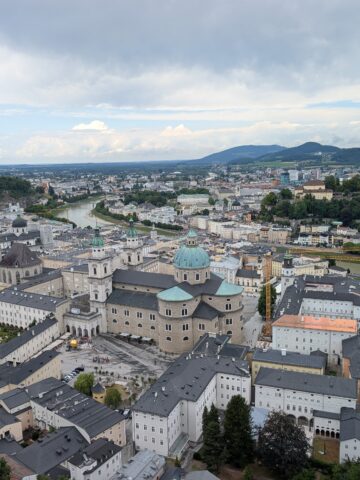
- Salzburg Day Trip from Vienna: Food, History & Things to Do
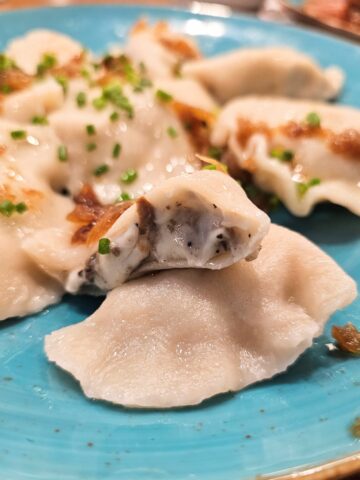
- Exploring Krakow Through Food: Polish Dishes, Historic Old Town & Wieliczka Salt Mine
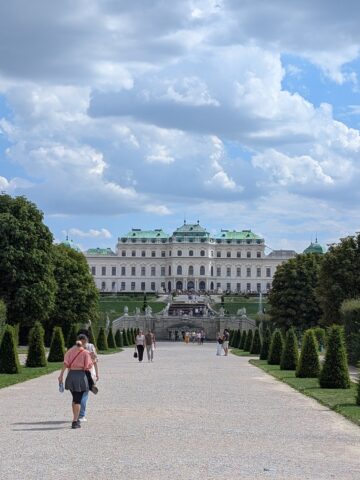
- Vienna Austria: Imperial History, Elegant Architecture & Incredible Food
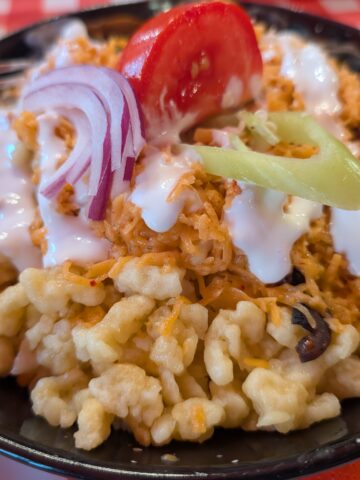
- Exploring Budapest Through Food: A Food Lover's Guide to Hungary's Capital
- What I Ate in Romania: Castles, Bucharest & Traditional Romanian Food
- Szentendre: A Colorful Day Trip from Budapest
- Hungarian Chimney Cake (Kürtőskalács)



Comments
No Comments