
After living in Budapest for more than two months, I’ve started to get a pretty good feel for the city. We’ve wandered through neighborhoods, discovered markets and restaurants, explored Budapest’s history, and even ventured across Hungary’s borders to explore a few neighboring countries. But eventually, I needed a change of scenery, so I decided to take my first Szentendre day trip from Budapest and explore this charming little town sitting along the Danube River just north of the city.
And let me tell you, Szentendre is cute. Like, ridiculously cute.
Think colorful buildings, cobblestone streets, tiny shops, art galleries, cafés tucked into corners, and enough pastries and Hungarian souvenirs to make your wallet very nervous.
Best of all? Getting there is incredibly easy.
How to Get to Szentendre from Budapest
If you’re visiting Budapest and looking for an easy day trip, Szentendre is an excellent choice.
I took the H5 suburban train from Budapest, which takes about an hour and drops you within walking distance of the historic center. From the train station, it’s roughly a 10–15 minute walk until you reach the old town and those unmistakable cobblestone streets.
And if you’re anything like me and prefer to spend your travel money on food rather than transportation, there’s another bonus: the H5 is only about $3 round trip.
You can also visit Szentendre as part of an organized bus tour or even arrive by boat on a Danube cruise. And while cruising up the Danube sounds like a pretty fantastic way to arrive, I was perfectly happy saving my money for lunch.
Once you reach the old town, you really don’t need much of a plan.
Just start walking.
That’s basically my travel strategy anyway.
Want to Save This Recipe?
Enter your email & I'll send it to your inbox. Plus, get great new recipes from me every week!
By submitting this form, you consent to receive emails from Went Here 8 This.
A Little History for Szentendre day trip from Budapest
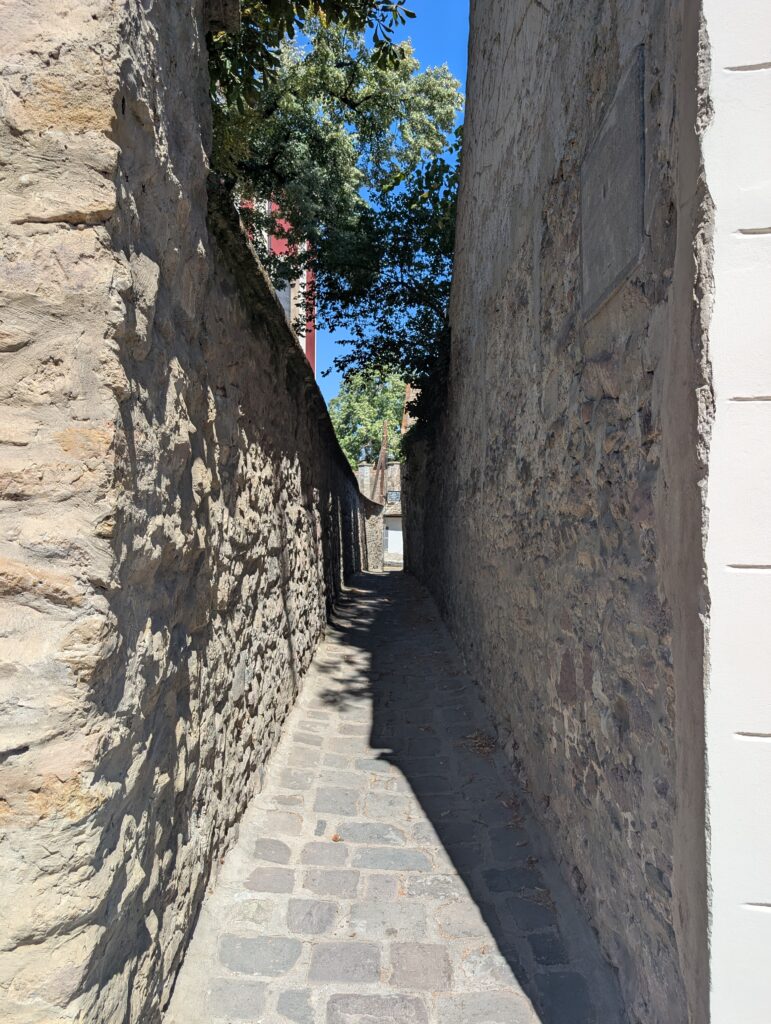
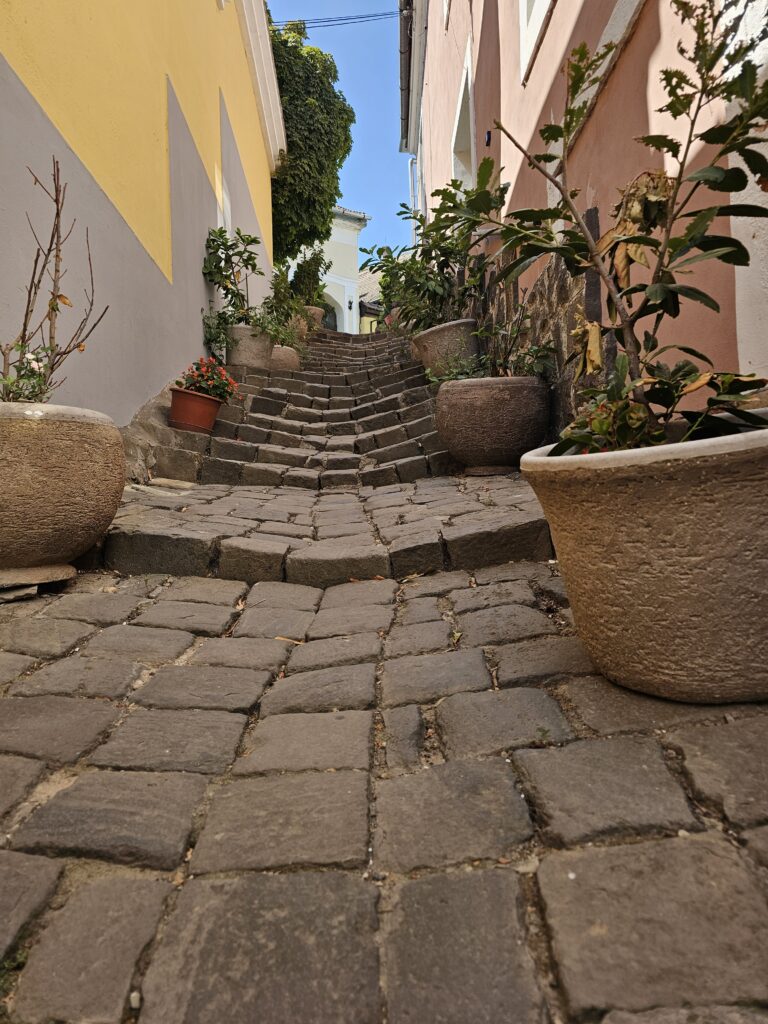
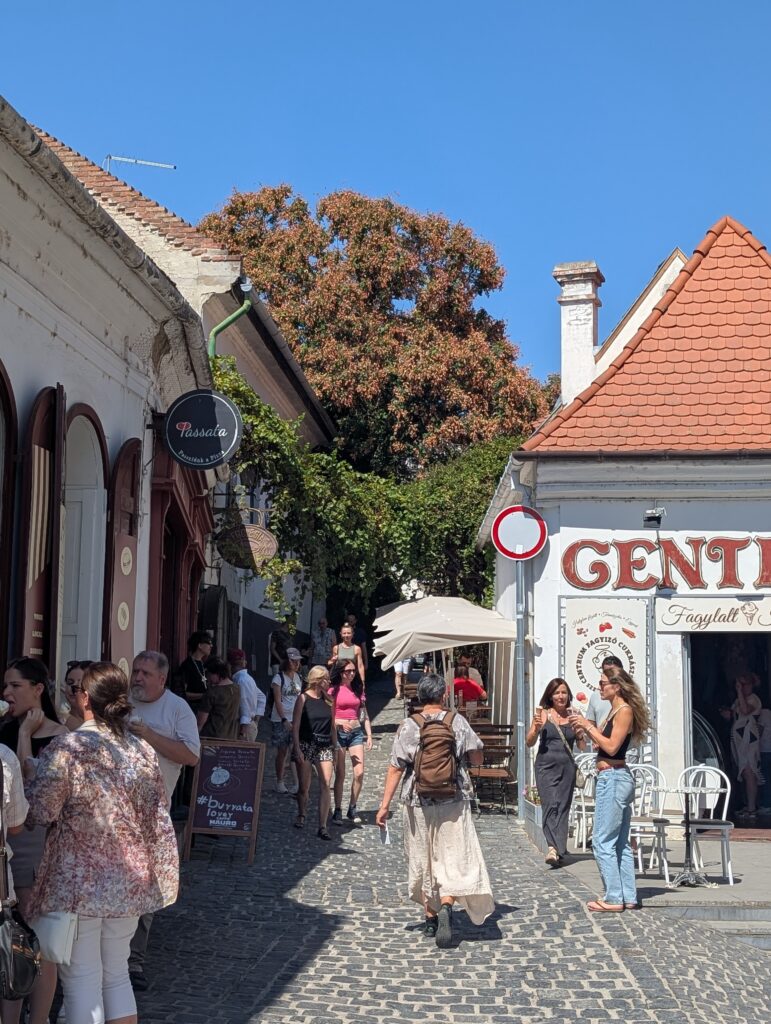
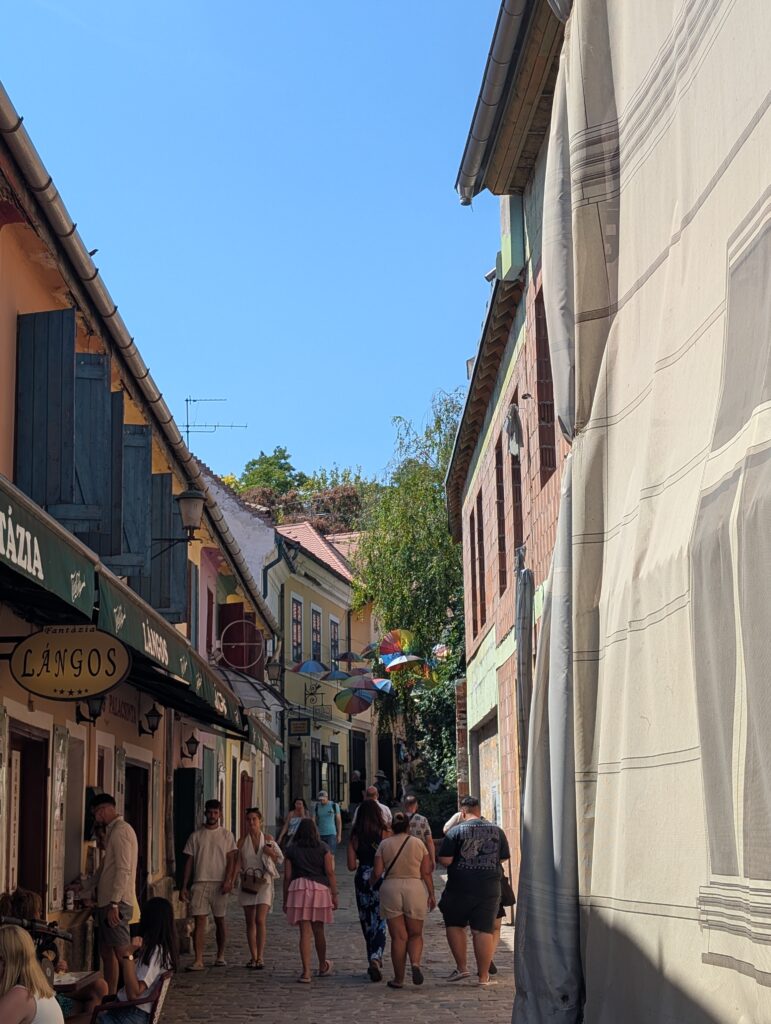
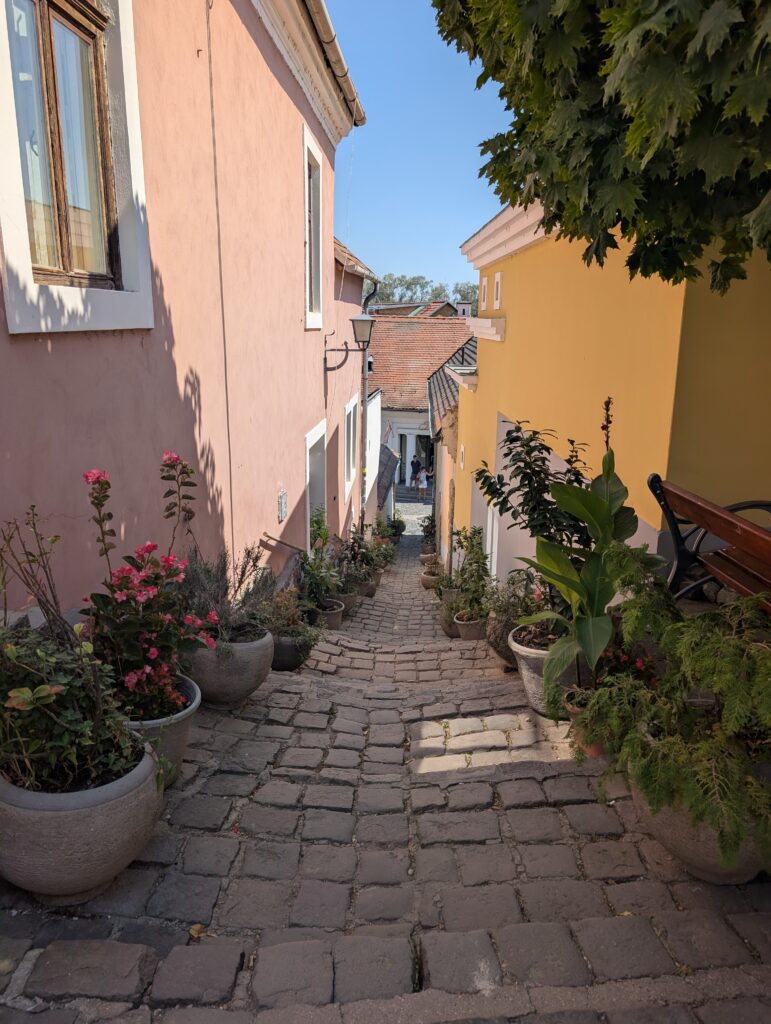
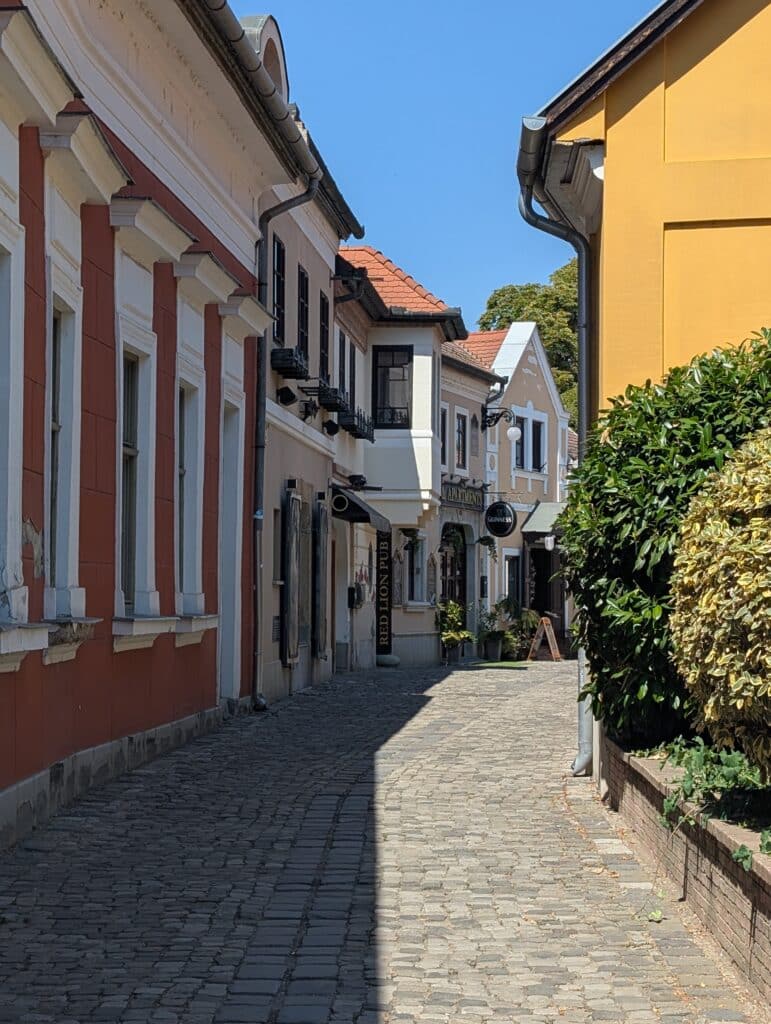
Szentendre sits along the Danube just north of Budapest and today is known for its Baroque architecture, colorful buildings, art galleries, museums, cafés, restaurants, and winding cobblestone streets.
But this little town has been around for a very long time.
The area dates back to the Roman Empire and continued to develop during the Middle Ages. It was during this period that the name Szentendre became established, derived from Saint Andrew (Szent András).
Like much of Hungary, Szentendre went through some difficult periods during the Ottoman occupation in the 16th and 17th centuries, when the town and surrounding region experienced significant depopulation.
Then came the 18th century—and a bit of a comeback.
Szentendre was repopulated by immigrants from Serbia, Dalmatia, Greece, and other parts of the Balkans. These communities had a huge influence on the town, and you can still see it today in the Orthodox churches, architecture, food, and overall Mediterranean feel.
In other words, Szentendre doesn't look quite like the Hungary you might have pictured before visiting.
It has this unusual mix of Central European, Balkan, and Mediterranean influences, which is one of the things that makes the town so much fun to explore.
By the 19th and 20th centuries, Szentendre had become a quieter market town and eventually developed a reputation as an artistic community. Artists, writers, and intellectuals were drawn to the area, helped in part by its close proximity to Budapest.
That artistic tradition is still very much alive today.
And honestly, you can see it everywhere.
Exploring the Old Town
When you arrive by train, walk toward the center and eventually the scenery starts to change.
The modern streets give way to cobblestones, colorful Baroque buildings, little shops, restaurants, galleries, and cafés.
That’s when you know you’ve arrived.
Szentendre is small enough that you don't really need a detailed itinerary. Wander down one street and you'll find yourself on another. Turn a corner and suddenly there's a tiny gallery. Walk another block and there's a café serving cake.
Basically, my kind of town.
Where We Ate in Szentendre

Of course, exploring works up an appetite.
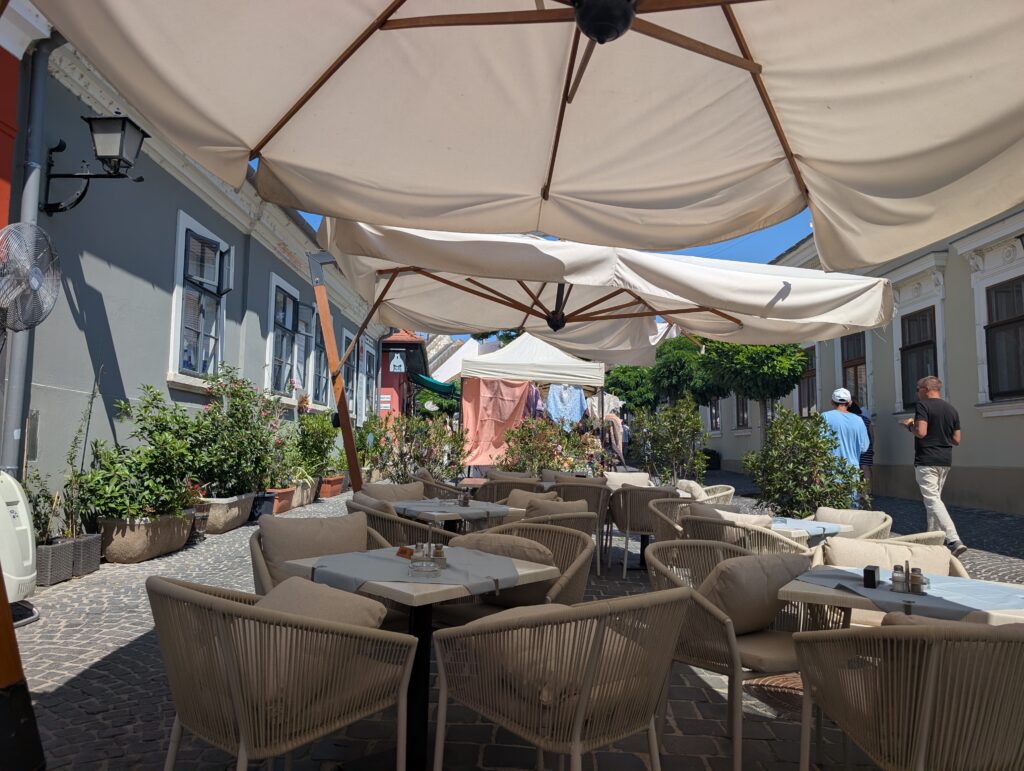
While wandering toward the main square, I found a charming restaurant with outdoor seating right along the cobblestone street: Művész Étterem Szentendre.
And because I am physically incapable of visiting Hungary without investigating the local food, we stopped for lunch.
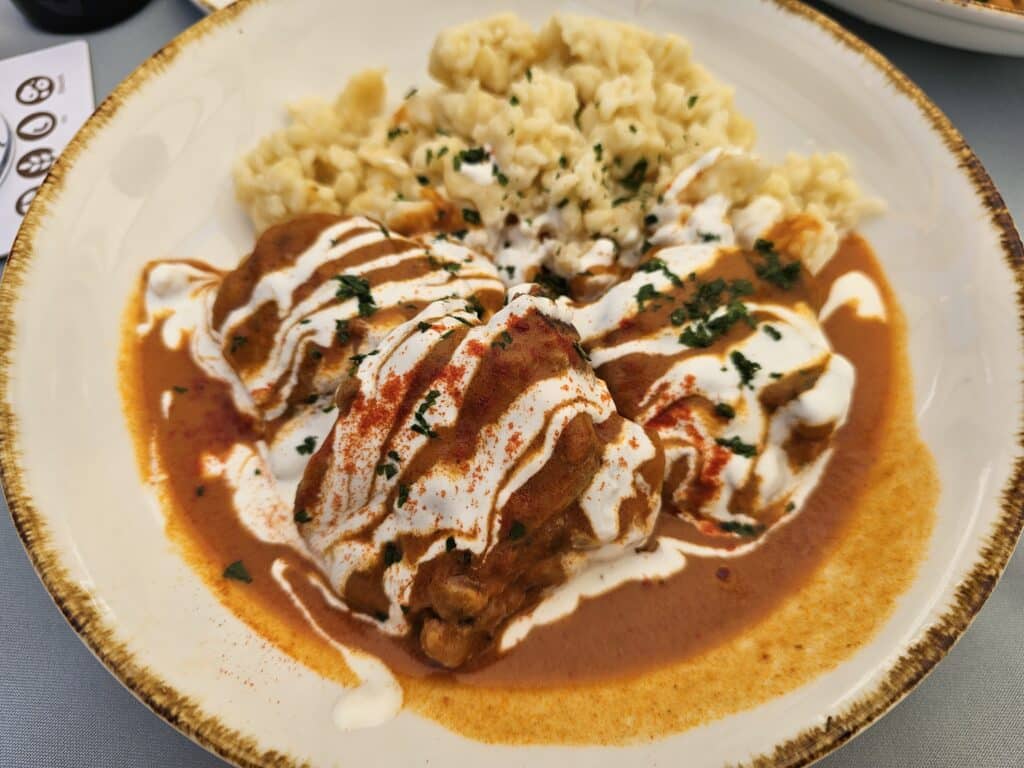
I ordered the traditional chicken paprikash with dumplings.
If you haven't had chicken paprikash yet, imagine tender chicken thighs cooked in a rich paprika sauce and finished with sour cream, served alongside soft Hungarian dumplings.
Yes, please.
And one interesting difference I’ve noticed while eating my way around Hungary is the sour cream. Hungarian sour cream is generally lighter and a little different from the sour cream we're accustomed to in the U.S.
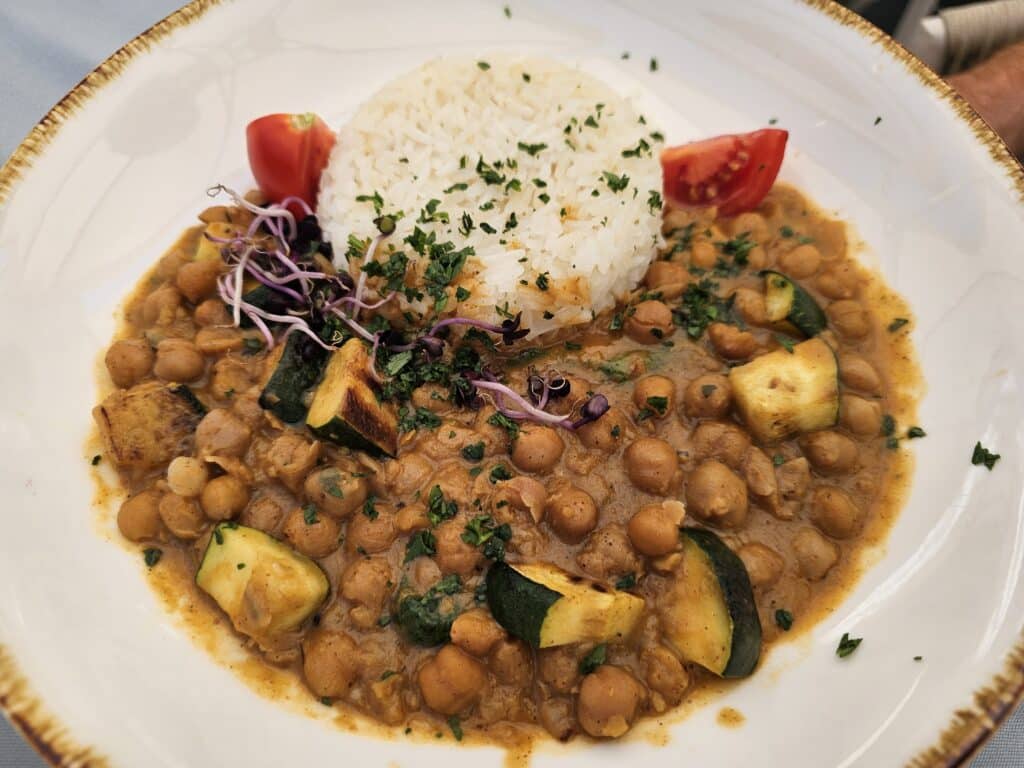
My husband went in a completely different direction and ordered a chickpea and zucchini coconut curry with spinach and jasmine rice.
Not exactly the first dish I would expect to find in a small Hungarian town, but chickpeas are actually a fairly common ingredient here.
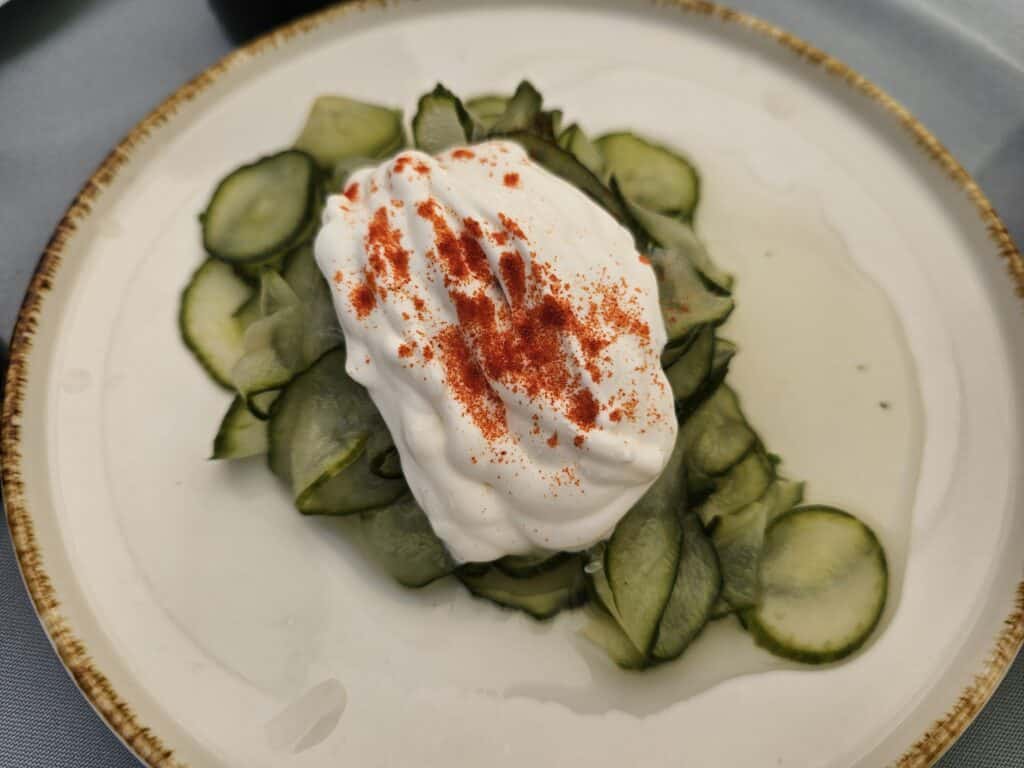
We also shared a cucumber salad with sour cream.
It had a vinegar-based dressing with a touch of sweetness that balanced the acidity. It was simple, refreshing, and surprisingly addictive.
And then there was the beer.
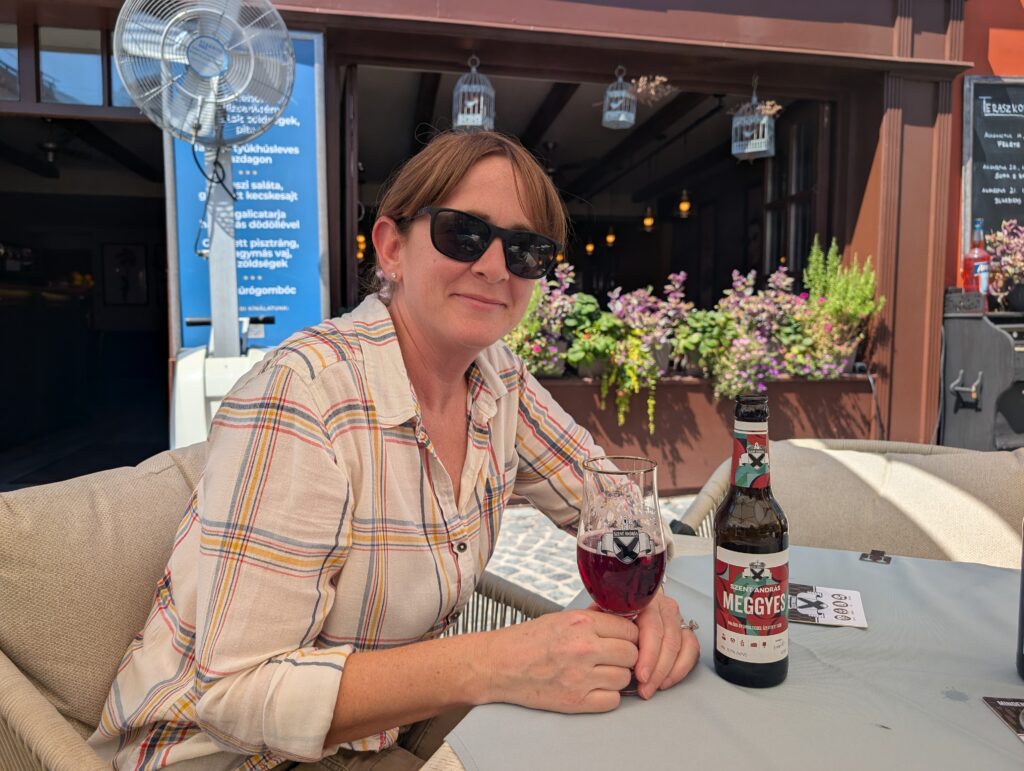
Hungarians have a thing for sour cherry beer, and I have quickly become a fan.
Despite the name, the cherries themselves aren't sour. Hungarian sour cherry beers have a fruity, slightly tart flavor that makes them incredibly refreshing.
Let's just say that after walking around Szentendre for a few hours, a cold cherry beer seemed like an excellent cultural experience.
Main Square
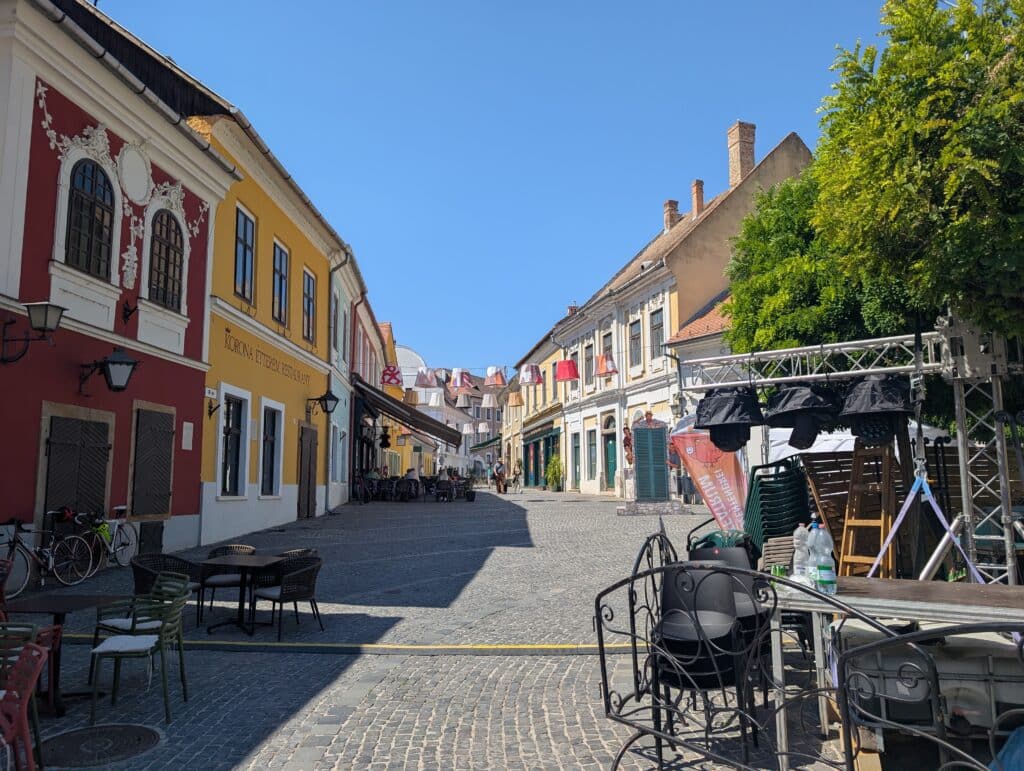
Eventually, you'll find yourself in Szentendre's Main Square, or Fő tér.
This is really the heart of the old town.
Colorful Baroque buildings surround the square, with restaurants, cafés, galleries, and shops spilling into the surrounding streets.
It's the kind of place where you can sit down with a coffee and spend an unreasonable amount of time watching people walk by.
In the middle of the square you'll find the Baroque cross, erected in 1763.
The cross was built to commemorate the fact that Szentendre had been spared from a devastating plague epidemic.
Today, it provides an interesting historical centerpiece to one of the prettiest squares in town.
From here, narrow streets wind away in every direction.
And this is where I recommend doing something very important:
Get lost.
Not dangerously lost.
Just pleasantly lost.
The best parts of Szentendre are often found when you're wandering without a particular destination.
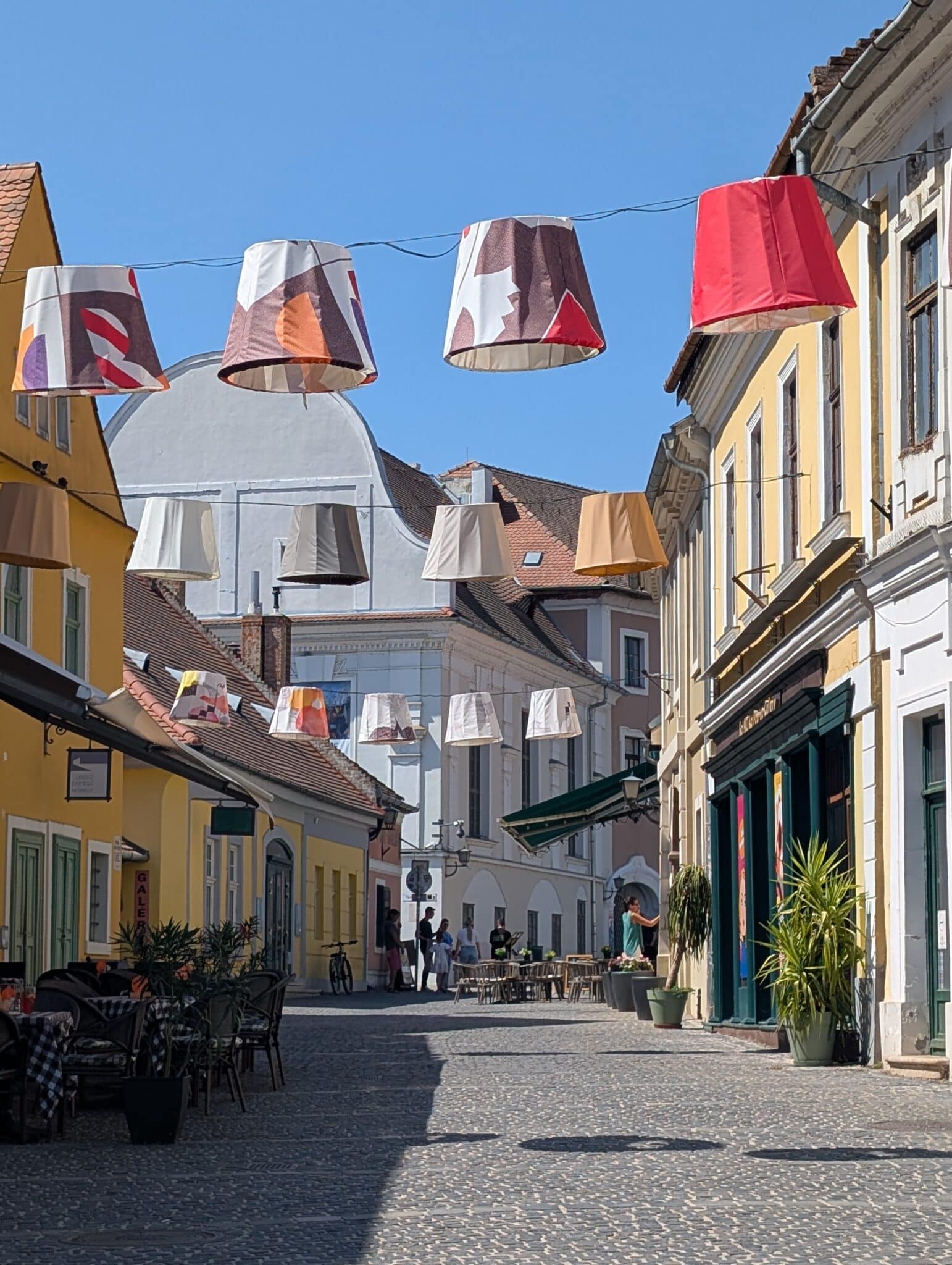
Umbrella Street
One of the more recognizable spots in Szentendre is Umbrella Street (Esernyős utca).
And yes, there are umbrellas.
Lots of them.
Colorful umbrellas hang overhead, creating a cheerful canopy over the narrow street.
The display changes seasonally, so the colors and overall look can change throughout the year.
It's one of those places that feels almost too picturesque to be real.
Naturally, this means you’ll probably take approximately 47 photos.
You’ve been warned.
Art Galleries and Local Crafts
Szentendre has long been associated with artists, and that tradition is impossible to miss.
The town is packed with galleries, museums, studios, and shops selling locally made crafts.
You’ll find everything from Hungarian embroidery and handmade jewelry to paintings, ceramics, and other artwork.
One place worth checking out is the Új Műhely Gallery, where you can see local artists and craftspeople at work.
The gallery also has a café where you can relax with coffee, lemonade, craft beer, a grilled sandwich, or a piece of cake.
Because apparently Szentendre has decided that every cultural attraction should also come with snacks.
I approve.
Szentendre's Orthodox Churches
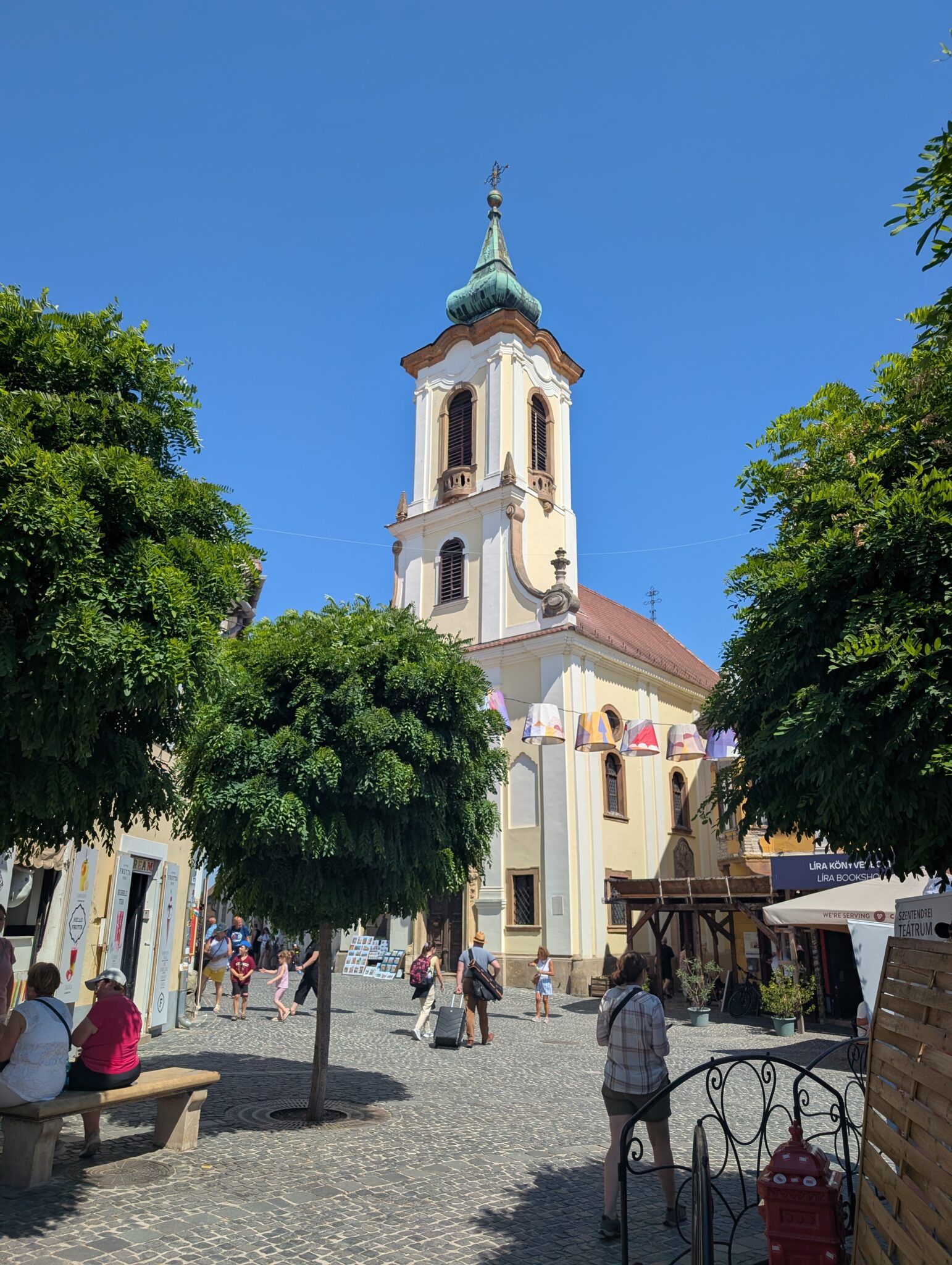
One of the most interesting things about Szentendre is the influence of its Serbian and Greek communities.
The town has nine churches, several of which reflect its Orthodox heritage.
One of the best known is the Greek Orthodox Blagovestenska Church, a Baroque-Rococo church built in the mid-18th century by Greek settlers living in what was known as the Greek Quarter.
Even before entering, the church grabs your attention.
Frescoes depicting Saint Helena and Saint Constantine decorate the area above the wooden entrance.
Inside, the highlight is the elaborate Rococo iconostasis, created between 1802 and 1803 by renowned icon painter Michael Zivkovic.
Whether you're particularly interested in religious architecture or not, it's worth stepping inside to appreciate the artwork and craftsmanship.
Walk Along the Danube
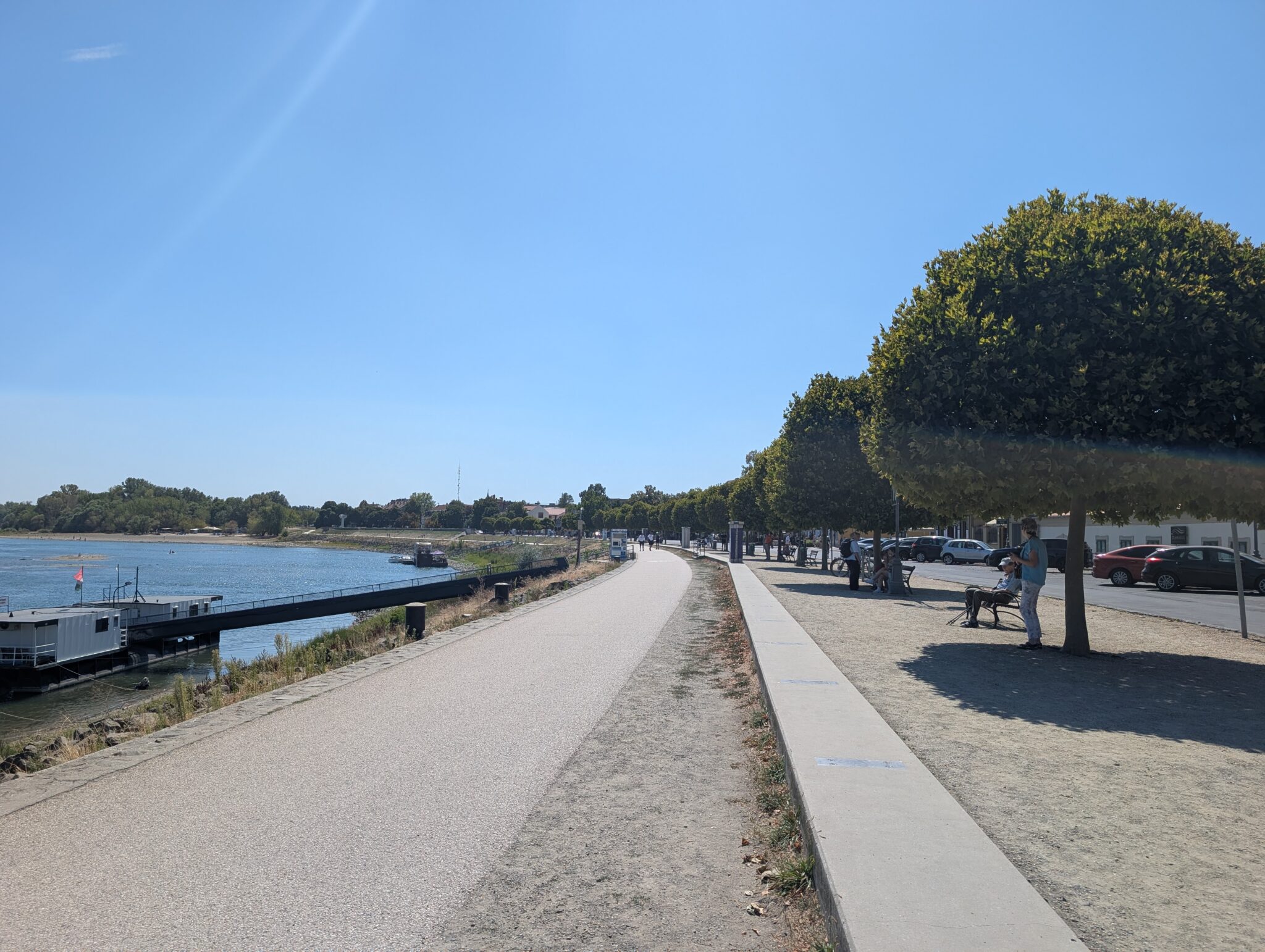
After wandering through the busy old town, head toward the Danube promenade.
The river runs right along the town center, providing a completely different atmosphere from the narrow streets and busy main square.
The paved promenade is perfect for a leisurely walk, and you may even see artists painting the scenery.
There are also cafés and restaurants along the river where you can grab something to eat or drink and simply enjoy the view.
It's a nice reminder that Szentendre isn't just about the historic center.
The Danube is a huge part of the town's character.
Museums for your Szentendre day trip from Budapest
If you're an art lover, you could easily spend an entire day—or several—exploring Szentendre's museums.
There are quite a few.
Margit Kovács Ceramic Museum
Located inside a beautiful Baroque merchant house, the Margit Kovács Ceramic Museum is dedicated to the work of Hungarian ceramic artist Margit Kovács.
The museum contains an impressive collection of her sculptures and pottery.
Her work combines traditional Hungarian folk influences with a modern artistic style, making this a particularly interesting stop if you're interested in Hungarian culture and crafts.
Czóbel Museum
The Czóbel Museum focuses on Hungarian painter Béla Czóbel (1883–1976).
The collection includes portraits, still lifes, and landscapes.
Czóbel is considered one of the most French-influenced Hungarian painters and is an important figure in Hungarian modern art.
János Kmetty Museum – Kerényi Collection
Located in an 18th-century building near the Main Square, the János Kmetty Museum celebrates the work of Hungarian modernist painter János Kmetty (1889–1975).
After Kmetty's death, his widow donated a collection of 275 works to the Ferenczy Museum, eventually leading to the establishment of the Kmetty Museum in 1981.
The museum also houses sculptures by Jenő Kerényi in its cellar.
National Wine Museum
Now we're getting to the important stuff.
Wine.
The National Wine Museum Szentendre has been welcoming visitors since 1993 and offers an introduction to Hungary's long wine-making tradition.
The museum is located within a network of winding cellars and explores the country's 22 wine regions, each with its own unique characteristics.
And yes, there are wine tastings.
Visitors can sample wines from established wineries as well as smaller producers, and the museum also hosts special tasting events.
Because when you're learning about Hungarian wine, obviously the only responsible thing to do is conduct some research.
Very thorough research.

Szentendre Skanzen Village Museum
If you want to go beyond the pretty streets of the old town, check out the Szentendre Skanzen Village Museum.
Located a short distance from the town center, this large open-air ethnographic museum gives visitors a look at traditional Hungarian village life.
You'll find historic buildings, folk art, traditional crafts, and demonstrations showing how people lived and worked in Hungary in earlier generations.
It's a great way to see a different side of Hungarian culture beyond Budapest's grand buildings and Szentendre's colorful tourist streets.
Is Szentendre Worth Visiting?
Absolutely.
If you're staying in Budapest for more than a few days, a Szentendre day trip from Budapest makes an easy and inexpensive day trip.
It's close enough that you don't have to spend half your day getting there, but different enough that it feels like you've actually escaped the city.
For me, the best part wasn't checking off a list of attractions.
It was simply wandering.
Walking along the cobblestone streets. Looking into little shops. Finding colorful buildings around random corners. Stopping for Hungarian food. Drinking sour cherry beer. Exploring the churches and galleries. And eventually ending up along the Danube.
After spending two months getting to know Budapest, Szentendre was a fun reminder that there is so much more to Hungary than its capital city.
And considering the H5 only costs about $3 round trip, it's a pretty easy decision.
So grab a train, bring your walking shoes, and leave a little room in your suitcase.
You’re probably going to find something you want to take home.
And if you don't?
There's always another piece of cake.
More Great Central European Destinations and Regional Food Recipes
Exploring Budapest Through Food: A Food Lover's Guide to Hungary's Capital
Authentic German Goulash Recipe
German Paprika Schnitzel With Spicy Paprika Sauce
Exploring Krakow Through Food: Polish Dishes, Historic Old Town & Wieliczka Salt Mine
Salzburg Day Trip from Vienna: Food, History & Things to Do
Coming Soon
- Bucharest Romania
- Bulgaria


Comments
No Comments