
Romania is known for Dracula, medieval castles, beautiful mountains, and a fascinating history. But for me, one of the best ways to experience a new country is through its food, I'll tell you a bit about What I Ate in Romania and of course some of the sites!
Naturally, when we planned our trip to Romania, I had a few things on my list: Bran Castle, Peleș Castle, Bucharest, and as much Romanian food as I could possibly fit into three days.
I had three days.
Three.
So, naturally, I thought I could see castles, explore cities, take a side trip to Bulgaria, and eat my way through Romania.
Spoiler alert: I was overly optimistic.
Our Romanian adventure was fun, beautiful, delicious, and just a little bit chaotic. I learned that Romanian traffic should never be underestimated, missed a city I really wanted to visit, discovered some surprisingly addictive fried olives, and ate some traditional Romanian dishes that I would happily go back for.
Here's what I ate in Romania, along with the castles, cities, and travel adventures that came with it.
Traditional Romanian Foods to Try
Before getting into everything we ate, let's talk about some of the traditional Romanian foods you may want to put on your list if you're planning a trip.
Romanian cuisine is hearty, comforting, and influenced by the many cultures and empires that have shaped the country over the centuries.
Here are some Romanian foods I wanted to try:
Ciorbă
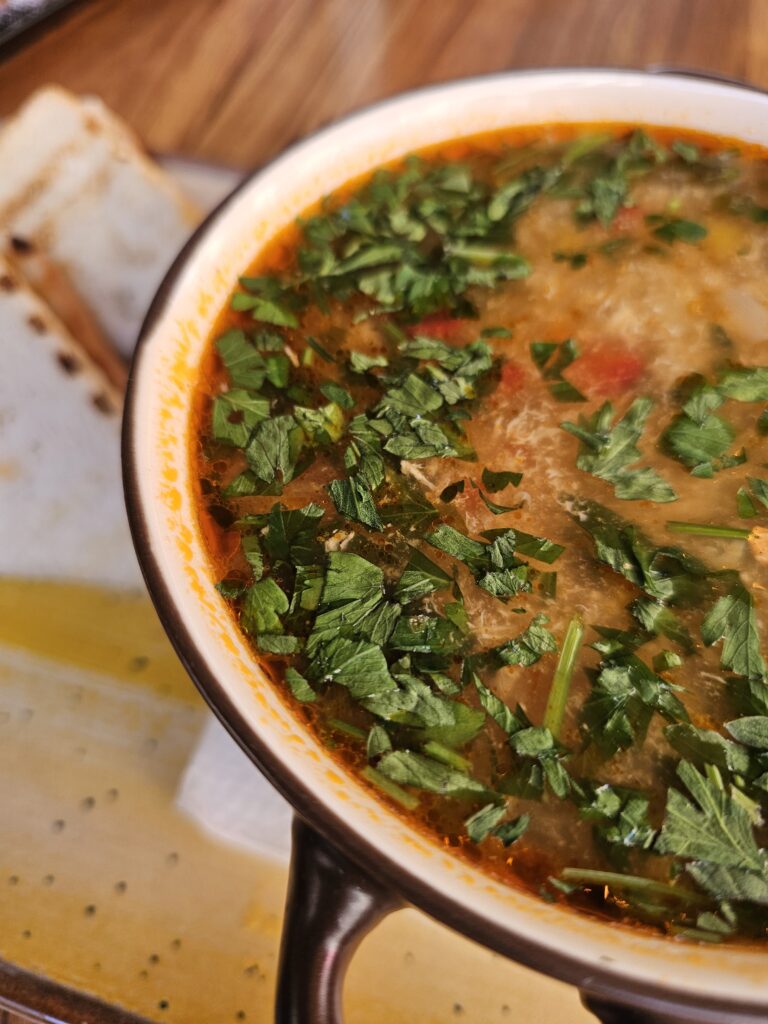
Ciorbă is the Romanian word for a family of sour soups. The sour flavor can come from ingredients such as borș, vinegar, or other acidic ingredients.
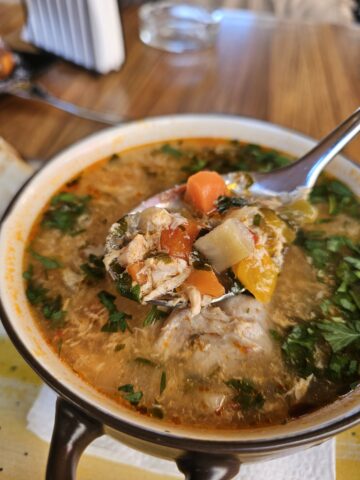
I actually got to try ciorbă de pui, a hearty chicken and vegetable soup, and it ended up being one of my favorite dishes of the trip.
Mămăligă
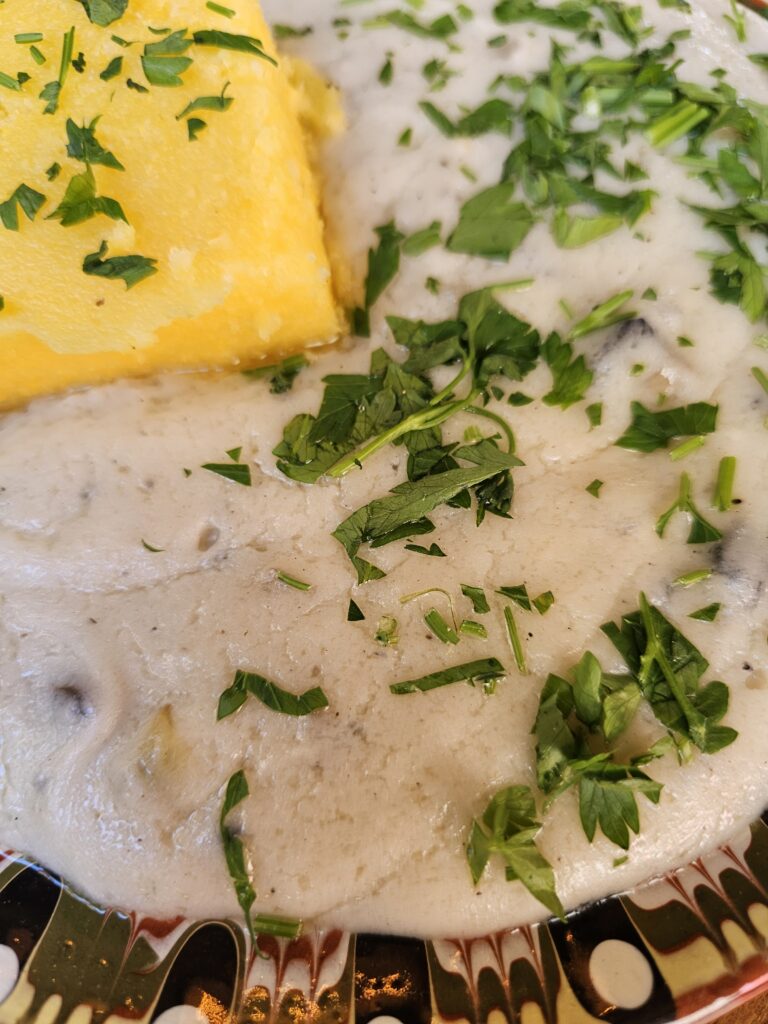
Mămăligă is a traditional Romanian cornmeal dish similar to polenta. It can be served soft and creamy or cooked until firm and cut into pieces.
We tried it with ciuperci cu smântână, creamy mushrooms cooked with garlic and sour cream. The combination was rich, rustic, and incredibly comforting.
Papanăși
If you have a sweet tooth, don't leave Romania without trying papanăși.
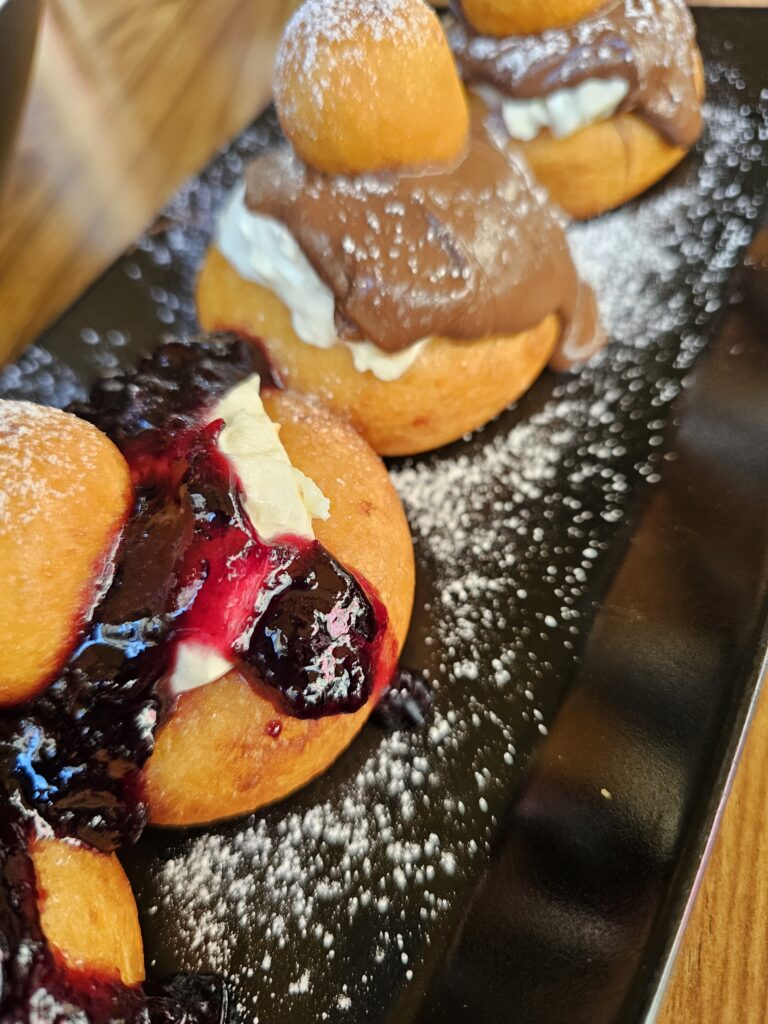
These traditional Romanian fried doughnuts are generally served with sour cream and fruit preserves.
We tried them with blueberry/sour cherry jam and Nutella.
And yes, I would absolutely order them again.
Mici
Mici, also called mititei, are small Romanian grilled meat rolls traditionally made from a seasoned mixture of meats. They are one of the foods I didn't get a chance to try on this trip.
Which means I now have an excellent excuse to return.
Sarmale
Sarmale are Romanian stuffed cabbage rolls, generally filled with seasoned meat and rice and served with accompaniments such as sour cream and mămăligă.
Another one that somehow escaped my three-day food adventure, but I did have something like this in Krakow.
Zacuscă
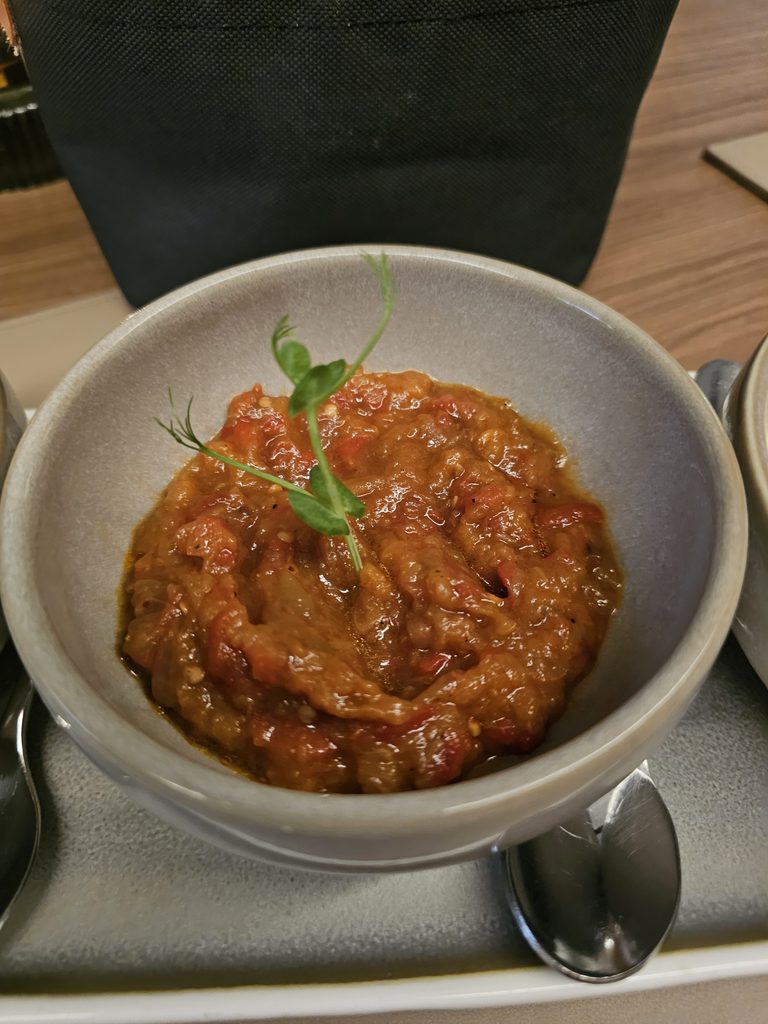
Zacuscă is a vegetable spread traditionally made with roasted eggplant and peppers along with other vegetables and seasonings.
We did have a vegetable spread during our trip, although I don't know if it was traditional zacuscă, so I'll have to do a little more research—and taste testing—next time.
Cozonac
Cozonac is a traditional Romanian sweet bread, often made for holidays and celebrations.
I didn't get to try it during this trip, but it's definitely on my Romanian food list for next time.
Romanian Cheeses
Romania has a variety of traditional cheeses, including fresh and aged cheeses made from different types of milk.
Sadly, I didn't get the full Romanian cheese experience on this trip.
Yey, another reason to go back.
Romanian Wine
And then there's Romanian wine.
We did manage to enjoy a Romanian white wine during our stay, which was a lovely way to end one of our long sightseeing days.
So, while I didn't manage to eat my way through every traditional Romanian food on my list, I did get a pretty delicious introduction.
And now I have a much longer list for next time.
Want to Save This Recipe?
Enter your email & I'll send it to your inbox. Plus, get great new recipes from me every week!
By submitting this form, you consent to receive emails from Went Here 8 This.
The Great Romanian Road Trip
Because I wanted to visit Bran Castle and Peleș Castle, I decided renting a car was the best way to get around.
Our flight arrived late at night, so I picked up the rental car around midnight and drove about an hour north of Bucharest. The plan was to get closer to the castles so we'd be ready to go the next morning.
It sounded like a great plan.
Then we met Romanian traffic.
I had planned to visit Bran Castle, explore Brașov, and then make our way to Peleș Castle for a scheduled tour.
Instead, I spent what felt like approximately 900 years in traffic.
Okay, maybe not 900 years.
But it sure felt like it.
We never made it to Brașov because I had a scheduled time at Peleș Castle and I was determined not to miss it.
By the time we finally reached Peleș, I was running on adrenaline and the promise of dinner.
Looking back, I probably should have booked an organized tour from Bucharest that visited both castles. Some of these tours are around 12 hours, which sounds like a long day, but it probably would have been less stressful than navigating the roads myself.
Lesson learned: Romanian traffic is not to be underestimated.
And unfortunately, all that traffic meant I didn't get to eat my way through Brașov like I had planned. But even most of the tours do not make to Brasov.
Bran Castle: Come for Dracula, Stay for the Food

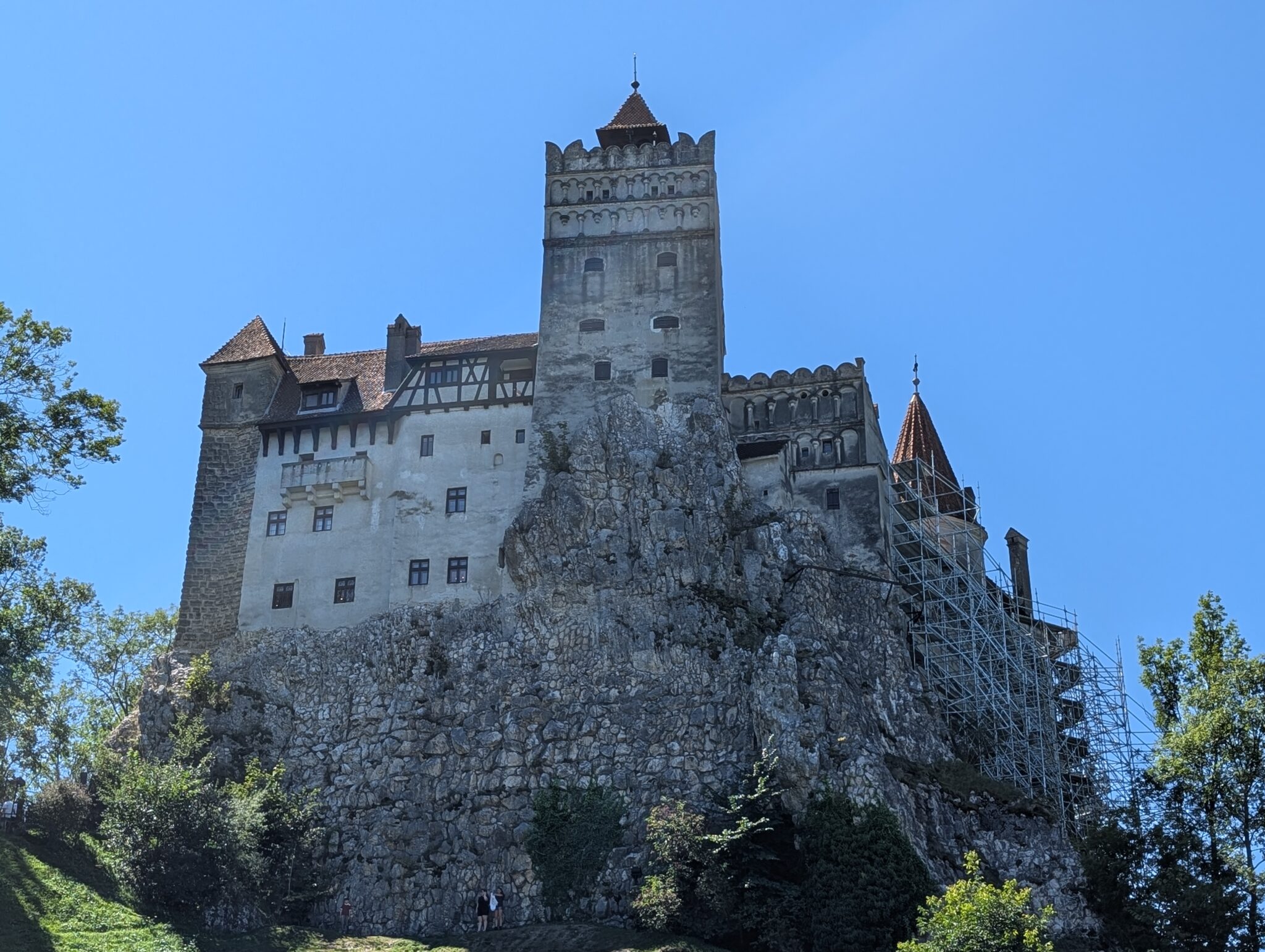
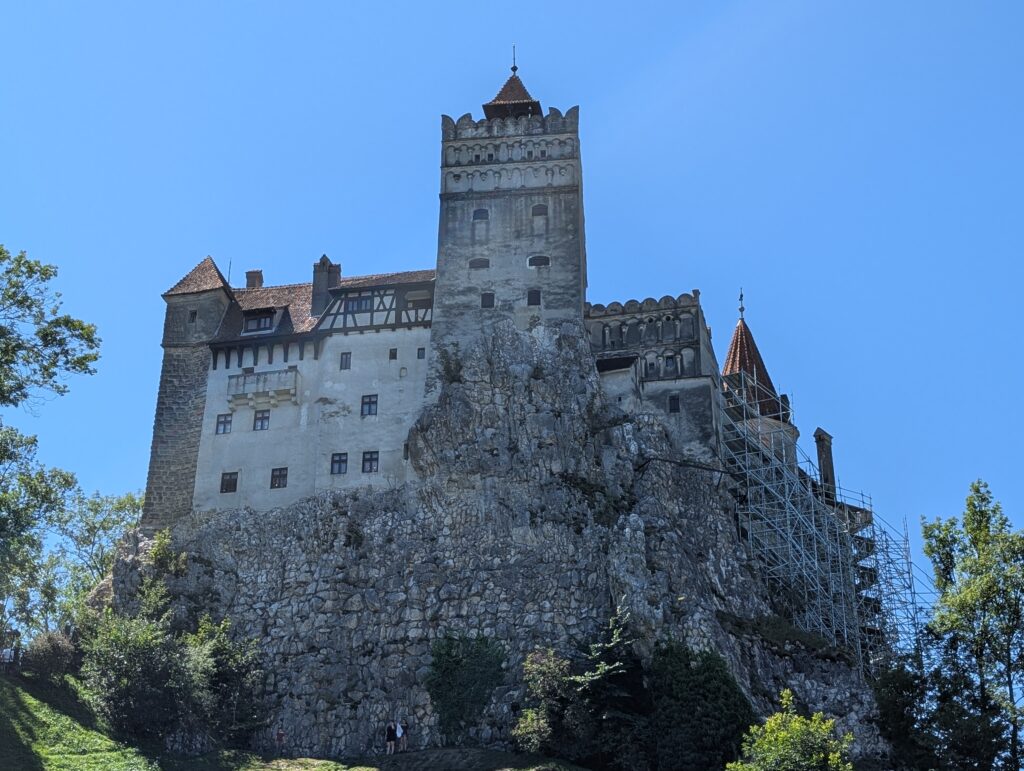
Dracula's Castle, perched on a rocky cliff in Transylvania, Romania. Beautiful views overlooking Bran Castle’s courtyard and the majestic surrounding mountains. 
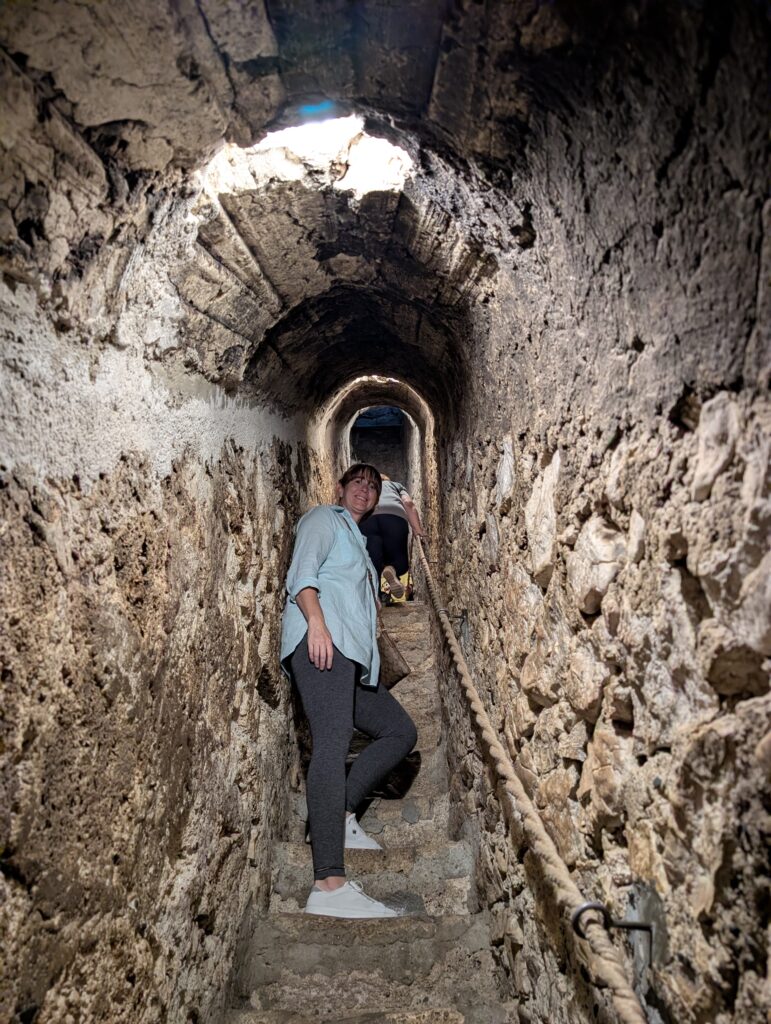
Here I am making my way up one of the narrow stone staircases hidden inside Bran Castle 
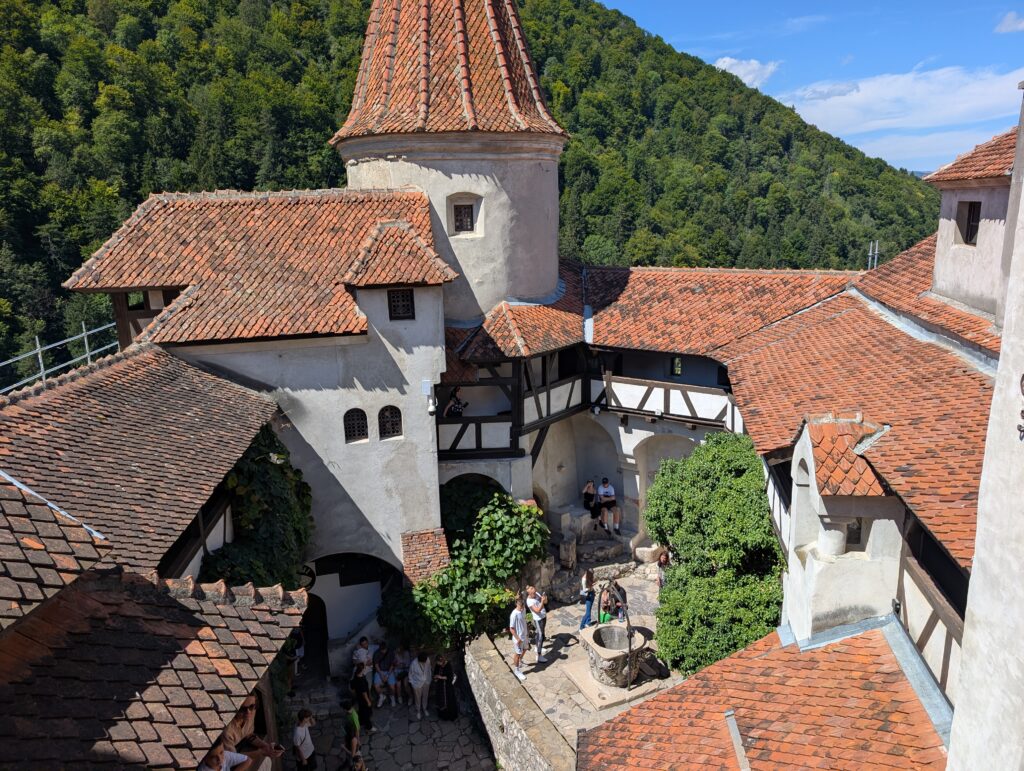
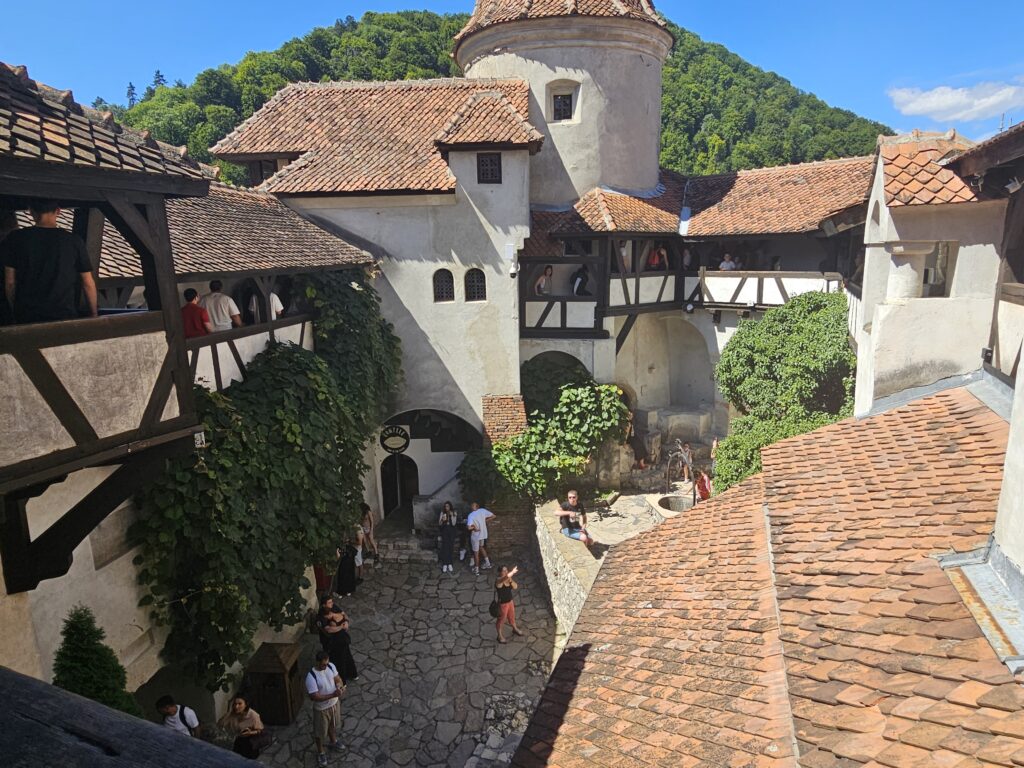
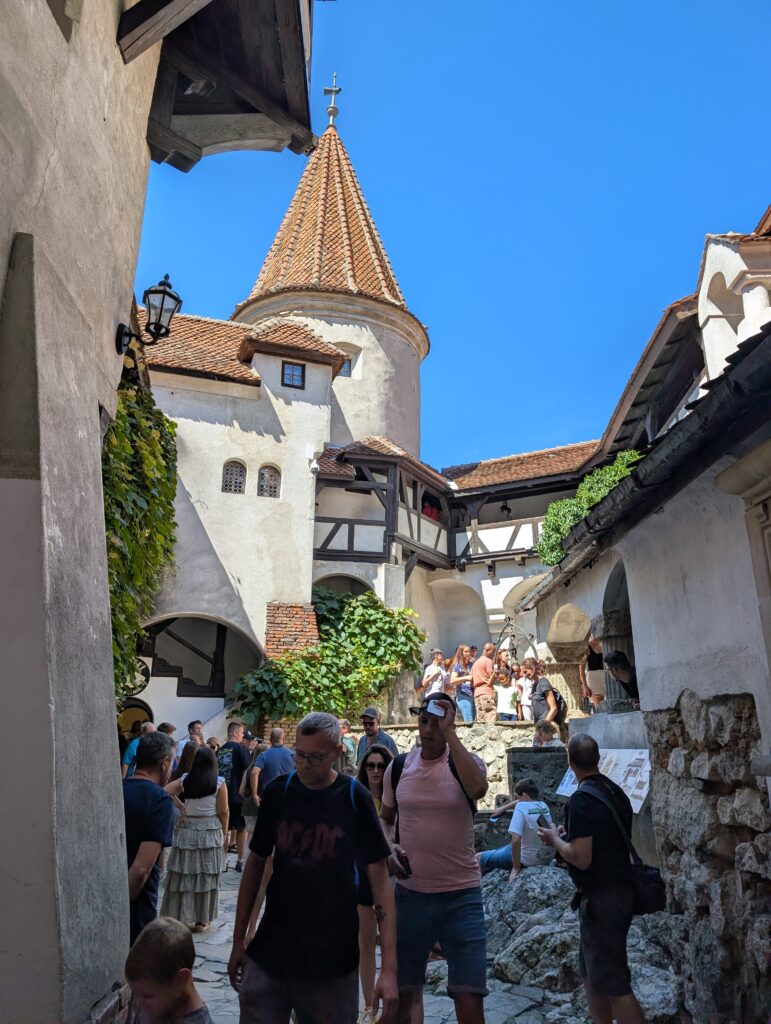
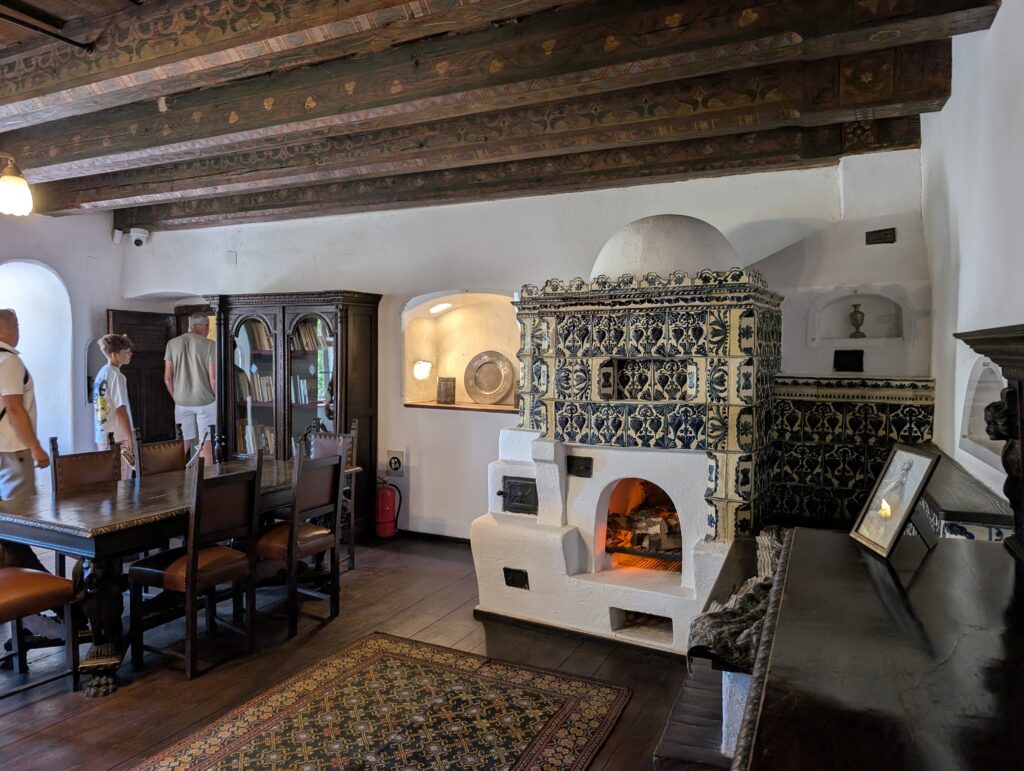
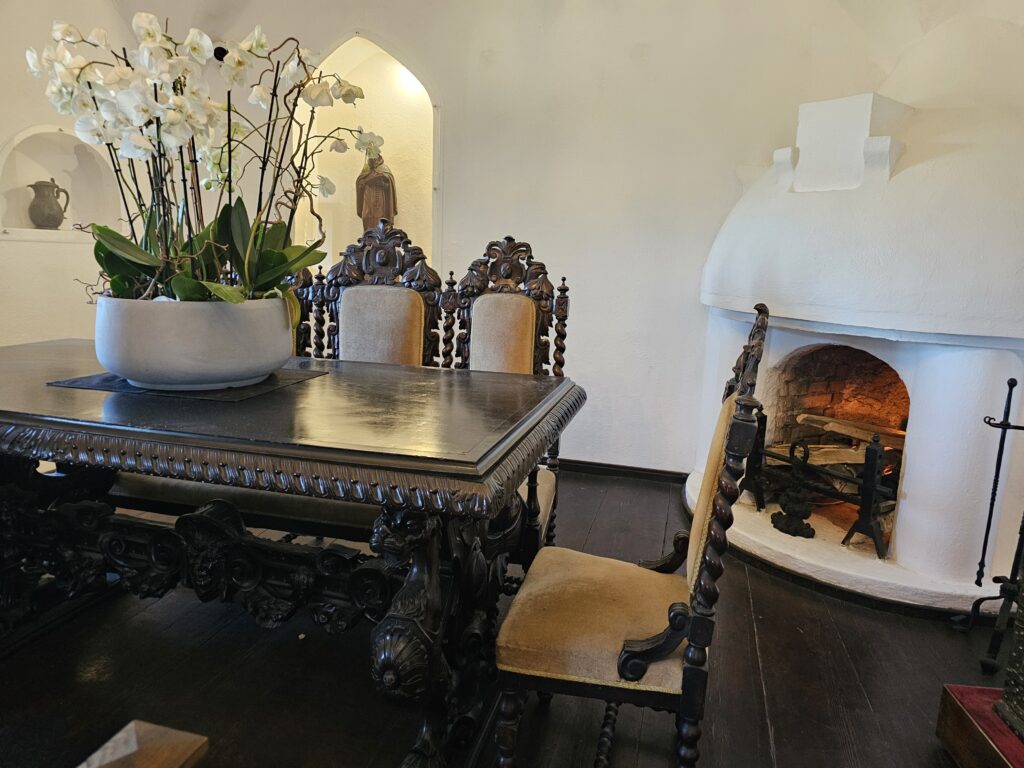
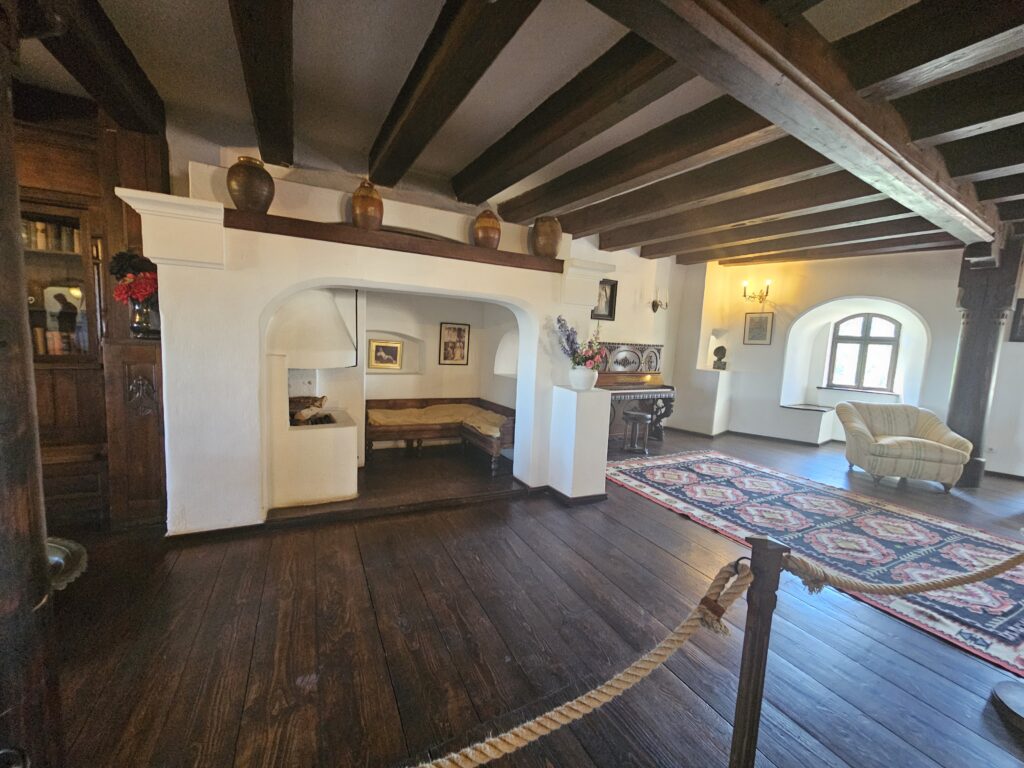
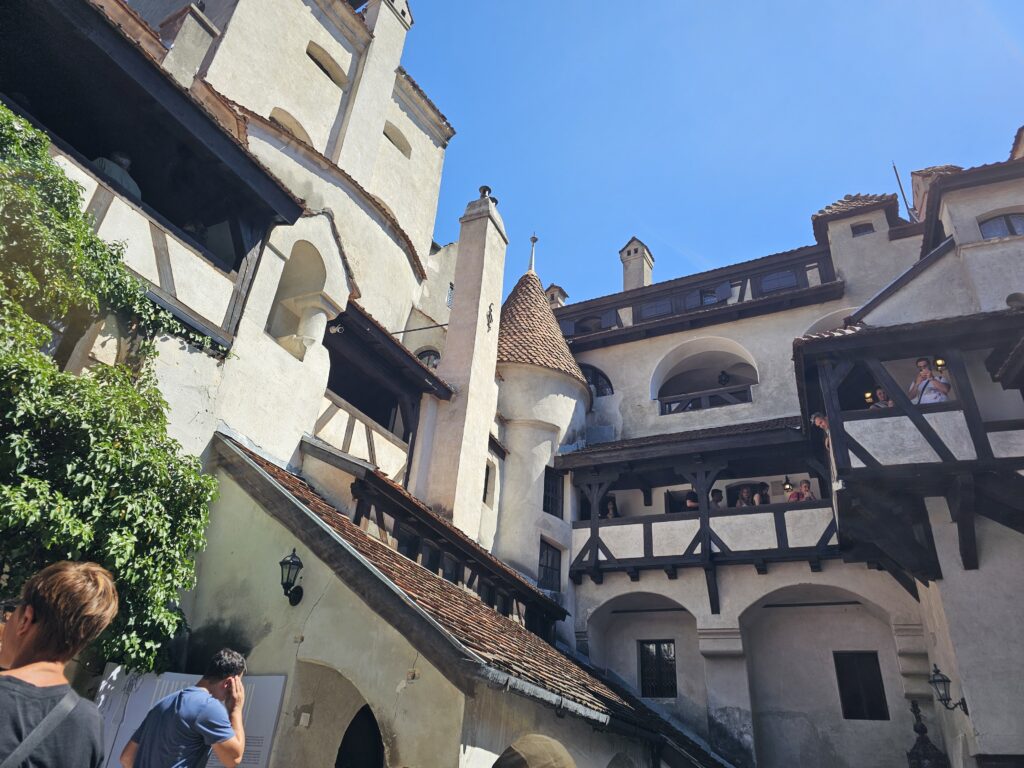
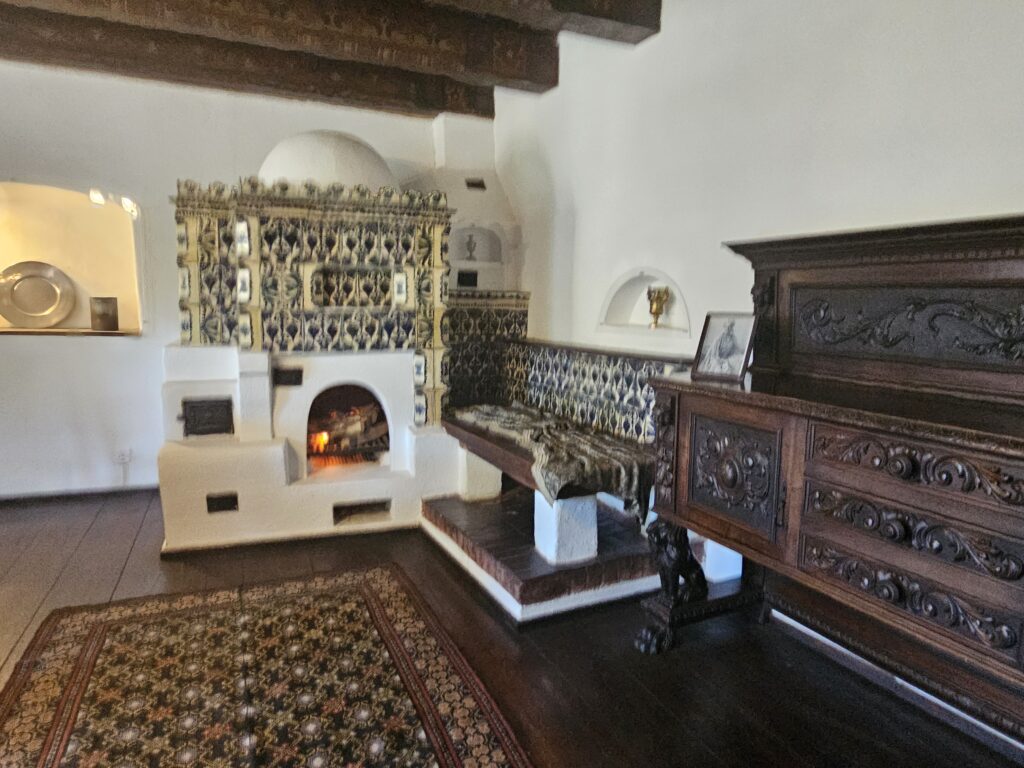
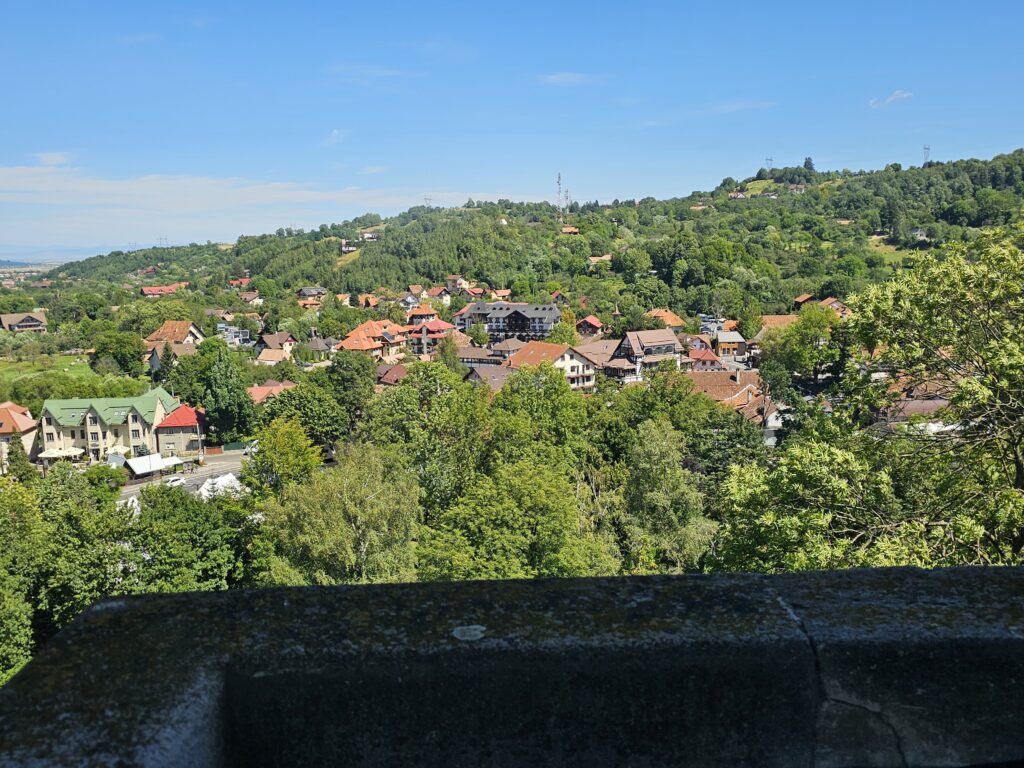
A look at the charming inner courtyard of Bran Castle in Transylvania, Romania. The crowds in the interior courtyard give you a good idea of just how popular Bran Castle is. It was definitely a busy day, but the castle was still fascinating to explore. A glimpse inside Bran Castle, where a traditional ceramic-tiled stove and antique wooden furniture reflect the castle’s historic charm An interior room inside Bran Castle in Transylvania, famously known as Dracula’s Castle. Bran Castle was built in 1377 by the Saxons of Brașov. It later served as a royal residence for Queen Marie of Romania and is very cozy with all its wood The inner courtyard of Bran Castle—you can see why its mysterious, medieval atmosphere makes it the perfect backdrop for Dracula’s castle. Originally build as medieval fortress and later as a royal residence the castle has a cozy feel with all the exposed wood. This view overlooks the town of Bran from the windows of Bran Castle in Transylvania, Romania.
Let's talk about the most famous name associated with Romania:
Dracula.
Can you visit Romania without hearing about Dracula approximately 47 times?
Probably not.
Bran Castle is the castle most closely associated with the Dracula legend, and there was no way I was going to Romania without visiting it.
But here's the fun part:
Dracula never actually lived at Bran Castle.
Bram Stoker never visited the castle either, and his novel Dracula never specifically identifies Bran Castle as Dracula's home.
The connection comes largely from later associations with Vlad III Dracula, better known as Vlad the Impaler.
Vlad was a real historical figure with a rather unpleasant reputation, but there isn't much historical evidence that he actually lived at Bran Castle.
Still, when you see the castle, it's easy to understand why the legend stuck.
The castle sits dramatically above the surrounding landscape, with medieval stone walls, narrow passageways, tiny staircases, and enough atmosphere to make you wonder if Dracula might appear around the next corner.
The earliest fortress on the site dates back to the medieval period. The Teutonic Knights played a role in establishing an early fortress in the area, and later, in the late 14th century, King Louis I of Hungary authorized the people of Brașov to build a stone fortress at Bran.
Its location was strategically important because it controlled a mountain pass and trade route.
The castle eventually lost much of its military importance and took on a completely different role.
In 1920, after Transylvania became part of Romania, Bran Castle was given to Queen Marie of Romania, who transformed it into a royal residence and retreat.
So when you visit Bran Castle, you're really seeing several layers of history:
Medieval fortress.
Military stronghold.
Royal residence.
Dracula attraction.
And, of course, tourist destination.
That's a pretty impressive résumé for one castle.
Eating Around Bran Castle
Bran Castle is busy.
Very busy.
The roads around the castle were packed, and the area outside was filled with restaurants, street food, souvenir shops, and tourists.
Lots and lots of tourists.
I had hoped to spend more time exploring the area and trying some of the local food, but our schedule was already getting tight.
And then there was Brașov.
I had really wanted to visit the city, explore its medieval streets, and, most importantly, eat.
Unfortunately, something had to go.
And it was Brașov.
As someone who plans trips around food, I was not thrilled.
But at least I had Peleș Castle waiting for me.
And hopefully dinner.
Peleș Castle: A Castle Worth the Traffic

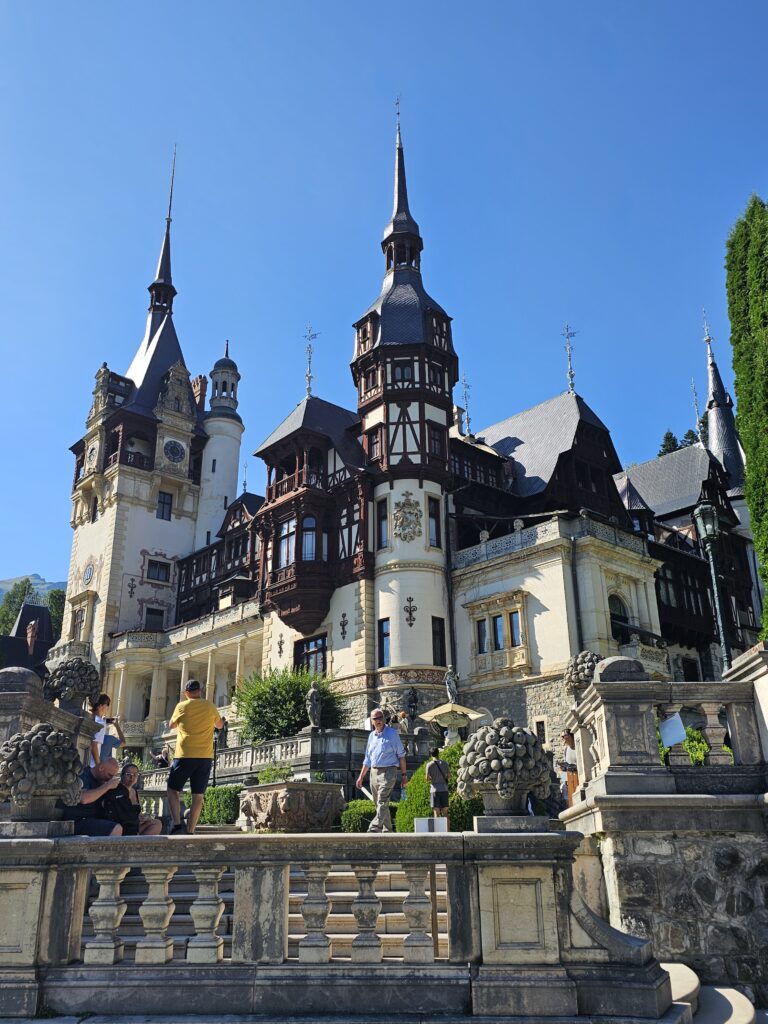
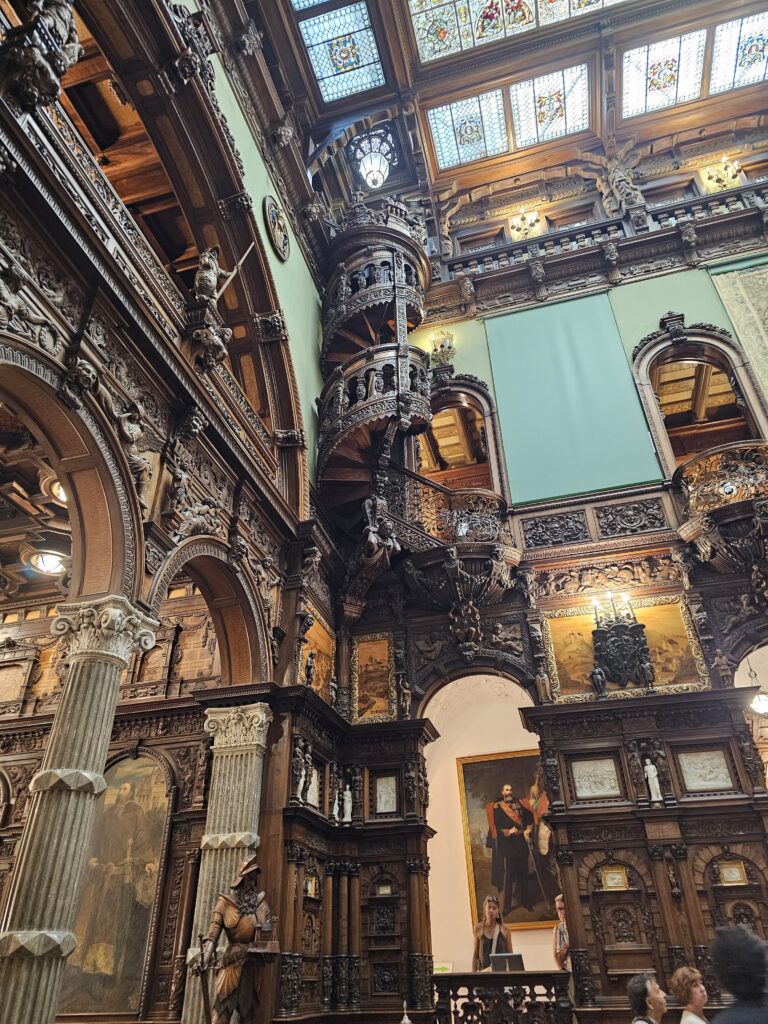
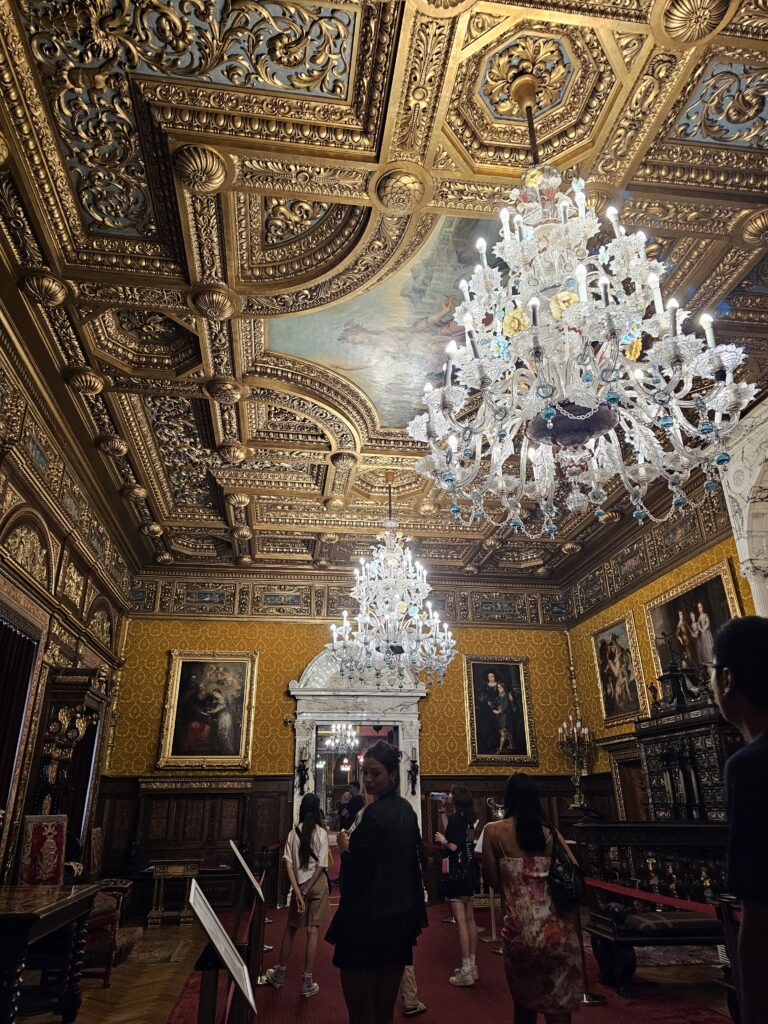
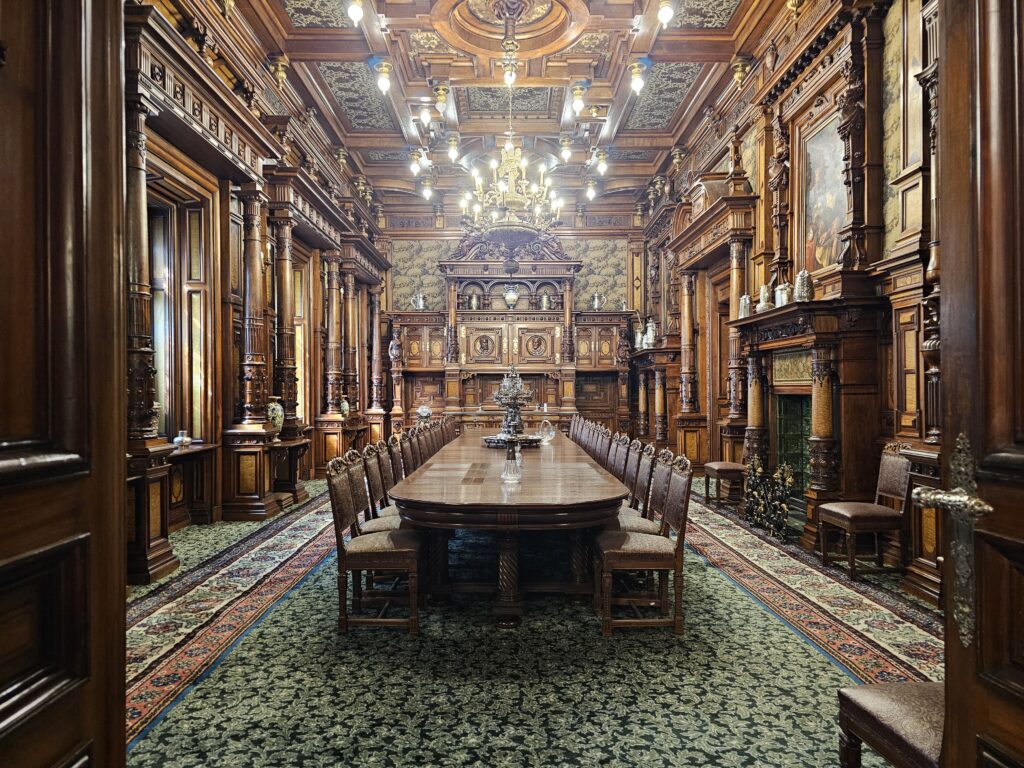
The ornate facade of Peleș Castle, a Neo-Renaissance royal palace located in Sinaia, Romania The stunning wooden interior in the Hall of Honor is so beautiful. The hall features three floors of intricate hand-carved dark walnut woodwork, elegant balconies, a delicate spiral staircase, and a retractable stained-glass ceiling. The Florentine room features an intricate, hand-carved wooden ceiling covered in gold leaf. The large Murano Chandeliers, hanging from the center arecrafted from famous Italian Murano glass. The majestic Royal Dining Room inside Peleș Castle The ornate facade of Peleș Castle The ornate wooden interior hall and central staircase of the historic Peleș Castle The opulent Imperial Drawing Room inside Peleș Castle The Imperial Suite (Apartamentul Imperial) inside Peleș Castle A beautifully carved dark wooden statue holding a torch lamp stands on the main staircase inside Peleș Castle
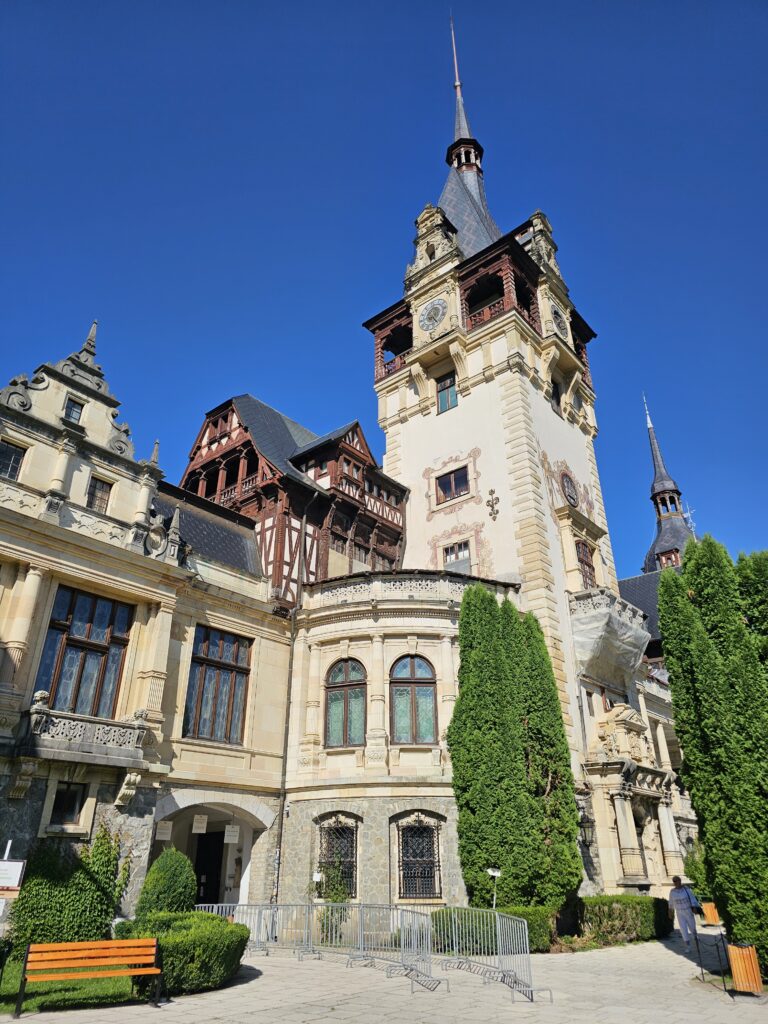
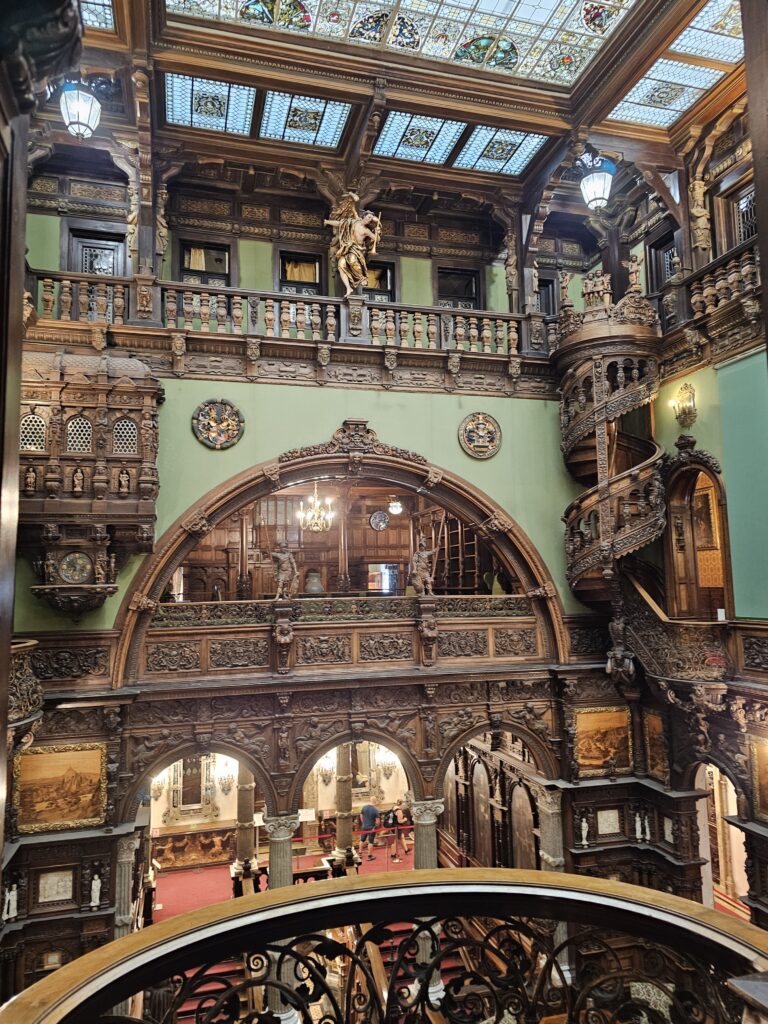
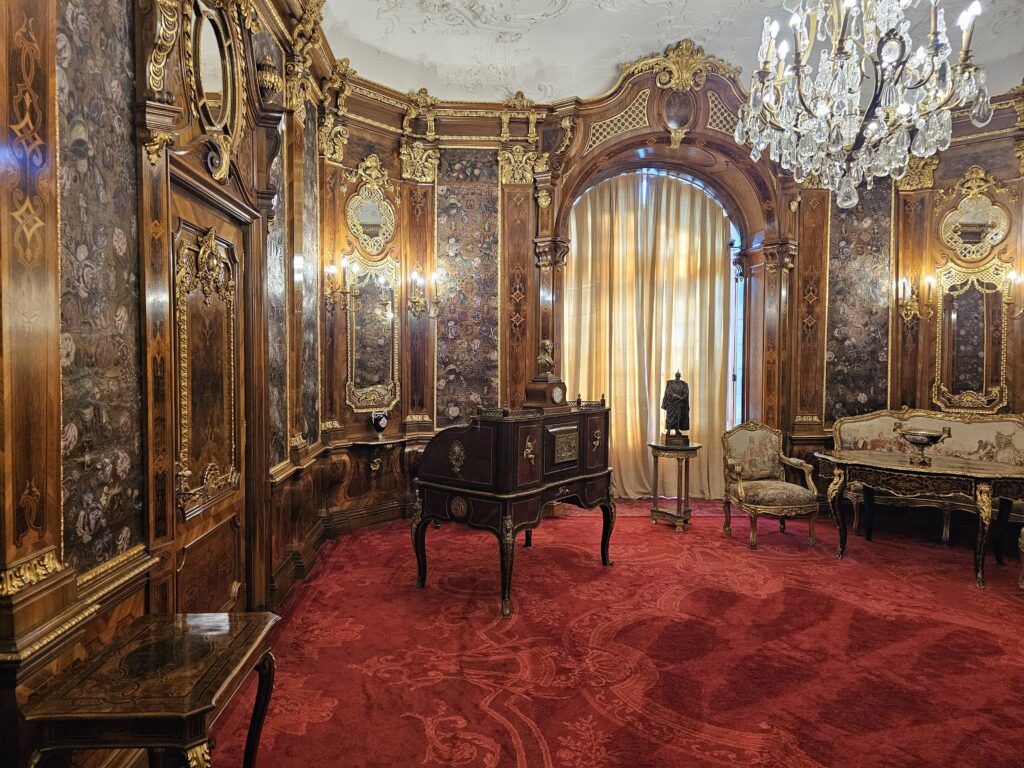
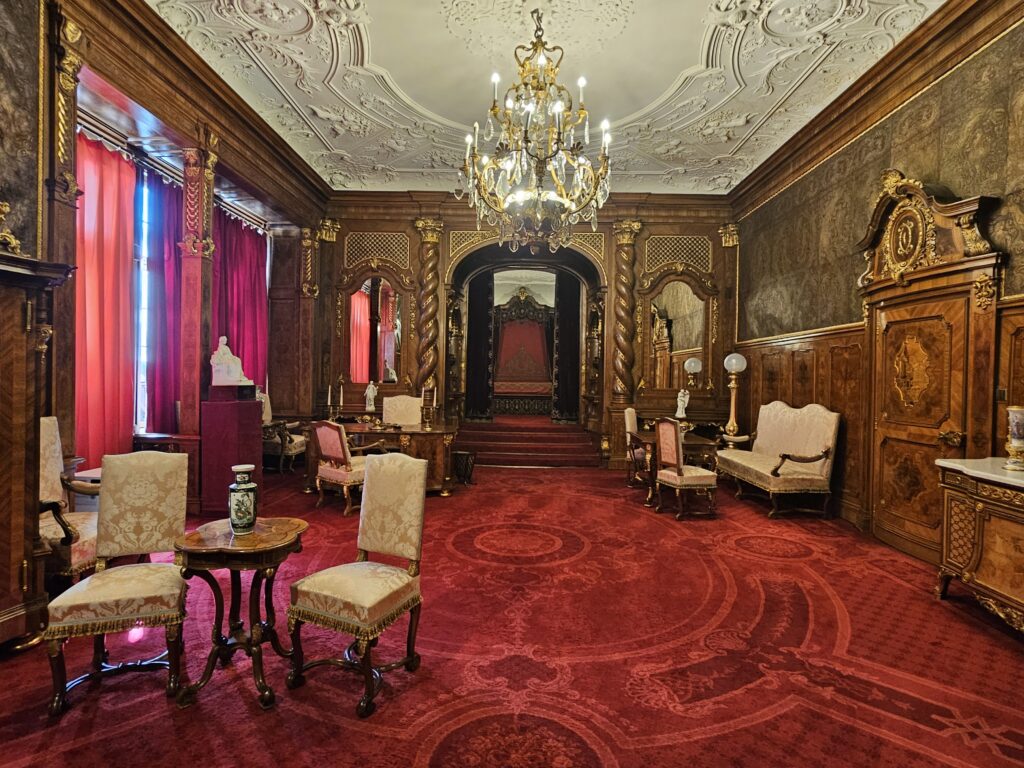
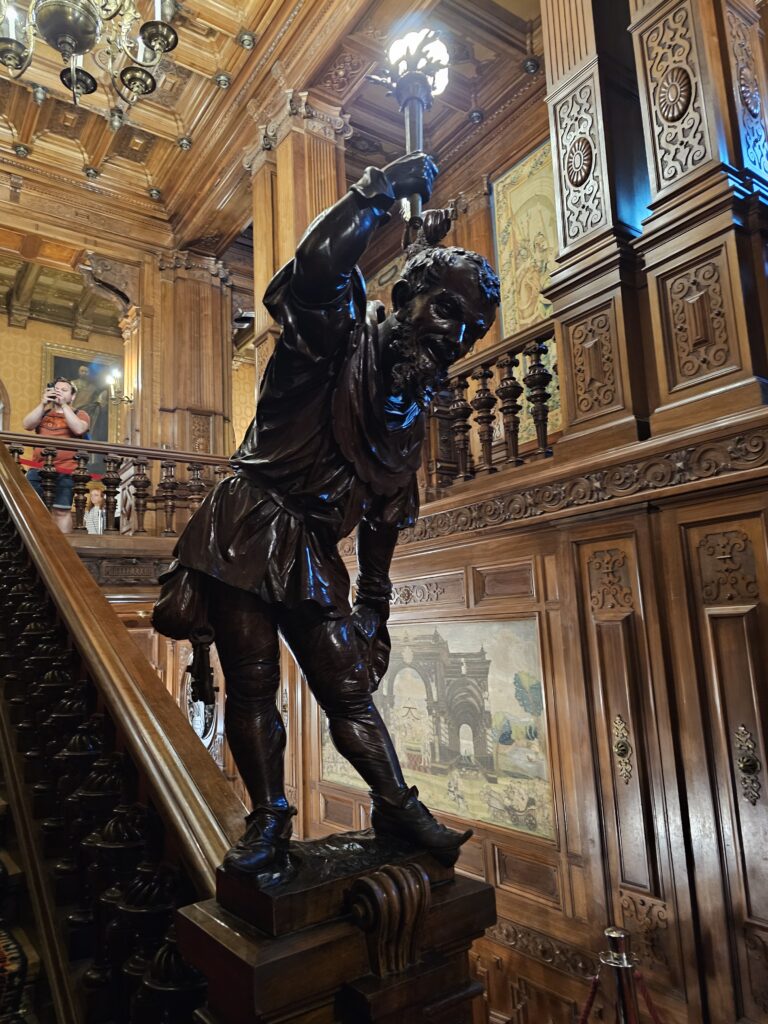
After the chaos of getting to Bran, Peleș Castle felt like a breath of fresh mountain air.
Located near Sinaia in the Carpathian Mountains, Peleș is absolutely beautiful.
And unlike Bran, the setting feels peaceful.
Romania gained independence in the 1870s, and King Carol I and Queen Elisabeth commissioned Peleș Castle as a royal summer residence.
Built in a German Neo-Renaissance style, the castle is filled with elaborate woodwork, stained glass, ornate interiors, weapons, and enough decorative details to make you wonder who was responsible for dusting the place.
Seriously.
There is a LOT going on inside.
The Romanian monarchy was abolished in 1947 when the communist government seized the castle. Today, Peleș is one of Romania's most important historic attractions.
The castle itself is gorgeous, but the mountain setting makes it even better.
After spending so much time sitting in traffic, I was more than ready to get out of the car and walk around.
There are trails around the castle, beautiful forests, and restaurants where you can sit down and enjoy a meal.
Which, naturally, brings me to my favorite part.
Dinner.
What I Ate Near Peleș Castle
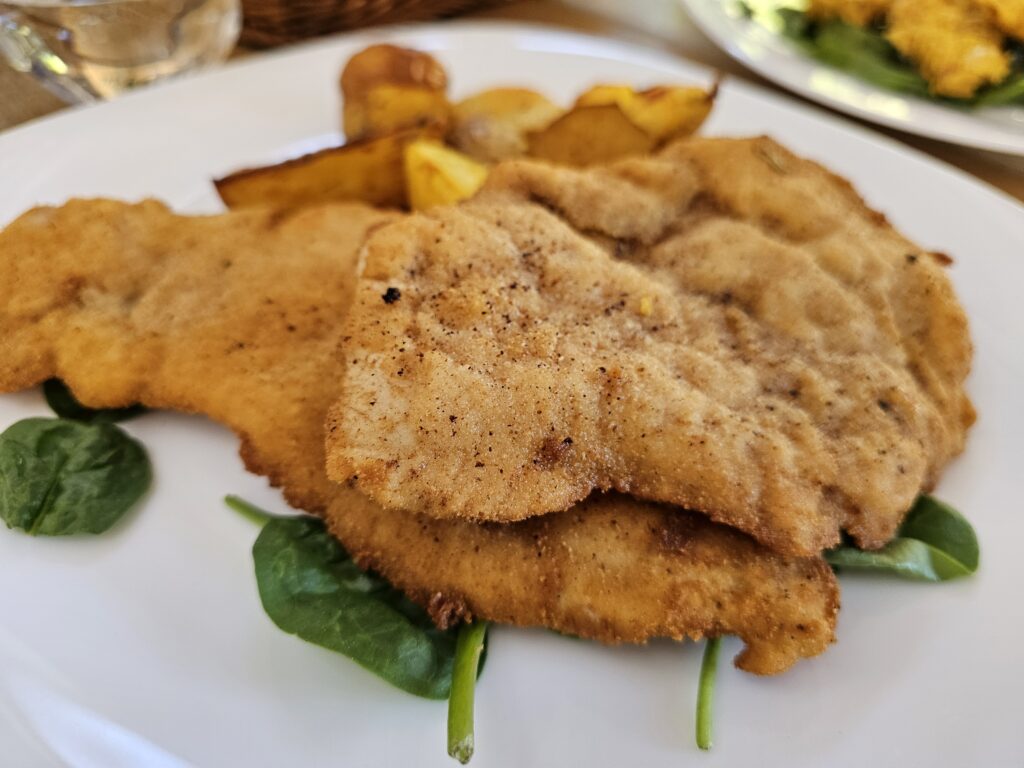
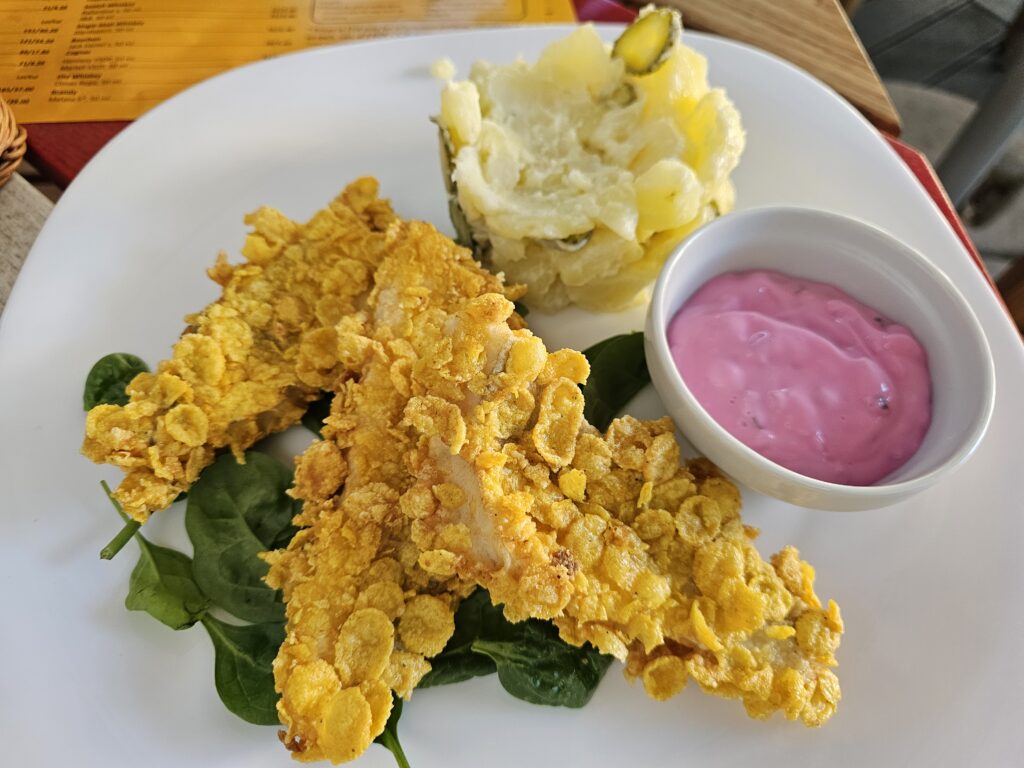
The chicken schnitzel was tender and juicy on the inside with a golden, crispy coating on the outside. It was lightly seasoned, letting the chicken shine without being overly heavy. The crunchy breading made every bite satisfying Zander, a freshwater fish commonly found throughout Central and Eastern Europe. This fish was battered in egg and flour, coated in cornflakes (yes, cornflakes!), and fried until perfectly crispy. The fish itself was light and tender, while the cornflake coating gave it an incredibly crunchy exterior with just a hint of sweet corn flavor.
After a long day of driving, sightseeing, and trying not to miss our scheduled castle tour, we were hungry.
Very hungry.
We stopped at Carol Gastro Bierhaus for dinner.
I ordered chicken schnitzel, while my husband ordered zander fillet.
The chicken schnitzel was tender and juicy on the inside with a golden, crispy coating on the outside. It was lightly seasoned, letting the chicken shine without being overly heavy. The crunchy breading made every bite satisfying, especially after a full day of exploring castles and battling Romanian traffic. Simple, comforting, and delicious—sometimes a crispy schnitzel is exactly what you need!
For the Zander, it is a freshwater fish commonly found throughout Central and Eastern Europe. This fish was battered in egg and flour, coated in cornflakes (yes, cornflakes!), and fried until perfectly crispy. The fish itself was light and tender, while the cornflake coating gave it an incredibly crunchy exterior with just a hint of sweet corn flavor. It was such a fun twist on a traditional fish coating that I might just have to try making it at home!
It came with a potato salad made with pickled cucumbers, onions, and mayonnaise. The pickled cucumbers gave it a delicious relish-like tang, while their crunch added a nice contrast to the soft, creamy potatoes. It was a simple side, but the combination of flavors and textures worked really well with the crispy fish.
And then there was the tartar sauce.
It was pink.
Naturally, I had questions.
Turns out, the pink color came from beet juice. Other than the color, it tasted pretty much like traditional tartar sauce.
Both meals were hearty and satisfying, which was exactly what we needed after our marathon sightseeing day.
What I Ate in Bucharest
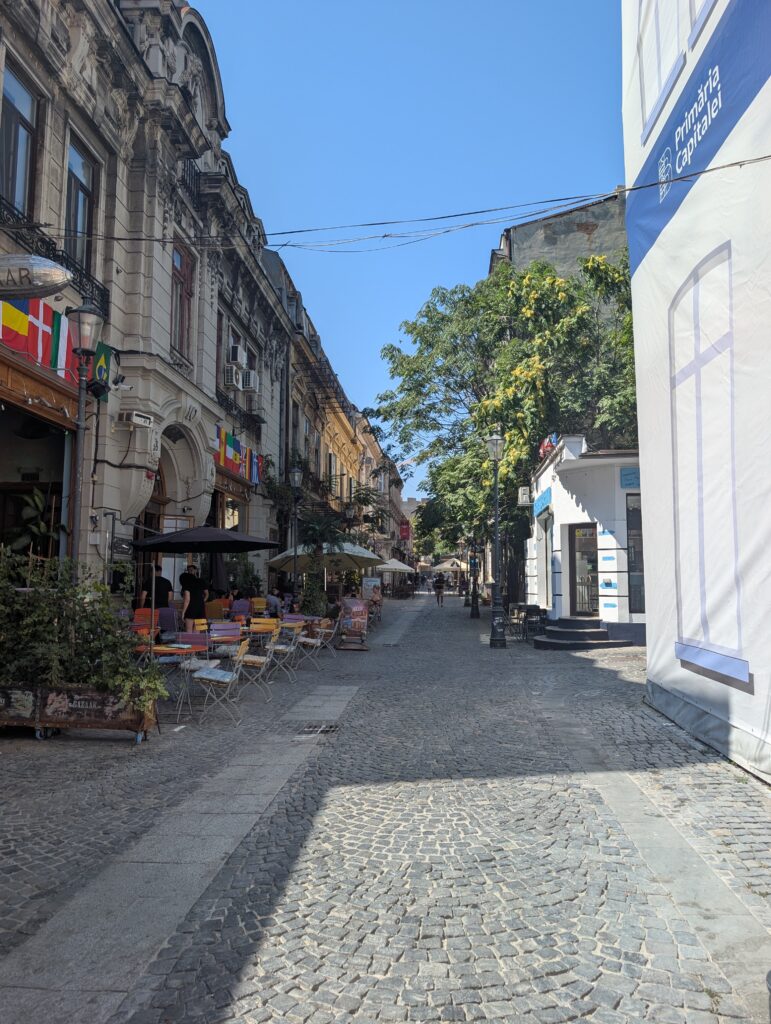
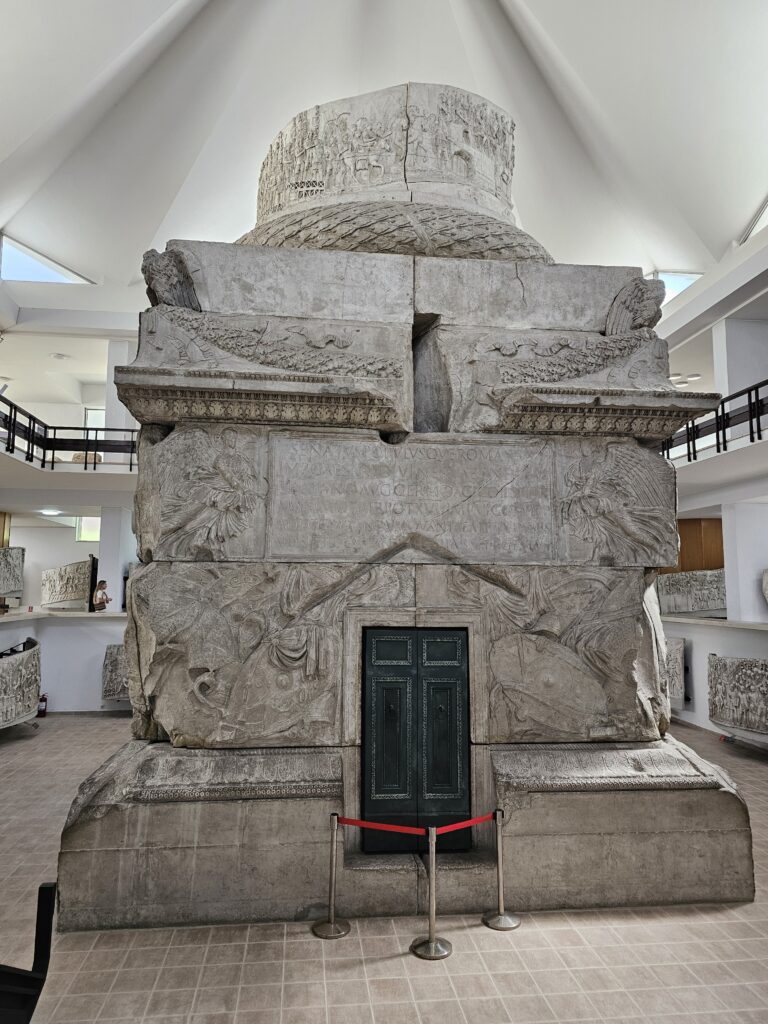
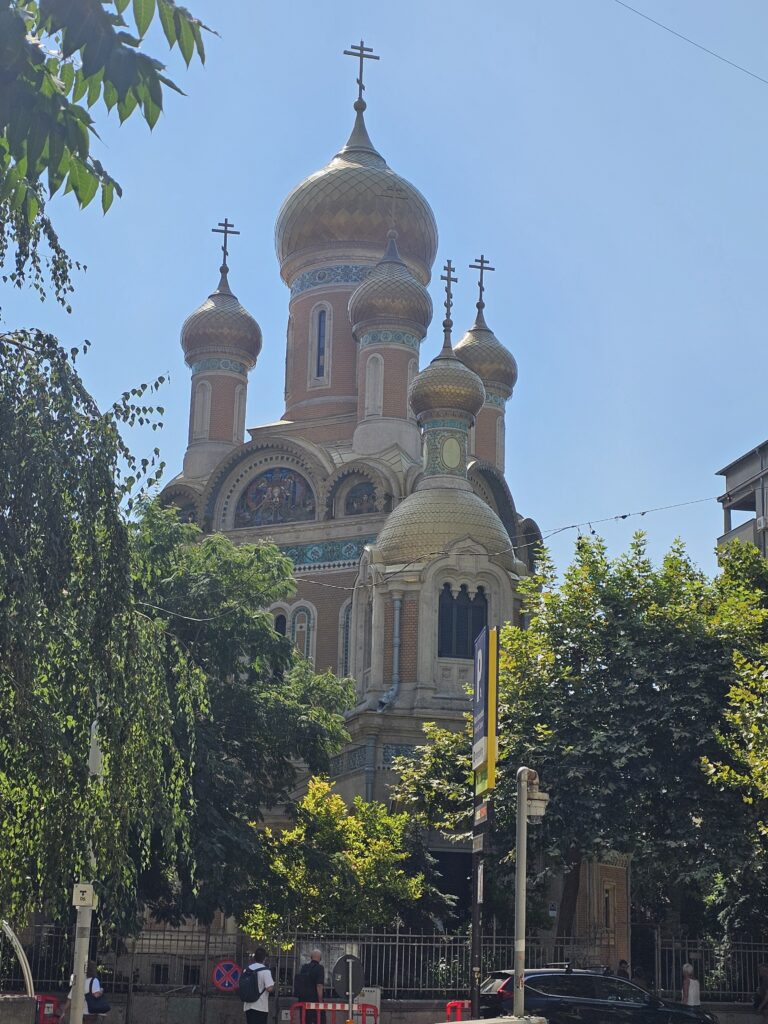
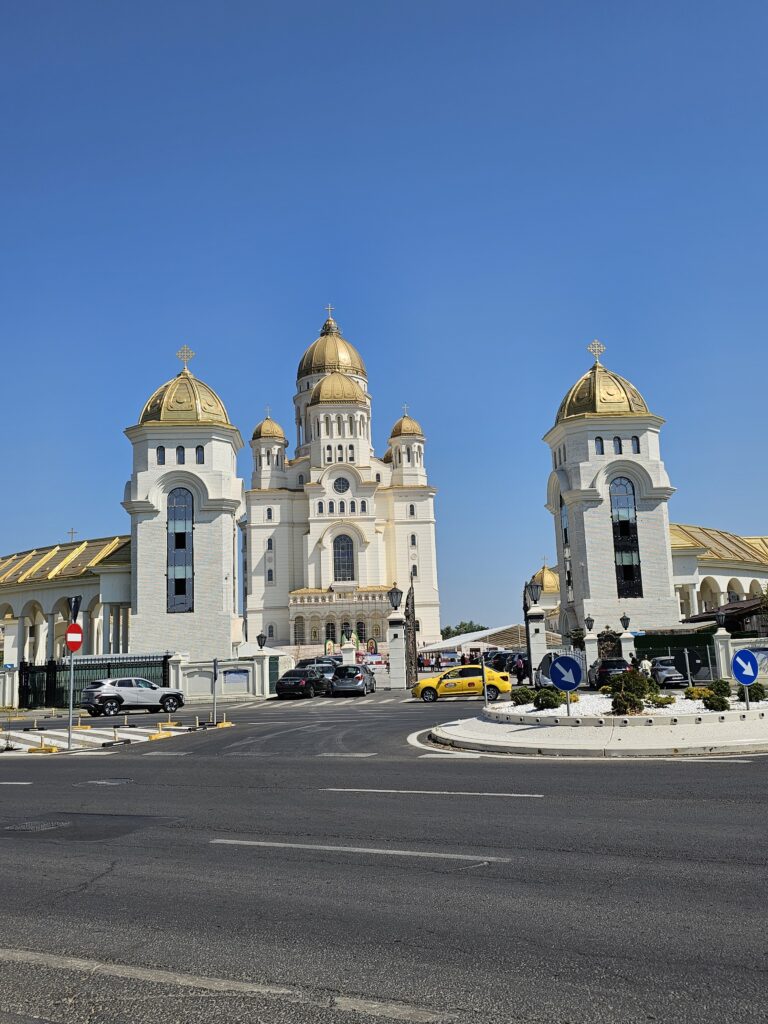
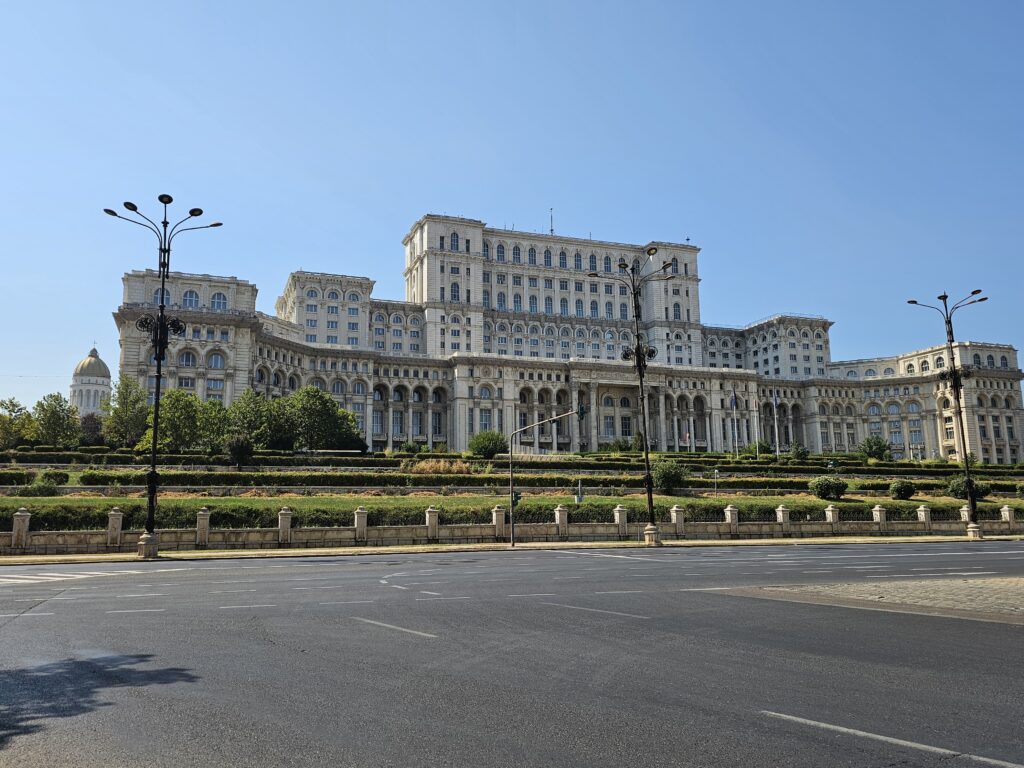
The interior of the historic Curtea Veche Church (also known as the Church of St. Anthony) in Bucharest. The interior features traditional Eastern Orthodox mural paintings, dark wood paneling, and an ornate gilded iconostasis at the front holding sacred icons. A cobblestone street lined with outdoor cafes and historic multi-story buildings in the Old Town of Bucharest Tucked between the buzzing streets of Bucharest's Old Town, the Villacrosse–Macca Passage is one of the city’s most photogenic and atmospheric corners. With its yellow glass roof, Parisian vibe, and eclectic cafes. Historic Stavropoleos Monastery located in the Old Town of Bucharest. Such a beautiful church and courtyard. CEC Palace, a historic Beaux-Arts bank building located on Calea Victoriei in Bucharest. One of the many cobblestone streets in the historic Lipscani District of Bucharest. Old town is such a beautiful place to wonder and explore. Life-size plaster cast replica of the base and lower portion of Trajan’s Column inside the National Museum of Romanian History. These intricate Roman bas-relief carvings were Commissioned by Roman Emperor Trajan and completed in AD 113. Many roman ruins can be found in Romania. Bucharest Russian Church, officially known as the Church of Saint Nicholas, located in central Bucharest the National Cathedral of Romania, also known as the People's Salvation Cathedral, located in Bucharest. Palace of the Parliament (Palatul Parlamentului), built in the 1980’s.
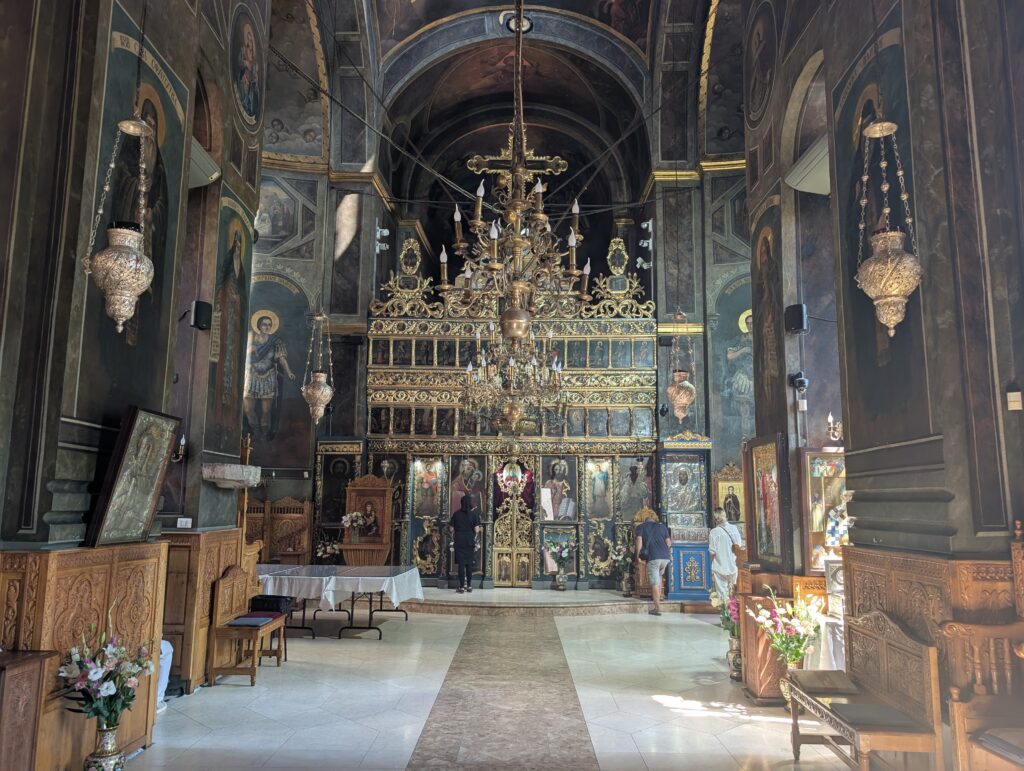
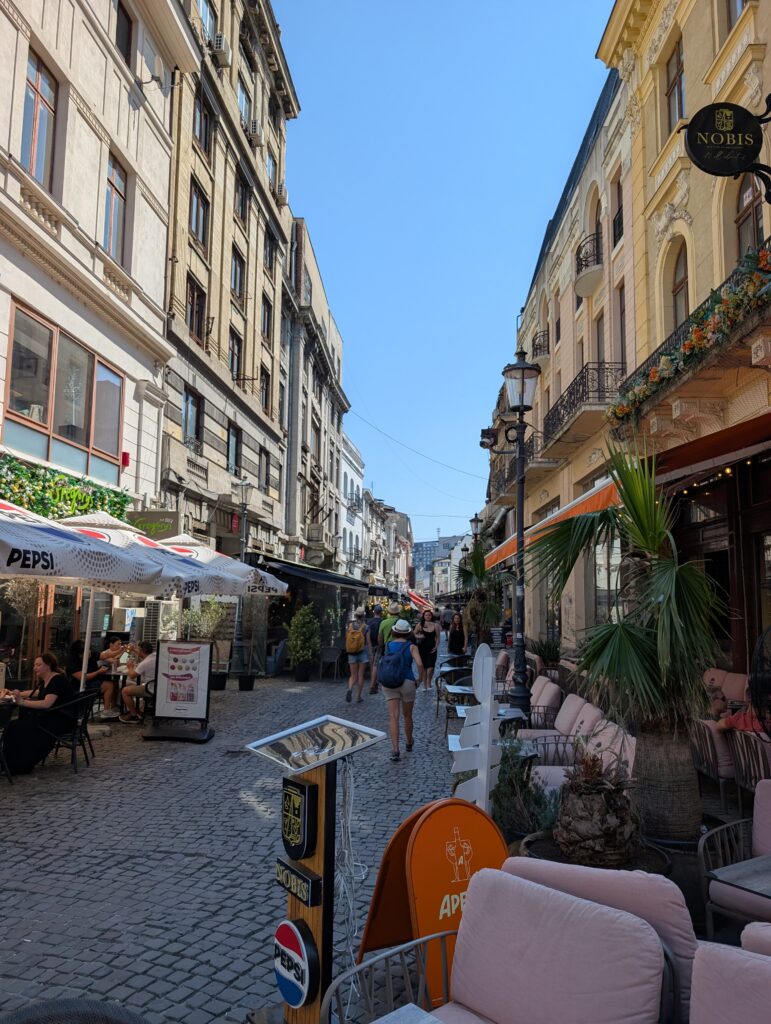
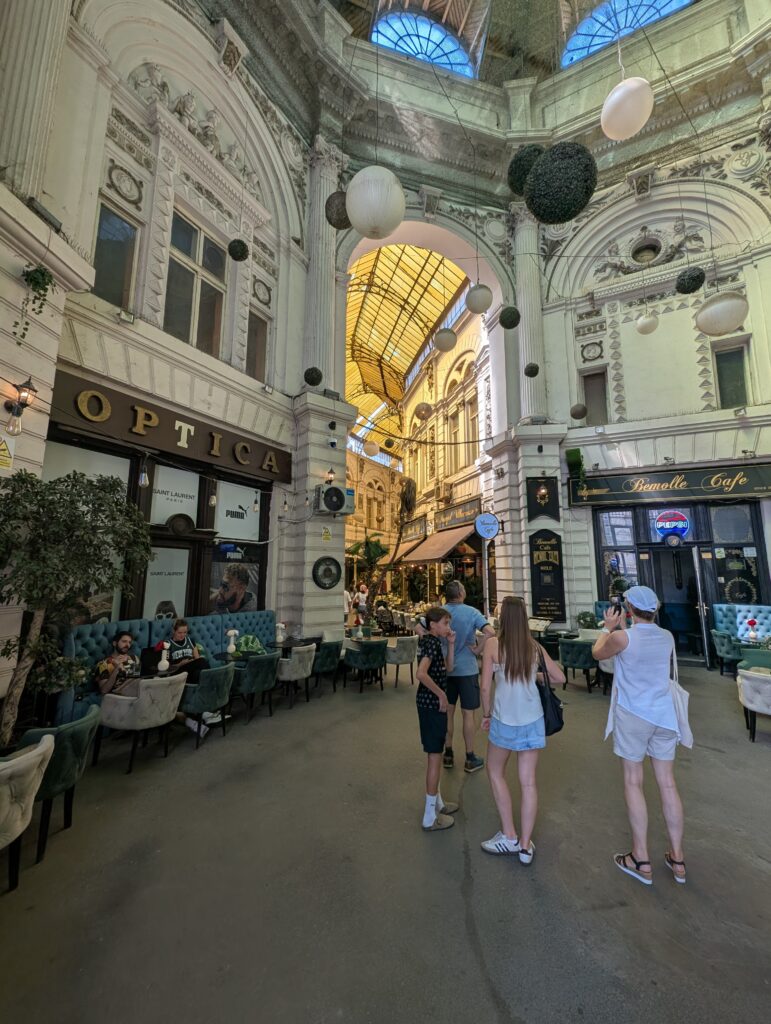
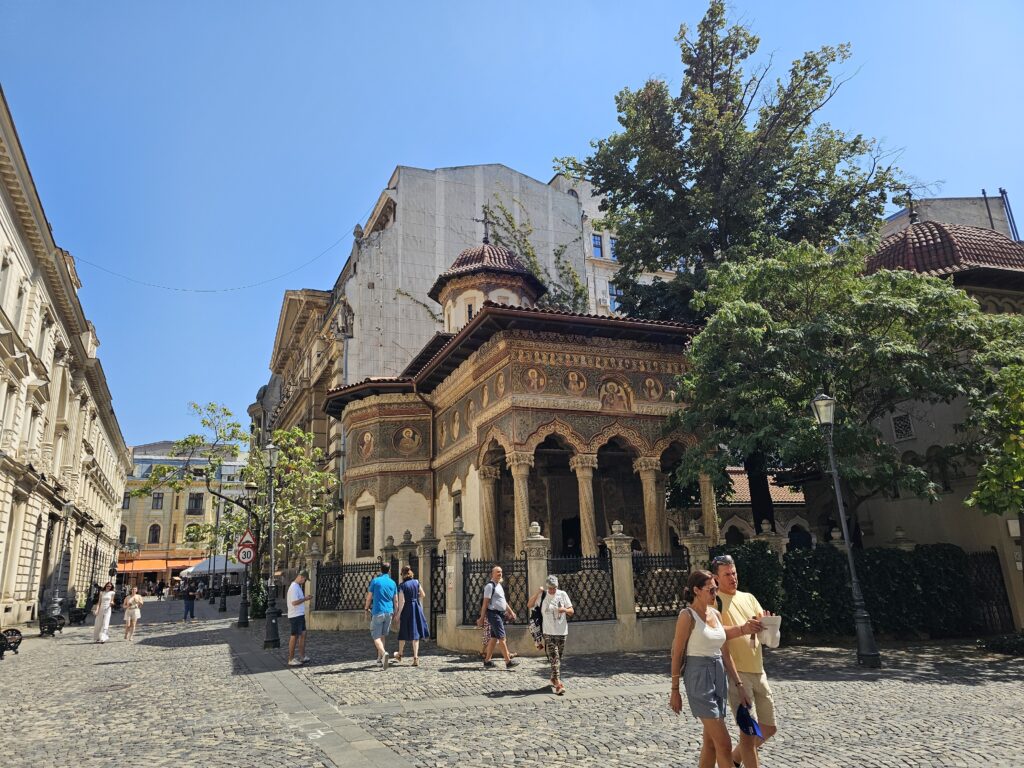
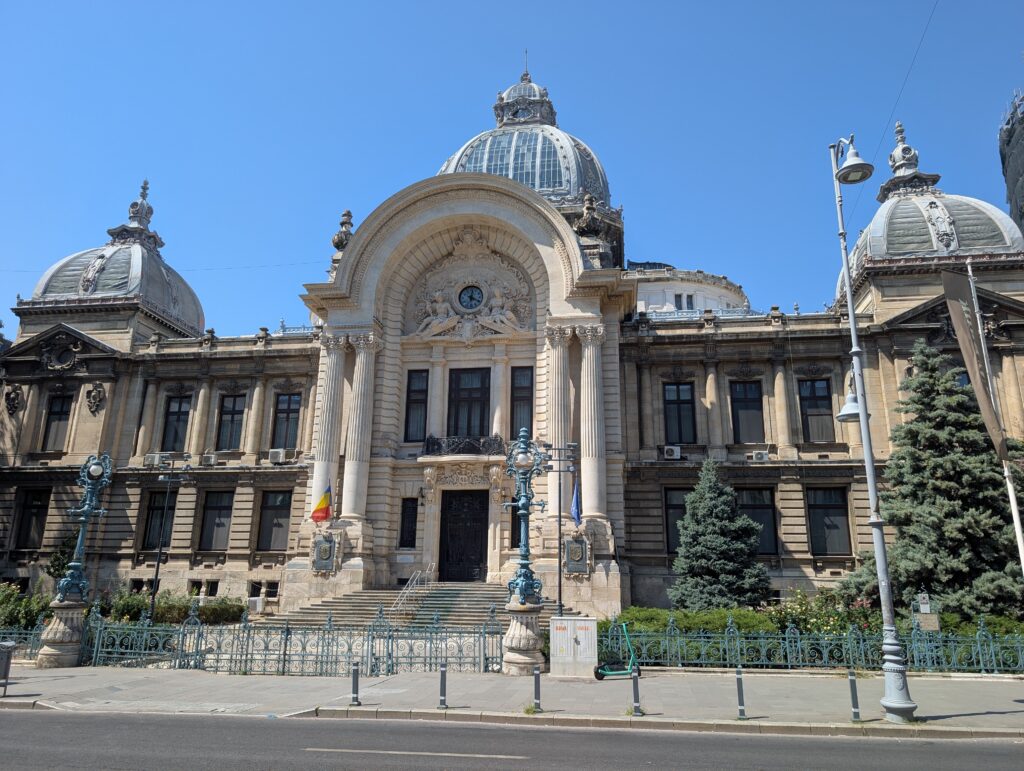
After our castle adventures, we headed back to Bucharest.
One of my favorite ways to explore a new city is to wander around without too much of a plan.
Okay, that's not entirely true.
I usually have a food plan.
For Bucharest, we decided to take a self-guided audio walking tour of Old Town using GPSMyCity.
It was a great way to explore the city at our own pace.
We wandered past the Bucharest Russian Church, Macca-Villacrosse Passage, National Museum of Romanian History, Stavropoleos Church, and Smardan Street.
The Museum of Romanian History included some cool Roman ruins that were found in the country, see the Roman carvings they have displayed in the museum below.
The cobblestone streets and narrow passages were some of my favorite parts.
There was something about wandering through the old city that made it feel like we'd stepped into another era.
Eventually, though, my stomach reminded me that we weren't just there for architecture.
It was time to eat.
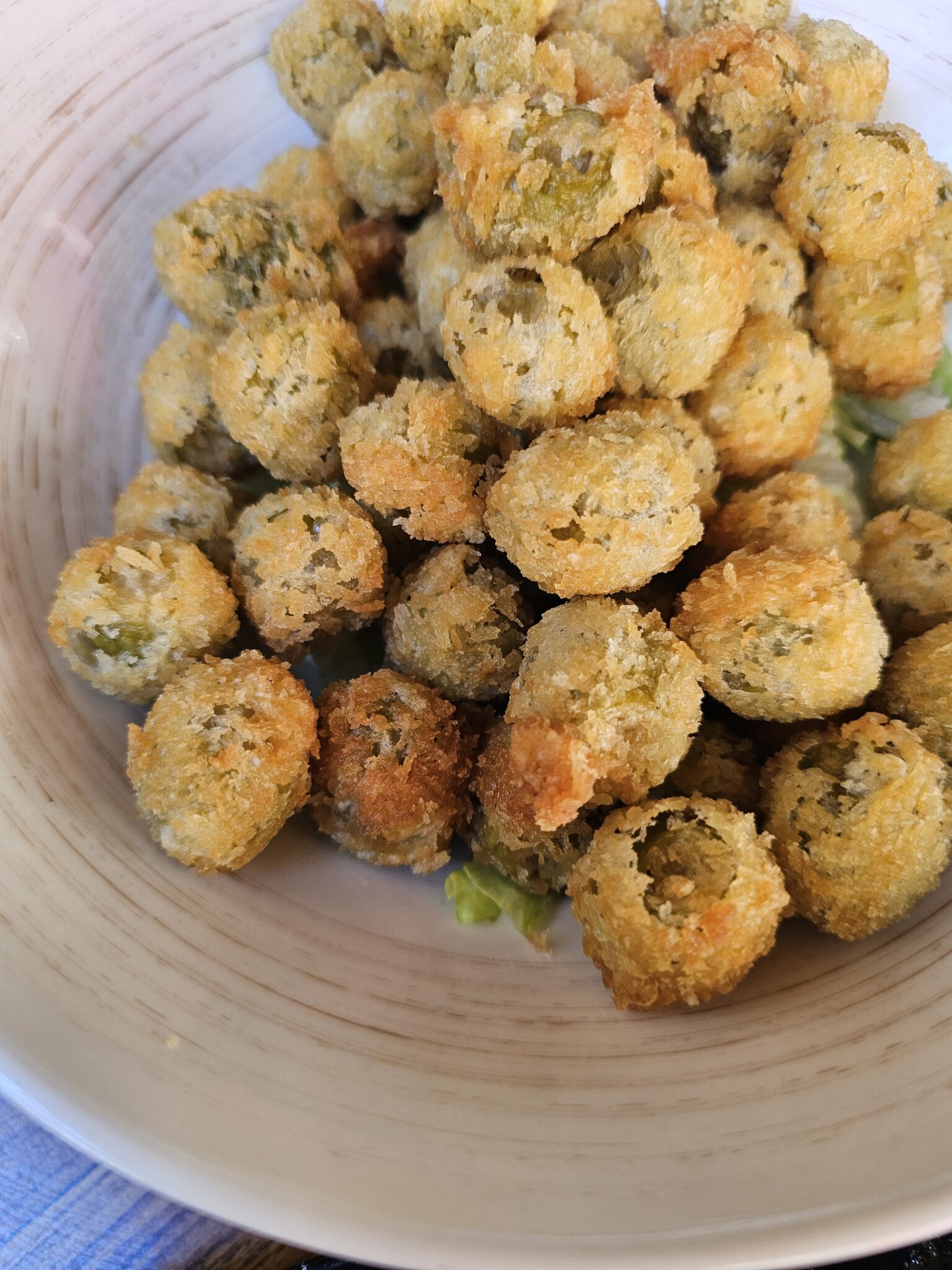
Crispy Olives: My Unexpected Romanian Food Obsession
We were starving when we stopped at a restaurant in Old Town.
We decided to order an appetizer while we waited for our main courses, and that's when I spotted something called crispy olives on the menu.
The description said they were olives wrapped in crispy breadcrumbs.
Okay.
Sure.
Let's try them.
When they arrived, I thought they'd brought enough food to feed an entire family.
They were basically green olives wrapped in breadcrumbs and deep fried.
And I could not stop eating them.
The salty, briny olive inside the crunchy fried coating was ridiculously good.
I'm not sure what I expected when I ordered them, but they turned out to be one of my favorite bites of what I ate in Romania.
Sometimes the simplest things win.
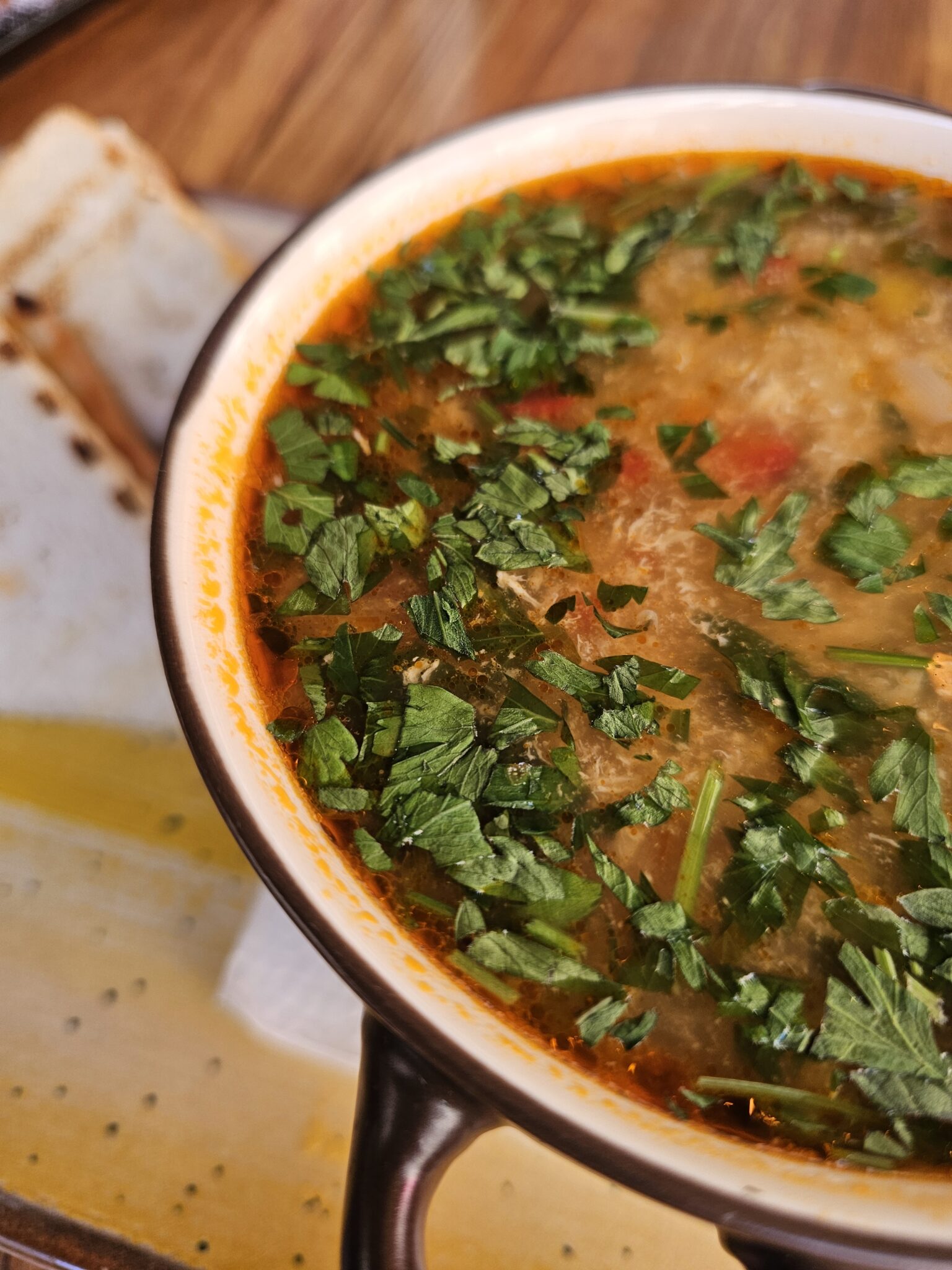
Ciorbă de Pui: Romanian Comfort Food
For my main course, I wanted something traditional, so I ordered ciorbă de pui, a Romanian chicken soup.
This wasn't your average chicken soup.
It was loaded with chicken, potatoes, carrots, celery, parsnips, onions, peppers, tomatoes, parsley, and Borș is a traditional sour, fermented liquid made from wheat or barley bran used Romanian cooking giving its distinctive tang.
And that sourness immediately grabbed my attention.
It reminded me of my grandmother's soup.
Her family came from the region and spoke Hungarian, so sitting in Romania eating a sour, hearty soup that reminded me of home was one of those unexpected travel moments that sticks with you.
Food has a funny way of doing that.
You can be thousands of miles from home and suddenly one bite takes you right back to your childhood kitchen.
This soup was hearty, comforting, slightly sour, and absolutely something I'd order again.
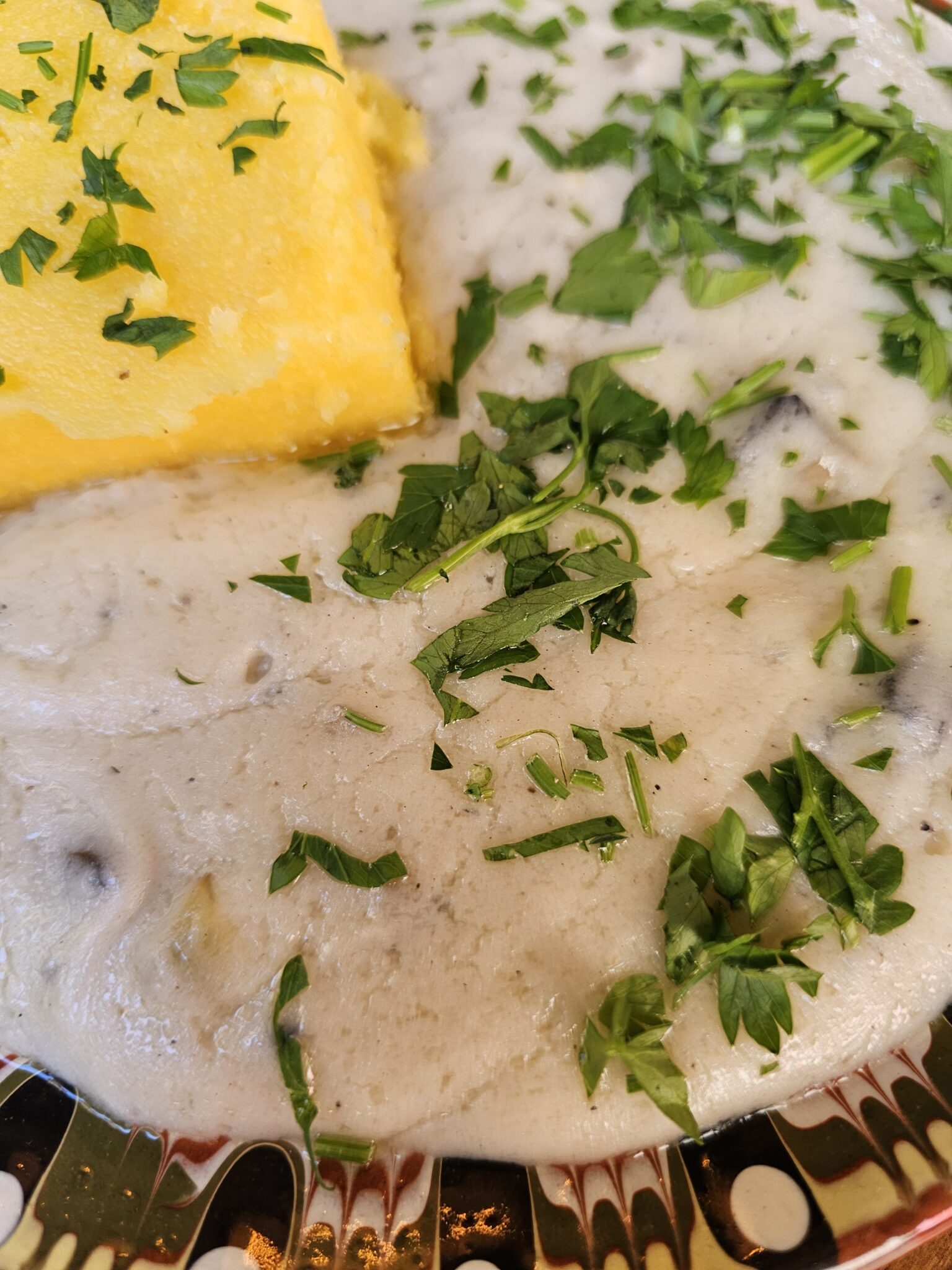
Ciuperci cu Smântână: Mushrooms & Creamy Goodness
My husband ordered ciuperci cu smântână, sautéed mushrooms cooked in a rich garlic and sour cream sauce.
It came with traditional Romanian mămăligă, a firm yellow cornmeal polenta topped with parsley.
Obviously, I had to steal a bite.
Or three.
The mushroom sauce was incredibly rich and creamy. Combined with the firm polenta, it almost reminded me of a really thick mushroom soup served alongside a block of creamy cornmeal.
It was rustic, hearty, and exactly the kind of food you want after spending the day walking around a European city.
Papanăși: Because Every Good Meal Needs Dessert
And then came dessert.
Papanăși.
If you visit Romania, put these on your food bucket list they are absolutely delicious.
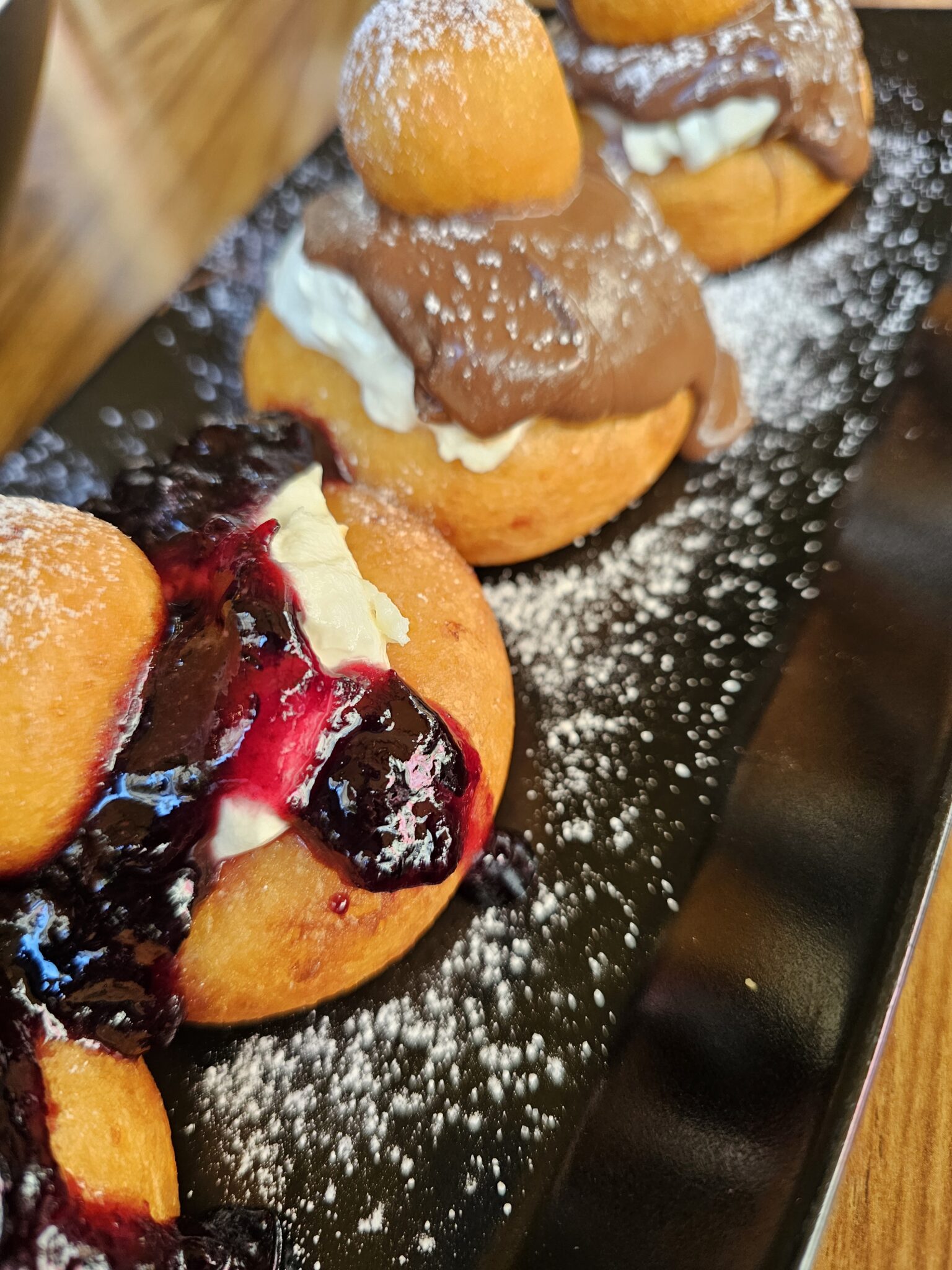
They're traditional Romanian fried doughnuts made with flour, eggs, and Romanian cottage cheese. They're usually served with sour cream and fruit preserves.
Our order came with four pieces.
Two had blueberry/sour cherry jam.
Two had Nutella.
Because apparently Romania wanted to make absolutely sure we weren't leaving hungry.
They were sweet, rich, and completely delicious.
At this point, we were stuffed.
Like, unbutton-your-pants-and-question-your-life-choices stuffed.
But it was worth it.
This was definitely one of my favorite things about what I ate in Romania.
Romanian Wine & One Last Snack
After our giant meal and more walking around Bucharest, we headed back to our hotel, Cavar Aparthotel.
But instead of immediately going to bed, we decided we needed one more drink.
Because apparently we had learned nothing from dinner.
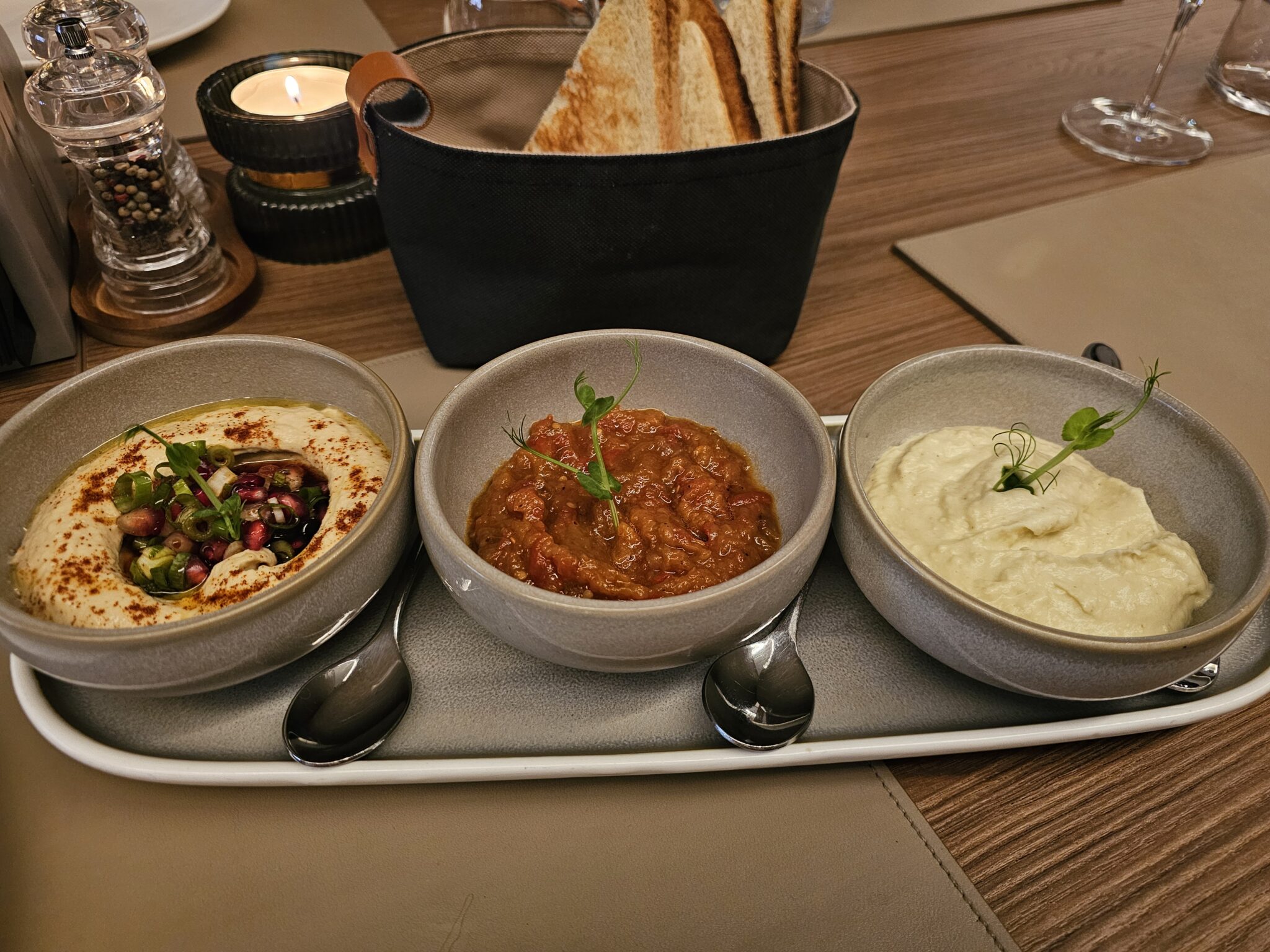
The hotel restaurant, Morfeo, was a lovely place to relax, and we ordered a Romanian white wine along with a trio of spreads.
There was hummus topped with pomegranate seeds and green onion with balsamic, a roasted vegetable spread, and an eggplant spread made with onion, green bell pepper, garlic, and spices.
With a glass of Romanian wine in hand, it was the perfect way to end the day.
What I Wish I'd Eaten in Romania
Three days was simply not enough time to eat my way through Romania.
There were several traditional Romanian foods I wanted to try but never got the chance to taste.
Mici
These little grilled meat rolls are one of Romania's best-known street foods, and they are definitely at the top of my list for next time.
Sarmale
Romanian stuffed cabbage rolls are another must-try that I missed.
I'm particularly interested in trying them with mămăligă and sour cream.
Zacuscă
I want to try authentic Romanian zacuscă and compare it to the vegetable spreads we enjoyed at our hotel.
Cozonac
A slice of traditional Romanian sweet bread with coffee sounds like the perfect breakfast to me.
Romanian Cheeses
I definitely need to spend more time exploring Romania's traditional cheeses.
Preferably with a glass of Romanian wine.
Because apparently I'm already planning the next trip.
More Romanian Desserts
After the papanăși experience, I think it's safe to say I'm interested in trying all of the Romanian desserts.
Research, obviously.
Strictly for research.
My Takeaways From Romania
Our Romania trip was fantastic.
It was also completely exhausting.
Trying to see Bran Castle, Brașov, Peleș Castle, Bucharest, and squeeze in another trip to Bulgaria in only three days was probably a little too ambitious.
Okay.
It was definitely too ambitious.
My biggest piece of advice?
Give yourself more time.
And if you're planning to visit Bran and Peleș from Bucharest, seriously consider taking a tour rather than renting a car—unless you really want to experience Romanian traffic firsthand.
But even though the trip was rushed, we saw incredible castles, explored Bucharest, learned more about Romanian history, and discovered some fantastic food.
And honestly, the food was one of my favorite parts.
What I ate in Romania was a wonderful mix of hearty soups, creamy mushrooms, crispy fried olives, traditional polenta, sweet cheese doughnuts, and Romanian wine.
There was something comforting about the food, even when I was eating something completely new.
And now I have a list of foods I didn't get to try.
Which means, naturally...
I'll just have to go back.
Next time, I'm giving myself more than three days.
Brașov?
You're going on the itinerary.
Mici?
You're on the list.
Sarmale?
We're coming for you.
And Romanian traffic?
Well...
I'm checking the traffic first.
More Great Central European Destinations
- Salzburg Day Trip from Vienna: Food, History & Things to Do
- Exploring Krakow Through Food: Polish Dishes, Historic Old Town & Wieliczka Salt Mine
- Vienna Austria: Imperial History, Elegant Architecture & Incredible Food
- Exploring Budapest Through Food: A Food Lover's Guide to Hungary's Capital
- What I Ate in Romania: Castles, Bucharest & Traditional Romanian Food
- Szentendre: A Colorful Day Trip from Budapest
- Hungarian Chimney Cake (Kürtőskalács)

Comments
No Comments