
After arriving in Budapest, our very first weekend getaway was to Vienna, Austria—and we were so excited to explore that we decided to squeeze in a Salzburg day trip from Vienna. The high-speed train ride took about 2.5 hours each way, giving us roughly six hours on the ground to explore Salzburg before catching our evening train back.
Six hours definitely wasn't enough time to experience everything Salzburg has to offer. In hindsight, we wish we had stayed overnight, yet we still managed to see several of the city's top landmarks, tuck into traditional Austrian comfort food, and soak up centuries of Alpine history.
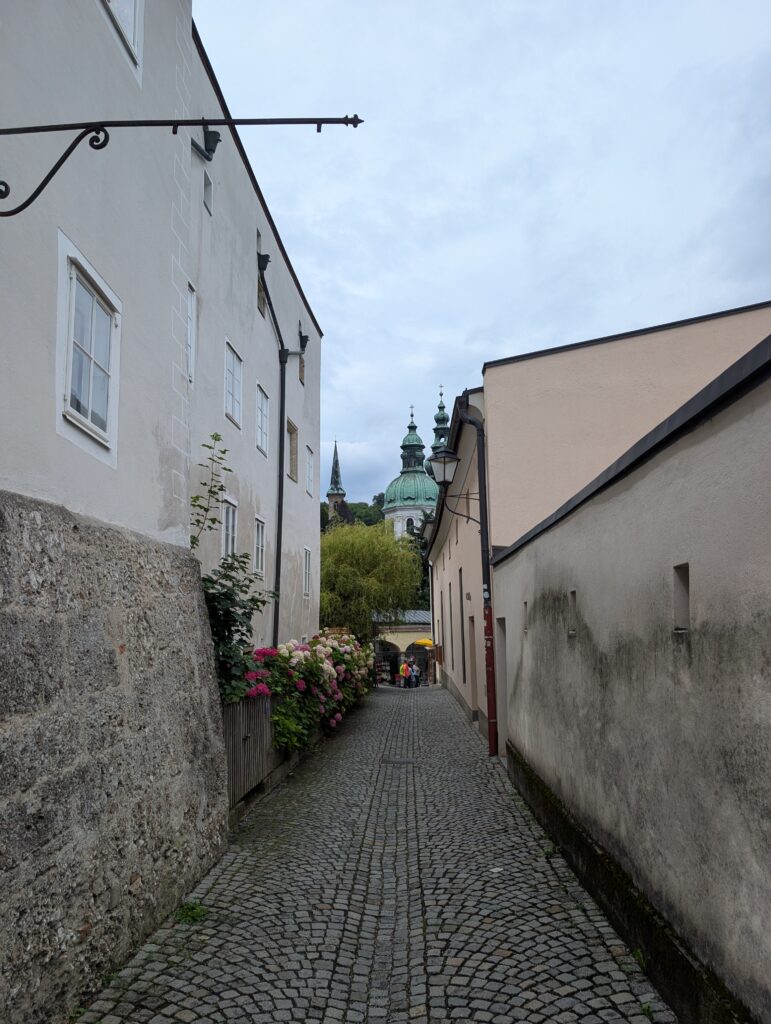
Once we pulled into Salzburg Hauptbahnhof, we hopped on a local city bus straight into the historic center. Our first stop was the grand Residenzplatz (Residence Square) in the heart of Salzburg's Old Town (Altstadt), where we wandered cobblestone lanes, historic squares, and tucked-away shops.
Of course, one of the biggest highlights was Hohensalzburg Fortress (High Salzburg Fortress), which towers dramatically above the Old Town. You can ride the funicular railway up to the top or, like we did, hike up the steep hillside path. Salzburg is also famously the birthplace of Wolfgang Amadeus Mozart, who was born here in 1756—you'll spot tributes to him all over town, including at Mozartplatz (Mozart Square).
Salzburg Day Trip From Vienna at a Glance:
• Getting There: ~2.5 hours by direct train from Vienna (Wien Hauptbahnhof) to Salzburg Hauptbahnhof, plus a quick local bus into Old Town.
• What to Eat: Austrian spinach dumplings, Käsespätzle, soft pretzels, and Hirter Kräuterradler at Wirtshaus zum Zirkelwirt.
• Top Sights Covered: Residenzplatz & Old Town, Hohensalzburg Fortress, and Hellbrunn Palace's Trick Fountains.
Jump to:
Food in Salzburg: Traditional Austrian Lunch

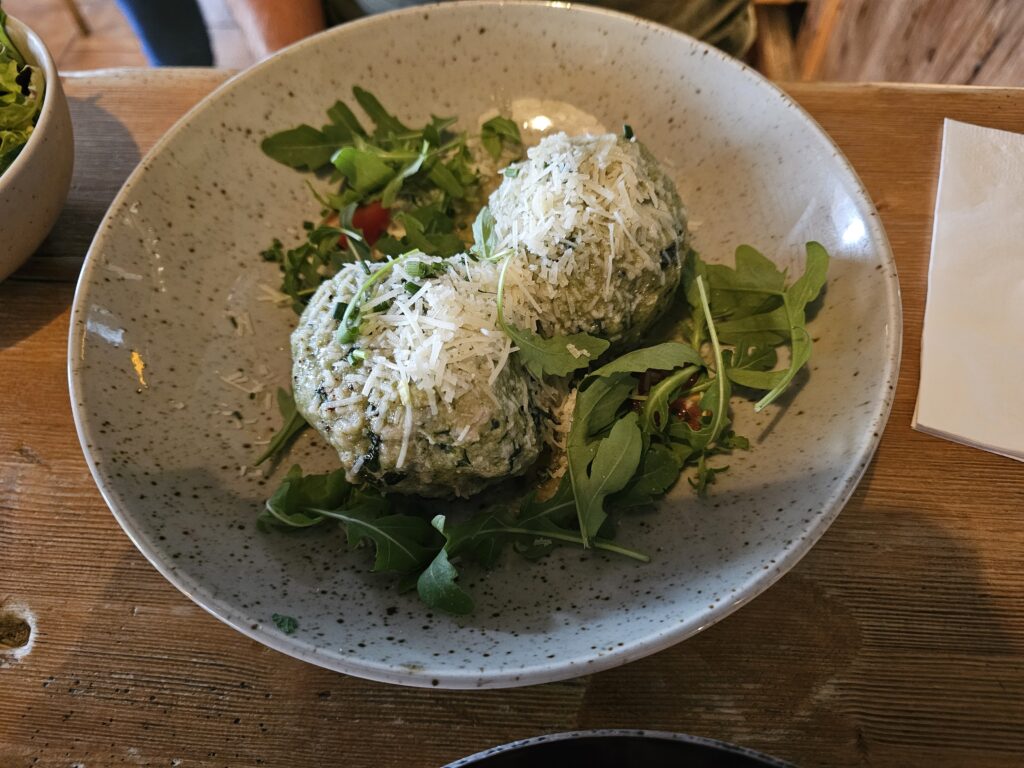
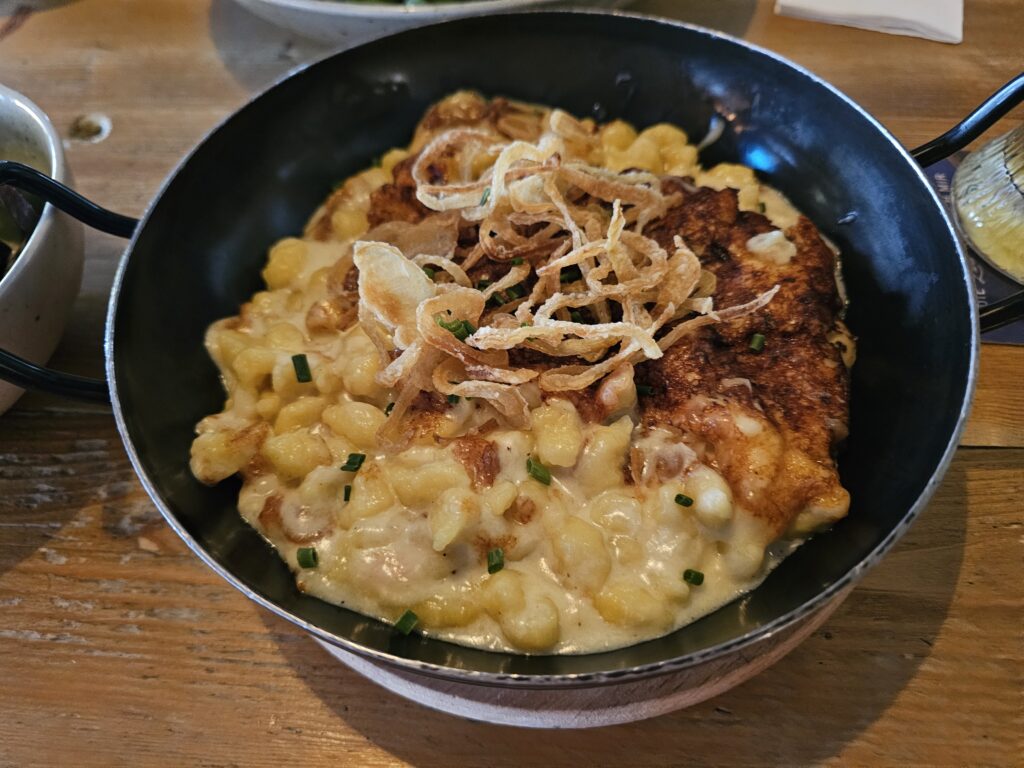
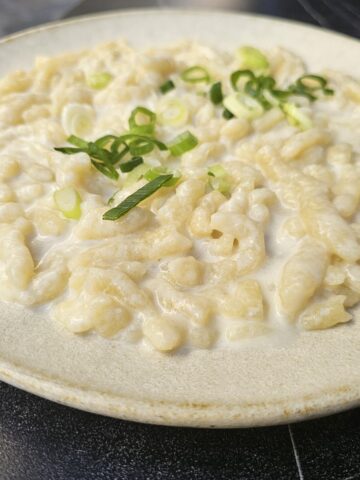
Austrian spinach dumplings, topped with melted butter and freshly grated Parmesan. Käsespätzle, homemade cheese spaetzle topped with crispy onions. 
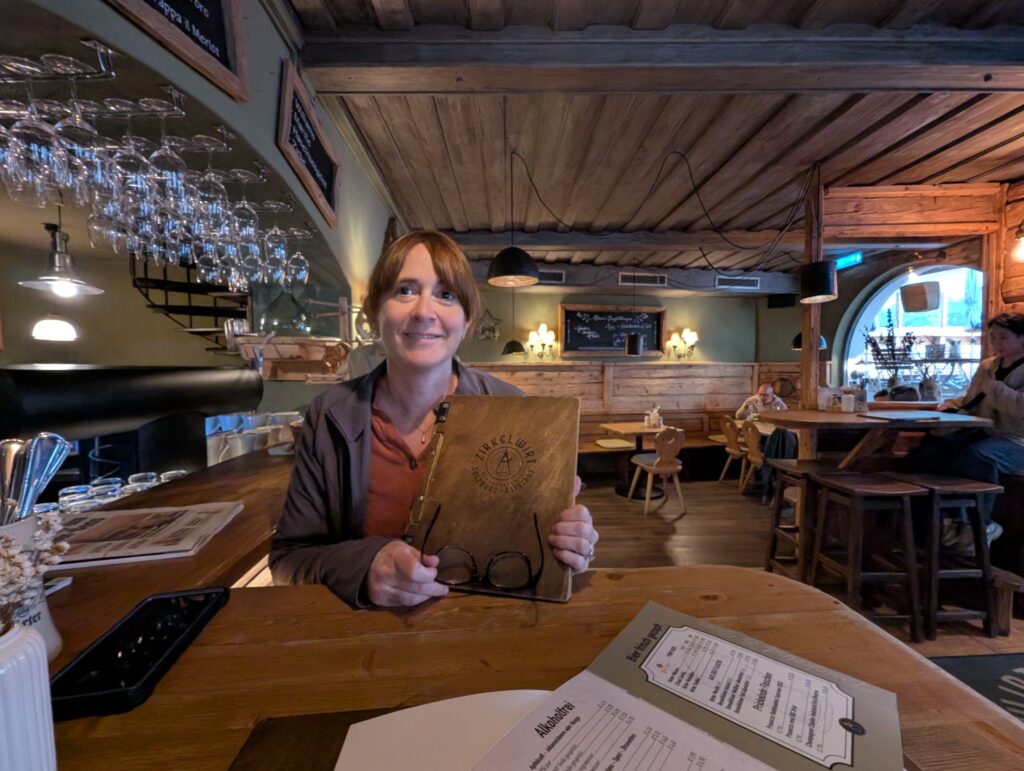
Lunch at Wirtshaus zum Zirkelwirt Salzburg 
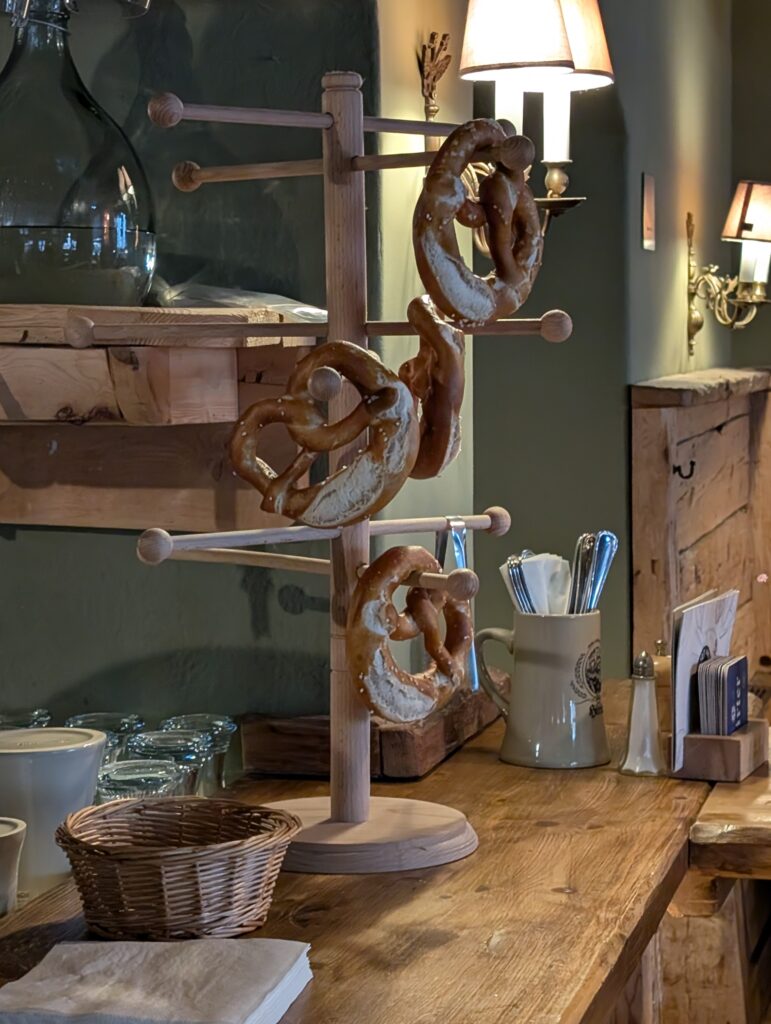
Austrian pretzels (Brezen or Brezel) have a deep brown crust and a soft, chewy interior. Wirtshaus zum Zirkelwirt Salzburg
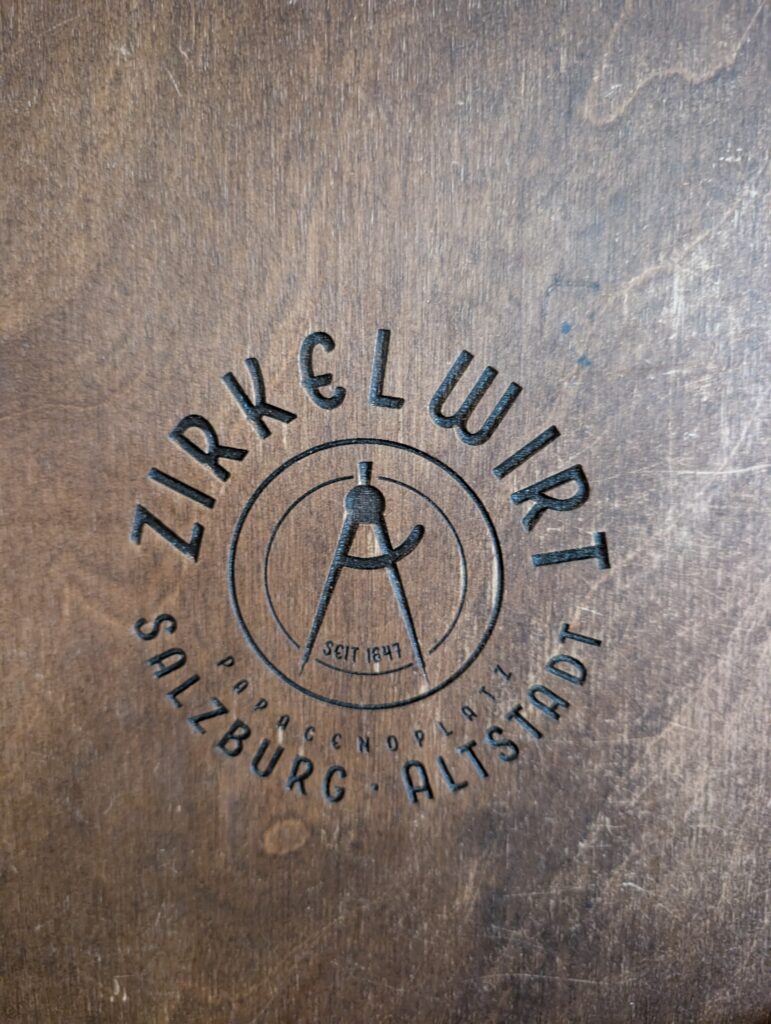
We arrived in Salzburg right around lunchtime and rode the public bus straight into the Old Town. After an early morning train ride, we were more than ready for some hearty Austrian food.
Wandering through the cobblestone streets near Residenzplatz, we stumbled upon Wirtshaus zum Zirkelwirt, a historic, atmospheric tavern that immediately caught our eye. Between the warm wood-paneled dining room and classic Alpine charm, we knew we had found our lunch spot.
After starting with a warm, chewy Austrian pretzel (Brezen), I ordered traditional Austrian spinach dumplings (Spinatknödel) drenched in melted brown butter and freshly grated Parmesan, while my husband dug into a bubbling skillet of Käsespätzle—homemade cheese spaetzle topped with sweet, crispy fried onions.
To wash it all down, we tried a Hirter Kräuterradler, a crisp blend of Austrian beer and sparkling herbal lemonade that tasted completely different from the sweet radlers back home. Everything was delicious, and soaking up the ambiance inside a centuries-old Salzburg tavern made lunch one of the best parts of the trip.
Want to Save This Recipe?
Enter your email & I'll send it to your inbox. Plus, get great new recipes from me every week!
By submitting this form, you consent to receive emails from Went Here 8 This.
Salzburg Day Trip From Vienna Itinerary (6 Hours)
Wondering how much you can realistically fit into a single day? Here is the exact timeline we followed on our 6-hour visit from Vienna:
| Time | Activity |
|---|---|
| 10:30 AM | Arrive at Salzburg Hauptbahnhof by train from Vienna |
| 11:00 AM | Take local bus to Old Town & explore Residenzplatz |
| 11:45 AM | Traditional Austrian lunch at Wirtshaus zum Zirkelwirt |
| 12:45 PM | Walk up the hillside path to Hohensalzburg Fortress |
| 1:00–2:15 PM | Tour Hohensalzburg Fortress, courtyards & panoramic viewpoints |
| 2:15 PM | Walk back down through Salzburg Old Town & Mozartplatz |
| 2:45 PM | Take an Uber to Hellbrunn Palace |
| 3:30–4:15 PM | Guided tour of Hellbrunn Palace & the Trick Fountains |
| 4:15 PM | Head back to Salzburg train station for the return train to Vienna |
A Brief History of Salzburg
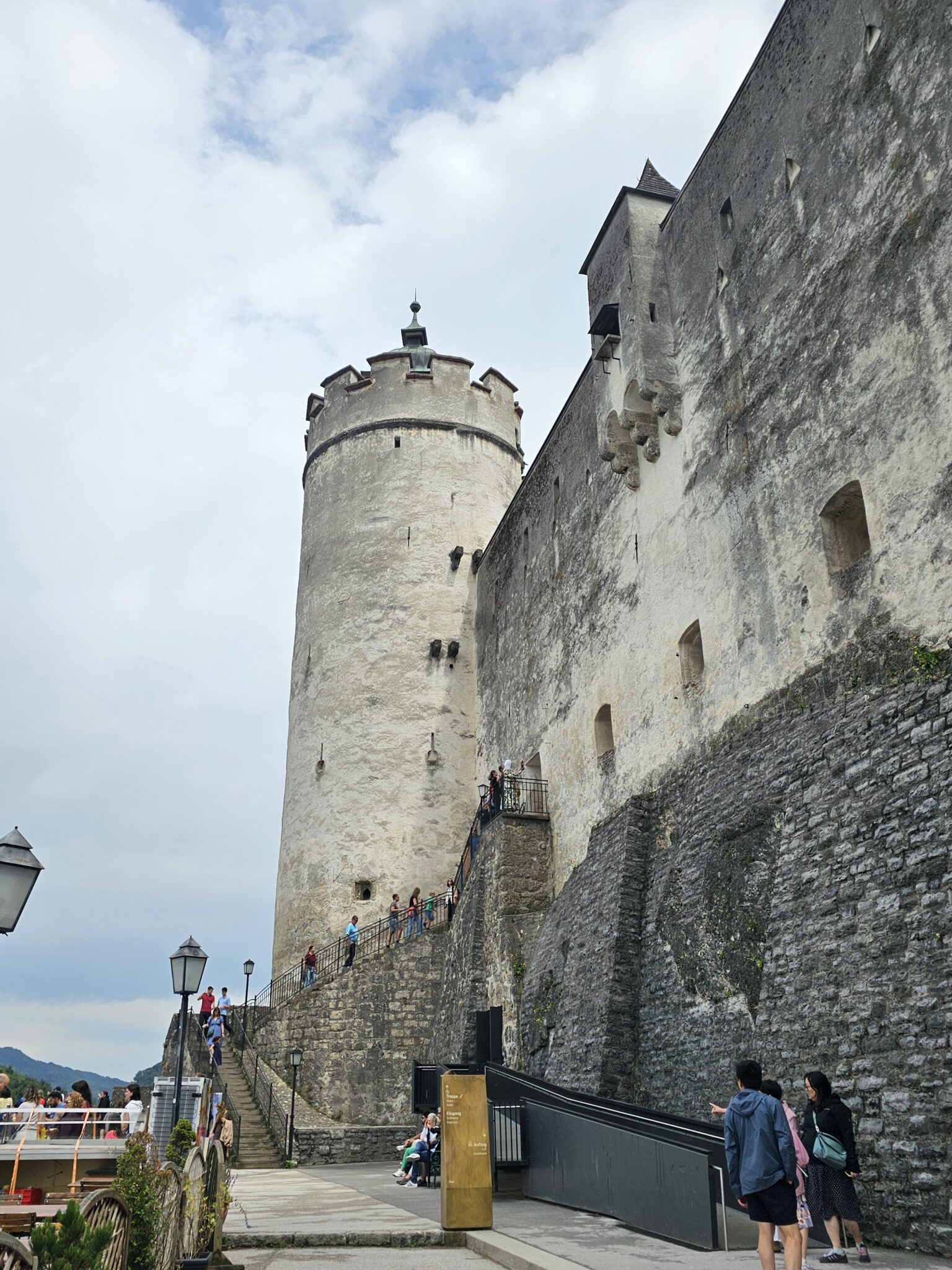
Salzburg's history stretches back more than 2,000 years. Around the 1st century AD, the Romans founded the settlement of Juvavum along the banks of the Salzach River, where nearby salt deposits quickly turned the town into a thriving trading hub.
In the 8th century, Salzburg emerged as a major religious center when Saint Rupert founded a monastery here. For centuries afterward, the city was ruled as an independent ecclesiastical principality by powerful Catholic prince-archbishops rather than secular monarchs. Fueled by the region's lucrative "white gold" salt trade, those archbishops transformed Salzburg into the opulent Baroque jewel box we see today.
Construction on Hohensalzburg Fortress began in 1077 under Archbishop Gebhard and expanded over the centuries into one of Europe's largest and best-preserved medieval fortresses. Following the Napoleonic Wars, Salzburg officially became part of the Austrian Empire in 1816—and today it captivates visitors with its Alpine backdrop, Baroque architecture, classical music legacy, and hearty cuisine.
Hohensalzburg Fortress

Paved pathway toward the entrance gate of historic Hohensalzburg Fortress, built right into the rock. This steep, paved walking path is one of the main pedestrian routes up to the castle grounds for visitors who choose to hike rather than take the funicular railway. Standing by the vaulted entry tunnels near the Rosspforte of the historic Hohensalzburg Fortress 
The stone gateway along the walking path leading up to Hohensalzburg Fortress 
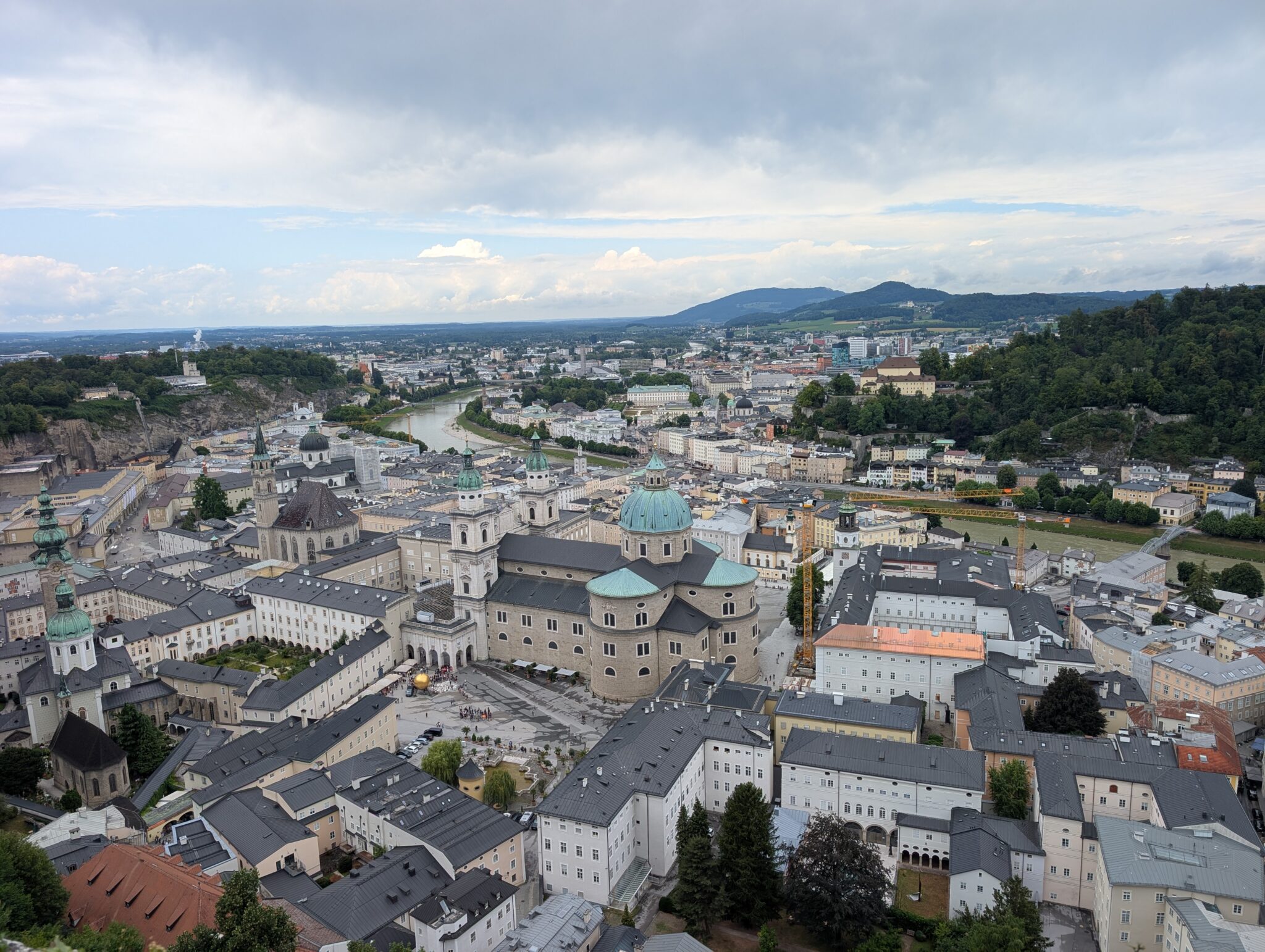
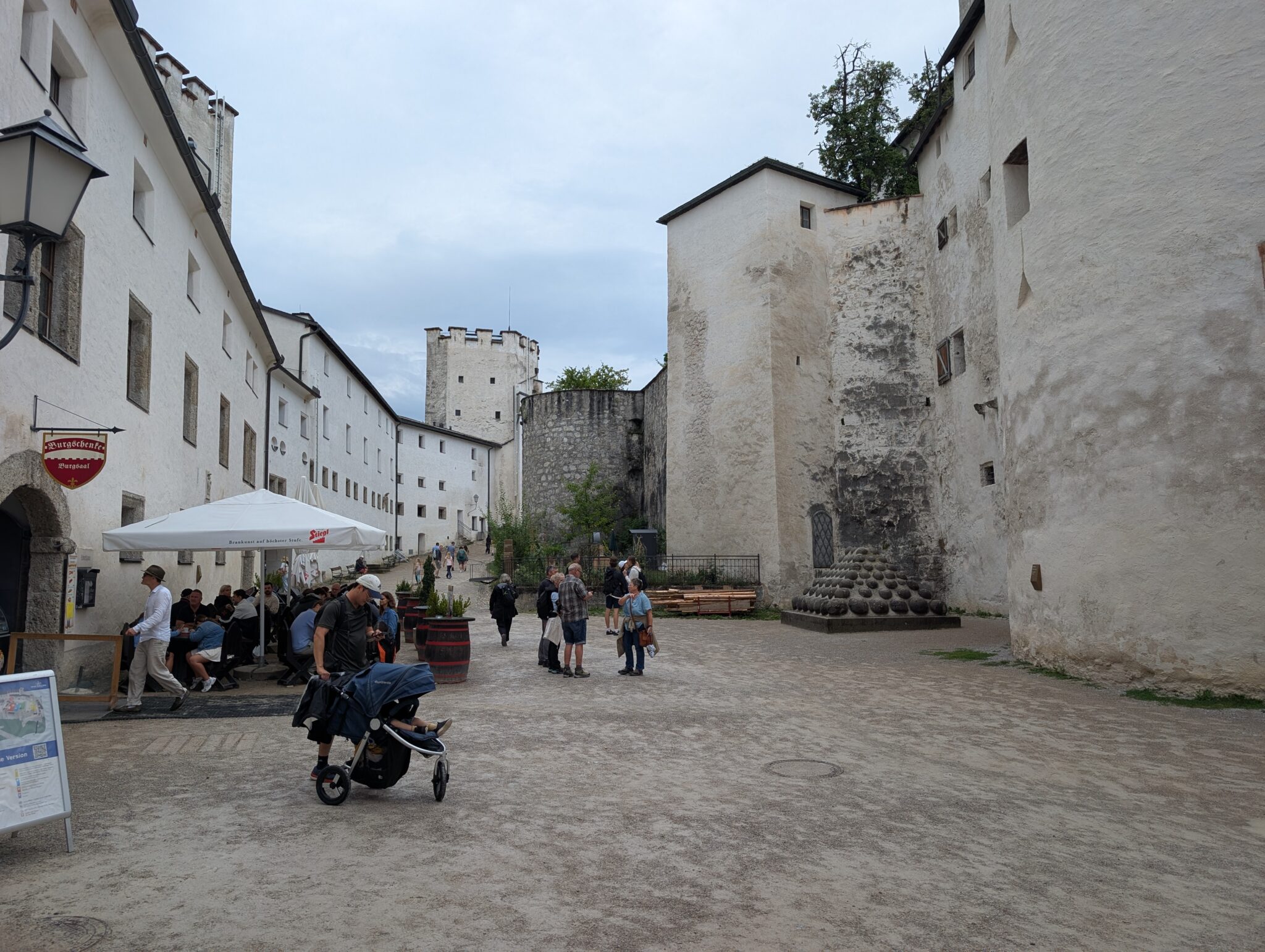
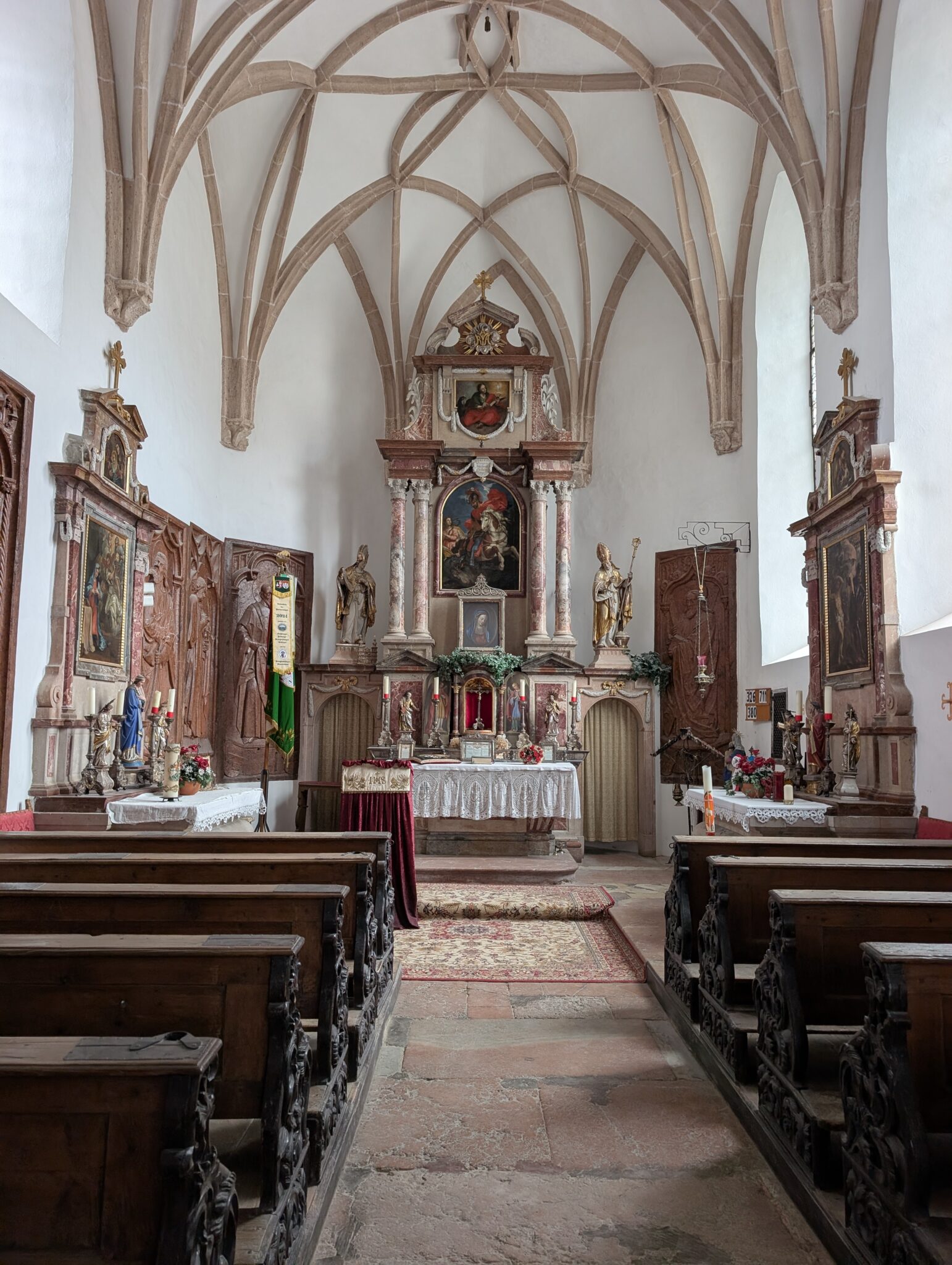
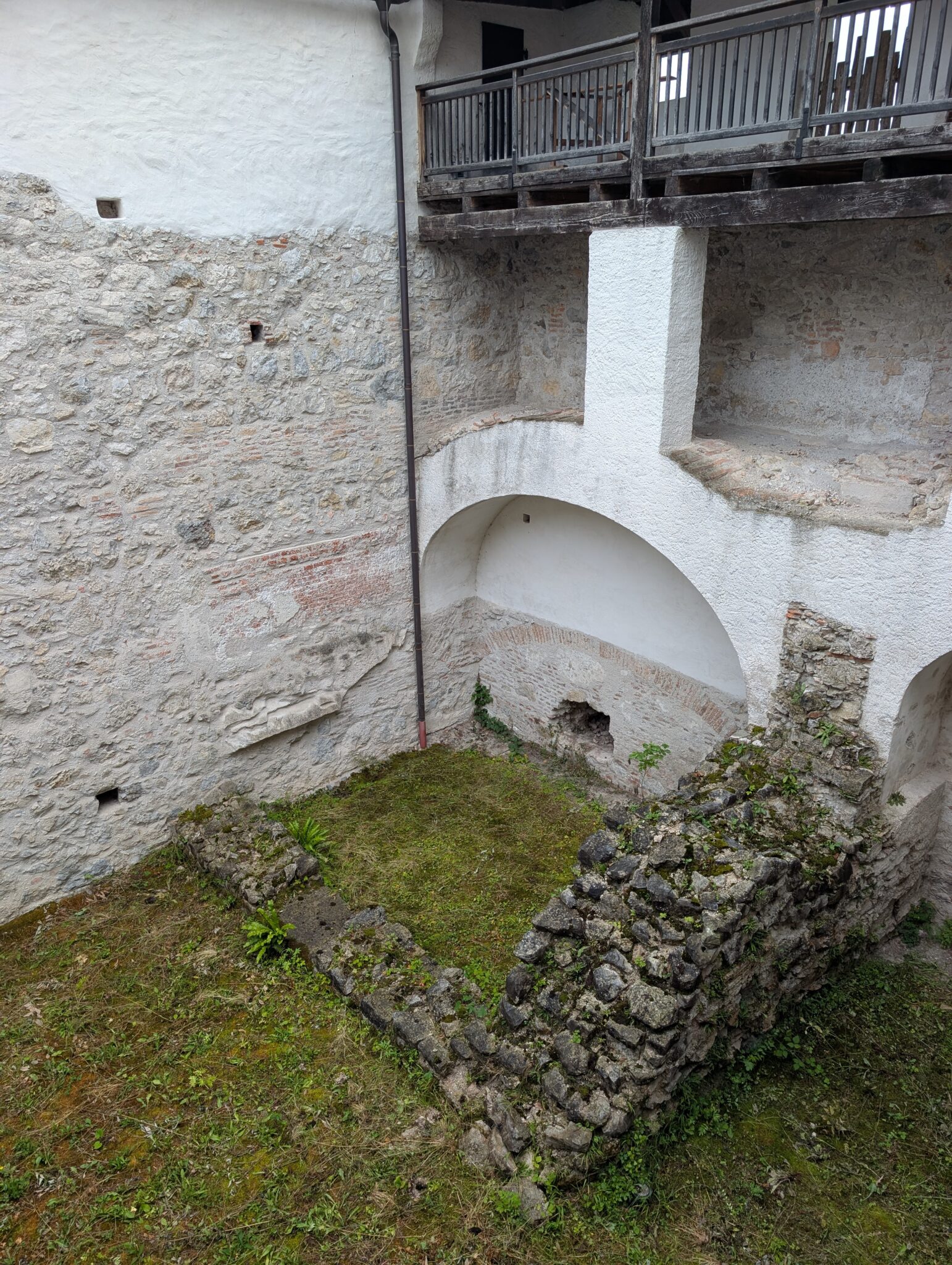
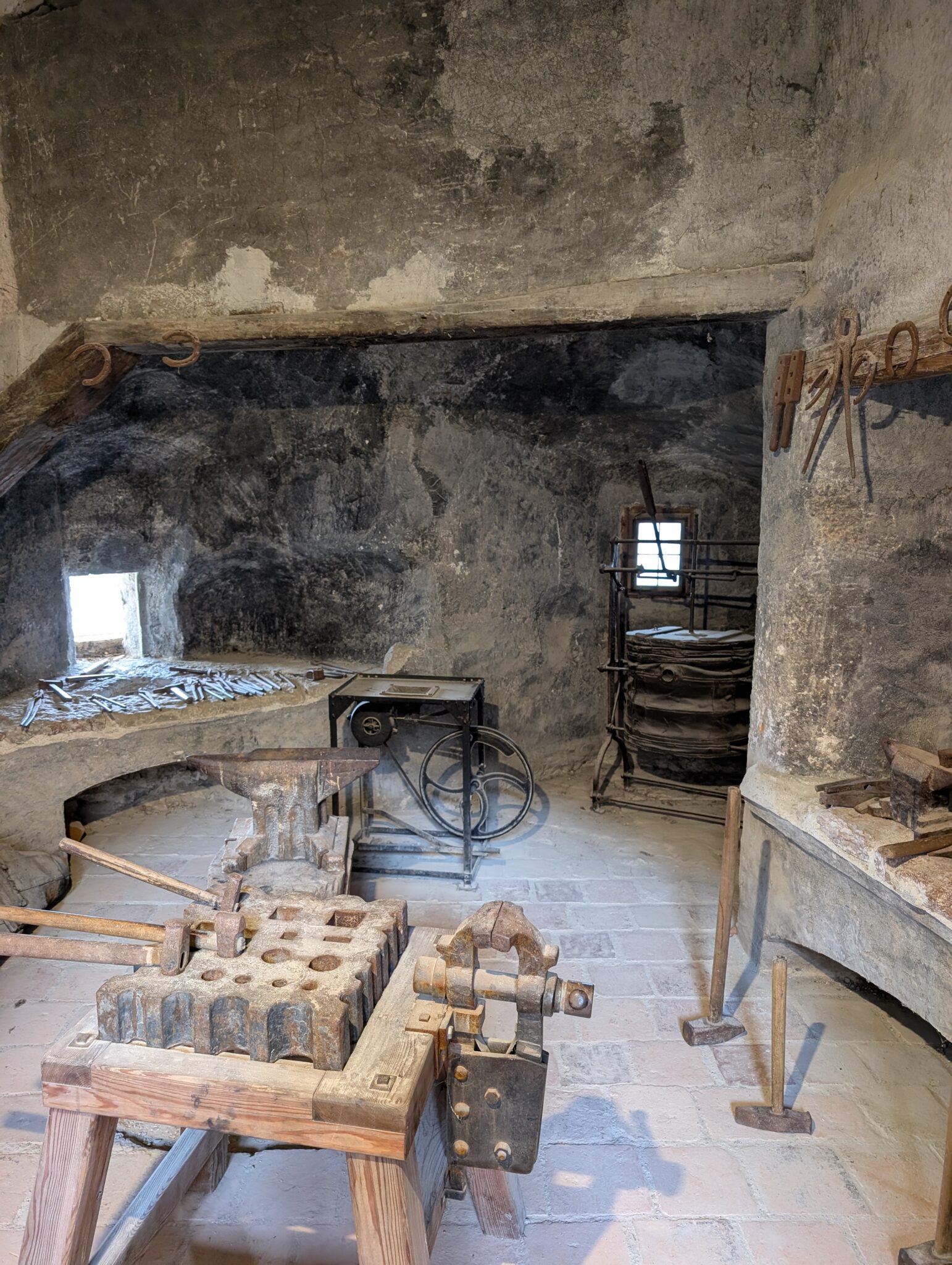
View from atop the tower in the fortress Inner courtyard area of Hohensalzburg Fortress Interior of St. George's Church (St. Georgs Kirche) inside Hohensalzburg Fortress. An interior courtyard section of the historic Hohensalzburg Fortress Blacksmith workshop inside Hohensalzburg Fortress.
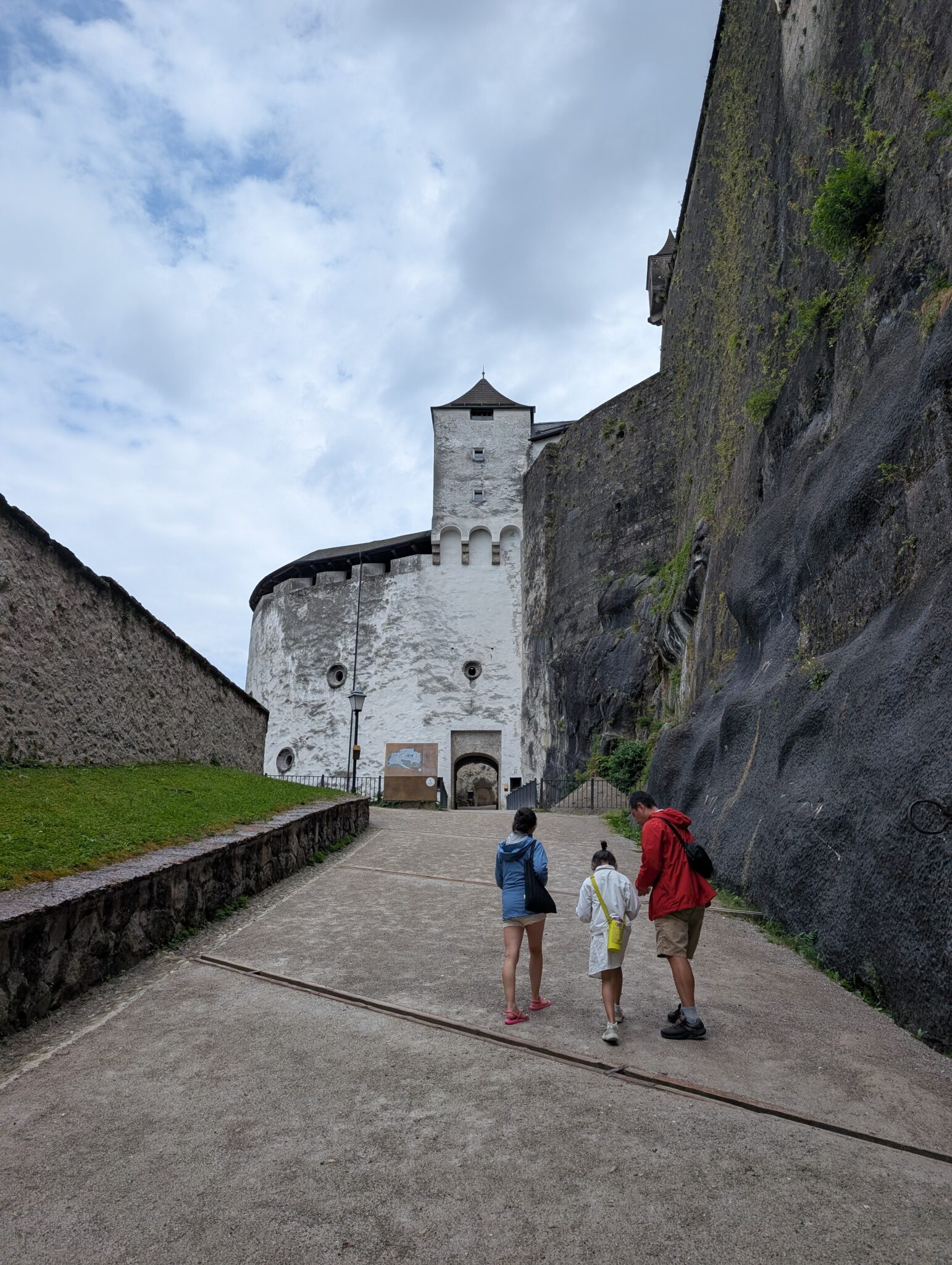
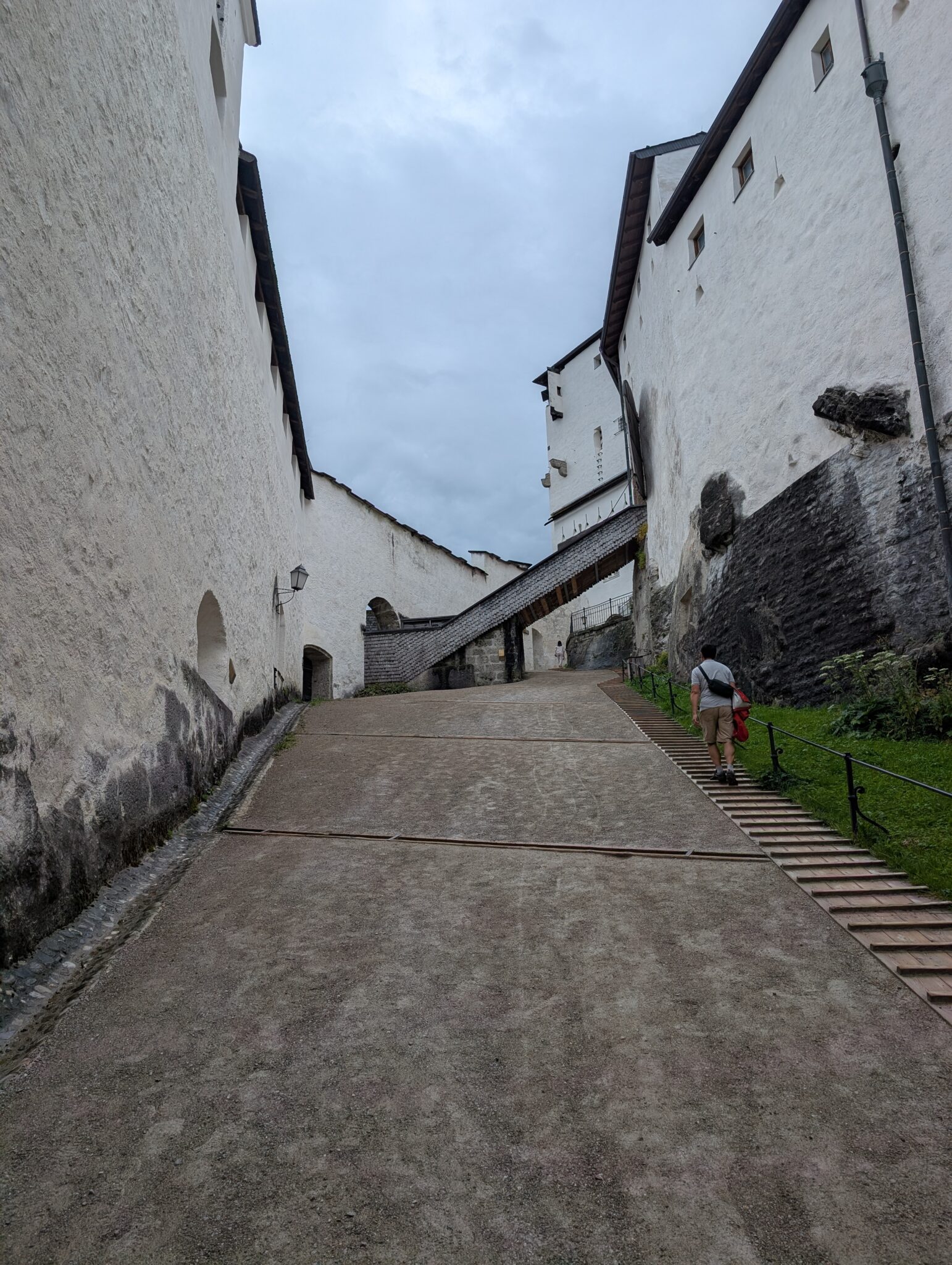
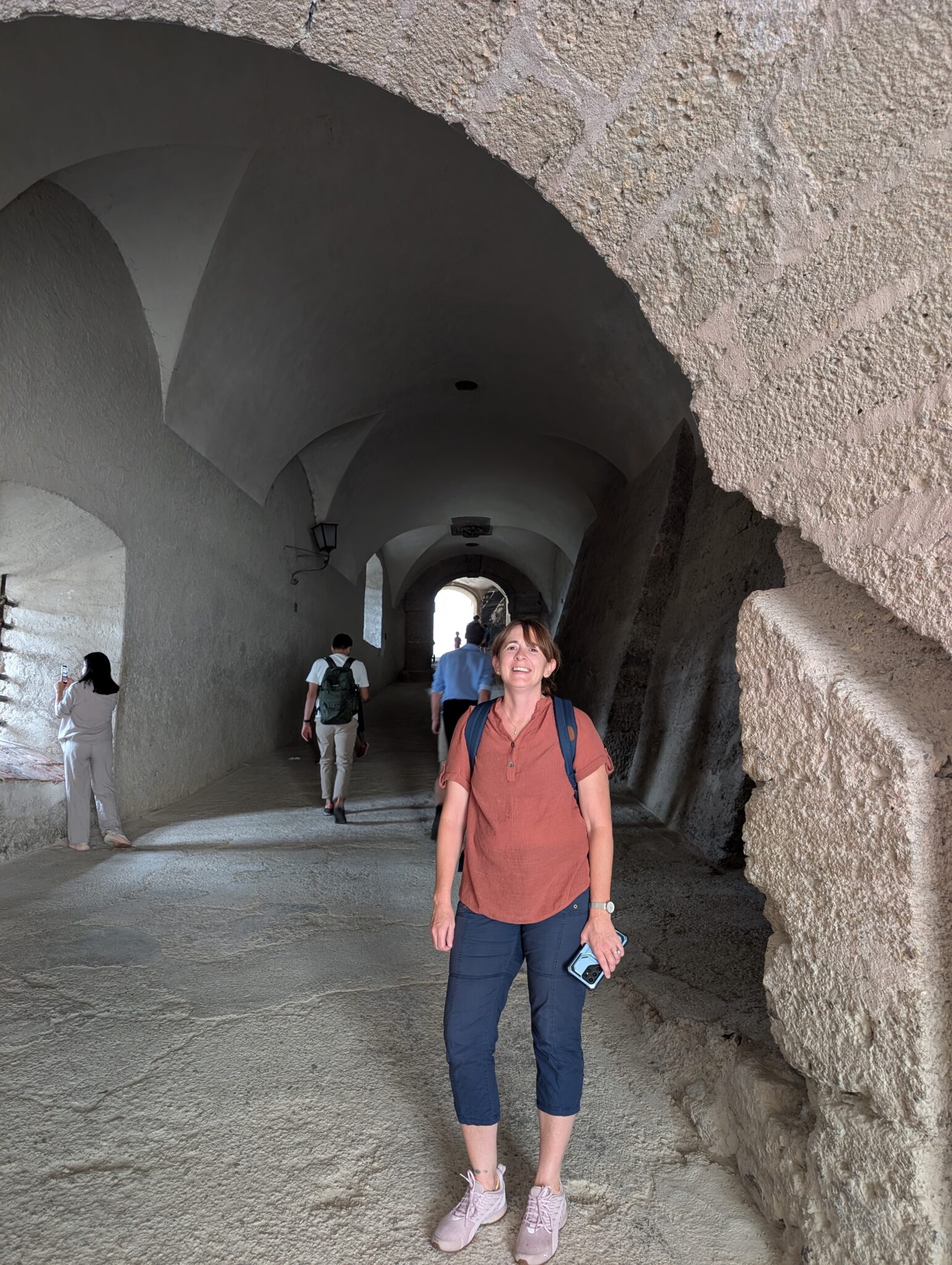
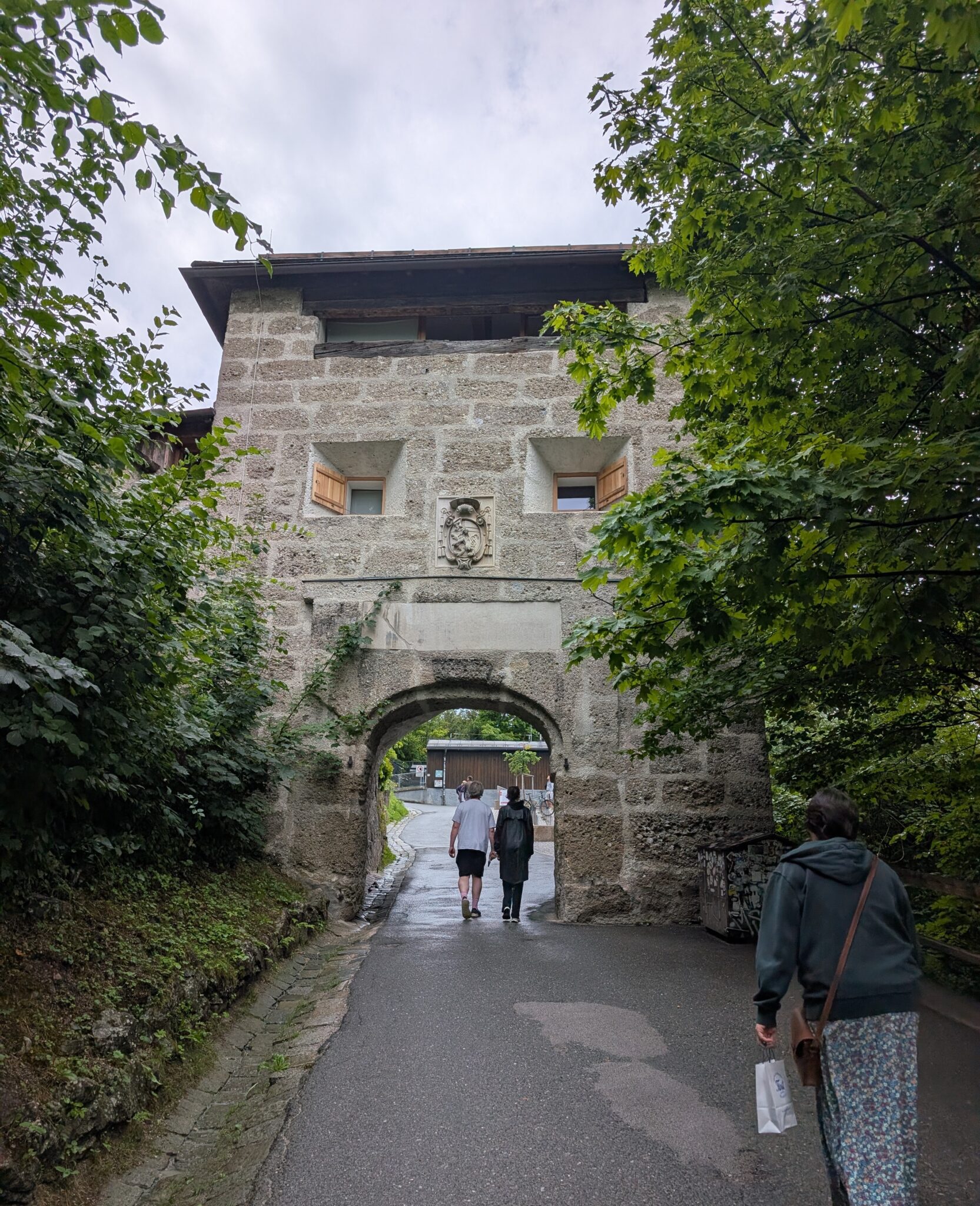
After lunch, we decided to work off all those cheese spaetzle and dumplings by walking up the steep slopes of Festungsberg to Hohensalzburg Fortress. The paved path climbs steeply in spots, winding past stone gateways and shaded wooded stretches that offered a welcome break from the summer sun.
Stepping through the massive fortified gates feels like entering a self-contained medieval town, complete with stone courtyards, watchtowers, and even an old blacksmith workshop. Inside, don't miss St. George's Church (St. Georgs-Kirche)—a charming late-Gothic chapel with intricate exterior reliefs—or the opulent Golden Hall and Golden Chamber, whose gilded ceilings and late-Gothic woodwork showcase the immense wealth of the prince-archbishops in the Princes' Apartments.
The Best Views in Salzburg
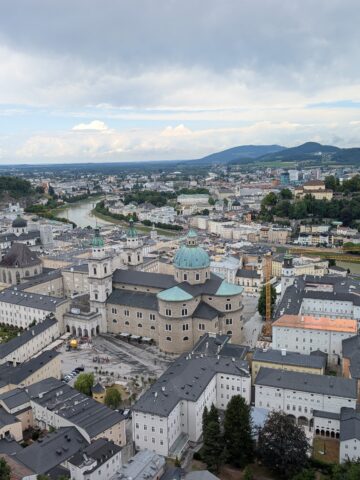
One of the biggest payoffs of visiting Hohensalzburg Fortress is climbing up to the lookout towers and ramparts. From the top, you get sweeping bird's-eye views across Salzburg's copper-domed Old Town, the winding Salzach River, and the surrounding Austrian Alps—the views alone make the uphill climb worthwhile.
Visitor Tip: Allow at least 1.5 to 2 hours to explore Hohensalzburg Fortress without rushing. If you want to save time or energy, ride the FestungsBahn funicular up and enjoy a leisurely stroll back down into Old Town.
Hellbrunn Palace and the Trick Fountains
With just a couple of hours left before our train back to Vienna, we grabbed an Uber south of the Old Town to squeeze in one final highlight: Hellbrunn Palace. It turned out to be the most playful, unexpected stop of our entire day.
Built in the early 17th century as a daytime summer pleasure palace for Salzburg's Prince-Archbishop Markus Sittikus von Hohenems, Hellbrunn wasn't meant as a formal residence—it was designed purely for entertaining guests in the countryside, and Markus Sittikus clearly had a mischievous sense of humor.
The highlight of the guided tour is the world-famous Trick Fountains (Wasserspiele), where hidden water jets, spouting stone tables, grottos, and water-powered mechanical theaters spring to life to surprise unsuspecting visitors. Even cooler? The entire system has operated for over 400 years using natural mountain spring water pressure rather than modern pumps. If you want something delightfully different from standard palace tours, put Hellbrunn at the top of your Salzburg list.
Is a Salzburg Day Trip From Vienna Worth It?
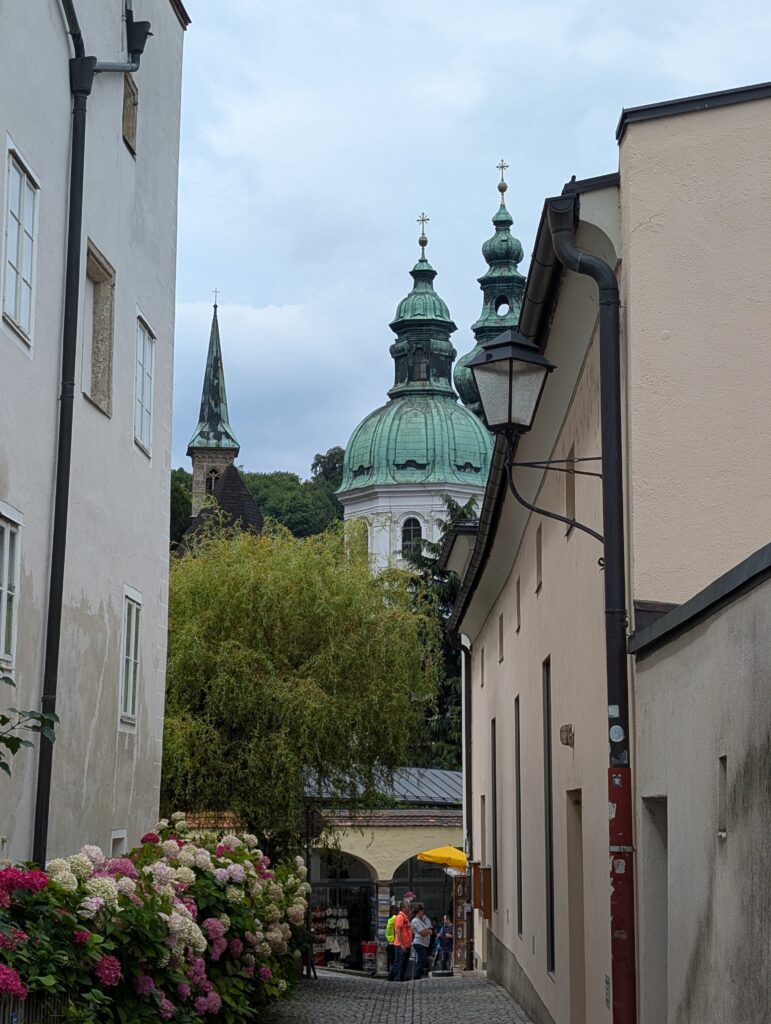
Austria offers an unforgettable blend of Alpine scenery, royal history, and comfort food—and tasting dishes like Käsespätzle and spinach dumplings right in the heart of Salzburg feels completely different from ordering Austrian food back in the U.S.
We loved every minute of our Salzburg day trip from Vienna, though six hours definitely wasn't enough time to see it all. If we could do it over again, I would spend at least two days in Salzburg so we could linger in Old Town cafés, tour Mozart's Birthplace, explore Mirabell Gardens, and sample even more Austrian specialties at a slower pace. Still, even a fast-paced day trip gave us an incredible taste of Salzburg—and plenty of excuses to return!
More Great Central European Destinations
- Salzburg Day Trip from Vienna: Food, History & Things to Do
- Exploring Krakow Through Food: Polish Dishes, Historic Old Town & Wieliczka Salt Mine
- Vienna Austria: Imperial History, Elegant Architecture & Incredible Food
- Exploring Budapest Through Food: A Food Lover's Guide to Hungary's Capital
- What I Ate in Romania: Castles, Bucharest & Traditional Romanian Food
- Szentendre: A Colorful Day Trip from Budapest
- Hungarian Chimney Cake (Kürtőskalács)
- Bratislava Food Guide: Exploring Slovak Food from Old Town to Devín Castle
Comments
No Comments