
Most trips only give you a snapshot of a city: you check off the major sights, eat a few memorable meals, and leave just as you're beginning to understand the place. My husband and I wanted something deeper, so we took a much bigger leap—moving to Budapest for a year to immerse ourselves in Hungarian culture, start exploring Budapest through food, and use Hungary's capital as our home base for Central and Eastern Europe.
While my husband teaches English in the local school system, I'm documenting our food and travel adventures and developing recipes inspired by the places we visit. Instead of rushing from landmark to landmark, we've had the rare privilege of experiencing Budapest as temporary locals.
During our very first week, we walked mile after mile through Budapest's neighborhoods—crossing the Danube, wandering the cobblestones of the Buda Castle District, getting lost in the Jewish Quarter, and following our noses whenever fresh bread, paprika, grilled sausage, or warm chimney cake pulled us toward a bakery or market stall.
We quickly realized that Budapest reveals itself through what's on the plate. A steaming bowl of goulash connects you to centuries of Magyar cooking traditions, a crispy piece of lángos introduces you to Hungary's beloved street-food culture, and a caramelized chimney cake fresh off the spit feels like the essence of the city itself.
From centuries-old castles and grand coffeehouses to bustling markets and ruin bars, Budapest has become one of our favorite cities to discover one bite at a time—and for this year, Budapest is home.
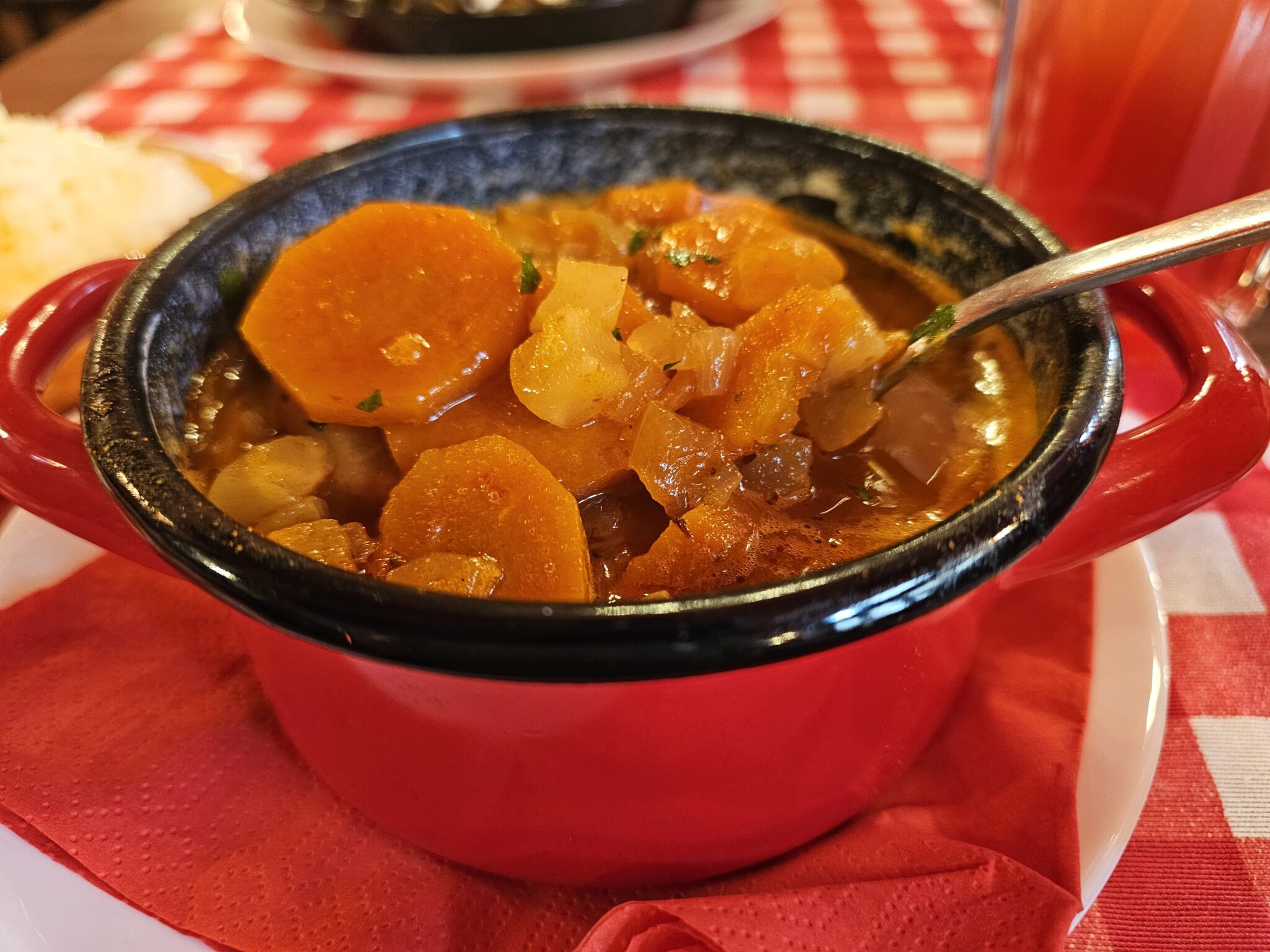
Budapest Food & Travel Guide at a Glance:
• Must-Try Hungarian Foods: Lángos (fried flatbread), Goulash Soup, Brindzás Paprikás, and Kürtőskalács (Chimney Cake).
• Top Food Neighborhoods & Markets: Buda Castle District, Pest's Jewish Quarter & Karaván Street Food Court, and Great Market Hall.
• Getting Around: Download the BudapestGO app (~$30/month for unlimited metro, tram, and bus rides across Buda and Pest).
• Iconic Non-Food Experience: Soaking in the Neo-Baroque pools at Széchenyi Thermal Baths.
Jump to:
Budapest: A City Where History and Food Come Together
A Brief History of Hungary and Its Culinary Roots
| Time Period | Ruling Group / Empire | Influence on Hungary |
| Before 1st Century AD | Celtic Tribes | Early settlements, trade routes, and agricultural traditions in the Carpathian Basin. |
| 1st–5th Century | Roman Empire | Established the province of Pannonia along the Danube; built roads, towns, and Aquincum (modern Budapest), introducing Roman architecture and vineyards. |
| 5th Century | Huns | Controlled parts of the region under Attila the Hun; later Hungarian legends connected the Magyars with the Huns. |
| 6th–9th Century | Avars, Slavs & Germanic Tribes | Controlled the region in waves, leaving cultural and archaeological influences before the arrival of the Magyars. |
| 895–896 | Magyars (Hungarians) Arrive | Magyar tribes settled the Carpathian Basin during the Hungarian Conquest (Honfoglalás), laying the foundation of modern Hungary. |
| 1000–1526 | Kingdom of Hungary | Established by King Stephen I; Hungary became a powerful medieval kingdom with its own language, culture, and culinary traditions. |
| 1526–1699 | Ottoman Empire & Habsburgs | Following the Battle of Mohács, Hungary was divided; Ottoman rule introduced thermal bath traditions, coffee culture, and new spices (including paprika). |
| 1699–1867 | Habsburg Monarchy | Hungary became part of the Habsburg Empire, with Austrian influence shaping architecture, government, and café culture. |
| 1867–1918 | Austro-Hungarian Empire | Budapest entered a golden age with major landmarks built, including the Parliament Building, Chain Bridge, and grand coffeehouses. |
| 1918–1945 | Independent Hungary (Interwar Period) | After WWI and the Treaty of Trianon, Hungary lost significant territory and faced political and economic instability. |
| 1945–1989 | Soviet Influence / Communist Hungary | Hungary became a communist state under Soviet influence, reshaping politics, economy, and everyday life. |
| 1989–Present | Modern Republic of Hungary | Transitioned to democracy, joined NATO (1999) and the European Union (2004), and emerged as a premier European cultural and culinary destination. |
How This History Shaped Budapest Today
Walking through Budapest is like walking through an open-air timeline: Roman ruins, medieval castles, Ottoman thermal baths, Habsburg boulevards, Jewish heritage sites, and grand cafés stand side by side. That same cultural layering defines Hungarian cuisine, blending paprika-rich stews and hearty comfort food with delicate pastries and modern fusion dishes.
One thing I quickly discovered while exploring Budapest through food is just how much Hungarians adore pastries. Bakeries sit on nearly every corner, tempting passersby with flaky croissants, strudels, chimney cakes, and sweet rolls. Another fun surprise is how ubiquitous Nutella is—tucked into crêpes, puff pastries, chimney cakes, and breakfast treats. Seeing it featured in so many local bakeries reminded me of my own easy dessert: 3-Ingredient Banana & Nutella Puff Pastry, which captures Budapest's love of buttery pastry and chocolate-hazelnut richness in minutes.
How This History Shaped Hungarian Food
Hungarian cuisine reflects centuries of cultural exchange:
- Romans: Agriculture, Danube vineyards, and early trade routes
- Magyars: Hearty meat dishes, slow-simmered stews, and paprika traditions
- Ottomans: Paprika peppers, coffeehouse culture, and warm spices
- Austrians: Viennese-style pastries, tortes, and grand café traditions
- Jewish Communities: Traditional breads, layered pastries (like flódni), and regional specialties
- Balkan Influences: Charcoal-grilled meats and bold savory seasonings
That's why exploring Budapest through food is so rewarding—every dish carries a piece of Hungary's layered history.
Want to Save This Recipe?
Enter your email & I'll send it to your inbox. Plus, get great new recipes from me every week!
By submitting this form, you consent to receive emails from Went Here 8 This.
Exploring Budapest One Neighborhood at a Time
When we first arrived in Budapest, our apartment was on the Buda side of the Danube River. Quieter and slightly less touristy than Pest, it was an ideal home base with quick access to both halves of the city.
The Danube divides Budapest into hilly, historic Buda on the west bank and flat, energetic Pest on the east bank. During our first week, before tackling the metro and tram network, we walked everywhere—wandering quiet residential streets, stumbling into neighborhood cafés, and learning each district's distinct personality.
Once we downloaded the BudapestGO app, getting around became effortless. For about $30 per month, we had unlimited access to buses, trams, and the metro, putting almost every attraction in Budapest within a 30-minute ride.
Buda Castle District

Buda Castle (Royal Palace) complex situated on Castle Hill in Budapest with the Danube River in the foreground. 
Historic Buda Castle with the Széchenyi Chain Bridge in the foreground connecting Buda to Pest. Matthias Church in Budapest, famous for its ornate Gothic Revival architecture and colorful roof tiles. 
Fortuna Street located in the historic Castle Hill district of Budapest. Tower of the Church of Saint Mary Magdalene (Buda Tower) in the Buda Castle District. 
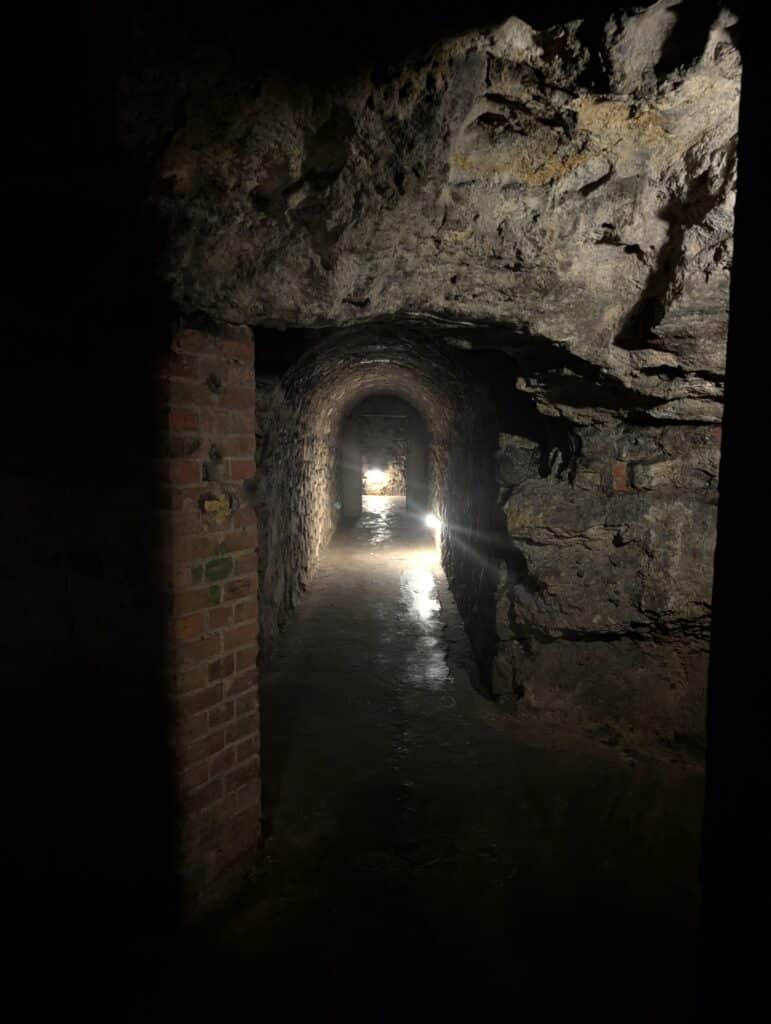
View from atop Mary Magdalene Tower overlooking the ruins below. Entrance to Fisherman's Bastion in the Buda Castle District of Budapest. Underground passage within the historical Buda Castle Caves. Scenic panoramic view of Budapest featuring the Danube River dividing Buda and Pest from Buda Castle. Panoramic view of the Neo-Gothic Hungarian Parliament Building along the Pest side of the Danube from Buda Castle.

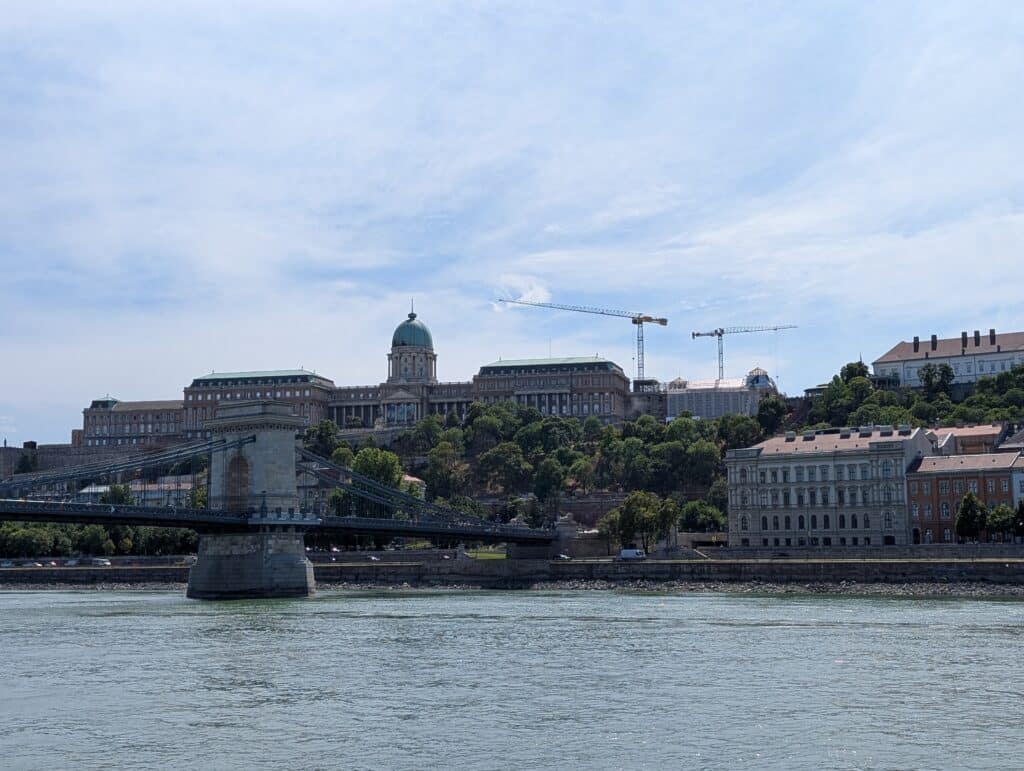
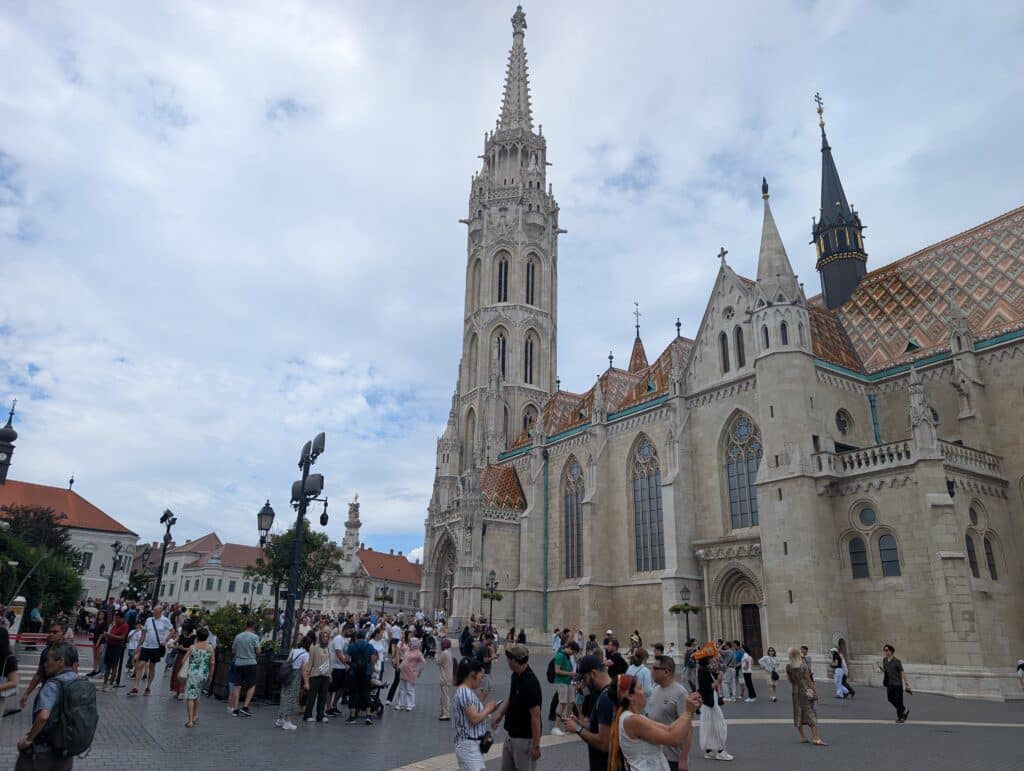
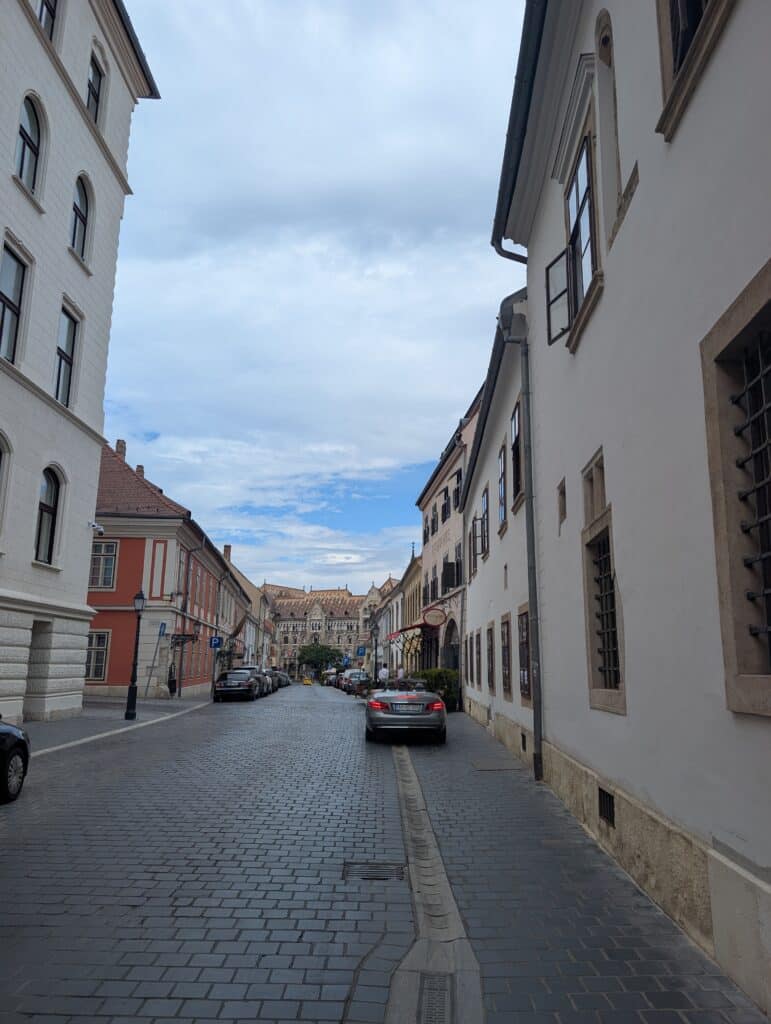
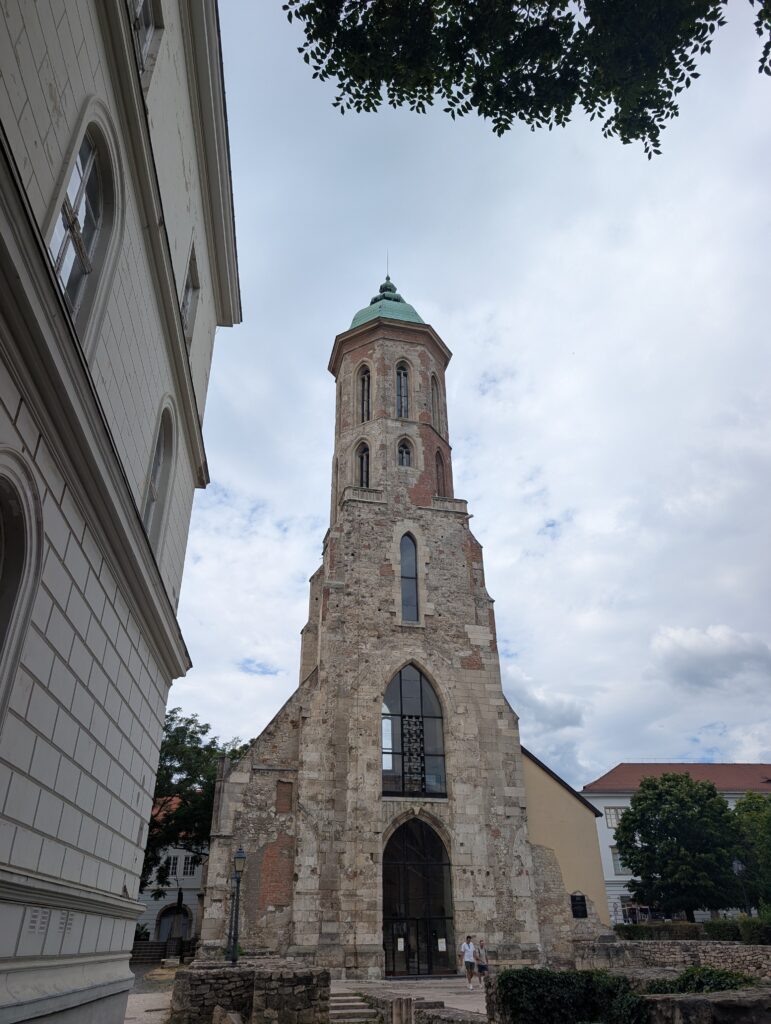
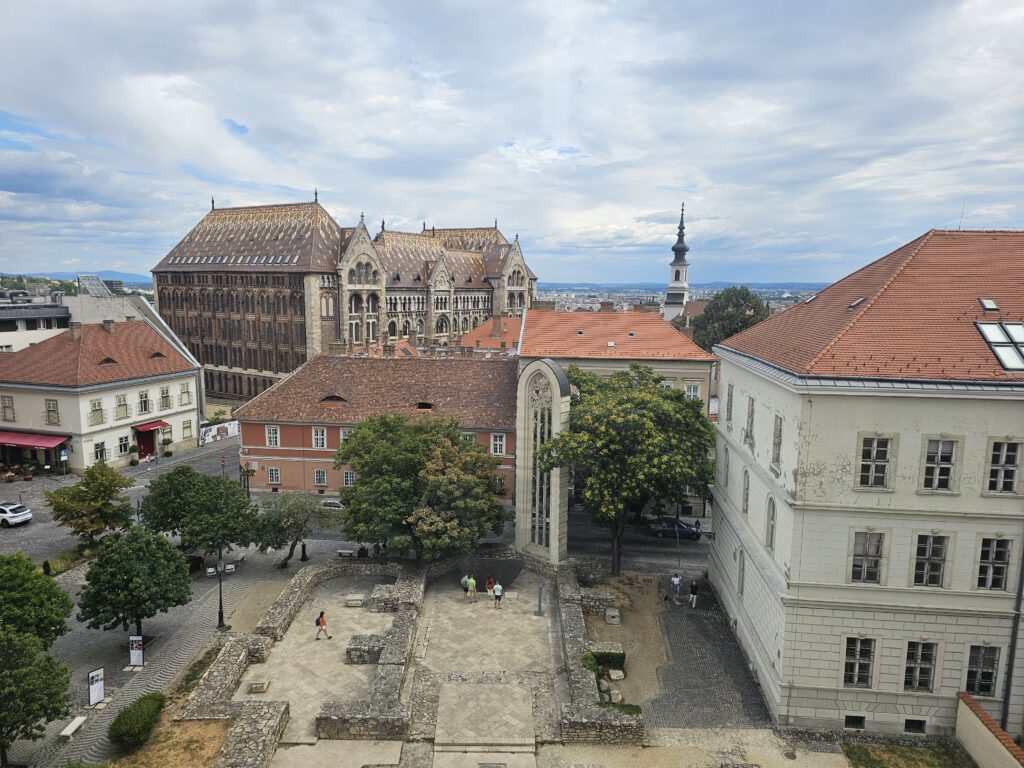
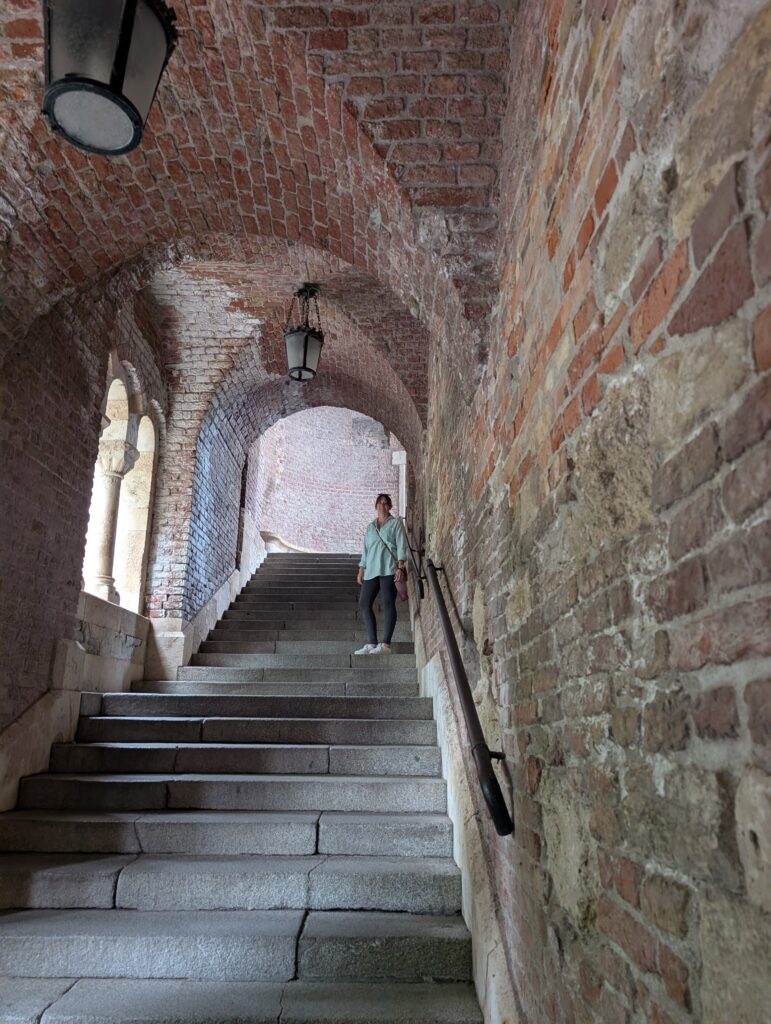
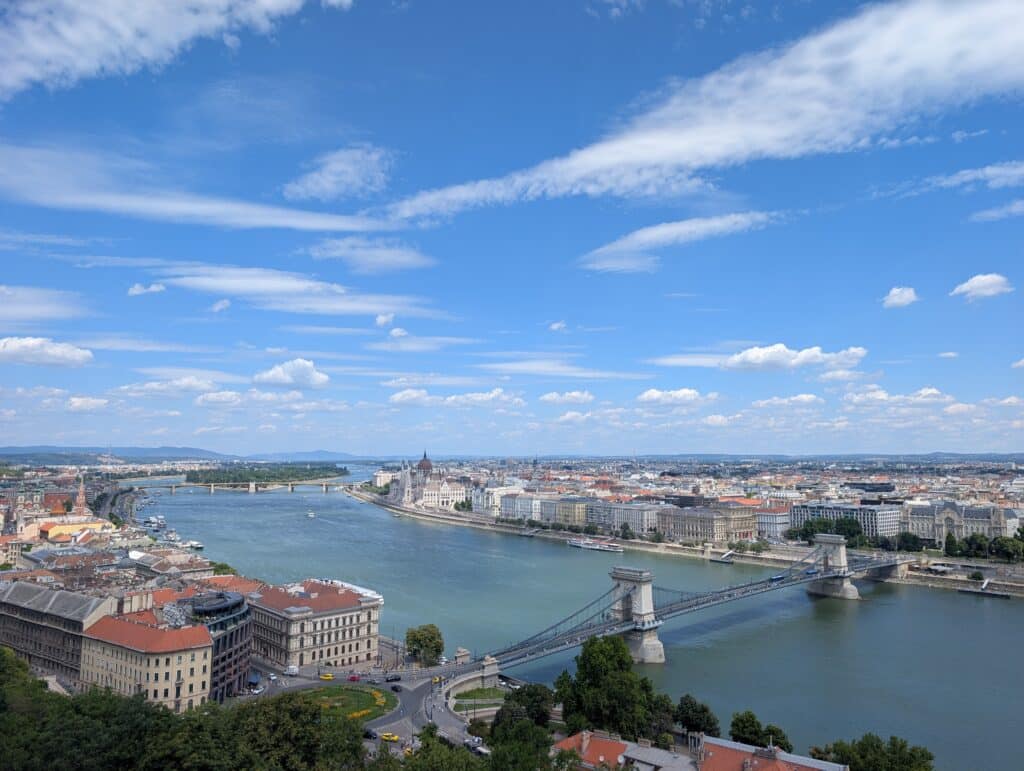
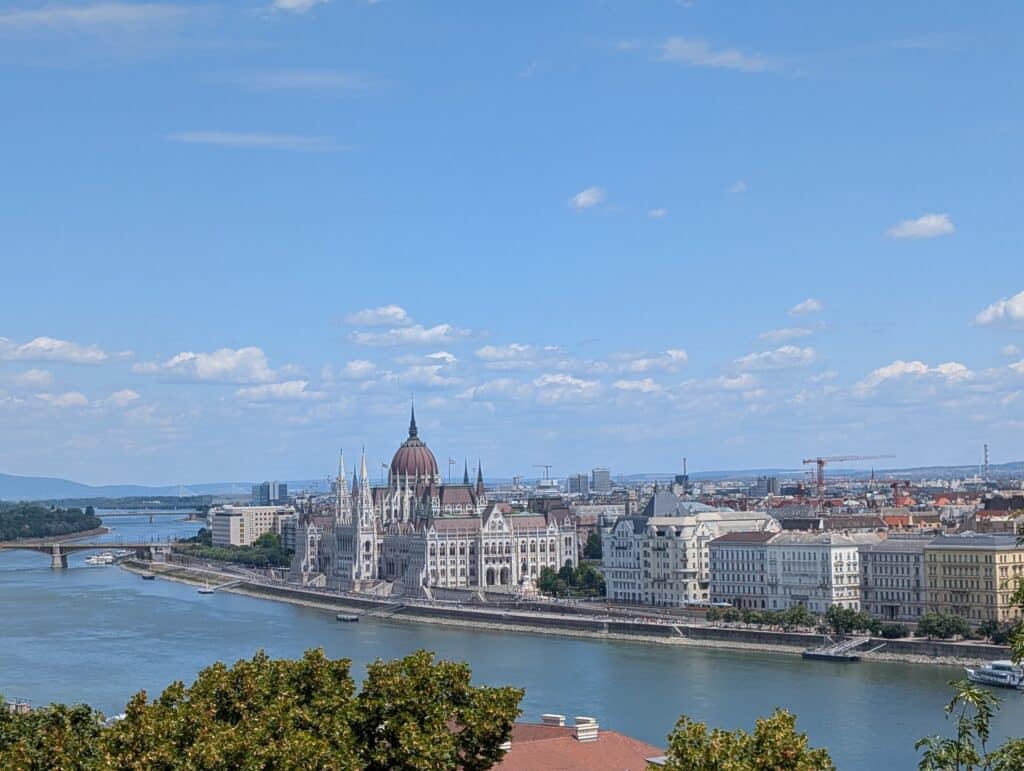
One of our first adventures was exploring the historic Buda Castle District. Perched high above the Danube, it's easy to spend an entire day wandering its cobblestone streets, medieval buildings, and sweeping viewpoints.
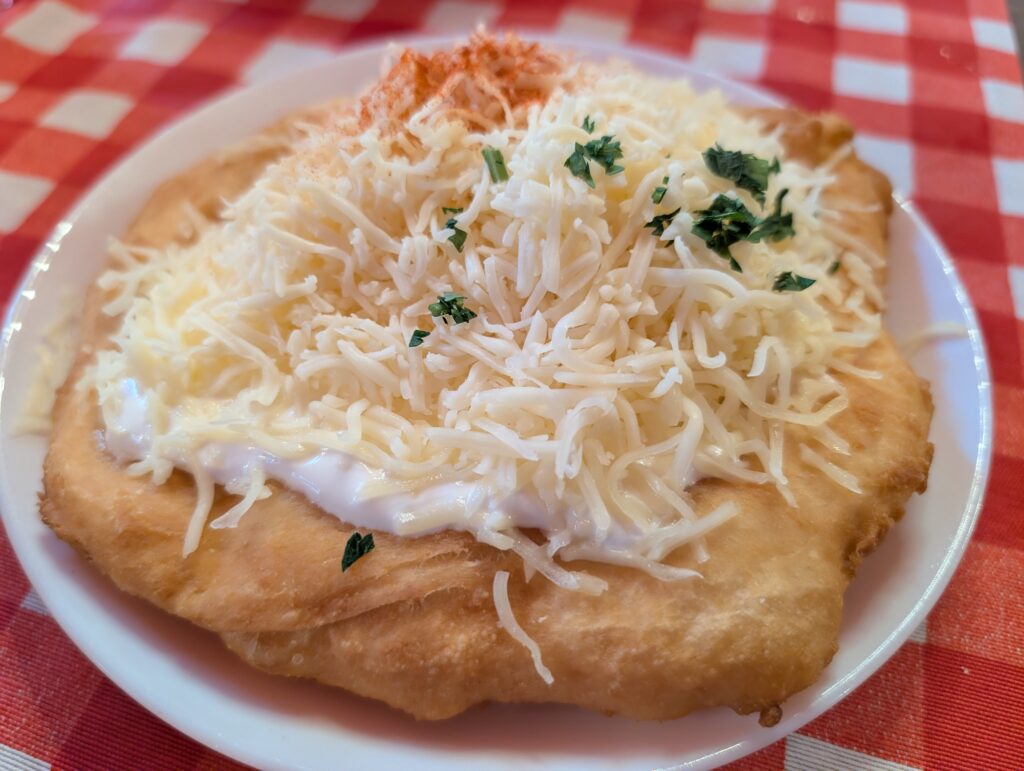
Of course, no visit is complete without trying lángos, Hungary's iconic deep-fried flatbread topped with everything from garlic, sour cream, and grated cheese to bacon and onions. Originally made from leftover bread dough baked near the front of a brick oven, today's golden, puffy lángos is pure street-food magic. Try my Langos recipe for a taste of Budapest at home.
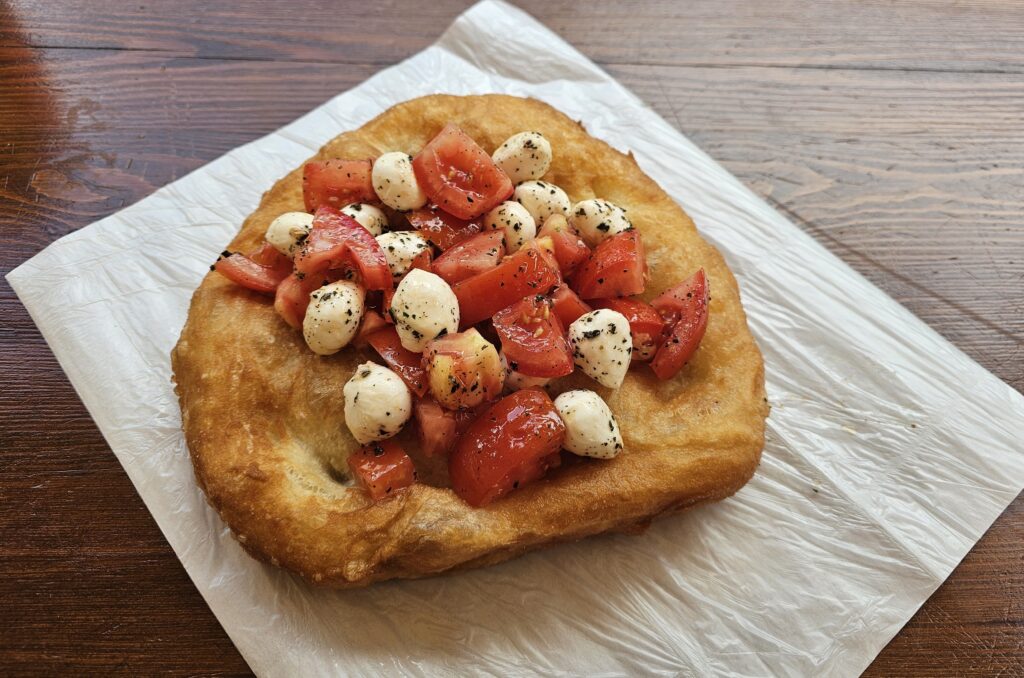
My very first lángos came from a stand near the base of the Buda Castle Funicular, topped with fresh tomatoes, mozzarella, basil, and balsamic glaze—a Caprese-inspired twist that was unforgettable. Later, I tried the classic version piled with sour cream, onions, and bacon.
Lángos is a traditional Hungarian deep-fried flatbread available at street stalls across Budapest. 
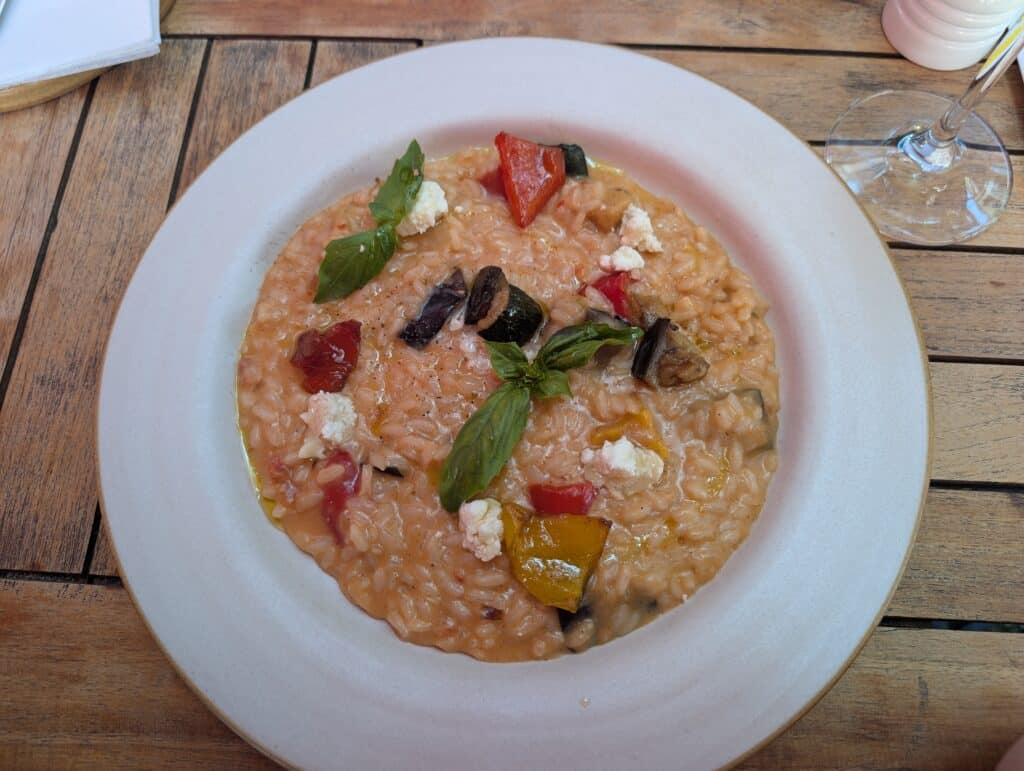
Caprese Lángos—a fresh fusion twist topped with ripe tomatoes, mozzarella cheese, sweet basil, and balsamic glaze. Ratatouille Risotto loaded with tomatoes, eggplant, and zucchini, finished with fresh basil and crumbled cheese in the Buda Castle District. Classic Hungarian lángos rubbed with garlic and topped with cold sour cream and grated cheese at Retro Goulash House.
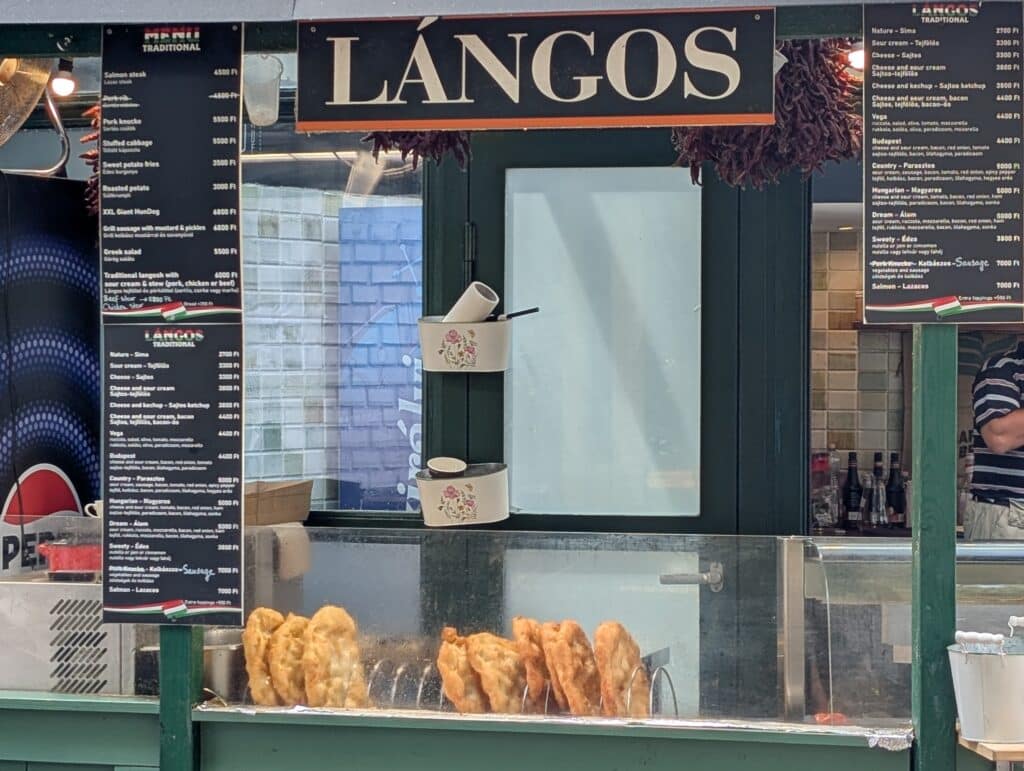
Whether you hike the winding paths or ride the historic funicular, Castle Hill is packed with landmarks: Fisherman's Bastion offers postcard views across the Danube toward Parliament, Matthias Church dazzles with its colorful Zsolnay-tiled roof, and Buda Castle houses both the Hungarian National Gallery and the Budapest History Museum. Below ground, don't miss the labyrinthine Buda Castle Caves, which served as medieval cellars and WWII shelters.
After an afternoon of walking, we grabbed an outdoor table at Jamie Oliver's Italian Buda Castle for people-watching and shared a creamy Ratatouille Risotto loaded with tomatoes, eggplant, zucchini, fresh basil, and crumbled cheese—light, comforting, and ideal after hours on cobblestones.
Hiking to the Citadel on Gellért Hill
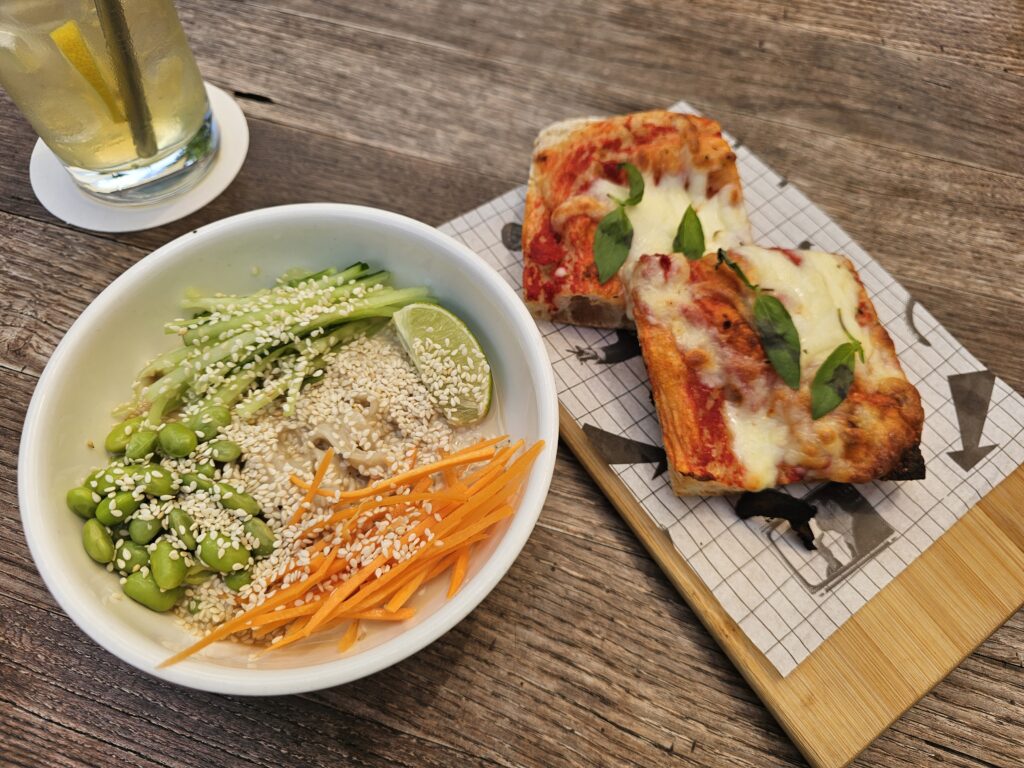
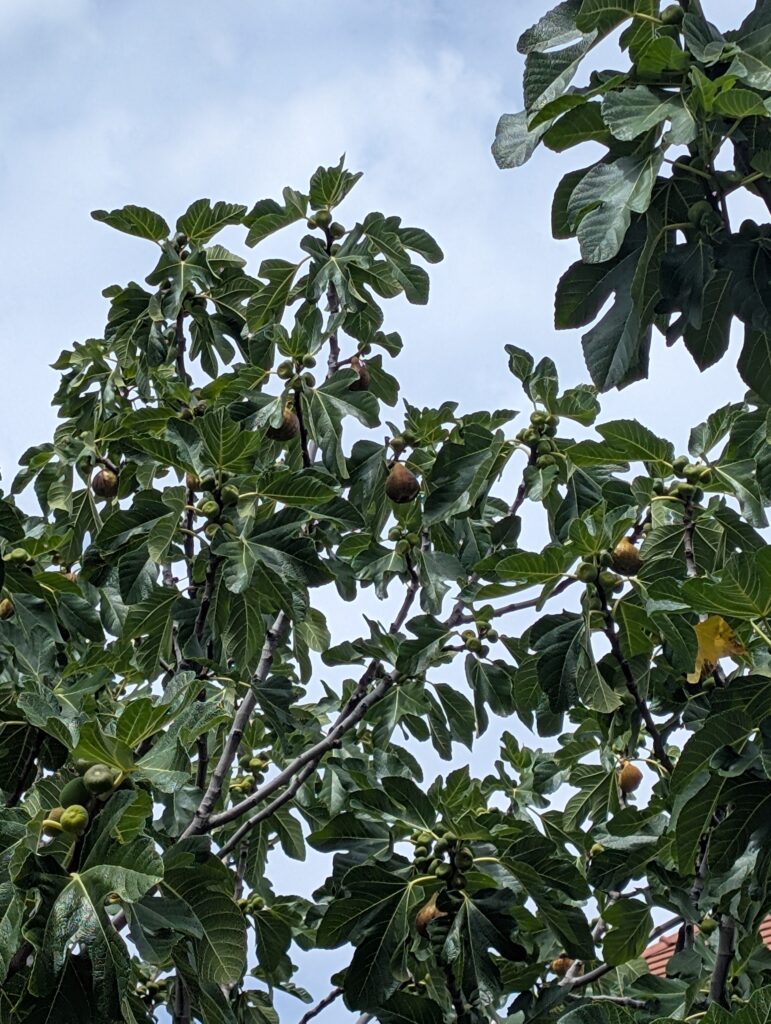
Just south of Buda Castle rises Gellért Hill and the Citadel (Citadella). Hiking straight up from our apartment definitely tested my legs, though it came with an unexpected mid-climb reward: Oda Czakó Kert, a leafy garden café tucked halfway up the hillside. We refueled with a crisp Margherita pizza and a refreshing sesame cold noodle salad tossed with carrots, cucumbers, and edamame before finishing the ascent.
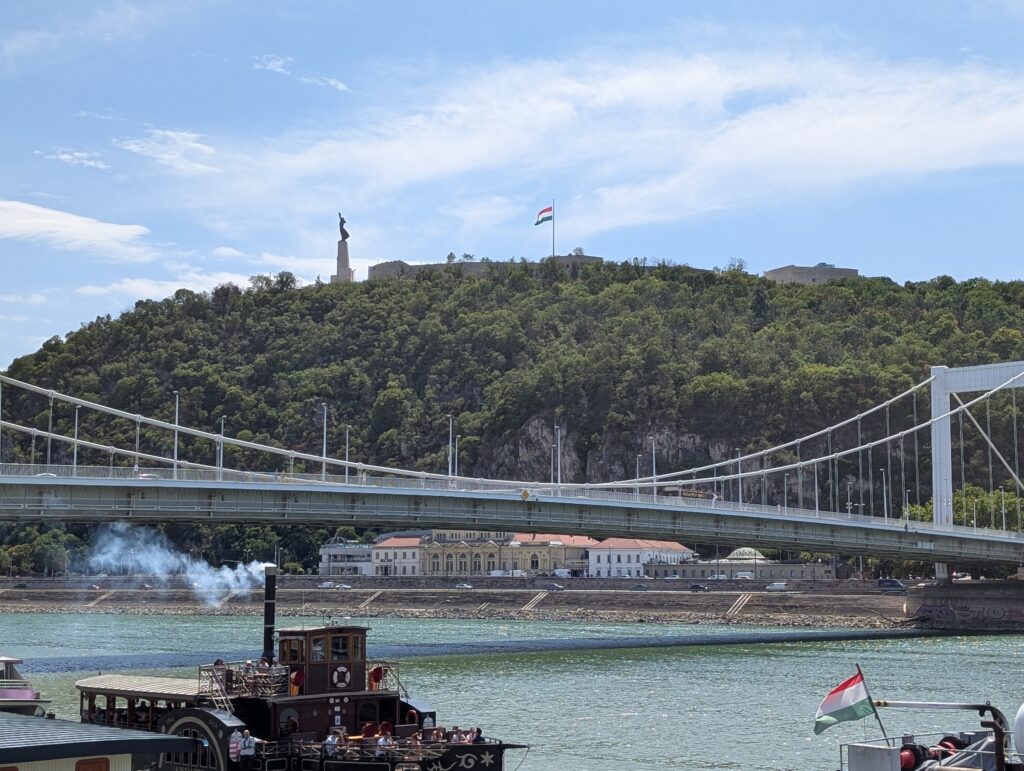
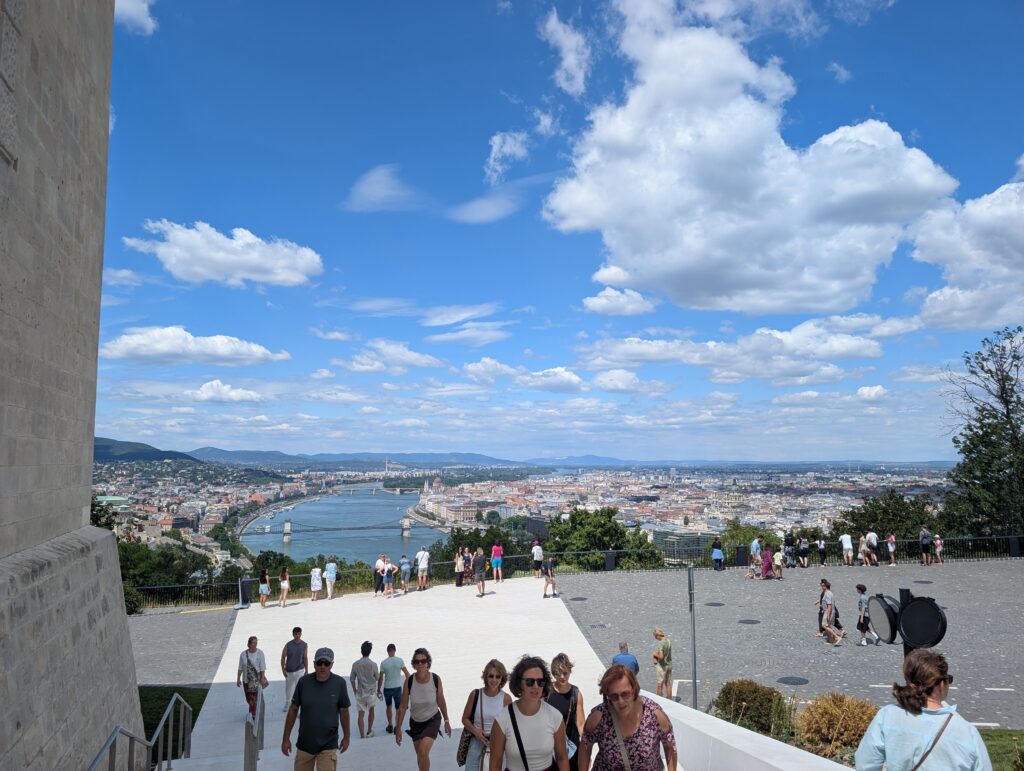
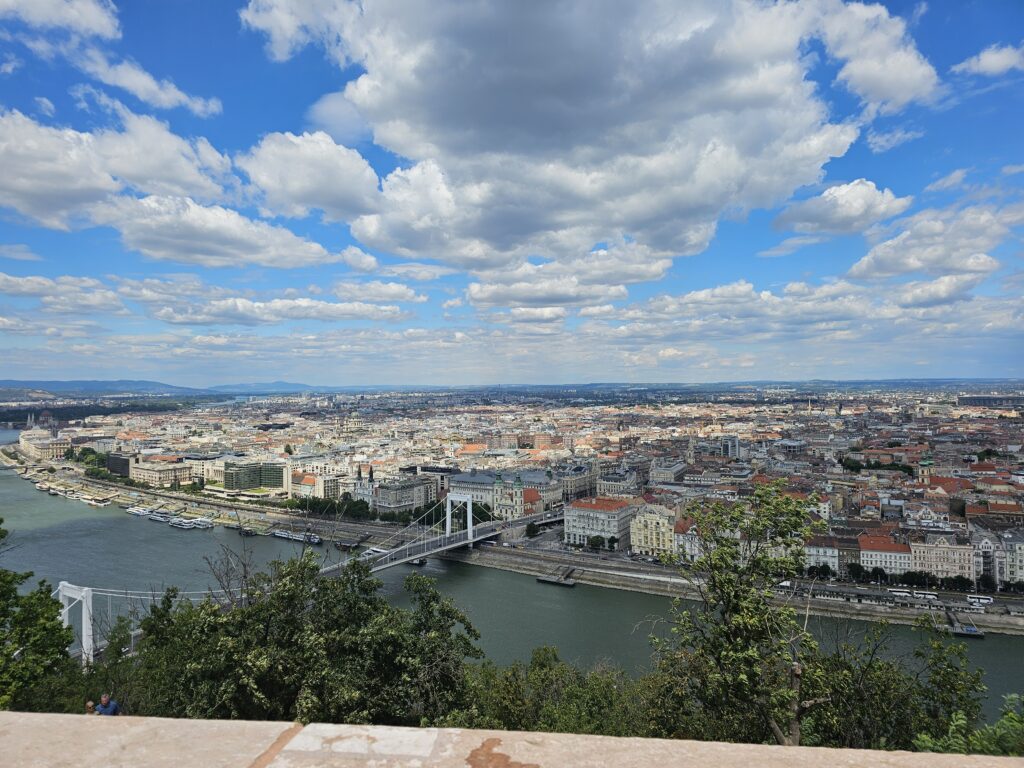

The 360-degree views from the summit were worth every step—you can trace the Danube bridges from one end of Budapest to the other before descending along shaded woodland trails back to the riverfront.
Discovering the Pest Side
Hungarian Parliament Building on the Pest side of the Danube—the largest building in Hungary and seat of the National Assembly. 
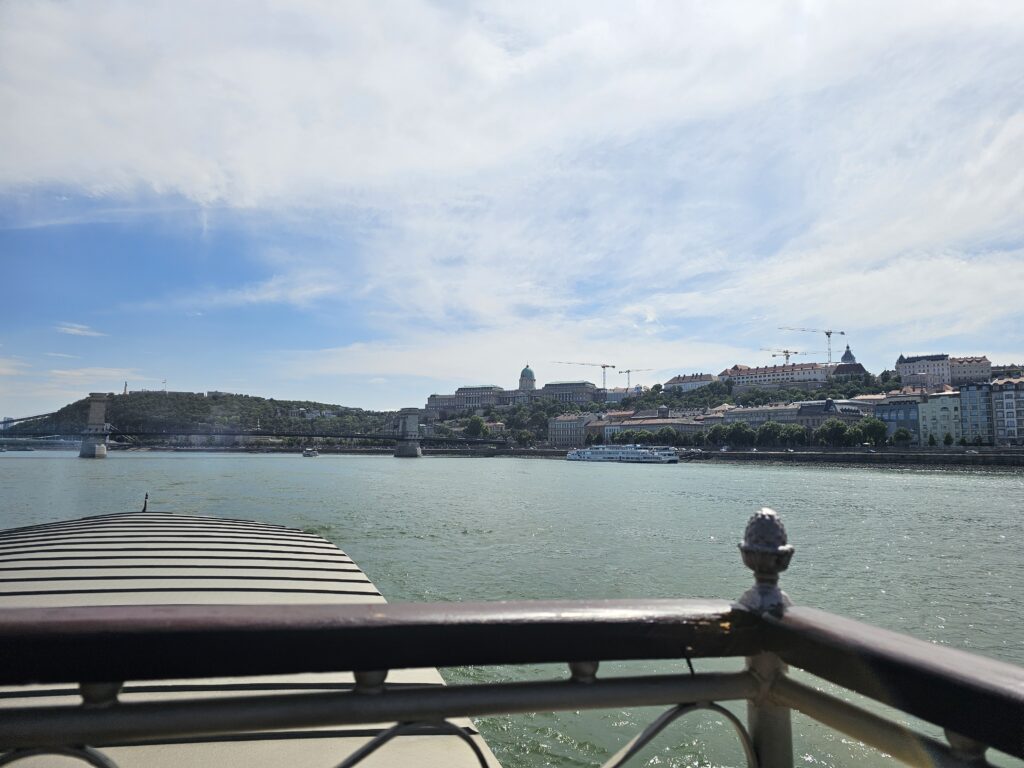
Hungarian Parliament Building in Budapest, beautifully illuminated at night. Kossuth Lajos Square offers an up-close vantage point of the Hungarian Parliament Building's Neo-Gothic spires and stonework. Danube River cruise views showing the historic Széchenyi Chain Bridge and Buda Castle in the background. 
Interior of the Dohány Street Synagogue in Budapest, the largest synagogue in Europe. Tree of Life Memorial in the Raoul Wallenberg Holocaust Memorial Park. Aquincum archaeological site in Budapest, featuring the remains of an ancient Roman city in the Óbuda district. Hercules Villa at the Aquincum Museum archaeological park, showcasing well-preserved Roman-era mosaics.
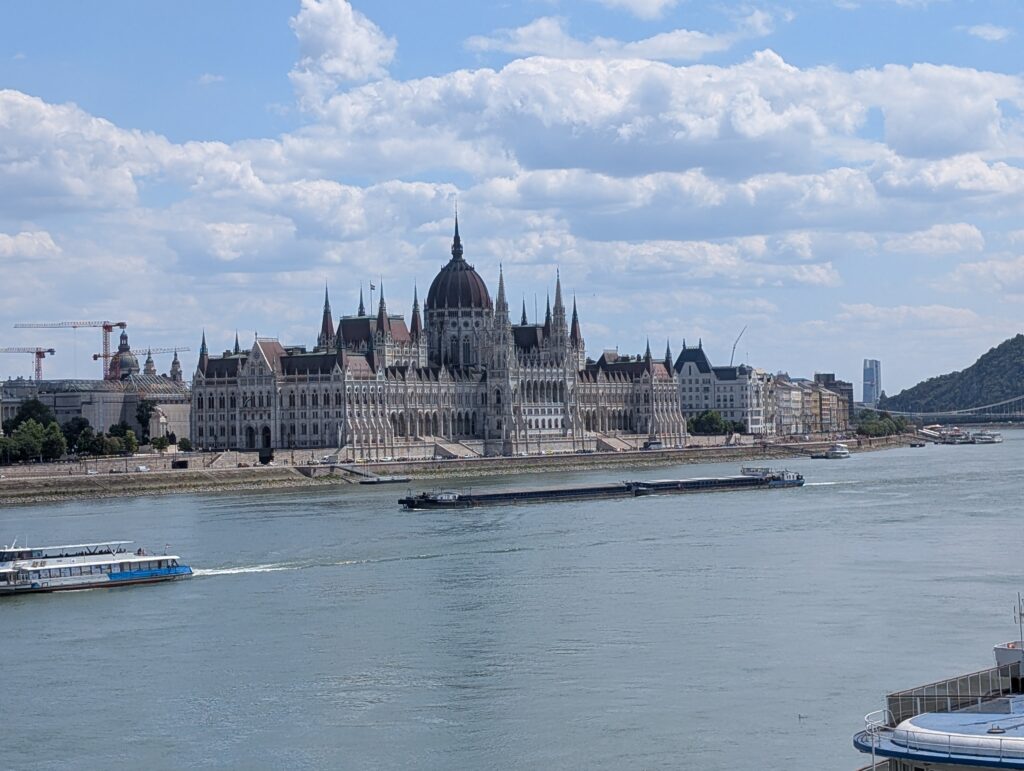
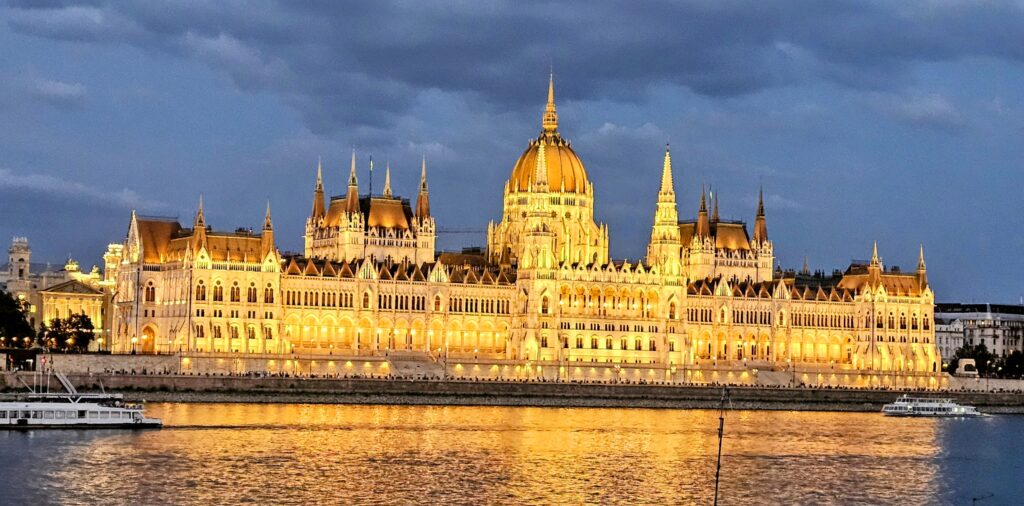
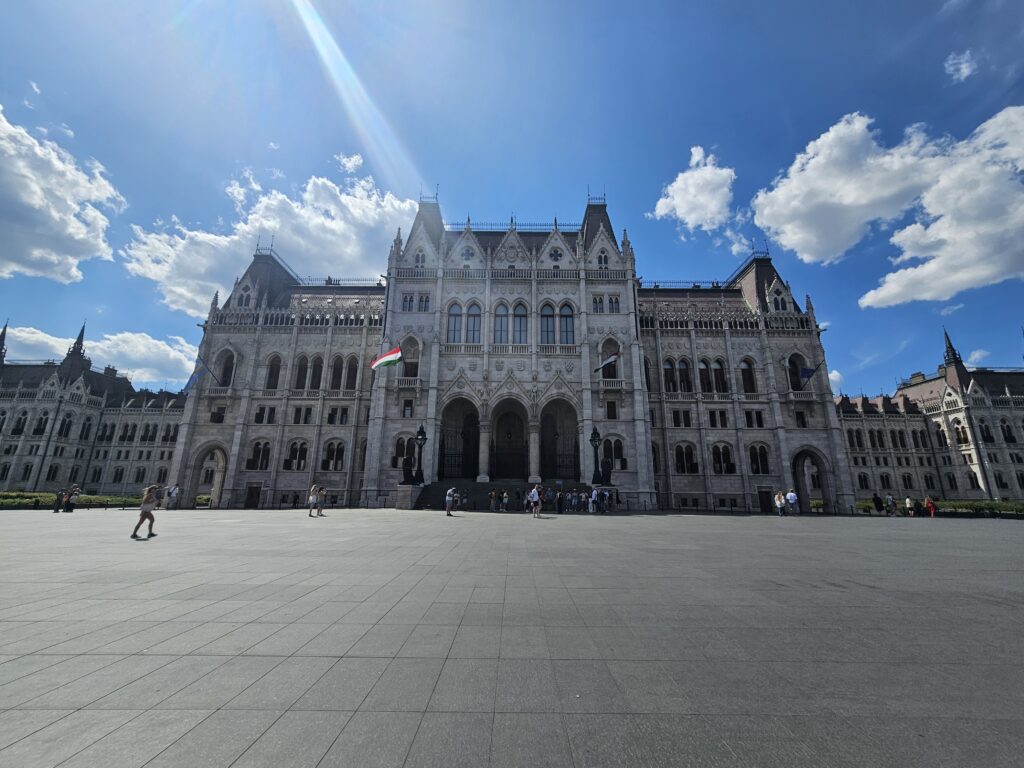
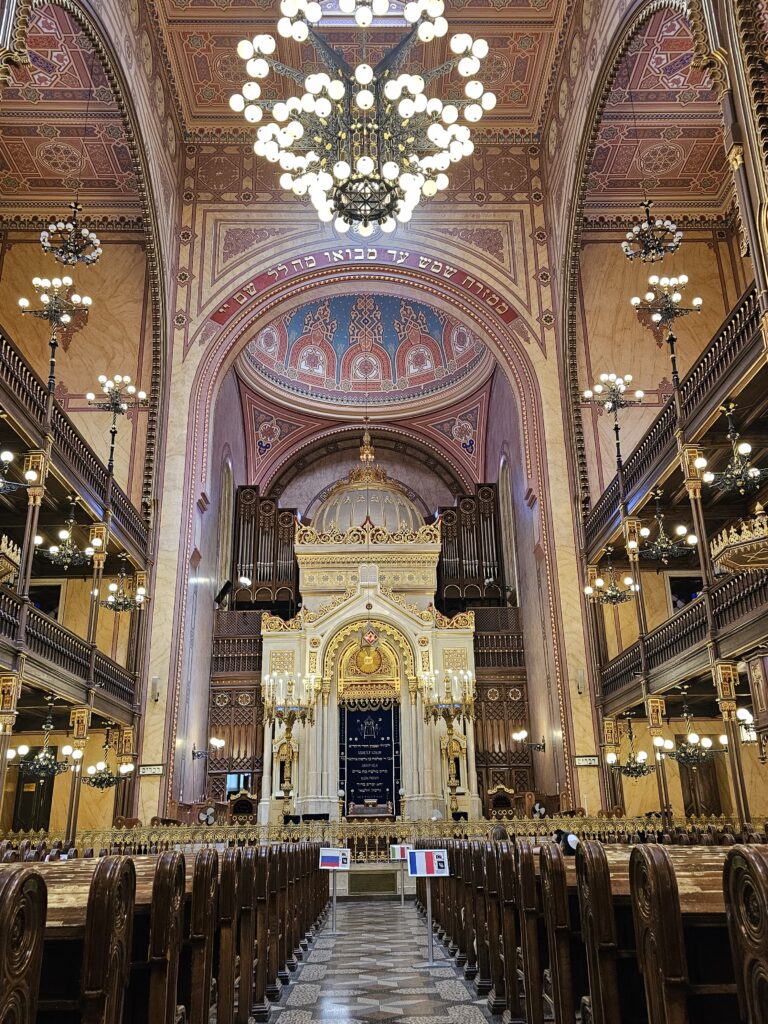
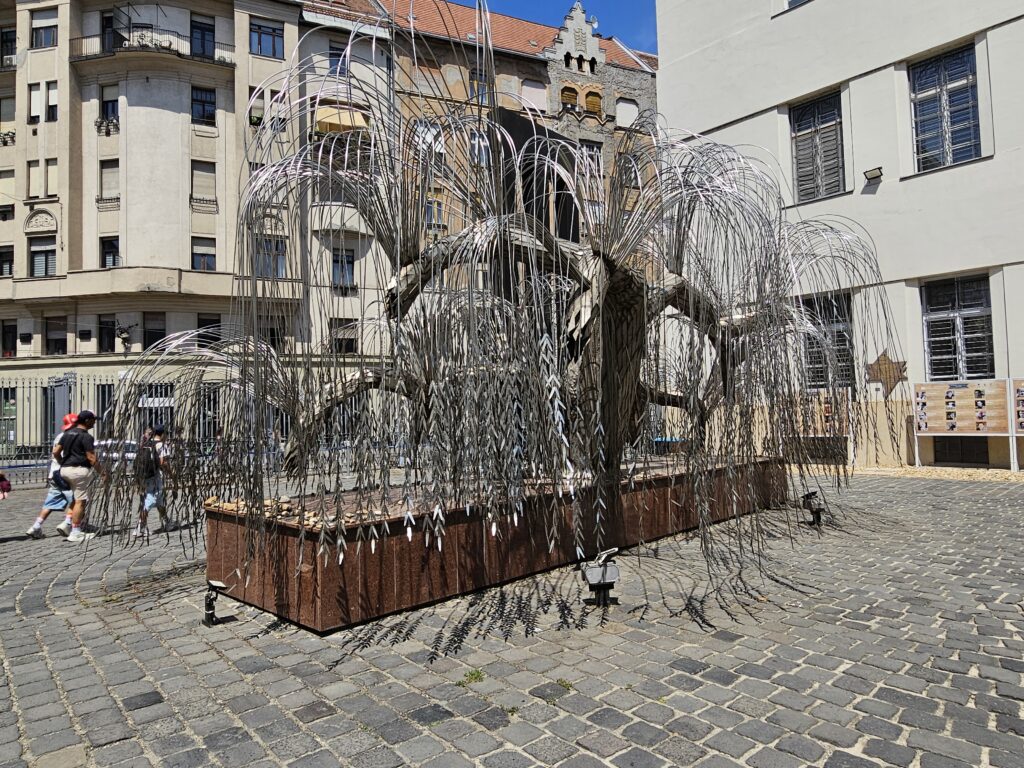
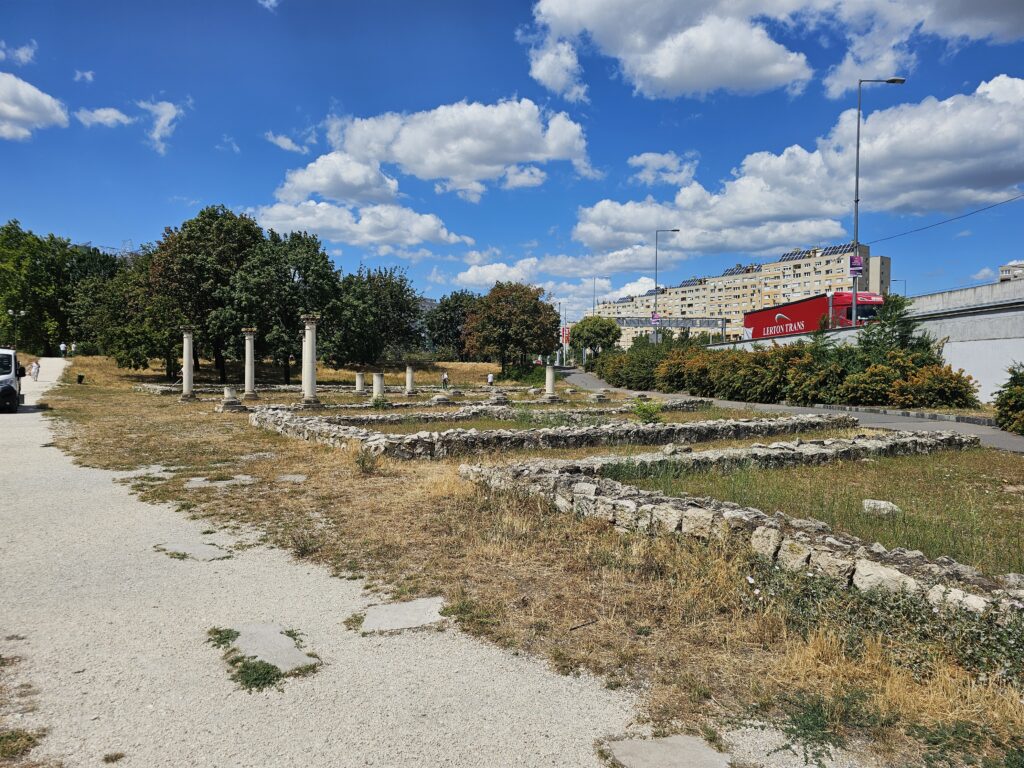
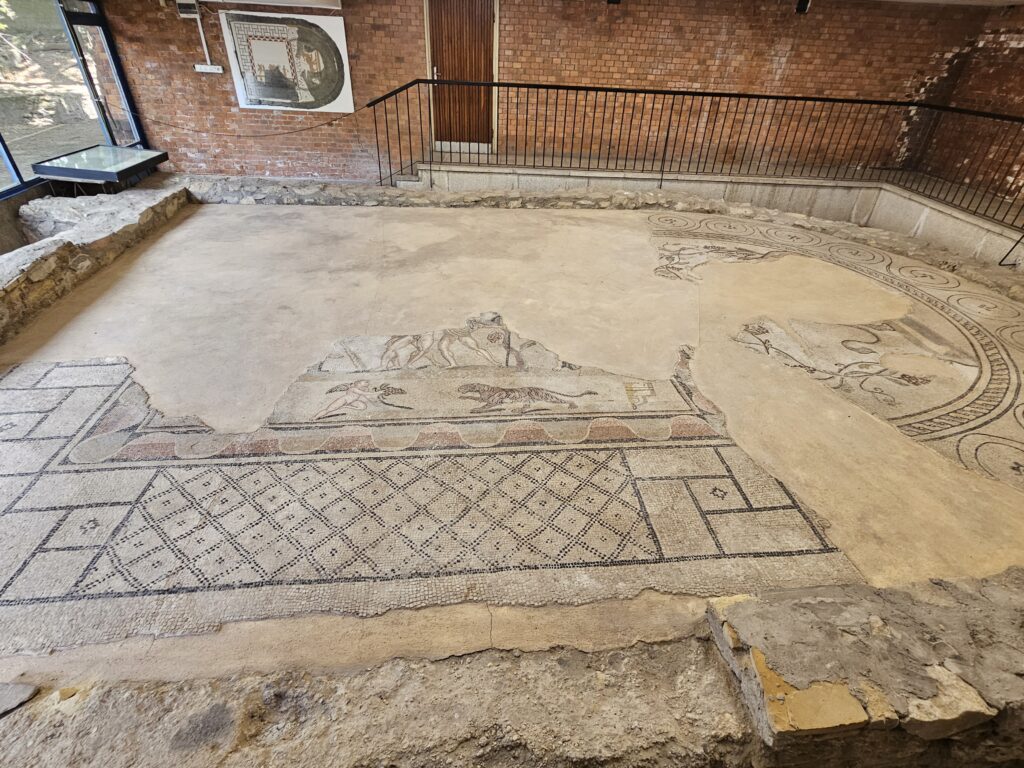
Crossing the Danube into Pest brings an entirely different energy. Here you'll find the Neo-Gothic Hungarian Parliament Building, St. Stephen's Basilica, the historic Jewish Quarter (home to the Dohány Street Synagogue), and an endless variety of cafés, bistros, and nightlife.
One of the Jewish Quarter's signature experiences is Budapest's ruin bars (romkocsmák)—eclectic pubs built inside once-abandoned buildings and courtyards filled with mismatched vintage furniture, street art, and string lights. Visiting Szimpla Kert, the city's original ruin bar, showed us immediately why it's a Budapest institution.
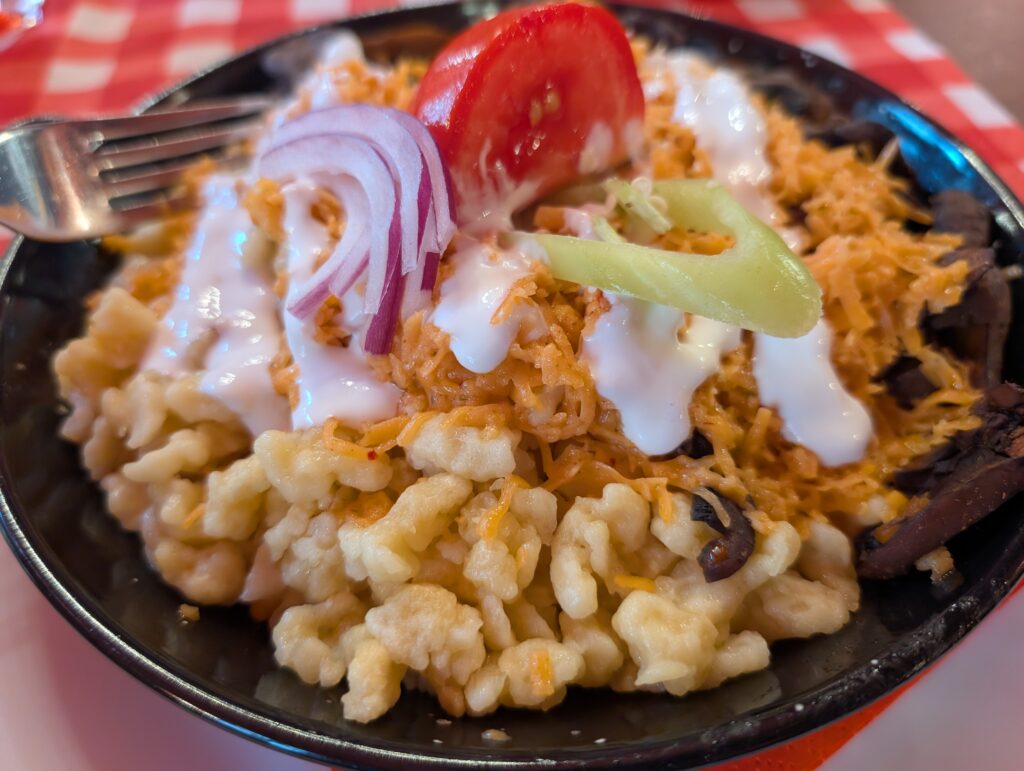
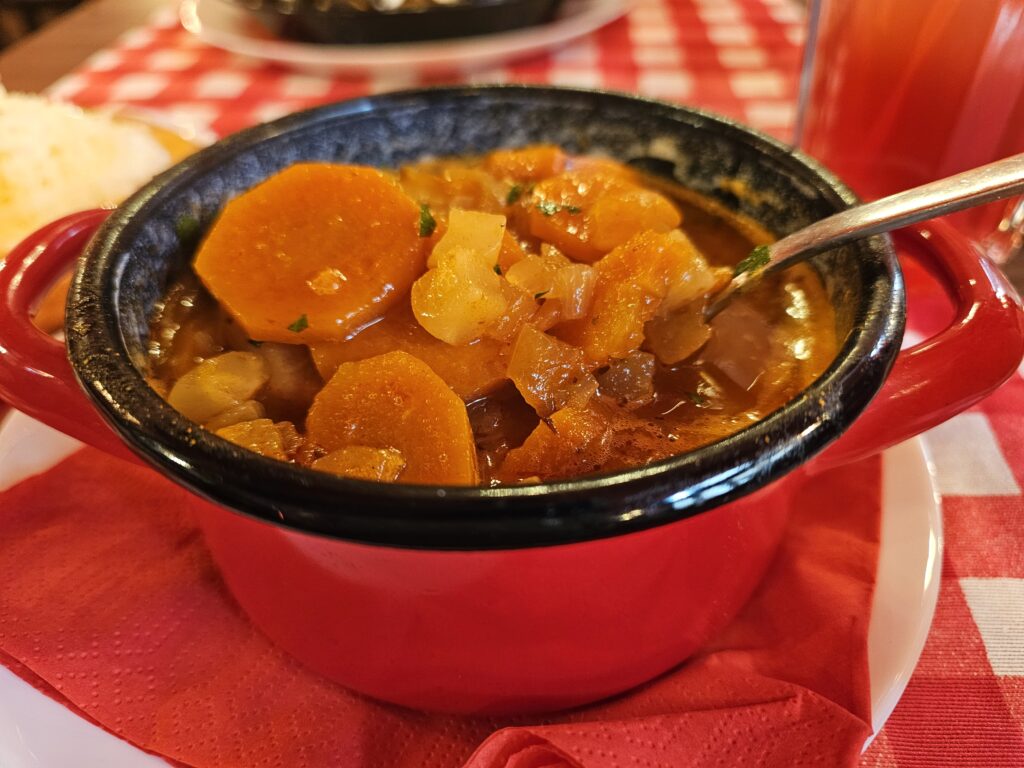
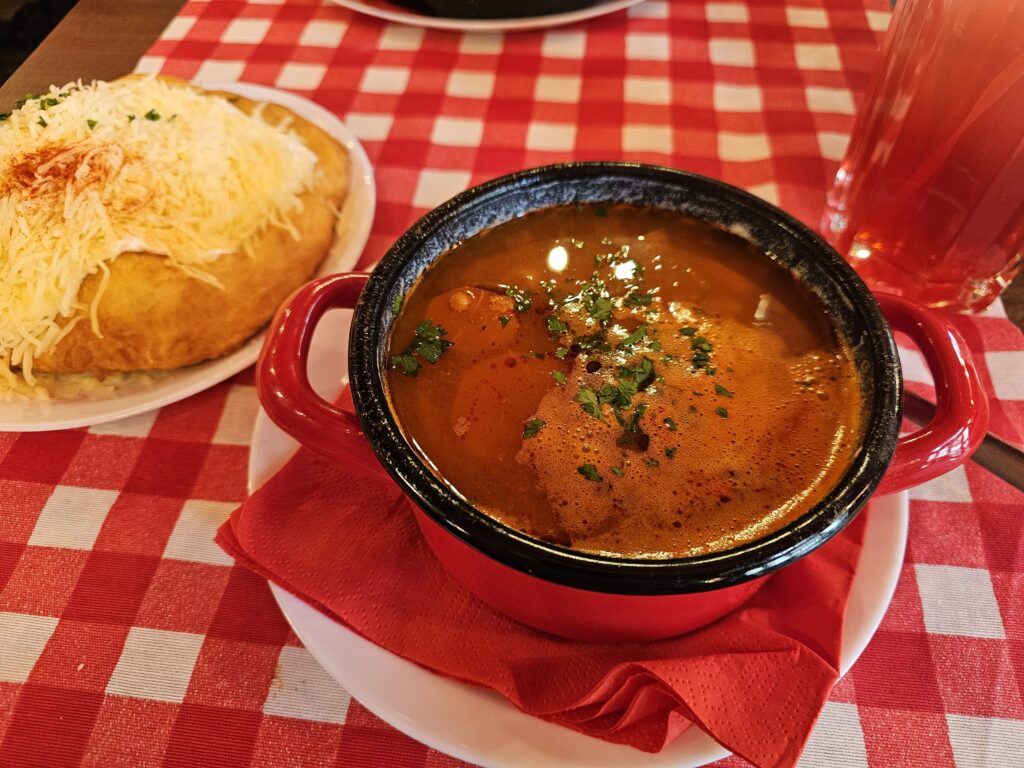
Vega Briboka Paprikash (Hot & Spicy) at Retro Goulash House: spicy paprika cheese, onions, mushrooms, creamy paprika sour cream sauce, and traditional dumplings. Traditional Vega Goulash Soup at Retro Goulash House. Traditional Vega Goulash Soup paired with Sour Cream & Cheese Lángos at Retro Goulash House. Lángos rubbed with garlic and topped with cold sour cream and grated cheese at Retro Goulash House. Crunchy Paquitos at Mexican Kitchen inside Karaván Street Food Court. Loaded nachos at Mexican Kitchen. 
English-style fish and chips with pea mash at a local Budapest pub—proof that you can find international comfort food all over the city.
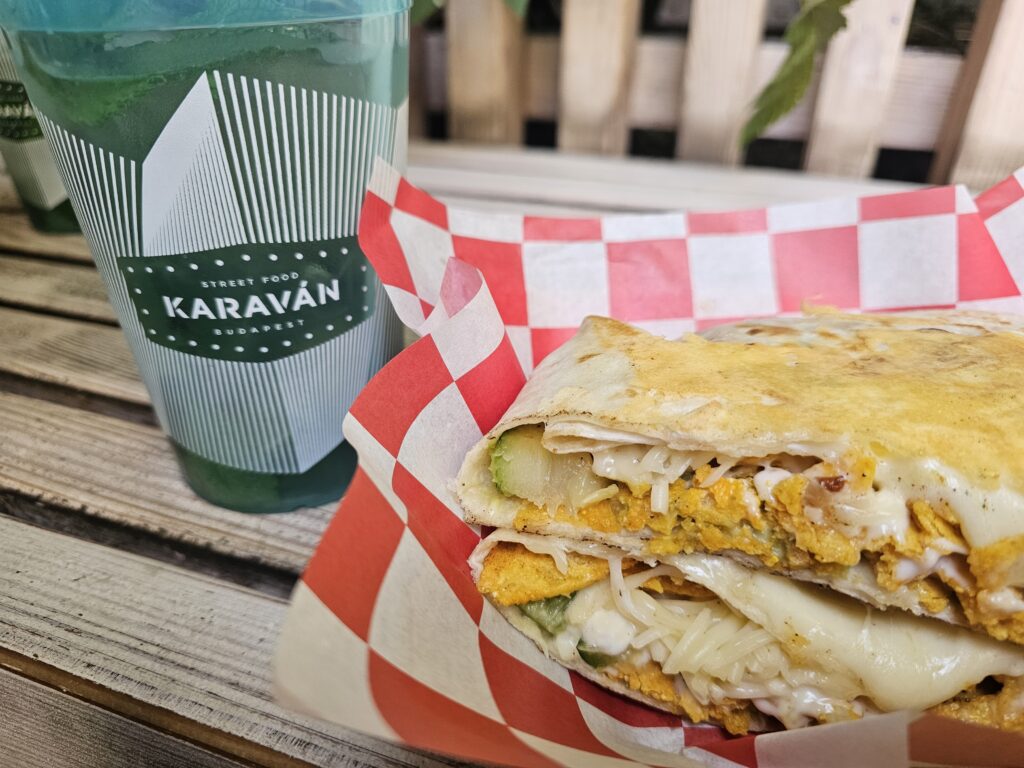
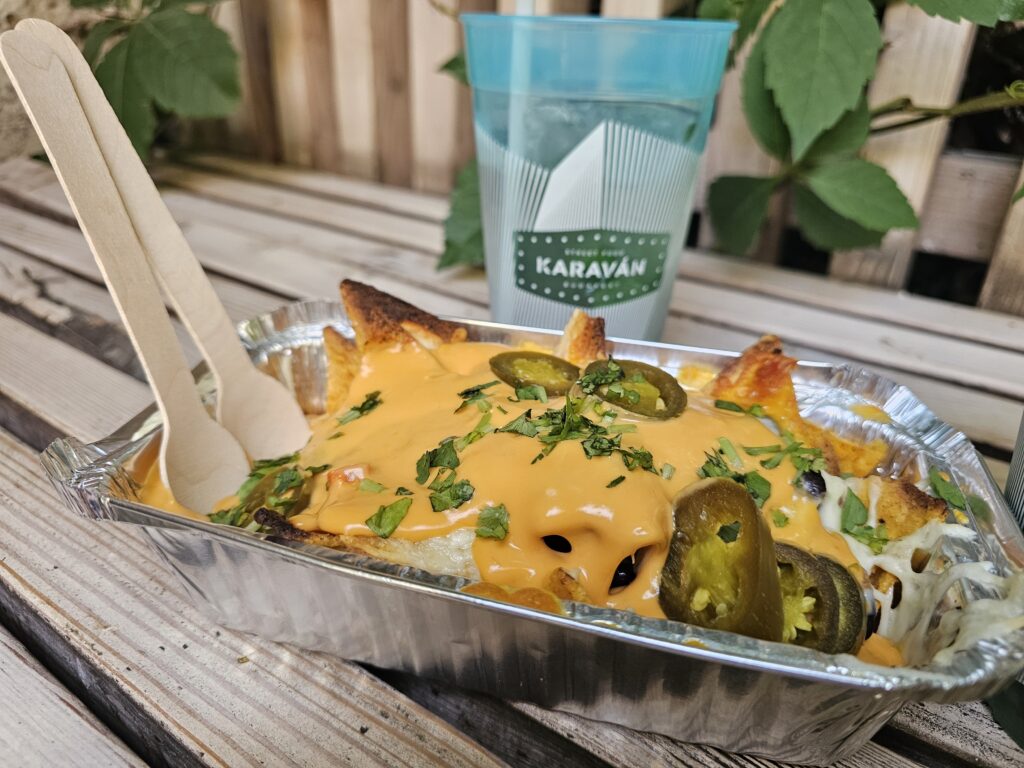
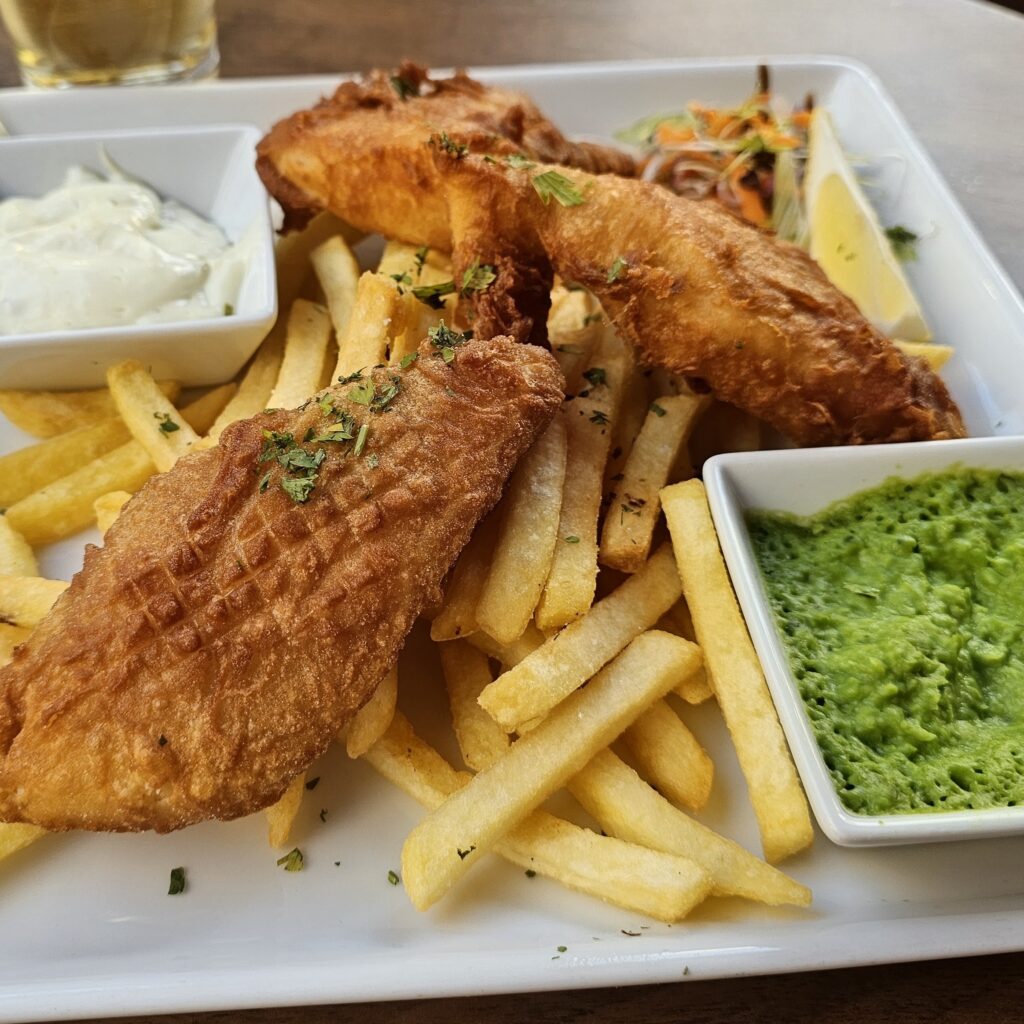
Right next door sits Karaván Street Food Court, an open-air alley of food trucks serving everything from Hungarian classics to tacos, burgers, and vegan bowls. We sampled crispy Mexican wraps and loaded nachos, showing how effortlessly Budapest balances Hungarian heritage with international street food.
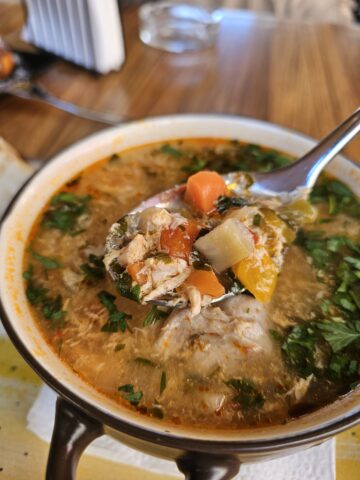
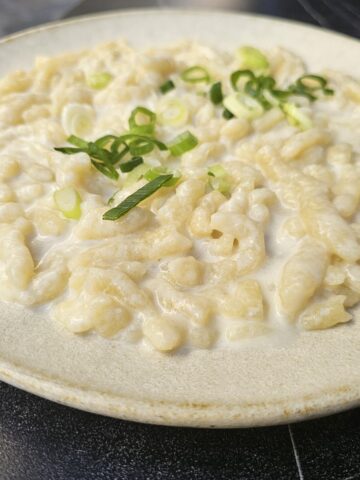
One evening we had dinner at Retro Goulash House, where I ordered a steaming bowl of Hungarian goulash soup paired with sour cream and cheese lángos. If you're craving goulash at home, try my authentic German goulash recipe, which shares many of the same rich flavors while I perfect my Hungarian goulash recipe. My husband ordered brindzás paprikás—a comforting dish of spicy sheep's cheese, onions, mushrooms, creamy paprika sauce, and soft dumplings (nokedli). Paprika is the backbone of countless Hungarian dishes; if you want those classic flavors on a weeknight, make my Instant Pot Chicken Paprikash.
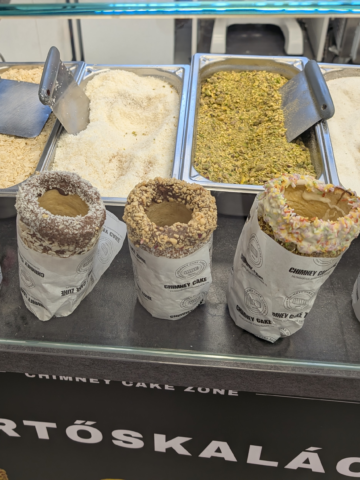
And of course, no walk through Pest is complete without a freshly baked Hungarian chimney cake (kürtőskalács). Strips of sweet yeast dough are wrapped around a wooden cylinder, brushed with butter, rolled in sugar, and roasted until caramelized and crisp outside while staying pillowy soft inside. Classic coatings include cinnamon sugar, ground walnuts, and cocoa, while modern stands stuff them with ice cream, fruit, or Nutella. I even took a hands-on baking class to master Hungarian chimney cakes from scratch—check out my recipe and class recap if you want to make them at home!
Great Market Hall (Nagy Vásárcsarnok)
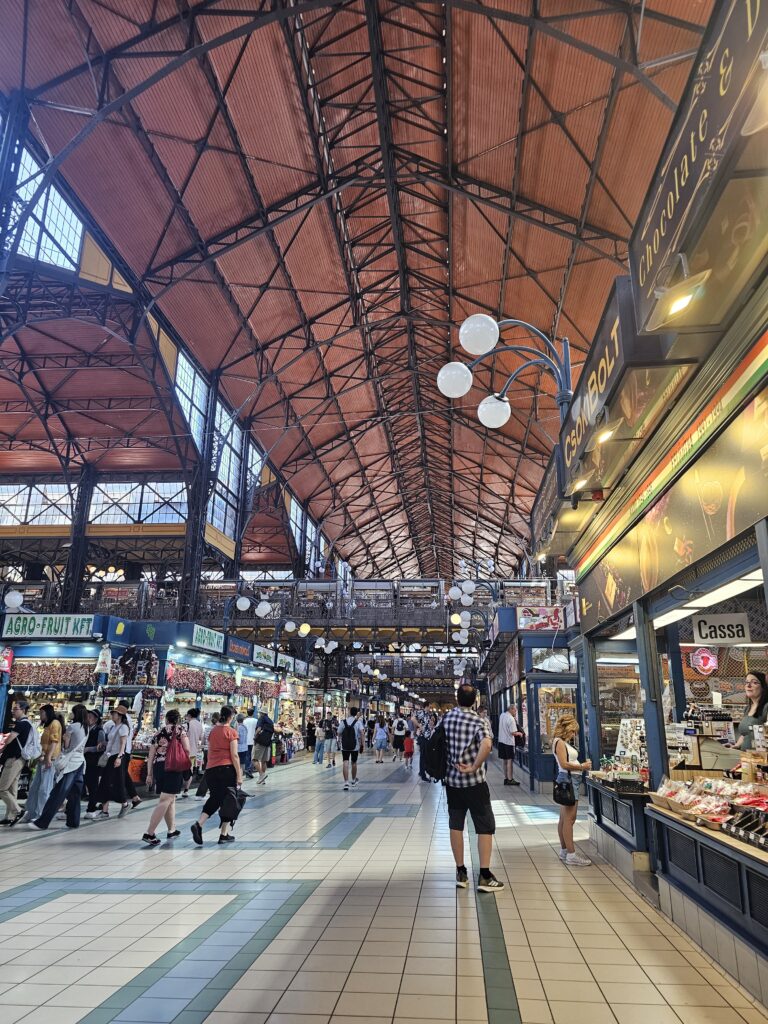
Great Market Hall is the largest and oldest indoor market in Budapest, operating since 1897 and topped with colorful Zsolnay ceramic roof tiles. Interior of the Great Market Hall, located on the Pest side of Liberty Bridge at the southern end of Váci utca. One of the many fresh vegetable and fruit vendors in the Great Market Hall. One of the traditional butcher and cured-meat vendors in the Great Market Hall.
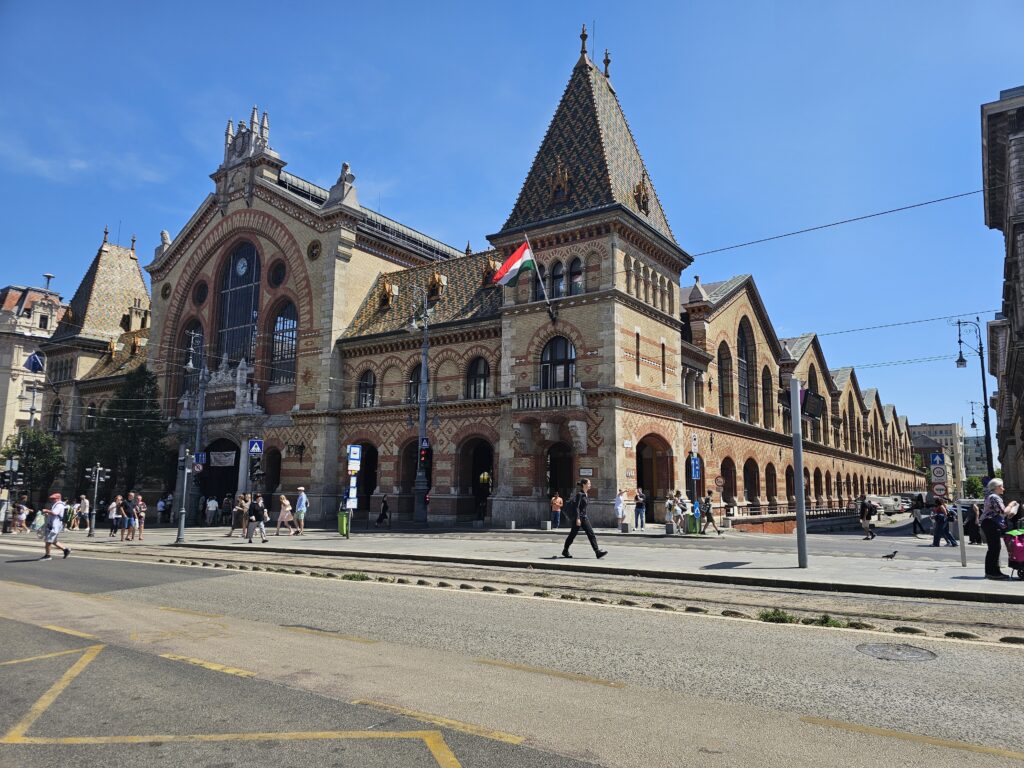
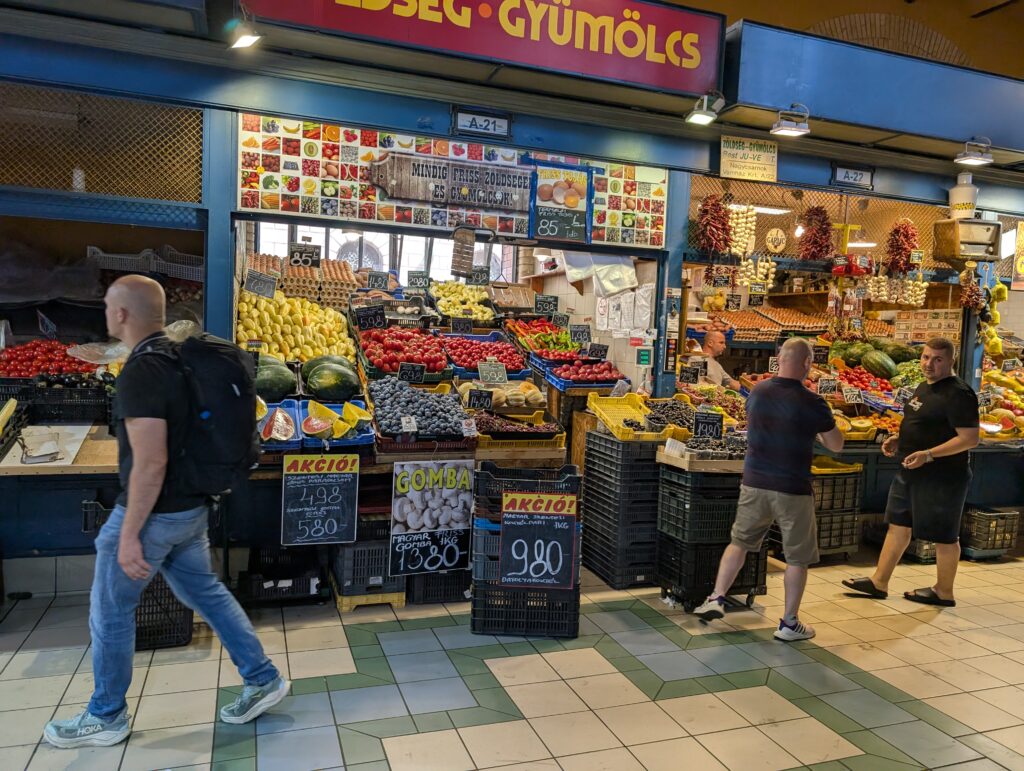
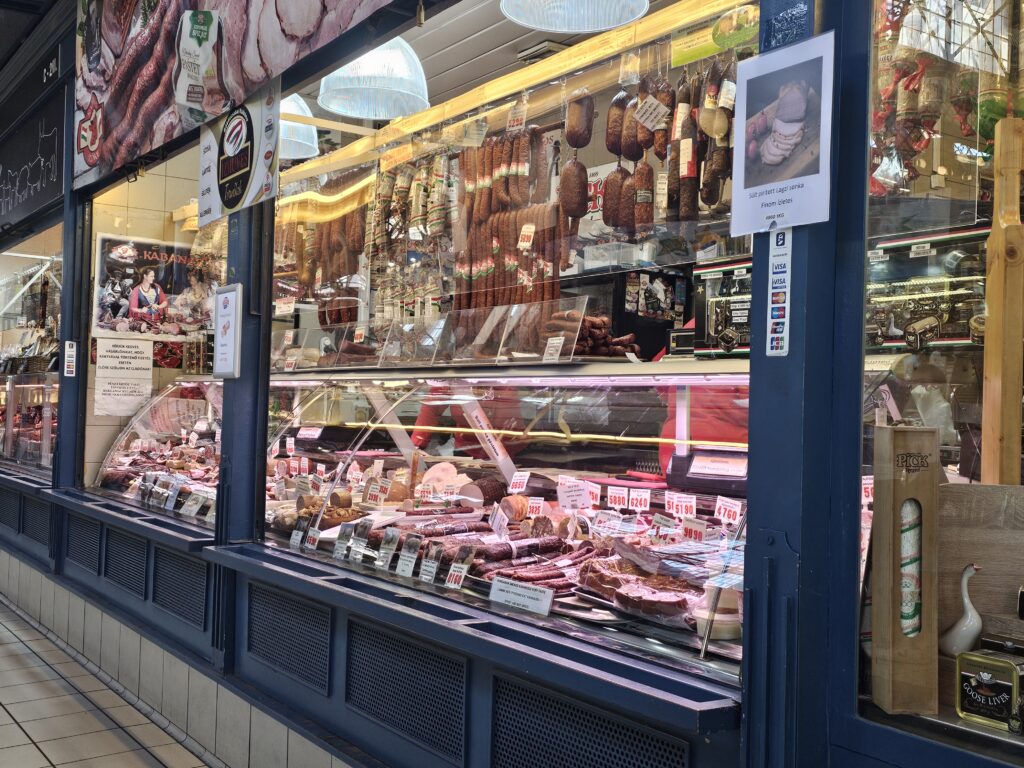
Living in Budapest has completely changed how I grocery shop. Without a car—and with a compact European apartment refrigerator—I shop every few days for fresh ingredients rather than doing massive weekly hauls, which means cooking with fresher seasonal produce than ever.
One of my favorite places to shop is the Great Market Hall (Nagy Vásárcsarnok) at Vámház körút 1–3, right at the southern end of Váci Street. Opened in 1897 and designed by architect Samu Pecz, this Neo-Gothic landmark is crowned with colorful Zsolnay ceramic roof tiles and a soaring steel-and-glass interior.
The ground floor brims with stalls selling seasonal vegetables, stone fruit, farm cheeses, smoked sausages, bakeries, sweet and hot paprika, and Hungarian wines, while the basement houses fishmongers and pickled-vegetable stands. Upstairs, food counters dish up hot Hungarian specialties alongside stalls selling embroidered linens and folk crafts—making it essential for anyone exploring Budapest through food.
Iconic Budapest Experiences Beyond Food
Széchenyi Thermal Baths
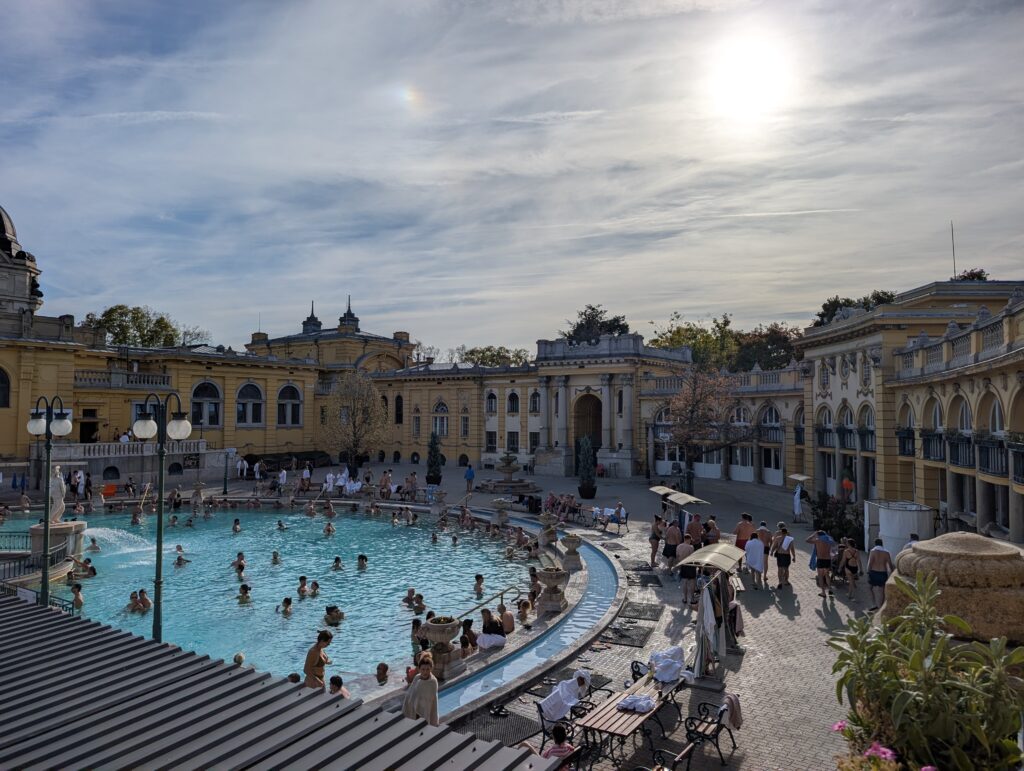
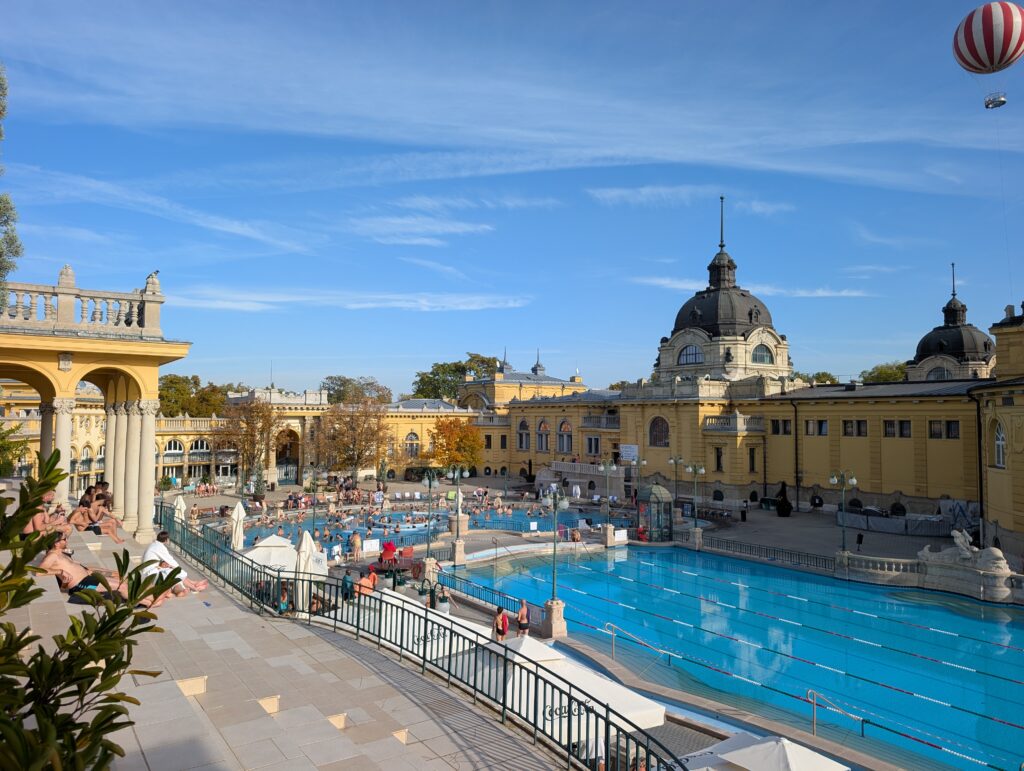
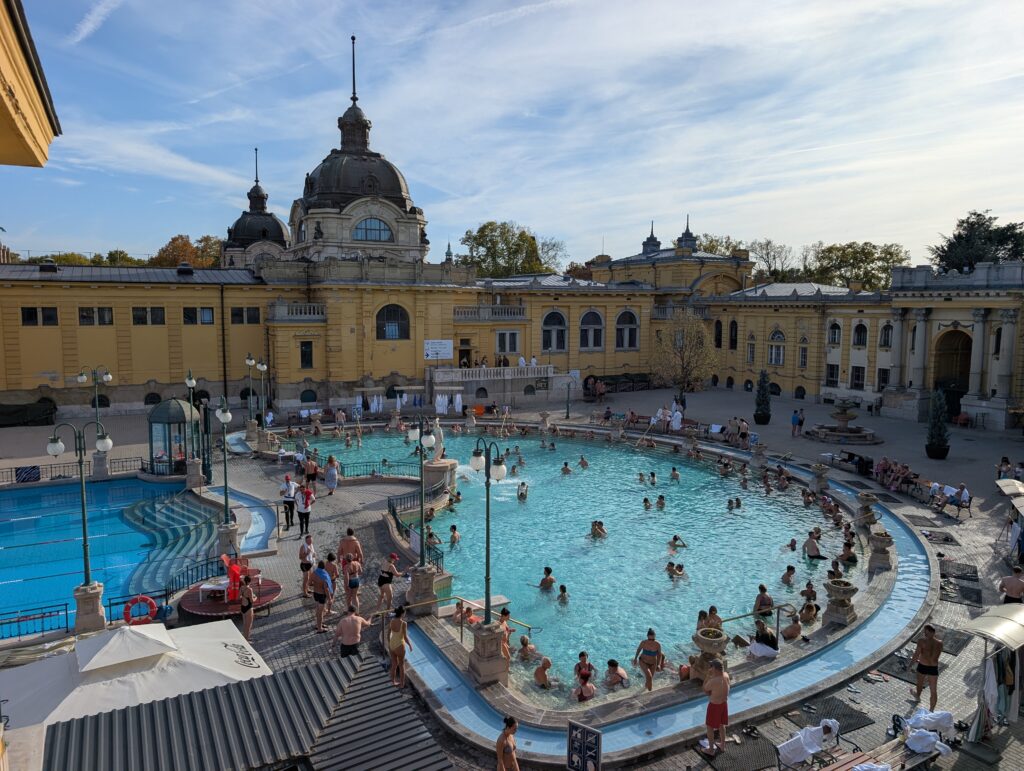
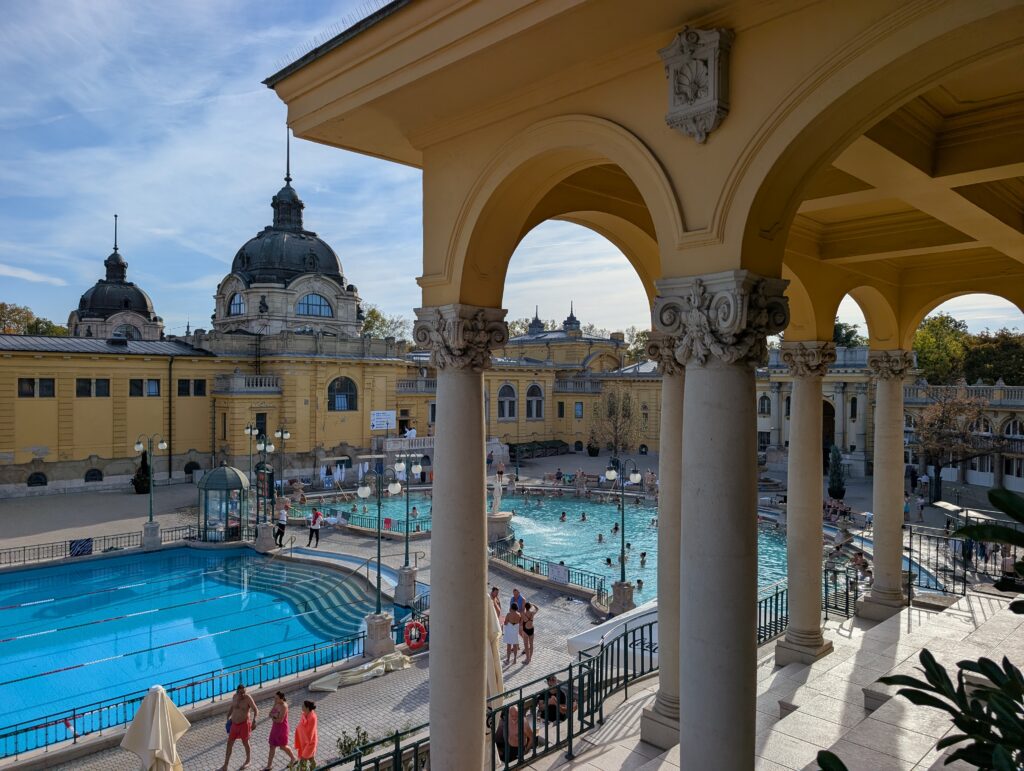
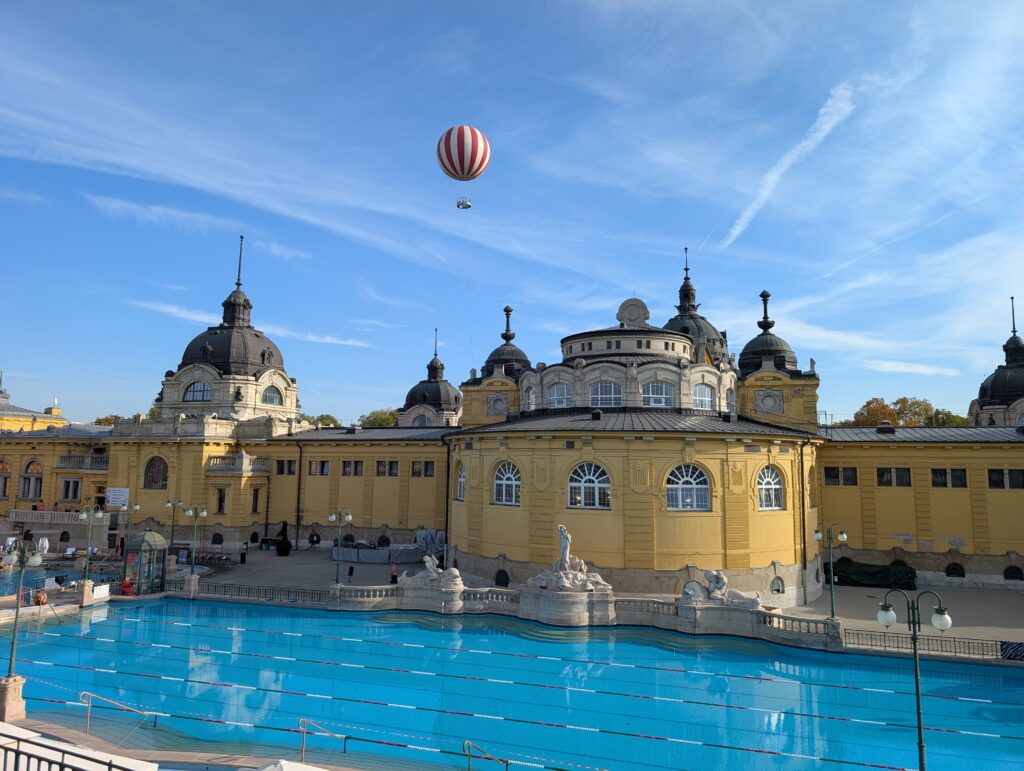
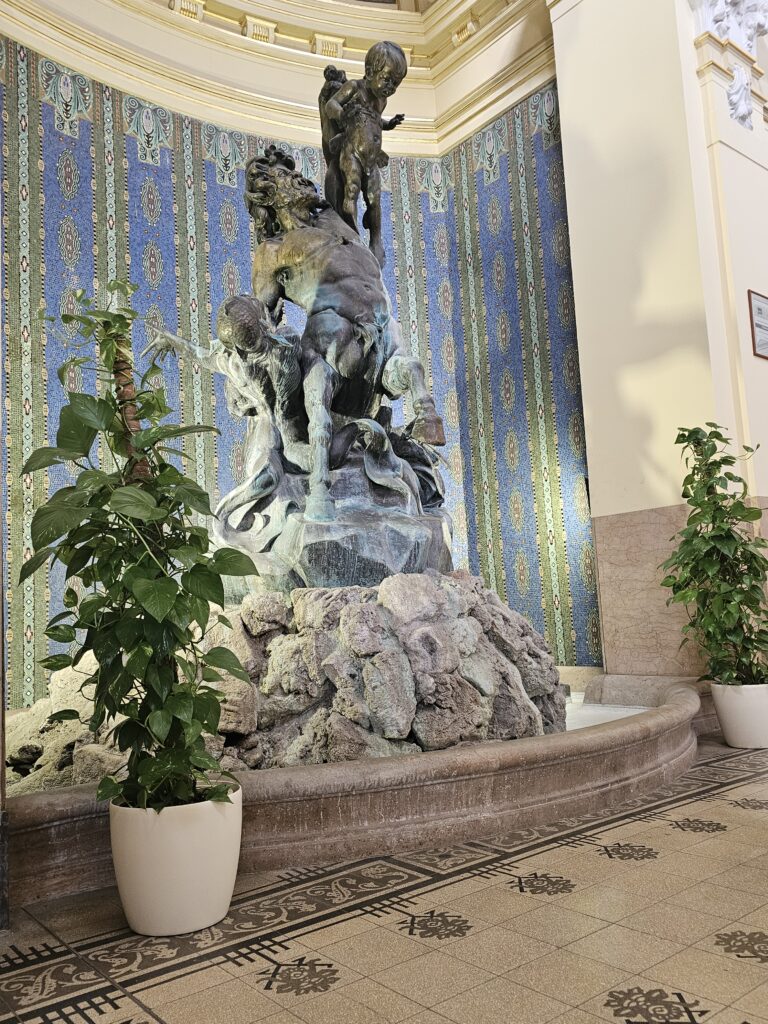

We finally visited the Széchenyi Thermal Baths in City Park, and the palatial yellow Neo-Baroque architecture alone is worth the trip! Opened in 1913 and fed by natural mineral springs, it's one of Europe's largest medicinal bath complexes—complete with steaming outdoor pools, indoor thermal baths at varying temperatures, saunas, and even private beer baths.
Budapest has earned its nickname as the "City of Spas" over nearly 2,000 years, dating back to Roman baths in ancient Aquincum and 16th-century Ottoman Turkish baths that still operate today. Soaking in Széchenyi's warm outdoor pool on a crisp autumn day surrounded by golden Neo-Baroque colonnades is pure magic (and on select weekend nights, the complex even hosts lively "Sparty" light-and-music pool parties).
Final Thoughts: Exploring Budapest Through Food
When we decided to move to Budapest for a year, we hoped to experience the city beyond its postcard landmarks—we just didn't realize how deeply its food would connect us to Hungarian history and daily life. Whether eating crispy lángos below Buda Castle, browsing fresh paprika and produce at the Great Market Hall, baking chimney cakes from scratch, or enjoying flaky pastries (like my Apple Puff Pastry) in a neighborhood café, every bite has told a story.
If you're planning a trip to Hungary's capital, don't just check off the major monuments. Wander into neighborhood bakeries, linger over coffee, and try dishes you've never heard of—exploring Budapest through food, one delicious bite at a time, is the best way to fall in love with the city.
More Great Central European Destinations
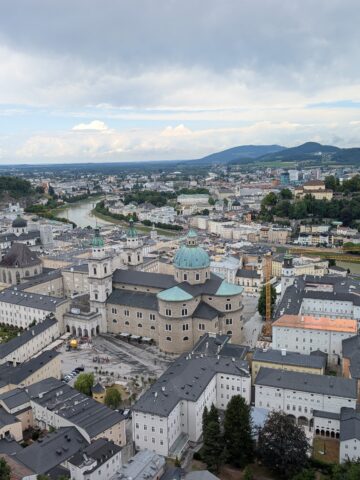
- Salzburg Day Trip from Vienna: Food, History & Things to Do
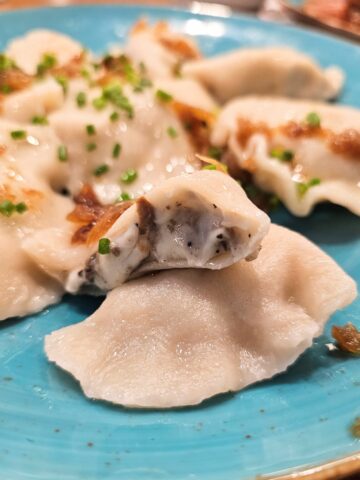
- Exploring Krakow Through Food: Polish Dishes, Historic Old Town & Wieliczka Salt Mine
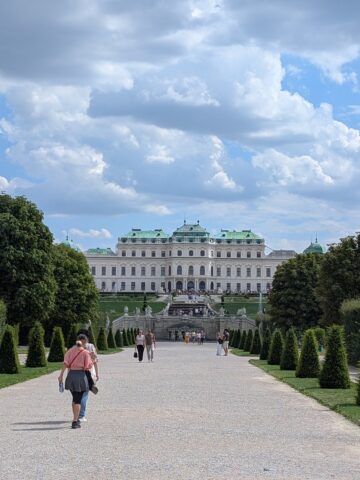
- Vienna Austria: Imperial History, Elegant Architecture & Incredible Food
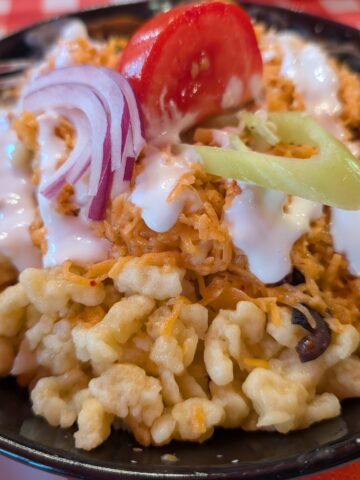
- Exploring Budapest Through Food: A Food Lover's Guide to Hungary's Capital
- What I Ate in Romania: Castles, Bucharest & Traditional Romanian Food
- Szentendre: A Colorful Day Trip from Budapest
- Hungarian Chimney Cake (Kürtőskalács)
- Bratislava Food Guide: Exploring Slovak Food from Old Town to Devín Castle
Comments
No Comments